Build A Massive V-Taper With This Back Shoulder Exercise Machine
Most lifters treat the rear deltoids and upper back as an afterthought. They throw in a few lazy dumbbell flyes at the end of a session and wonder why their physique lacks that 3D look. If you want true width and thickness, you need to master the back shoulder exercise machine.
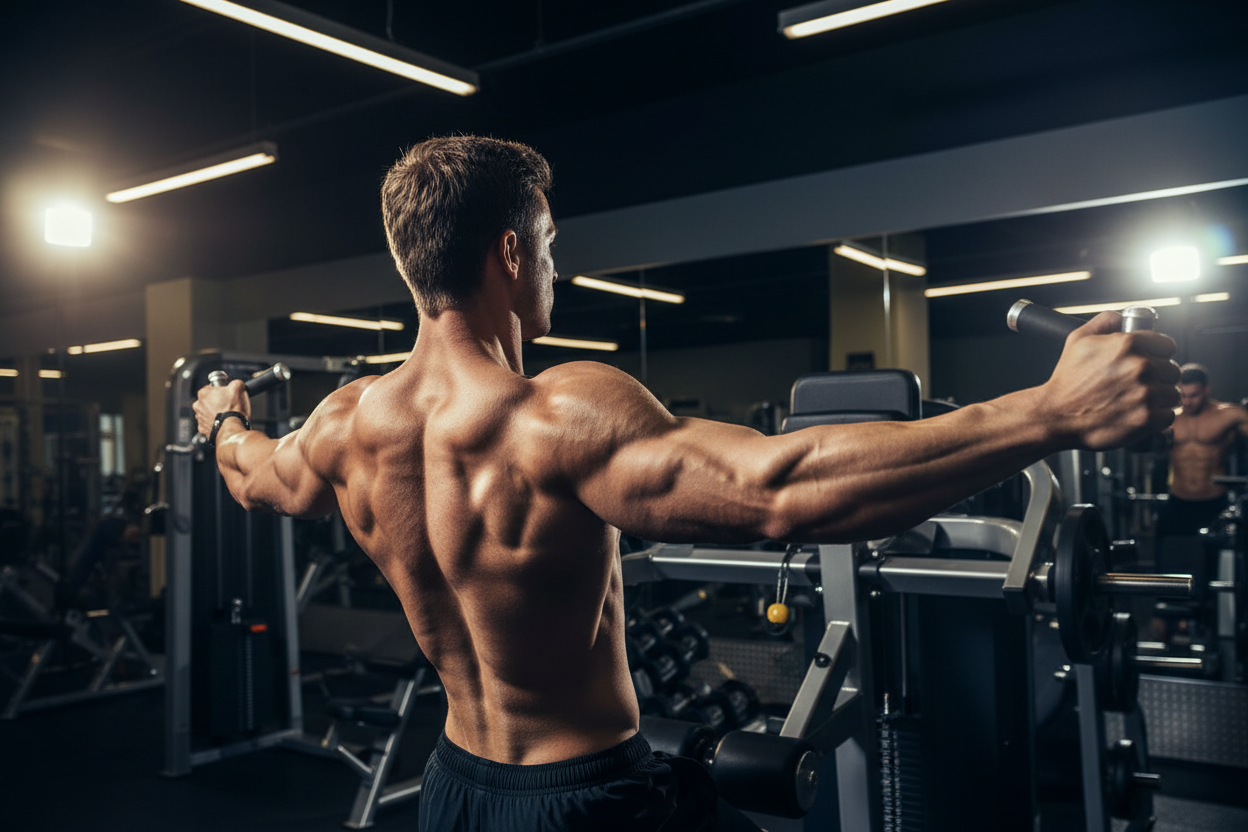
This piece of equipment—often a Reverse Pec Deck or a dual-function Row/Rear Delt unit—removes the stability factor required by free weights. This allows you to drive maximum tension directly into the muscle fibers without your lower back or stabilizer muscles giving out first. It is the most efficient tool for isolating the stubborn musculature of the upper posterior chain.
Key Takeaways
- Isolation is King: The machine stabilizes your torso, forcing the rear delts and rhomboids to do 100% of the work.
- Hand Position Changes Target: Pronated (palms down) hits the rear delts; neutral (palms facing) recruits more rhomboids and traps.
- Control the Eccentric: The biggest growth signal comes from resisting the weight on the way back to the starting position.
- Seat Alignment: Your shoulders must align with the machine's pivot point to prevent joint strain.
Why the Back and Shoulder Machine Beats Dumbbells
Free weights are fantastic, but they have a distinct disadvantage when training the rear delts: gravity. With dumbbells, the tension curve drops off at the bottom of the movement. When your arms hang straight down, there is zero tension on the rear delts.
A dedicated back and shoulder machine solves this physics problem. It uses a cam or pulley system to provide constant tension throughout the entire range of motion. This means your muscles are under load at the very beginning of the rep and at the peak contraction. For hypertrophy (muscle growth), this constant time-under-tension is superior to the swinging momentum often seen with dumbbells.
Mastering the Setup: It’s All in the Angles
You cannot just jump on the seat and start pulling. The biomechanics matter. If your setup is off, you will likely engage your lats or triceps instead of the intended target.
The Pivot Point Rule
Adjust the seat height so that your shoulder joint is directly in line with the machine’s axis of rotation (the pivot point). If you sit too low, you place unnecessary stress on the rotator cuff. If you sit too high, you turn the movement into a weird, ineffective row. Your arms should move parallel to the floor.
Protraction is Essential
When using a shoulder back machine, keep your chest pressed firmly against the pad, but allow your shoulders to round forward slightly (protraction) at the start of the rep. This stretches the rhomboids and rear delts. As you pull back, do not squeeze your shoulder blades together immediately if you are targeting the rear delts. Keep the scapula stable and move the arm bone (humerus) back. If you want to hit the mid-back, then you squeeze the shoulder blades together at the peak.
Common Mistakes That Kill Gains
I see people loading the stack and using momentum to jerk the weight back. This is useless. The rear delt is a small muscle; it does not need heavy loads to grow. It needs precision.
Another error is bending the elbows too much. While a slight bend protects the joint, bending them past 15-20 degrees turns the movement into a tricep extension. Keep the arms relatively straight to maintain a long lever arm, which increases the torque on the shoulder muscle.
My Training Log: Real Talk
I have a love-hate relationship with the reverse fly machine at my local gym. It’s an older model, and honestly, the chest pad is rock hard. When I’m deep in a set, aiming for that burning failure point around rep 15, the pressure on my sternum becomes almost as distracting as the muscle fatigue.
One specific detail you won't find in a textbook: the handles on this specific machine are worn-down rubber. Once my hands get even slightly sweaty, my grip starts sliding outward. I’ve learned that I have to use a "thumbless" suicide grip and actually hook my wrists around the handles rather than squeezing them. This takes my forearms out of the equation completely. It feels awkward for the first two reps, but the isolation on the rear delt is night-and-day compared to gripping it tight. If you feel your forearms burning before your shoulders, try opening your hand and pushing back with the side of your palm instead.
Conclusion
Building a thick, wide back requires more than just heavy deadlifts. It requires targeted isolation. The back shoulder exercise machine offers a mechanical advantage that free weights simply cannot match. Adjust your seat, check your ego at the door regarding weight, and focus on driving the elbows back. Your V-taper will thank you.
Frequently Asked Questions
How often should I use the back and shoulder machine?
Because the rear delts and upper back are postural muscles designed for endurance, they recover quickly. You can train them 2 to 3 times per week. High volume works best, so aim for 3-4 sets of 12-20 repetitions.
Is this machine better for width or thickness?
It contributes to both, but primarily the "3D" look of the shoulders. Developing the rear delts caps off the shoulder, making you look wider from the side and back. Engaging the rhomboids (by squeezing shoulder blades) will add density and thickness to the upper back.
Can I use this machine if I have shoulder pain?
Generally, yes, because it is a stable movement. However, you must limit the range of motion. Do not bring your arms back so far that your shoulder joint feels a pinch. Stop when your arms are in line with your body. Always consult a physiotherapist if you have existing injuries.