Why Your Random Exercise Workout Equipment Just Gathers Dust
I remember scrolling through marketplace listings at midnight, convinced that a $50 'total body' slider was the missing piece to my home setup. It wasn't. It ended up being a weirdly shaped coat rack that took up four square feet of precious real estate. Most people treat buying exercise workout equipment like a grocery trip when they are hungry—you end up with a cart full of junk you do not need and a floor covered in clutter.
Quick Takeaways
- Flooring is your foundation; never put iron on bare concrete.
- Systems beat standalone gadgets every single time.
- Multi-use gear saves both your budget and your floor space.
- Avoid impulse buys by sticking to a modular 'ecosystem' plan.
Welcome to the Frankenstein Gym
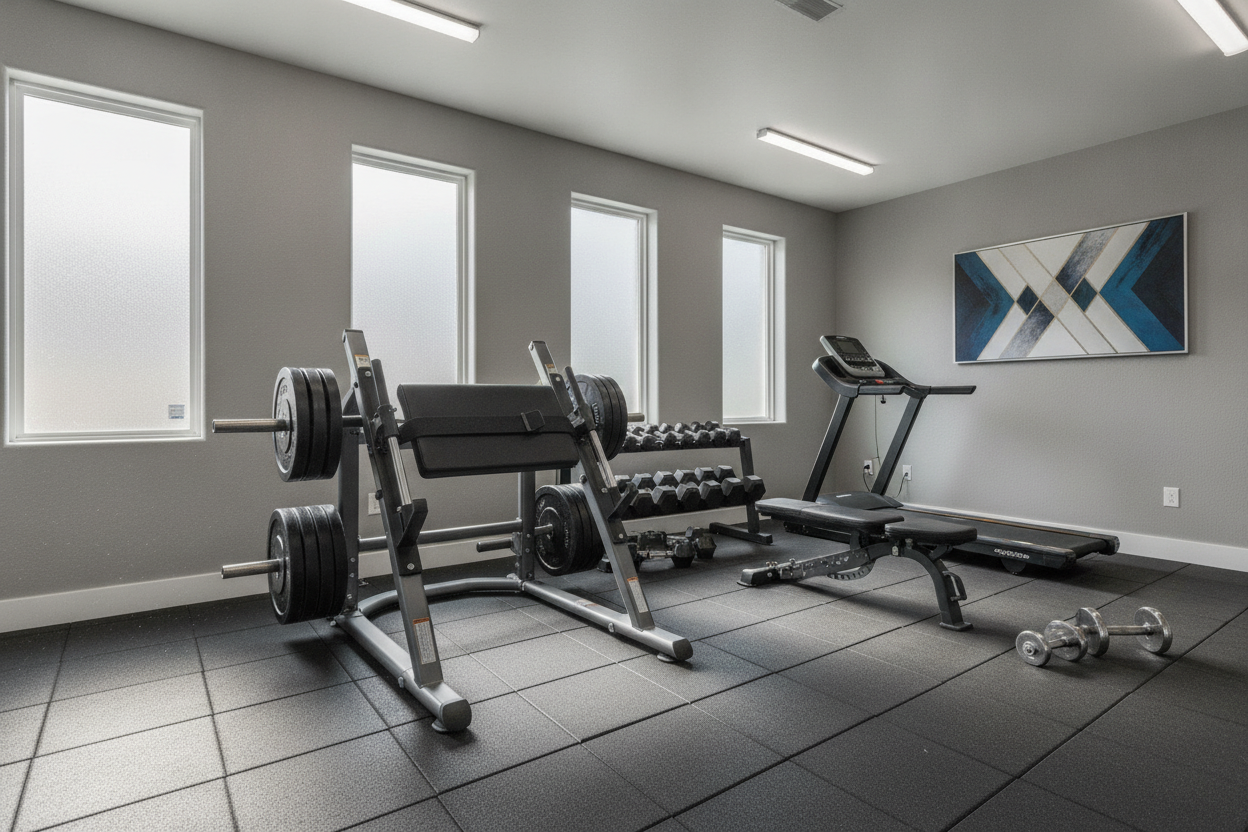
The 'Frankenstein Gym' is a common sight in suburban garages. You buy a pair of hex dumbbells here, a cheap adjustable bench there, and some random fitness products on a whim. Suddenly, your training space feels like a junk drawer. It is not just about the wasted money; it is about the friction. If you have to move three pieces of gear just to get to your pull-up bar, you are going to skip the workout.
A cohesive space needs flow. When your equipment fitness choices are made in isolation, nothing fits together. You end up with a bench that is too tall for your rack or plates that do not quite fit the sleeves of your budget barbell. This mismatch kills your momentum and makes your home gym feel like a chore rather than a sanctuary.
Your Floor Is More Important Than Your New Toy
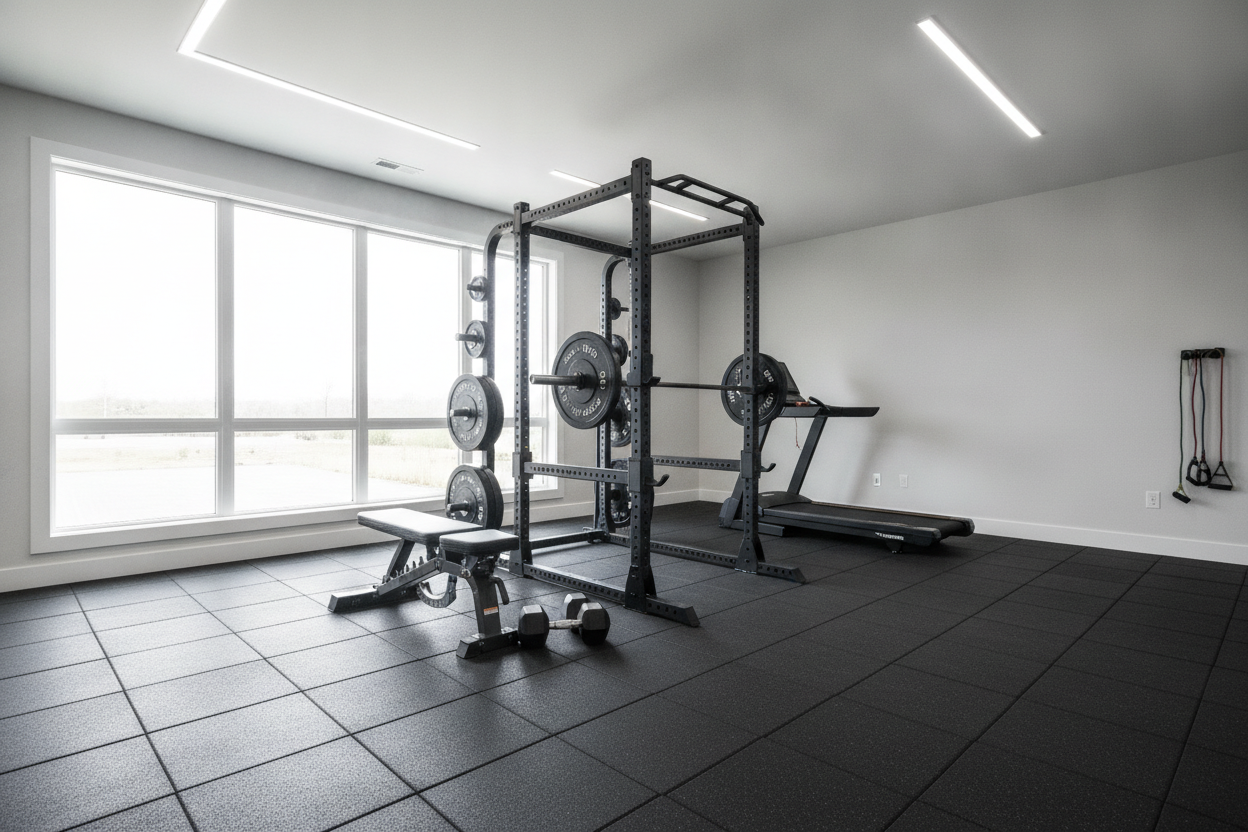
I have seen guys drop two grand on a high-end rack and plates only to crack their concrete or ruin their floor finish on day one. You need a solid foundation before you bring in the heavy metal. A thick exercise mat gym flooring setup is the first thing you should buy, not the last. It dampens noise, protects your subfloor, and actually makes the space feel like a professional gym.
High-density rubber is the gold standard here. If you are doing deadlifts or dropping dumbbells, thin yoga mats or cheap foam tiles will not cut it. You want something that can handle a 300-lb load without compressing into nothing. Proper flooring also saves your joints during high-impact movements, which is a spec most people forget to check until their knees start barking.
Stop Buying Stuff, Start Building a System
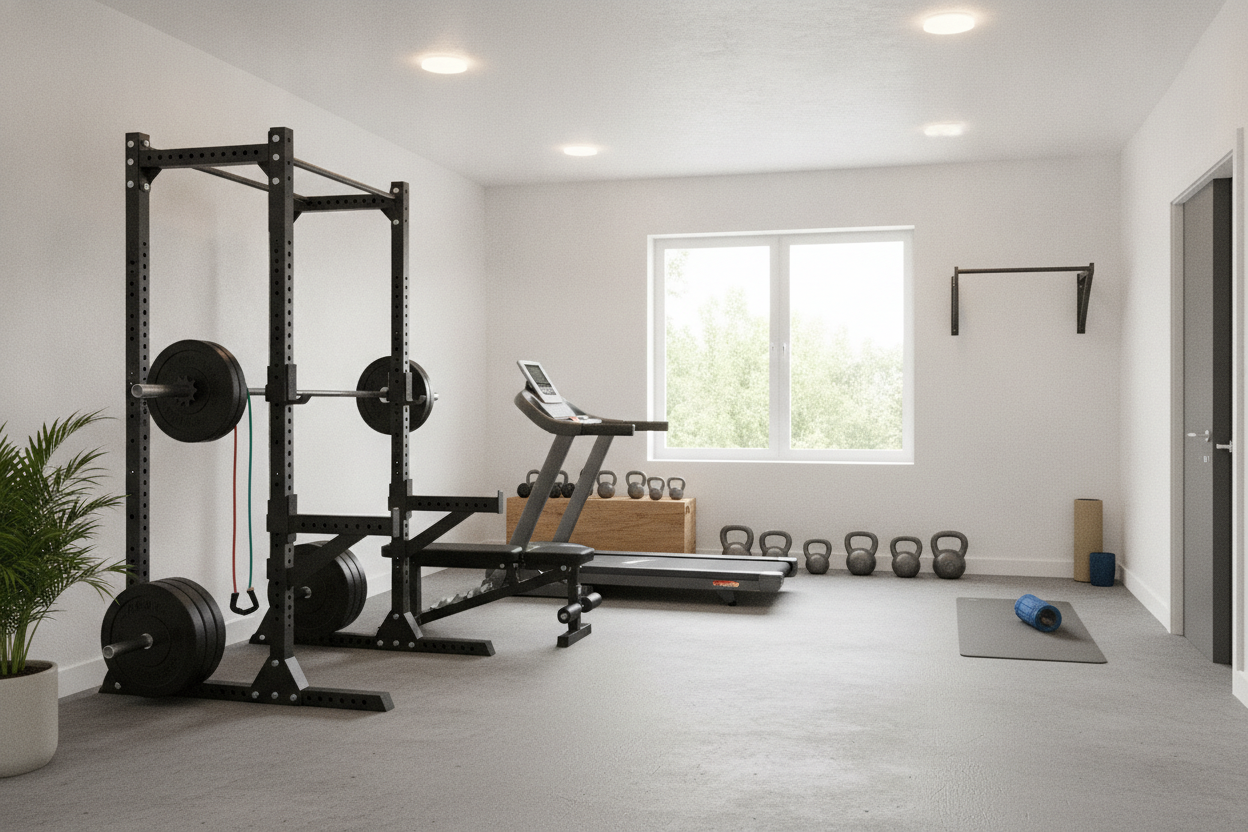
Think about fit equipment as a modular ecosystem. Instead of buying a dedicated leg extension machine that only does one thing, invest in a power rack with a cable attachment. This is the essential equipment for every fitness level because it grows with you. You start with the basic uprights, then add spotter arms, then a dip station, then a lat pulldown.
When you buy a system, every new 'home gym supply' piece adds functionality to what you already own. A standalone piece of gear is a dead end. A modular rack is a gateway to fifty different exercises. Look for 2x3 or 3x3 steel tubing with standard hole spacing so you are not locked into one brand's overpriced attachments.
My 3-Question Test for New Fitness Supplies
Before I click 'buy' on any new fitness supplies, I put them through a simple filter. First: Can I do at least three different movements with this? Second: Does it fit in my designated footprint without blocking my rack? Third: Does it do something my current gear cannot? I usually consult a Major Fitness home gym equipment review guide to see if the actual dimensions match the marketing fluff.
Marketing photos are notorious for using small models to make a compact home gym supply look larger or more robust than it is. You need to know the gauge of the steel and the actual footprint. If a piece of gear only does one thing and takes up six square feet, it is probably not worth your time unless you are training in a warehouse.
The Right Way to Shop for Sales
Sales are a trap if you do not have a pre-existing list. I only look at home gym equipment deals when I know exactly which specific piece completes my current ecosystem. Buying a cheap barbell just because it is 40% off is a massive mistake if the knurling is passive or the sleeves do not spin properly. You will just end up replacing it in six months.
Focus on quality over quantity. One pair of high-quality adjustable dumbbells that go up to 80 lbs is infinitely better than five pairs of cheap, fixed-weight dumbbells that clutter the floor. When shopping for equipment fitness pieces, look for warranties and user reviews that mention long-term durability, not just how it looked right out of the box.
Personal Experience: The Wobble of Regret
I once bought a 'budget' squat rack off a generic marketplace site. The steel was 14-gauge, which sounded fine on paper. But the first time I racked 225 lbs, the whole thing swayed like a tree in a hurricane. I was terrified to push my limits because I did not trust the gear. I ended up selling it for a loss just to get it out of my garage. Now, I won't buy anything for my home gym supply that isn't at least 11-gauge steel with 5/8-inch hardware. Trusting your equipment is the only way to train hard.
Frequently Asked Questions
What is the absolute first thing I should buy?
Flooring. Do not even think about a rack until you have high-density rubber mats down. It protects your house and your gear.
Is adjustable gear actually worth the higher price?
Yes, especially for dumbbells and benches. A solid adjustable bench with a 1,000-lb capacity replaces three flat benches and saves massive amounts of space.
How much space do I really need for a home gym?
You can do a lot in a 4x6 foot space, but a full power rack usually requires an 8x8 foot area to allow for the width of a standard Olympic barbell and plate loading.