Why Your Overhead Dumbbell Exercise Always Feels Shaky
I spent three years stuck on the 60-pound dumbbells, wondering why my arms felt like they were vibrating every time I went for a heavy set. I’d grind out four reps, and then my neck would tighten up so much I’d have a headache for the rest of the day. I thought I just had weak delts, but the truth was much more embarrassing: I was as stable as a pool noodle.
When you perform an overhead dumbbell exercise, your body is a kinetic chain. If there is a leak anywhere between your feet and the weights, your brain will literally throttle your power output to keep you from snapping something. It is a protective mechanism, and until you fix your stability, those 80-pounders might as well be on the moon.
- Stop the rib flare: Keeping your ribcage down engages your core and protects your lower back.
- Brace for impact: Tighten your midsection as if you are about to take a punch before you start the press.
- Root your feet: Drive your heels into the floor to create a solid base of support.
- Path matters: Move the dumbbells in a straight line, not a wide arc, to maximize leverage.
The Real Reason Your Shoulders Are Shaking
Most guys plateau on the dumbbell press because they treat it like a localized shoulder move. It isn't. If your trunk is soft, your shoulders have nothing to push against. Think of it like trying to launch a cannon from a canoe; the recoil just sinks the boat.
When I finally stopped ego-lifting and started filming my sets, I saw my midsection collapsing the second the weight got heavy. That shaking you feel in your triceps? That is often your nervous system screaming because your spine isn't supported. You are bleeding force before the weight even moves an inch.
The 'Rib Flare' Trap Destroying Your Leverage
The most common mistake I see in garage gyms is the 'banana back.' Lifters arch their lumbar spine and flare their ribs because they lack the shoulder mobility to get their arms truly vertical. They are essentially turning an overhead press into a standing incline bench press.
This compensation kills your leverage and puts a massive amount of shear force on your lower back. To fix this, you need to understand how deep you should actually press. If you go too low while your ribs are flared, you lose all tension in the lats and core, making the bottom of the rep feel incredibly unstable.
How to Build a Stable Overhead Dumbbell Workout
To turn your overhead dumbbell workout into a mass builder, you have to master the 'statue' setup. Stand with your feet shoulder-width apart, squeeze your glutes like you're trying to crack a walnut, and pull your belly button toward your spine. This creates a rigid pillar for your shoulders to work from.
As you press, keep your elbows slightly tucked. Do not let them flare out 90 degrees to your sides, which hammers the AC joint. I highly recommend using the piston technique for dumbbell presses. This keeps the weights moving in a vertical track, ensuring the tension stays on the muscle fibers rather than the connective tissue.
Don't Ignore Your Feet (Seriously)
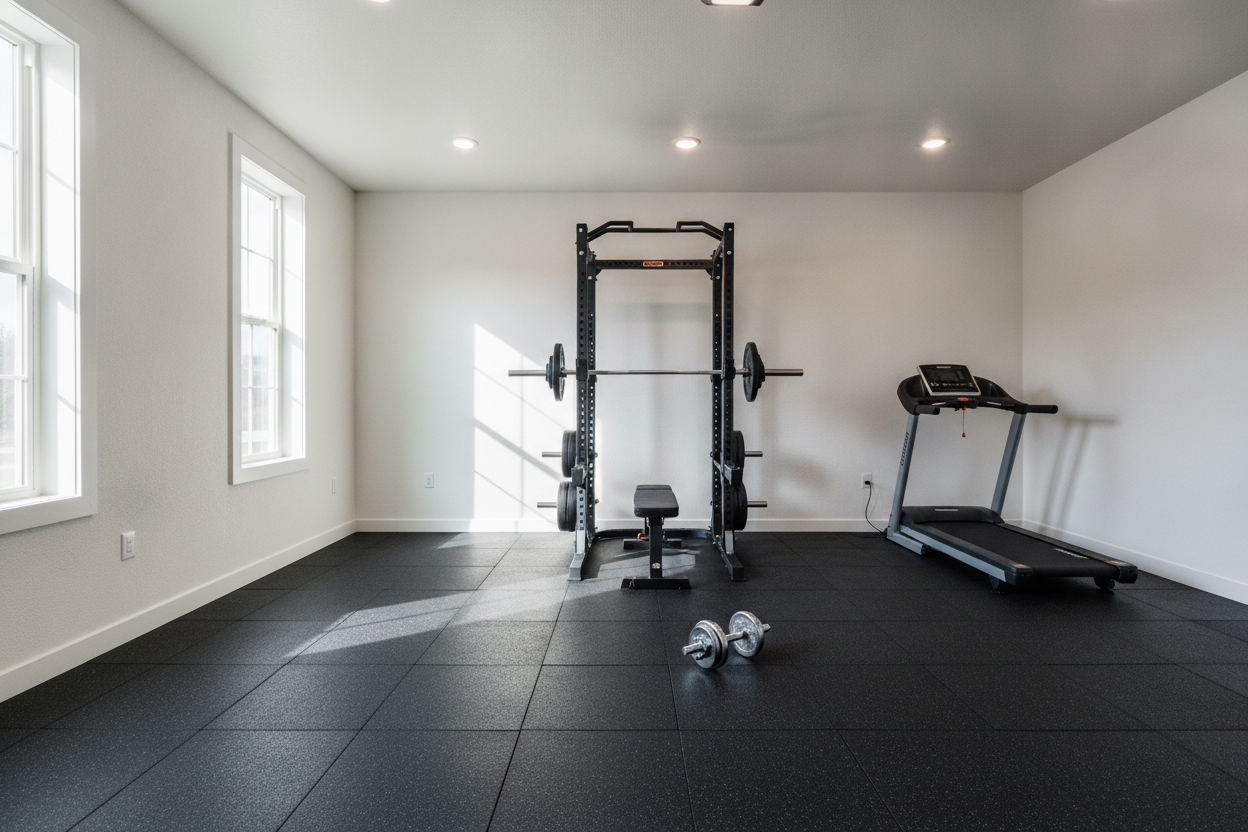
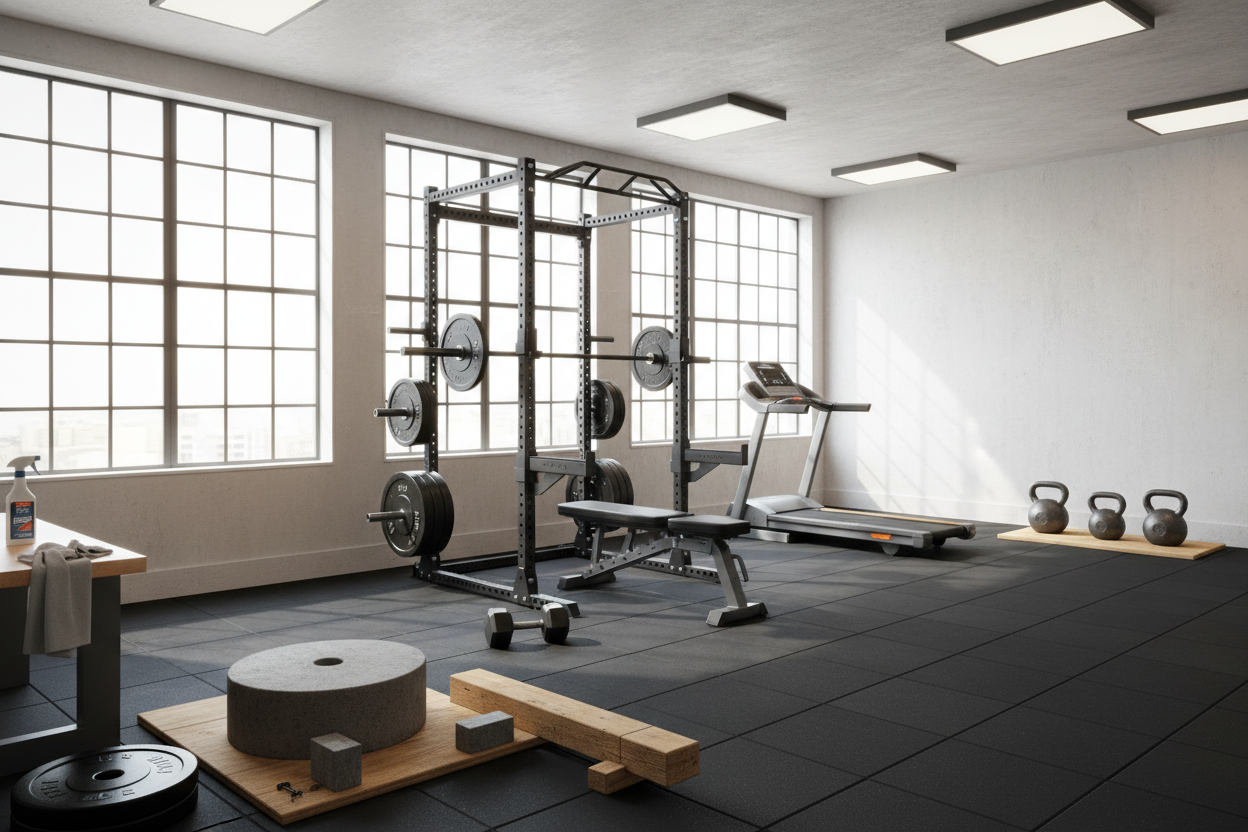
Power starts at the floor. If you are pressing in squishy running shoes or on a slick garage floor, you are leaving pounds on the table. I used to train on bare concrete, and my feet would slide out just enough to kill my drive. Switching to a dedicated high-grip home gym flooring changed everything for my seated and standing presses.
When you drive your heels down, you create 'irradiation'—a fancy term for full-body tension. That tension travels up through your legs, into your braced core, and finally into your shoulders. It makes the dumbbells feel lighter because your whole body is helping to move the load, not just two small muscle groups.
My Biggest Form Fail
I once tried to 'manhandle' a pair of 75s while standing on a cheap, slippery yoga mat. My right foot slipped about two inches mid-rep, my ribs flared to compensate, and I felt a 'zip' in my lower back that kept me out of the gym for two weeks. It was a stupid mistake. Now, I don't touch heavy dumbbells unless my feet are locked in and my core is rigid. Respect the weight, or it will eventually disrespect you.
Frequently Asked Questions
Should I sit or stand for dumbbell presses?
Standing requires more core stability and is better for overall athleticism. Sitting allows you to focus purely on shoulder hypertrophy because the bench provides the stability your core might lack. I do both, but I go heavier on the bench.
Why does my neck hurt after overhead pressing?
You are likely 'shrugging' the weight with your traps instead of pressing with your delts. Keep your shoulder blades tucked down and back. If you reach too high at the top, your upper traps take over and yank on your cervical spine.
Is it okay if the dumbbells touch at the top?
No. Clinking the weights together actually removes tension from the shoulders at the peak of the movement. Keep them about six inches apart to maintain constant mechanical tension on the deltoids.