I Replaced Two Gym Days With One Lat and Shoulder Workout
I used to spend six days a week in my garage, chasing a pump that usually vanished by the time I finished my post-workout shake. I was running a classic bro-split: Back on Monday, Shoulders on Tuesday. By Wednesday, my rotator cuffs felt like they were full of sand, and my 'V-taper' looked more like a vertical rectangle. I finally got fed up and condensed everything into one high-intensity lat and shoulder workout. It cut my gym time in half and actually started moving the needle on my frame width.
- Supersetting vertical pushes and pulls maximizes recovery between sets.
- Focusing on shoulders and lats together creates a more proportional V-taper.
- Heavy compounds (OHP and Pull-ups) should always come before isolation work.
- High-quality flooring is non-negotiable for heavy overhead stability.
The Problem With Your Traditional Upper Body Split
The standard 'Back Day' usually involves 20+ sets of various rows and pull-downs. Then, 24 hours later, you try to smash your shoulders. The issue? Your lats and delts aren't isolated islands. When you're doing heavy rows, your posterior delts are screaming. When you're pressing overhead, your lats are working overtime as stabilizers. By separating them into different days, you're often just piling on junk volume while your joints never actually recover.
I noticed that my overhead press stalled for months because my back was still fried from the day before. You need to stop sabotaging your shoulder and workout routine by thinking more is always better. High-volume bro-splits often lead to that nagging 'clicking' in the front delt rather than actual muscle thickness. Combining these groups allows for a dedicated 'width' day that gives your joints 48-72 hours of actual rest between sessions.
Why Supersetting Shoulders and Lats Actually Works
Biochemically, antagonistic supersets are the secret to staying in the gym for 45 minutes instead of 90. When you perform a vertical pull, like a weighted pull-up, your overhead pressing muscles (the deltoids and triceps) are largely resting. When you flip the script and press, the lats are on the sidelines. This shoulder lats workout structure allows you to keep the rest intervals short without seeing a massive drop-off in strength.
It’s about efficiency. Instead of sitting on a bench for three minutes scrolling through your phone, you’re hitting a complementary muscle group. This keeps your heart rate elevated and forces a massive amount of blood into the upper torso, which is exactly what you want for hypertrophy. If you’re looking for more foundational programming on how to stack these movements, our workout hub has the deep dives on push-pull mechanics.
The Exact Garage Gym Routine I Run for My V-Taper
I don't do thirty different exercises. I do three blocks. Each block has a specific job: move heavy weight, create metabolic stress, and fix posture. This is the exact routine I used to finally fill out the sleeves of my XL shirts without feeling like my shoulders were made of glass.
Block A: Heavy Overhead Press Paired With Weighted Pull-Ups
This is the foundation. If you aren't getting stronger here, you aren't growing. I load up my barbell for strict overhead presses—none of that leg-drive push press nonsense—and pair it immediately with weighted pull-ups using a dip belt. I aim for 5 sets of 5-8 reps. To build boulder shoulders, you need that heavy vertical load to recruit the maximum amount of muscle fibers in the lateral and anterior delts.
My biggest mistake for years was using a 'suicide grip' on the OHP. Don't do it. Wrap your thumbs. I also prefer a 28.5mm bar for this because it feels more secure in the palm than a thicker power bar. For the pull-ups, I use a neutral grip if my elbows are feeling cranky, but a wide overhand grip is the gold standard for hitting those upper lat fibers.
Block B: Lateral Raises and Straight-Arm Pulldowns
Now that the heavy lifting is done, it's time for the 'width' work. This block uses shoulder lat exercises that focus on the stretch. I grab a pair of dumbbells for lateral raises—keep the pinkies up and don't swing—and superset them with straight-arm cable pulldowns. If you don't have a cable machine, a heavy resistance band looped over your pull-up bar works just as well. We are looking for 3 sets of 15-20 reps here. The goal is a skin-splitting pump.
Block C: The Face Pull Finisher
The final piece is corrective. Face pulls hit the rear delts and the traps, pulling your shoulders back into a proud, athletic position. I do these for high reps, usually 3 sets of 20. I use a rope attachment and pull towards my forehead, pulling the ends of the rope apart at the finish. It’s the single best way to ensure your shoulders and lats don't just look big, but actually function correctly.
The Bare-Bones Equipment You Need for This Setup
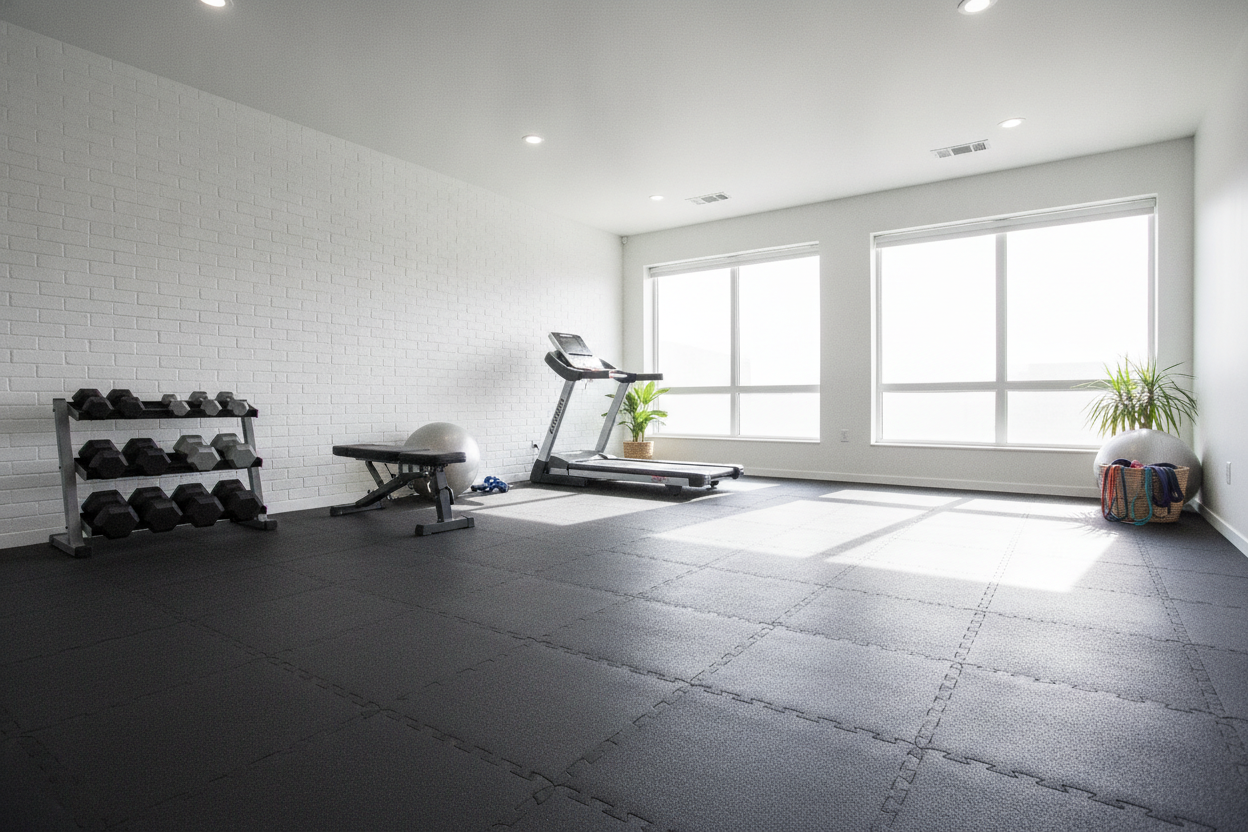
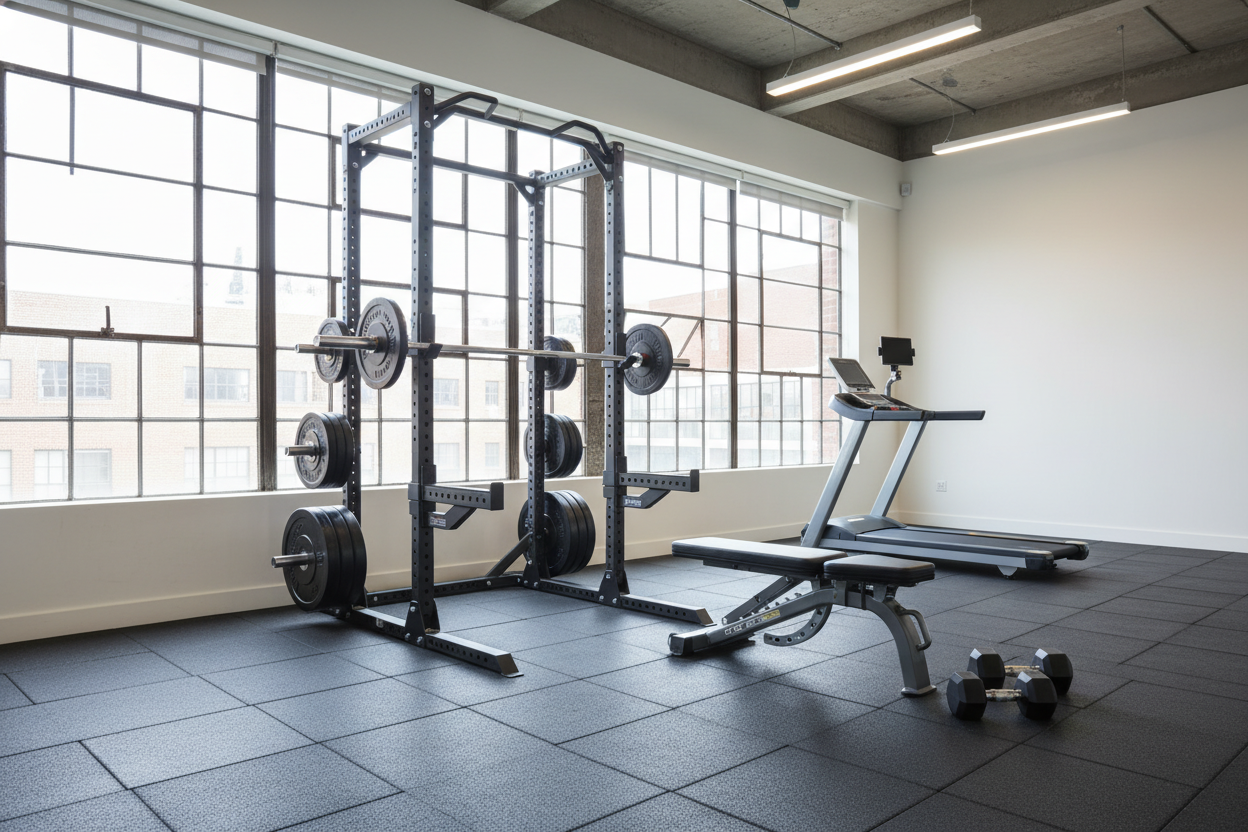
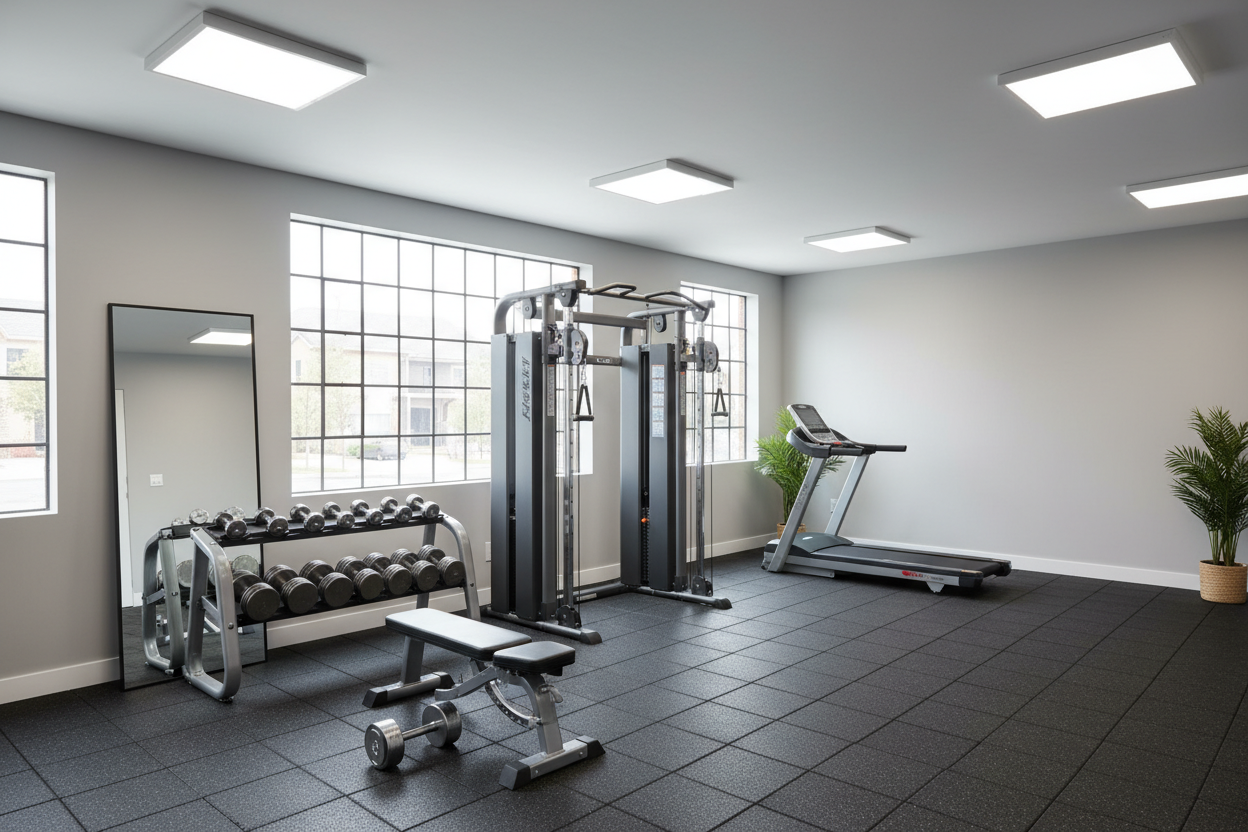
You don't need a $5,000 functional trainer for this. I run this whole session with a power rack, a barbell, and a set of dumbbells. One thing people overlook is the floor. If you’re pressing 155+ lbs over your head, you cannot have your feet sliding on dusty concrete. I use a dedicated gym flooring for home workout space that’s at least 3/4-inch thick. It gives you the 'bite' you need to drive through the floor during the OHP.
I'm also a big fan of loadable dumbbells for the lateral raises. Buying a full rack of fixed dumbbells is a waste of space in a garage gym. A pair of handles that can take 10-lb plates will get you through 90% of this workout. Just make sure the collars are tight; there’s nothing worse than a 5-lb plate falling on your toe during a set of raises.
FAQ
Can I do this workout every day?
No. This is high-intensity stuff. Hit it twice a week max, with at least 48 hours in between sessions. Your muscles grow while you sleep, not while you're lifting.
What if I can't do a single pull-up?
Use a heavy resistance band for assistance or swap them for lat pulldowns. The goal is the vertical pulling motion, not the ego of doing unassisted reps.
Do I need a belt for the overhead press?
If you're pushing near your body weight, a 10mm lever belt can help with intra-abdominal pressure. For the higher-rep stuff, skip it and let your core do the work.