Why Your Local Hardware Store Might Be the Best Place to Start Your Home Gym
Most people start their hunt for home gym equipment at dedicated fitness retailers or massive online marketplaces. It makes sense; that is where the industry tells you to go. However, if you are building a garage gym or trying to outfit a basement workout space on a budget, you are likely overlooking a goldmine of heavy-duty gear: the hardware store. Specifically, major home improvement centers have quietly become excellent sources for strength training equipment, both through their expanding online catalogs and the raw materials they sell for DIY solutions.
You can find legitimate fitness gear if you know where to look. Beyond the obvious tools, these stores offer industrial-grade storage and raw materials that often outperform consumer-grade fitness products. If you are tired of paying a premium for a brand logo, it is time to look at the aisles of lumber and steel differently.
Finding Iron in Unexpected Places
The inventory at home improvement stores has shifted significantly over the last few years. While you might not find a full wall of kettlebells next to the power drills in every physical store, the online marketplaces for these retailers have expanded to include third-party fitness vendors and direct-to-consumer fitness brands. When shopping for dumbbells lowes is actually a surprisingly robust option. They frequently stock brands like CAP Barbell and other solid cast-iron options that ship directly to your home or the store.
The advantage here is often logistics. Shipping heavy metal is expensive. Dedicated fitness sites often tack on massive freight charges. Large retailers with established supply chains can sometimes offer better shipping rates or free ship-to-store options, significantly lowering the cost per pound of your equipment. It pays to cross-reference prices. You might find that the rubber hex dumbbells you were eyeing on a specialty site are available through a hardware retailer for the same price but with easier pickup options.
My Experience Building a Garage Setup
I learned this lesson the hard way a few years ago. I was trying to outfit my garage for winter training and needed a way to organize a growing collection of kettlebells and slam balls. The "fitness specific" storage racks I looked at were flimsy, wobbly, and cost upwards of $200 for a few thin shelves. I decided to drive to the local hardware store instead.
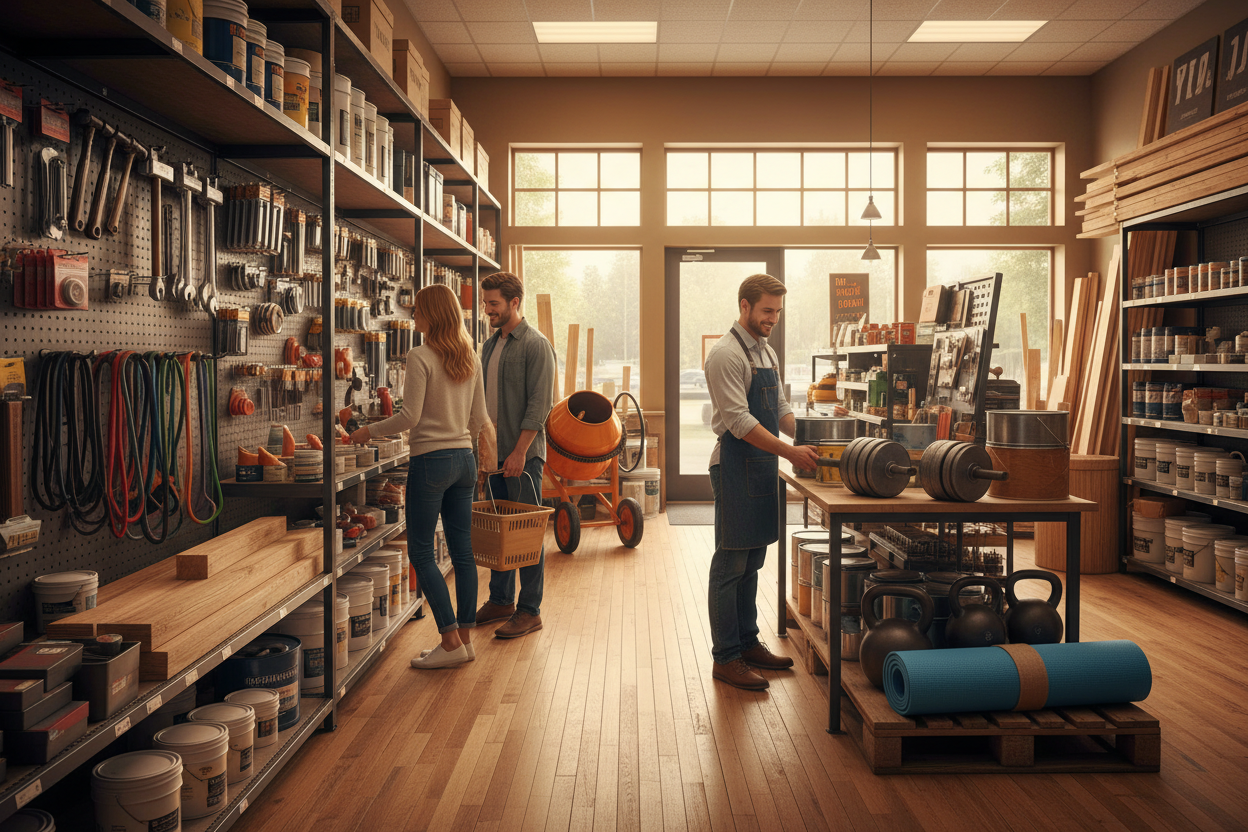
I walked out with a heavy-duty industrial shelving unit meant for paint cans and power tools. It cost half the price of the gym-branded rack and held three times the weight capacity. While I was there, I spotted 50lb bags of play sand and heavy chains, which immediately gave me ideas for variable resistance training. That trip shifted my entire perspective on where to source gear. It wasn't just a place for lumber; it was a strength athlete's candy store if you had a little imagination.
Storage Solutions That Actually Hold Up
One of the biggest headaches in a home gym is organization. Weights end up on the floor, which is bad for the equipment and a tripping hazard for you. While you can buy a dedicated lowes dumbbell rack through their website—and they do carry specific tiered racks designed for hex weights—the real pro move is looking at their garage organization section.
Industrial storage racks, the kind made by brands like Gladiator or Kobalt, are engineered to hold heavy machinery. A standard wire shelving unit might buckle under a complete set of 5-50lb weights, but a welded steel garage shelf won't even flinch. If you are lifting heavy, you need storage that matches your intensity. These units allow you to store dumbbells, medicine balls, and even heavy plates without worrying about structural failure. Plus, the industrial aesthetic fits perfectly in a garage gym environment.
The DIY Approach to Heavy Lifting
If you are truly looking to build functional strength without spending thousands, the raw materials aisle is your best friend. This is where the concept of lowes weight takes on a double meaning—both the fitness products they sell and the heavy materials you can repurpose.
Consider sandbag training. It is one of the most effective ways to build stabilizing strength. Buying a pre-filled sandbag from a fitness company is expensive. Buying a heavy-duty canvas duffel or a surplus military bag and filling it with $5 bags of play sand from the hardware store is incredibly cheap. You can customize the weight exactly to your needs. A 50lb bag of sand is heavy, awkward, and mimics real-world lifting scenarios better than a perfectly balanced barbell sometimes.
Similarly, heavy chains used for towing or securing loads make excellent additions to squats and bench presses. As you lift, the chain lifts off the floor, increasing resistance at the top of the movement. This is a classic powerlifting technique, and sourcing the chain locally saves you the massive markup found on fitness websites.
Navigating the Online vs. In-Store Experience
It is necessary to manage expectations regarding availability. You likely won't walk into the store and physically pick up a 45lb Olympic plate off the shelf in most locations. The strategy is to use the website to filter for weights lowes has available for pickup. The online inventory is vast compared to what is physically stocked.
When you order online for store pickup, you minimize the risk of package theft—a common issue with heavy boxes left on porches—and you avoid the hassle of waiting around for a delivery truck. If the item arrives damaged (which happens with heavy weights), you can refuse it right at the customer service desk rather than trying to repackage a 50lb item and drag it to the post office for a return.
Flooring and Foundation
We cannot talk about hardware store gyms without mentioning flooring. Horse stall mats are the gold standard, often found at farm supply stores, but home improvement centers offer puzzle-lock rubber tiles and heavy-duty utility mats that work well for lighter setups. More importantly, they sell the plywood and OSB board needed to build a proper deadlift platform.
Protecting your foundation is critical. A few sheets of plywood sandwiched together creates a platform that disperses the shock of dropped weights, saving your garage floor from cracking. This is a simple weekend project that elevates a home gym from "weights in a corner" to a professional-grade training space.
Making the Purchase Decision
Building a home gym is an investment in your health, but it doesn't have to drain your bank account. By broadening your search to include home improvement retailers, you gain access to durable storage, competitive pricing on drop-shipped weights, and the raw materials for effective DIY equipment. Check the load capacity on shelving, compare the price per pound on iron, and don't be afraid to get creative with sand and chains. The weights don't care where you bought them; they only care that you lift them.
Frequently Asked Questions
Can I return fitness equipment to the store if I bought it online?
Generally, yes. Most major home improvement retailers allow you to return items purchased through their website to a local physical store. This is a huge advantage with heavy fitness equipment, as shipping it back yourself would be prohibitively expensive.
Do hardware stores carry Olympic-sized weights or just standard ones?
While in-store stock is usually limited to smaller accessories, their online catalogs frequently list Olympic 2-inch plates and barbells from third-party vendors. Always check the product description to ensure the center hole diameter matches your bar.
Is industrial shelving safe for storing heavy dumbbells?
Industrial shelving is often safer than cheap fitness racks, provided you check the "weight per shelf" rating. Look for heavy-duty steel units rated for at least 1,000 lbs per shelf to ensure they can handle the concentrated weight of dumbbells and kettlebells.