The Only Home Gym Equipment Guide You'll Actually Use (No Wasted Money)
Building a home gym doesn't mean converting your spare bedroom into a commercial fitness center. After spending nearly a decade working out at home—and yes, making plenty of expensive mistakes along the way—I've learned that the best setup is one you'll actually use, not the one that looks impressive gathering dust in the corner.
The beauty of exercising at home is the freedom to work out on your schedule, without commute times or monthly membership fees. But walking into a sporting goods store or scrolling through endless online options can feel overwhelming. You'll find everything from $10 resistance bands to $3,000 smart mirrors, and figuring out what actually belongs in your space takes some guidance.
Essential Equipment That Forms Your Foundation
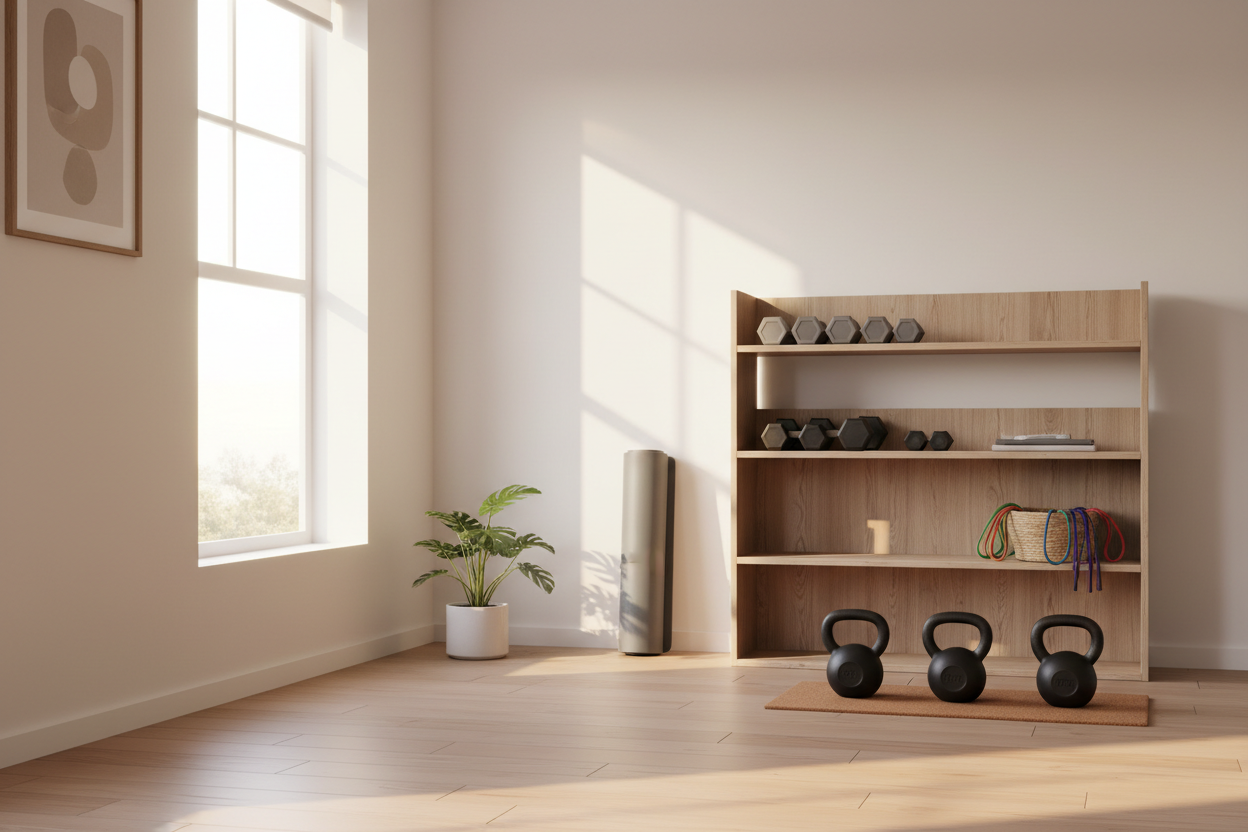
A quality set of adjustable dumbbells deserves the top spot on any list of exercise equipment for home use. They're compact, versatile, and can handle everything from bicep curls to goblet squats. I started with a pair of 25-pound dumbbells thinking I'd upgrade later, but quickly realized adjustable weights would have saved me both money and storage space. Look for sets that go from 5 to 50 pounds—they'll grow with your strength.
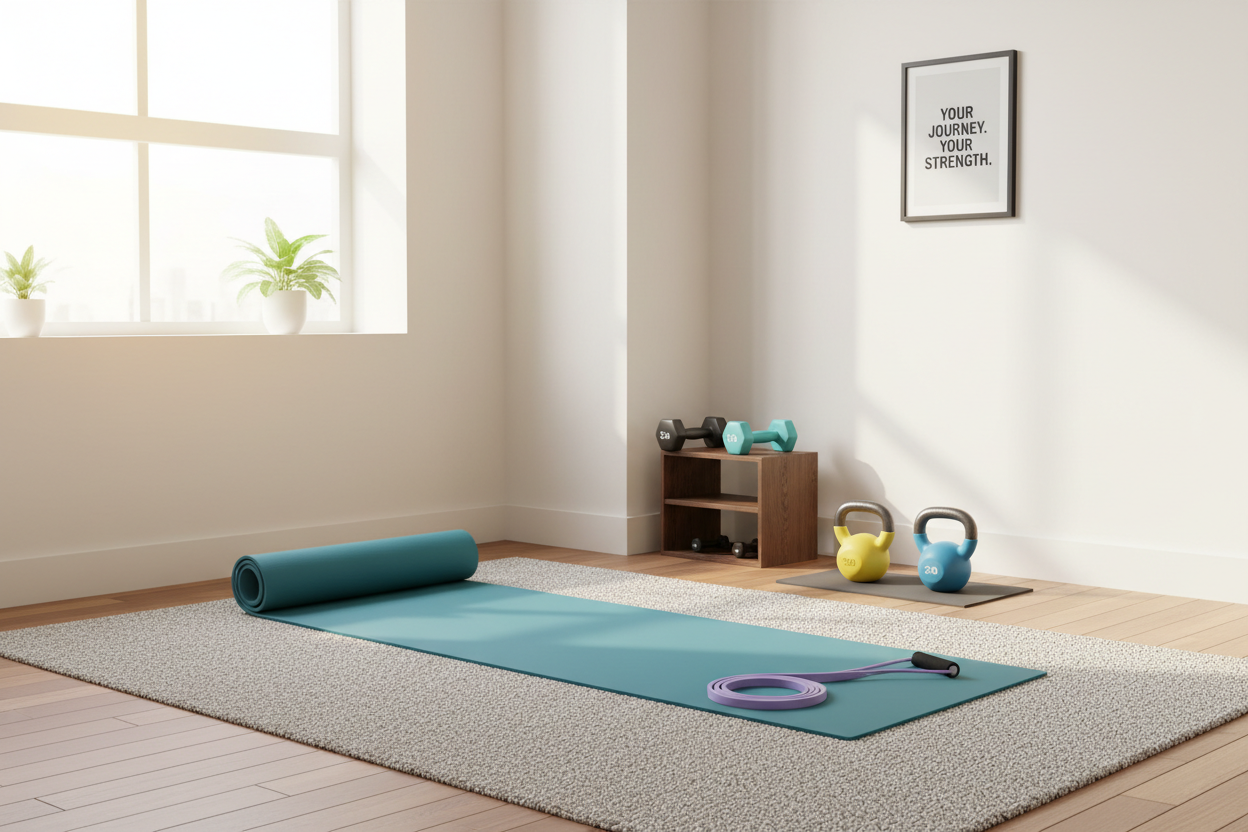
Resistance bands might seem basic, but they punch way above their weight class. A good set with varying resistance levels costs less than a single month at most gyms, yet provides enough variety for full-body workouts. They're perfect for warm-ups, rehabilitation work, and adding extra challenge to bodyweight exercises. Plus, they fit in a drawer when you're done.
A yoga mat serves double duty as both a comfortable surface for floor exercises and a designated workout zone in your home. This psychological boundary matters more than you'd think. Having a specific spot where you roll out your mat signals to your brain that it's time to exercise, creating a ritual that helps with consistency.
Mid-Level Additions for Expanding Your Routine
Once you've established a regular routine, a kettlebell opens up entirely new movement patterns. The off-center weight distribution forces your stabilizer muscles to work harder during swings, Turkish get-ups, and single-arm presses. A 25-35 pound kettlebell works well for most people starting out, though women might prefer beginning with 15-20 pounds.
Pull-up bars deserve consideration if you have a suitable doorway. They're among the most affordable pieces of equipment that target your back, shoulders, and arms effectively. The doorway-mounted versions require no installation and can be removed when guests visit. I was skeptical about the stability at first, but a quality bar holds firm and has become my favorite upper body tool.
A stability ball might look like a relic from 1990s fitness videos, but it remains relevant for core work and adding instability to familiar exercises. Using one as your desk chair for short periods throughout the day also engages your core muscles passively. Just make sure to get the right size for your height—your knees should bend at 90 degrees when sitting.
Cardio Options That Don't Dominate Your Space
Jump ropes deliver serious cardiovascular benefits in a package that costs less than lunch. They're harder than they look—I could barely manage 30 seconds when I started—but improve coordination while torching calories. Get a speed rope with adjustable length and ball bearings for smooth rotation.
A step platform or aerobic stepper creates opportunities for cardio intervals, step-ups, and elevated exercises. Mine lives under the couch when not in use, sliding out for quick sessions. The adjustable height versions let you increase difficulty as your fitness improves.
Smart Investments for Serious Home Trainers
When your home exercise equipment ideas evolve beyond basics, a quality bench becomes invaluable. An adjustable bench that moves from flat to incline positions multiplies your exercise options dramatically. You can perform chest presses at different angles, supported rows, step-ups, and countless other movements that would be awkward or impossible on the floor.
A barbell with weight plates represents a bigger commitment in terms of both money and space, but nothing builds strength quite like compound barbell movements. If you go this route, include a squat rack or power cage for safety. This combination lets you safely perform squats, bench presses, and overhead presses—the foundational movements of most strength programs.
Foam rollers and massage tools might not seem like exercise equipment, but recovery is part of training. Spending 10 minutes rolling out tight muscles can prevent injuries and improve your performance in the next workout. I ignored this advice for years until a stubborn IT band issue forced me to take recovery seriously.
Budget-Friendly Alternatives and Creative Solutions
Your list of home exercise equipment doesn't need to break the bank. Filled water bottles or milk jugs work as beginner weights. A sturdy chair substitutes for a bench in many exercises. Stairs provide built-in cardio equipment. A backpack loaded with books creates a makeshift weighted vest for push-ups and squats.
Resistance bands can replace cable machines for a fraction of the cost. A door anchor attachment transforms them into a versatile pulley system for rows, chest flies, and tricep pushdowns. This setup costs under $50 but replicates movements that would require a $2,000 cable machine.
What Not to Buy (Lessons from My Garage)
That fancy ab roller gathering dust? The vibrating platform that promised effortless results? The complicated suspension system I used twice? We all have equipment graveyard stories. Before buying anything, ask yourself: "Will I actually use this three months from now?" If you hesitate, start with something simpler.
Avoid equipment that only does one thing unless that one thing is something you'll do regularly. A bicep curl machine takes up as much space as an adjustable bench but offers a tiny fraction of the exercise variety. Prioritize versatility, especially when you're just starting to build your collection.
The best home gym is the one that matches your actual workout habits, not your aspirational ones. Start small, use what you have consistently, then expand thoughtfully. Your future self—and your wallet—will thank you for the restraint.
Frequently Asked Questions
How much should I budget for basic home gym equipment?
You can build a functional home gym for $150-$300 with adjustable dumbbells, resistance bands, a yoga mat, and a pull-up bar. This covers all major movement patterns and muscle groups. As your needs grow, add equipment gradually rather than buying everything at once.
What's the most versatile single piece of equipment for small spaces?
Adjustable dumbbells offer the best versatility-to-space ratio. They replace an entire rack of fixed-weight dumbbells and enable hundreds of exercises targeting every muscle group. Resistance bands with a door anchor come in as a close second for even tighter spaces.
Do I need cardio equipment if I have strength training tools?
Not necessarily. Circuit training with your strength equipment—performing exercises back-to-back with minimal rest—provides cardiovascular benefits. A jump rope adds dedicated cardio for under $15. Save treadmills and stationary bikes for when you're certain you'll use them regularly.