Why Your Legs Workout With Bar Is Too Complicated
I remember standing in my garage at 9:00 PM, staring at a whiteboard covered in twelve different exercises. I had bands looped over the rack, a landmine attachment ready to go, and I was trying to figure out how to squeeze in 'sissy squats' with a weight plate. My legs workout with bar had become a part-time job, and despite the sweat, my quads weren't growing and my squat was stuck at 275 lbs. I was doing too much, and none of it was heavy enough to matter.
Quick Takeaways
- Junk volume is the enemy of leg growth; focus on 4 heavy movements.
- Mechanical tension from heavy squats beats high-rep machine mimicry every time.
- Unilateral work like reverse lunges fixes imbalances and saves your knees from chronic wear.
- Recovery is a metric, not an afterthought—if you can't beat last week's numbers, you're doing too much.
The Trap of the 'More is Better' Leg Day
Most of us start our home gym journey by trying to replicate the commercial gym experience. We see a pro bodybuilder doing eight different machines and think we need to do the same with our single barbell. This leads to what I call 'barbell gymnastics'—trying to perform high-rep isolation moves that just don't work with a 7-foot piece of steel. You end up doing 5 sets of 20 'fluff' reps that burn but don't build.
When you add endless accessory movements, you aren't building muscle; you're just generating systemic fatigue. By the time you get to your fourth 'finisher,' your lower back is fried, your focus is gone, and you're just moving weight for the sake of movement. This junk volume is why your legs look the same despite the effort. You're exhausted, but you haven't actually challenged your mechanical limits.
Why Stripping Down Your Routine Actually Works
Real growth comes from progressive overload on big, compound patterns. When you strip the fluff, you allow your central nervous system to actually adapt to the load. You aren't just 'working out'; you're practicing a skill under tension. This neurological efficiency is what allows you to handle the weights required for a true barbell leg workout for mass.
Denser muscle is built when you force the body to stabilize a heavy bar. Machines take the stabilization out of the equation. While that has its place, in a garage gym, the bar is your best tool for forcing every fiber in your quads and glutes to fire. You don't need a leg extension machine if you know how to actually push a squat to a deep, controlled bottom position with 300+ pounds on your back.
The 4-Move Minimalist Barbell Framework
You only need four movement patterns to build wheels that won't fit in your jeans: a heavy bilateral squat, a posterior hinge, a unilateral push, and a calf isolation. That’s it. If you can’t get a workout done with those four, you aren't training hard enough on the first two. This framework forces you to put your energy where the ROI is highest.
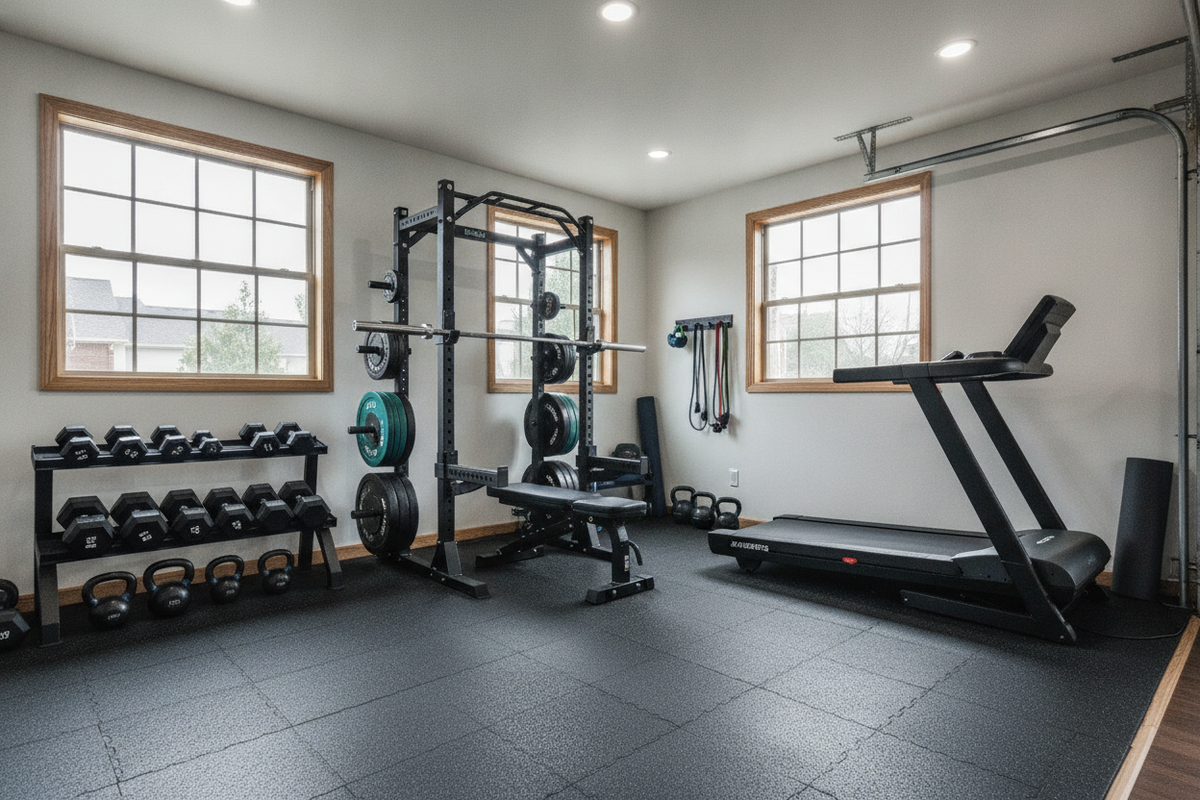
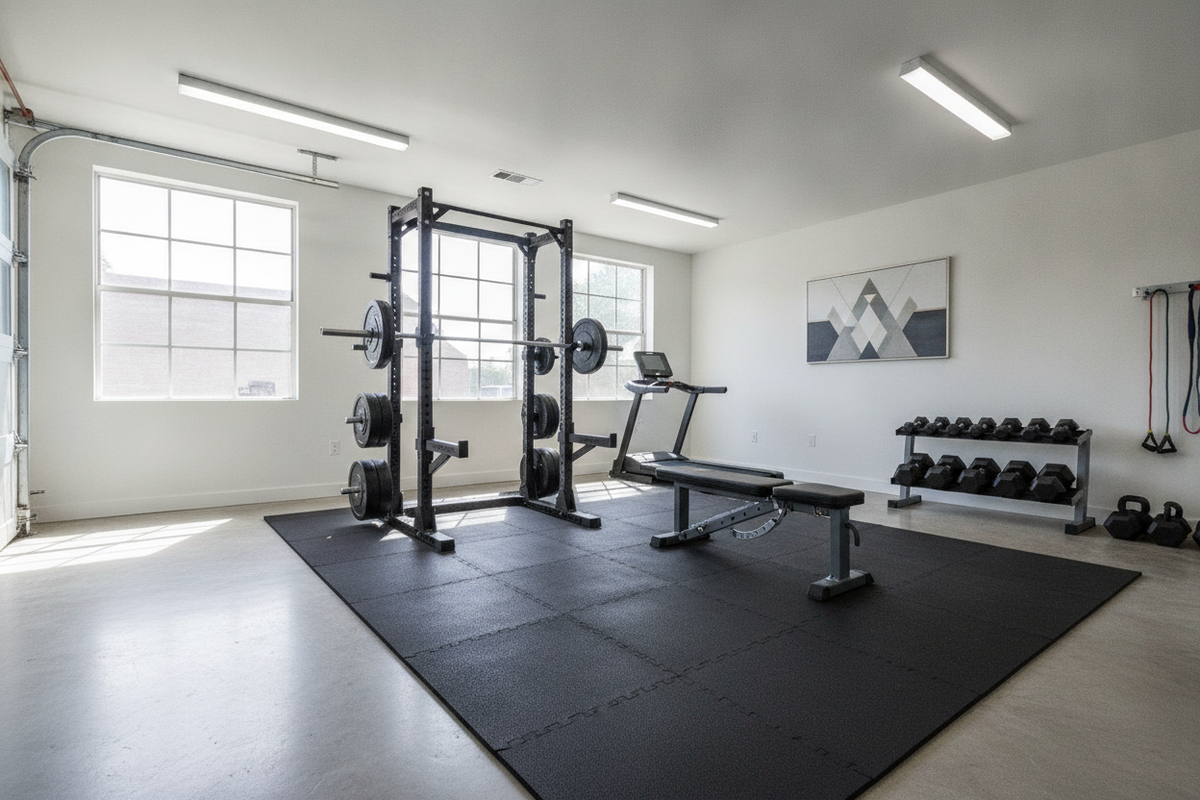
To do this safely, you need the right foundation. I’ve seen guys try to clean-and-press weight just to get it on their back for squats. That's a recipe for a torn labrum. A quality power rack weight bench barbell package is non-negotiable for heavy leg days. You need safeties so you can actually find your limit without worrying about a trip to the ER when you fail a rep.
Movement 1: The Heavy Squat (Front or Back)
This is the anchor of the session. Whether you prefer high-bar back squats or the quad-dominant front squat, this is where you move the most weight. Focus on a 2-second eccentric, a slight pause at the bottom to kill momentum, and an explosive drive up. Depth matters more than the number on the plates—get those hips below the crease of your knees. If you're cutting reps short, you're cutting your gains short.
Movement 2: The Barbell RDL
The Romanian Deadlift is the king of the hamstrings. The biggest mistake I see is people treating this like a standard deadlift and letting the bar drift away from their shins. Keep the bar painted against your legs. Push your hips back until you feel a massive stretch in the hamstrings, then snap your hips forward. Stop at mid-shin level; don't compromise your spine just to touch the floor with the plates.
Movement 3: The Barbell Reverse Lunge
Forward lunges can be absolute hell on the patellar tendon if your form isn't perfect. I switched to reverse lunges years ago and never looked back. They keep the tension on the glutes and hamstrings and allow for a more vertical shin. This movement fixes the 'left-right' strength gaps that heavy squatting can sometimes hide. It’s the ultimate 'functional' mass builder for the lower body.
Programming Your Sets, Reps, and Recovery
You don't need to max out every Tuesday. In fact, if you're hitting RPE 10—absolute failure—every session, you’ll burn out in a month. Aim for RPE 8, meaning you finish your set feeling like you could have done two more clean reps. This keeps your joints fresh and your progress consistent over years, not weeks. Consistent 5-pound jumps every two weeks beat a 50-pound jump that sidelines you with an injury.
Cycle your intensity throughout the month. One week go for sets of 5, the next week sets of 10. For more specific templates on how to structure these blocks and ensure you aren't overtraining, check out our Workout Hub. Remember, you don't grow in the rack; you grow while you're sleeping and eating after the session. If you can't walk for four days, you didn't 'crush' it—you just messed up your recovery for the rest of the week.
Personal Experience
I once spent a whole summer trying to do a 'pro' leg routine I found in a bodybuilding magazine. It had 9 exercises and I was in the gym for two hours. My squat actually went down 15 pounds because I was so chronically overtrained. I cut it back to just Squats, RDLs, and Lunges. Within eight weeks, my legs were noticeably thicker and I was pulling 405 for reps. Simple is almost always better when you're training in a garage.
FAQ
Can I build big legs with just a barbell?
Absolutely. Some of the greatest physiques in history were built before fancy machines existed. The barbell allows for the highest level of mechanical tension, which is the primary driver of muscle growth. You just have to be willing to embrace the discomfort of a heavy bar on your back.
How often should I train legs with a bar?
Twice a week is the sweet spot for most people. One day can focus on higher intensity (lower reps), and the second day can focus on higher volume (more reps). This frequency allows for enough practice to master the movements while providing plenty of time for muscle protein synthesis.
What if my lower back hurts during RDLs?
You're likely reaching with your arms instead of hinging with your hips. Keep your chest up, your shoulder blades tucked into your back pockets, and focus on pushing your butt toward the wall behind you. If the bar leaves your thighs, the load shifts to your spine. Keep it close.