Why Your Lean Bulk Training Program Just Makes You Fat
We’ve all been there. You finish a cut, you're finally seeing some vein definition in your shoulders, and you decide it's time to put on some real size. But three weeks into your lean bulk training program, you realize you're just getting soft around the middle and your 'extra energy' is mostly spent napping after a 1,000-calorie lunch.
I’ve spent a decade in my garage, moving iron and testing every mass-building theory under the sun. Most of them are garbage designed to sell supplements. If you want to actually build muscle without buying a whole new wardrobe of XL hoodies, you need to stop eating like a teenager and start training with surgical precision.
Quick Takeaways
- Muscle growth is a slow process; anything over 0.5 to 1 lb of weight gain per week is likely fat.
- Focus on mechanical tension and logbook progression, not just 'chasing the pump.'
- Recovery is the bottleneck—more training days often lead to more fatigue, not more muscle.
- Conditioning is non-negotiable for nutrient partitioning and insulin sensitivity.
- Micro-loading is the only way to sustain long-term progress on compound lifts at home.
The 'Dirty Bulk' Lie You Keep Telling Yourself
The 'dirty bulk' is the greatest trap in fitness. It’s the permission slip we give ourselves to eat pizza and skip the treadmill because we’re 'growing.' In reality, your body has a hard limit on how much muscle tissue it can synthesize in a day. Shoveling in an extra 1,000 calories of junk doesn't speed up protein synthesis; it just speeds up your trip to a higher body fat percentage.
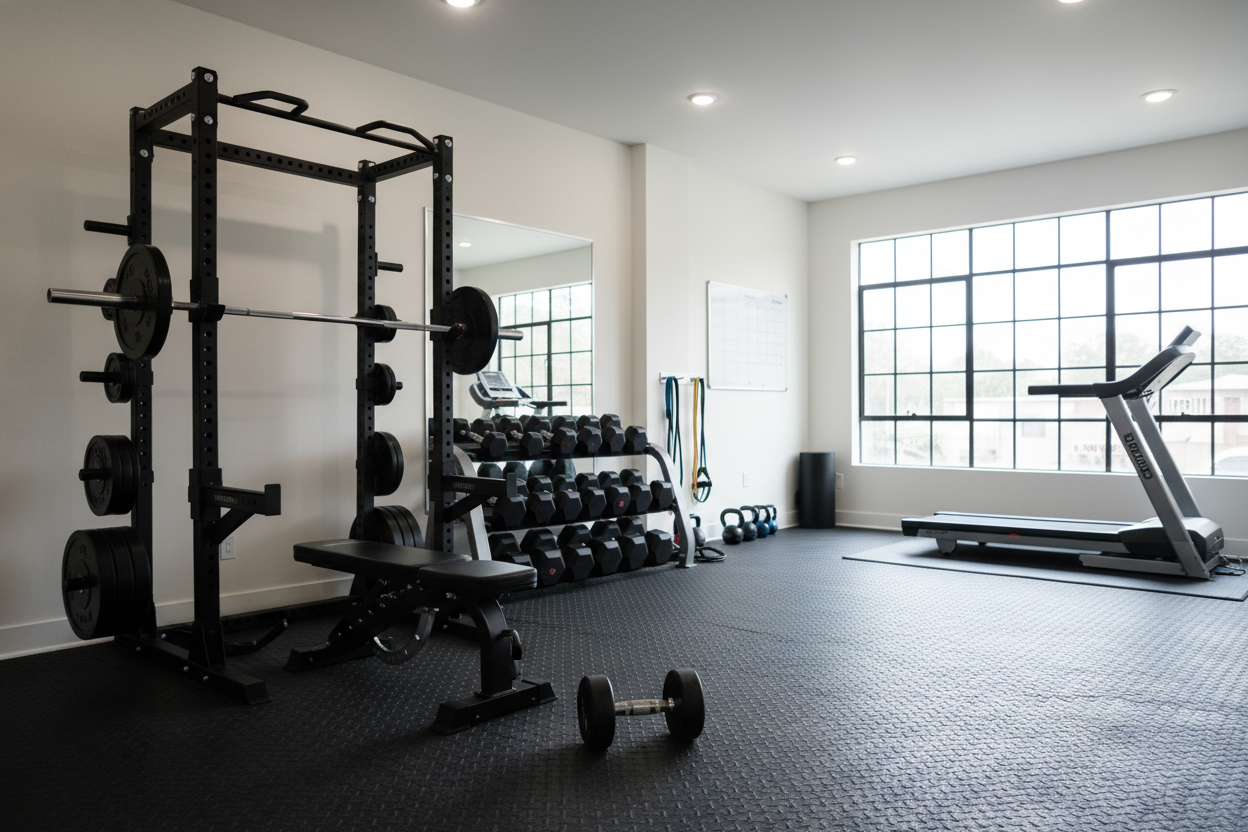
In a garage gym setting, this laziness usually manifests in sloppy, ego-driven lifts. You start using body English on your rows and cutting depth on your squats because the scale went up and you think you're stronger. You're not. You're just heavier and less efficient. Real growth requires the discipline to stay lean enough to actually see if the weight you're adding is muscle or just a thicker layer of insulation.
What Actually Makes It a Lean Bulk Training Program?
A true lean bulk training program isn't about doing 'toning' exercises or high reps to stay cut. That’s a myth. To build lean mass, you need the same heavy, high-tension work you’d do on any other program, but with a focus on strict, measurable progression. This is where a lean mass workout differs from a standard 'bro split.'
You aren't just looking for a sweat. You are looking for a 2.5-lb increase on the bar or one extra, perfectly controlled rep compared to last week. When you're in a caloric surplus, your recovery is better, which means you can actually handle the mechanical tension required to trigger hypertrophy. If your logbook isn't moving, you aren't bulking; you're just overeating.
Why You Grow More on Fewer Training Days
Most lifters think that because they’re eating more, they should train six days a week. This is a mistake. Muscle doesn't grow in the gym; it grows while you're sleeping and your CNS is recovering. When you're pushing for lean mass, the goal is to create a stimulus and then get out of the way. I’ve found that the best lean muscle mass workout plan only takes 3 days a week if you're hitting it with enough intensity.
By condensing your lean mass workouts, you allow for full recovery between sessions. This means every time you step into your garage, you are fresh enough to break a personal record. If you’re dragging yourself through a 6-day split while trying to stay lean, you’ll eventually hit a wall of systemic fatigue that stalls your lifts and makes you look flat despite the extra calories.
Stop Using Your Bulk to Avoid Conditioning
I used to think cardio would 'kill my gains.' I was wrong. Dropping conditioning during a bulk is the fastest way to ruin your insulin sensitivity. When your heart is healthy and your metabolism is firing, your body is much better at directing those extra calories into your muscle cells rather than your love handles. This is why I kept cardio in my lean bulk training program even when I was trying to move the scale up.
You don't need to run marathons. Two or three sessions of low-intensity steady-state (LISS) or a quick round of hill sprints will keep your appetite sharp and your heart capable of handling heavy sets of squats. If you're winded just walking to your rack, your work capacity is going to limit your muscle growth long before your diet does.
The Garage Gym Setup for Incremental Growth
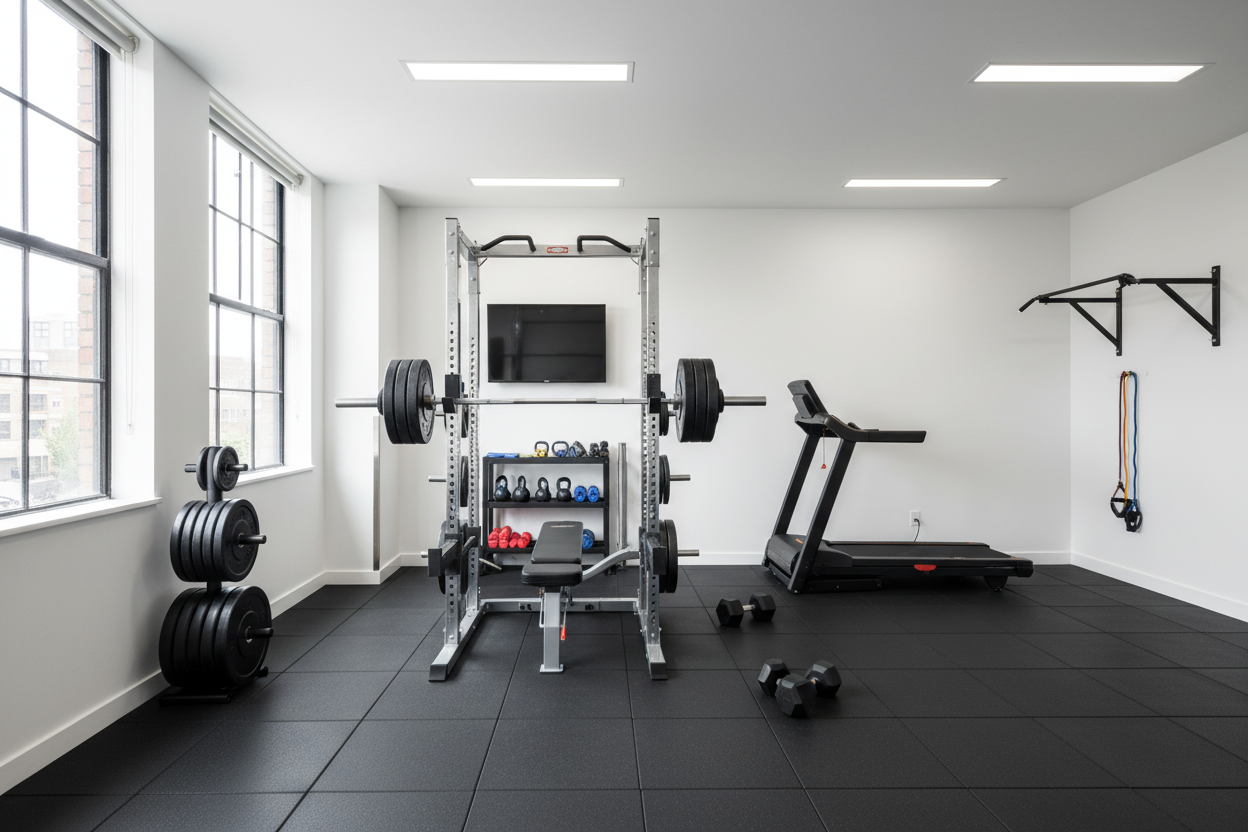
To succeed at a lean bulk, you need to be a data nerd. You can't just throw another 45-lb plate on the bar and hope for the best. Real lean mass workouts are won in the margins. This means investing in high-quality strength training accessories like fractional plates. Adding 1 lb to your overhead press every week is sustainable; trying to add 5 lbs every week is a recipe for a plateau.
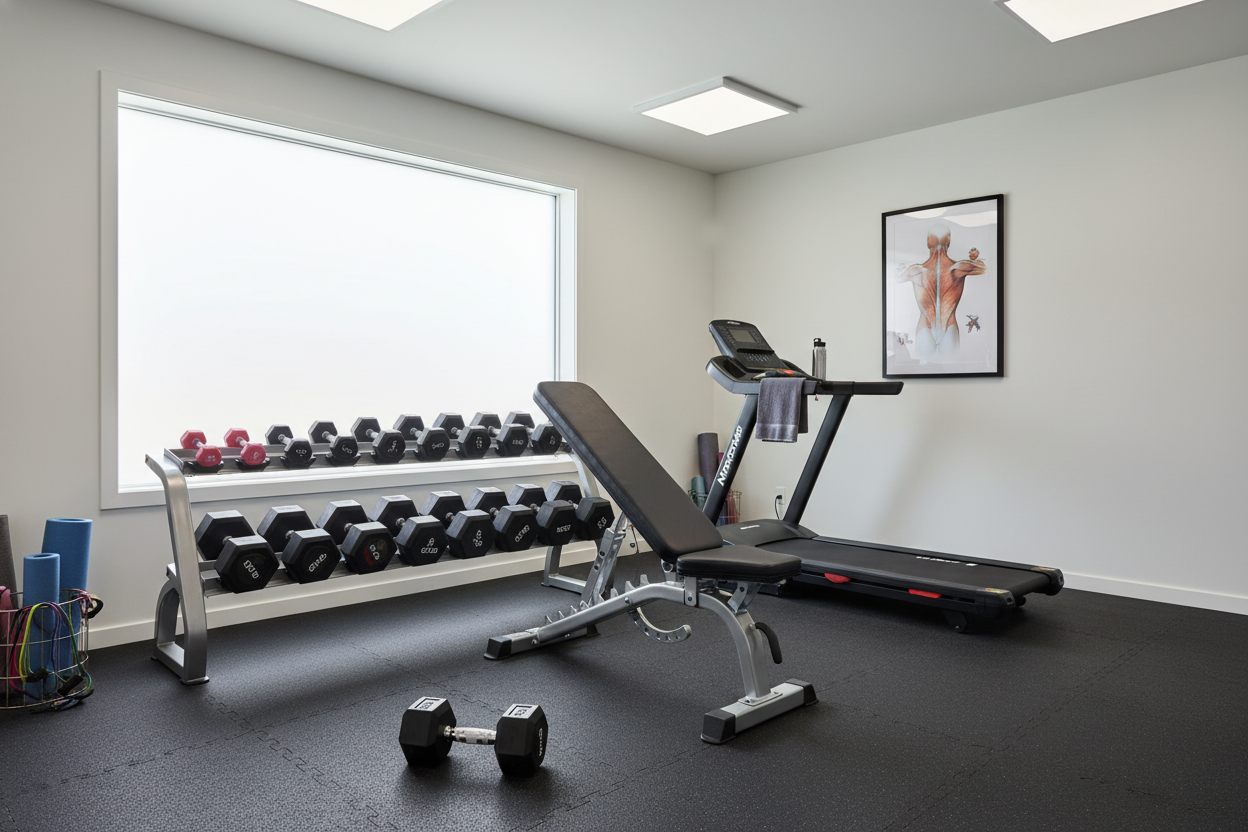
Stability is also key. If you're lifting heavy in a garage, you need a solid foundation. I’ve wasted time trying to squat on uneven concrete or cheap, squishy foam. Switching to a dedicated 6x8ft exercise mat changed my stability on heavy triples. When your feet are locked into a non-slip surface, you can focus entirely on the lift rather than your balance, which is essential when you're pushing for those final, growth-inducing reps.
Personal Experience: My 'Permabulk' Disaster
Back in 2018, I decided I was going to 'get huge.' I stopped tracking my macros and stopped doing any form of cardio. I told myself that the 15 lbs I gained in two months was mostly muscle. When I finally cut back down, I realized I had gained maybe 2 lbs of muscle and 13 lbs of pure fat. It took me four months of grueling dieting to get back to where I started. If you aren't tracking your lifts and your waist measurement, you're just guessing. Now, I never start a bulk without my micro-plates and a clear conditioning plan.
FAQ
How many calories should I add for a lean bulk?
Start with 250-300 calories above your maintenance. If you aren't gaining weight after two weeks, bump it by another 100. Don't jump straight to a massive surplus unless you want to buy new pants.
Can I build muscle without a surplus?
It's possible if you're a beginner or returning from a long break, but for most experienced lifters, a slight surplus is necessary to provide the energy needed for new tissue growth.
What is the best rep range for lean mass?
A mix is best. Use the 5-8 range for your big compounds to build strength and the 8-12 or 12-15 range for isolation movements to maximize hypertrophy and minimize joint wear.