Why Your Delt Dumbbell Exercises Only Make Your Traps Sore
I spent three years wondering why my neck looked like a cobra hood while my shoulders stayed flat. I was doing every delt dumbbell exercises variation I could find, but my traps were doing 90% of the work. It is a common trap (pun intended) that home gym lifters fall into when they prioritize the weight on the bar over the tension on the muscle.
You see it in every commercial gym and garage setup: someone grabbing the 40-pounders for lateral raises and swinging them like they are trying to take flight. Your shoulders aren't growing because you aren't actually using them. You are shrugging the weight up, letting your massive trapezius muscles hijack the movement.
Quick Takeaways
- Ego-lifting shifts the load from the small deltoid heads to the powerful traps.
- Momentum is the primary enemy of shoulder width.
- Seated variations and 'dead stops' are the best ways to force isolation.
- Stability at the floor level prevents the body from cheating during heavy sets.
The Trap-Dominance Problem Nobody Talks About
The human body is an efficiency machine. It wants to move weight from point A to point B using the strongest muscles available. When you perform a deltoid workout dumbbell style, your traps are itching to help. If the weight is even five pounds too heavy, your brain will subconsciously signal your traps to 'shrug' the weight up before the delts even engage.
This 'body english' usually starts at the hips and travels up the spine. You might think you are getting a great deltoid muscle workout dumbbell session, but you are really just doing a high-intensity shrug. To fix this, you have to stop thinking about moving the weight 'up' and start thinking about pushing it 'out' toward the walls. If you feel your ears moving toward your shoulders, you've already lost the rep.
3 Delt Dumbbell Exercises That Actually Force Isolation
If you want to stop the shrugging and start growing, you need to change your approach. These three movements are designed to eliminate momentum and force the delts to do the heavy lifting. You can use these specific techniques to build 3D delts at home without needing a rack full of specialized machines.
The Dead-Stop Seated Lateral Raise
Standard lateral raises are too easy to cheat. By sitting down, you remove the ability to use your legs. By bringing the dumbbells to a complete rest on your outer thighs between every rep, you kill the stretch reflex. You are starting from zero momentum every single time. It is humbling. You will likely have to drop your usual weight by 30%, but the pump in your lateral delts will be unlike anything you've felt with standing raises.
The Pronated Chest-Supported Rear Sweep
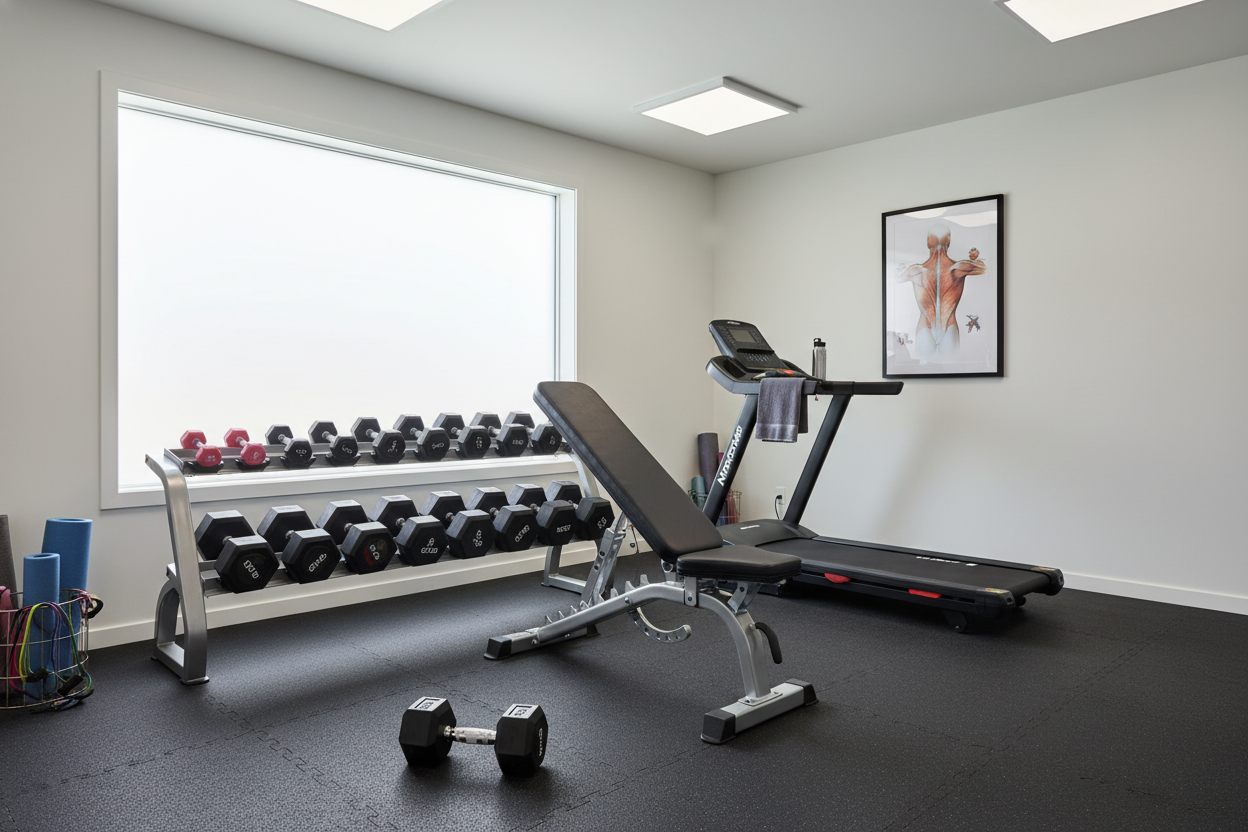
Most people fail at rear deltoid muscle exercises with dumbbells because they do them standing and bent over. Their lower back tires out, and they start 'rowing' the weight with their lats. Set your adjustable bench to a 45-degree incline and lay chest-down. Use a pronated (palms down) grip and sweep the weights out in a wide arc. Keeping your chest glued to the pad ensures your rear delts are the only things moving that load.
The Strict J-Press for Anterior Delts
The J-Press is a hybrid that bridges the gap between a standard overhead press and an Arnold press. Start with the dumbbells in front of your shoulders, palms facing you. As you press, rotate them only slightly—not the full 180 degrees. This keeps the tension strictly on the front delt and prevents the triceps from taking over the lockout. It is a surgical tool for the front of the shoulder.
The Floor Setup Mistake Wrecking Your Bracing
Isolation requires a stable base. If you are training on a slick garage floor or a cheap, thin rug, your bench is probably micro-sliding during your sets. When your base is unstable, your nervous system won't let you output maximum force through your limbs. You end up compensating by tensing your neck and traps just to stay upright.
I recommend investing in stable home gym flooring to ensure your feet can actually 'root' into the ground. When your feet are planted and your bench is locked in place, you can focus 100% of your mental energy on the shoulder contraction rather than trying not to slide across the room.
How to Program These Into Your Current Split
Shoulders can handle a lot of frequency, but they are easily overtaxed if you are hitting heavy overhead presses every day. Slot these isolation movements at the end of your 'Push' or 'Upper' days. Aim for 3 sets of 12-15 reps with a focus on a two-second eccentric (lowering) phase. If you need help fitting these into a broader routine, check out our full workout programming guides for more structure.
My Experience: The 15-Pound Lesson
For years, I refused to use anything lighter than 35-lb dumbbells for lateral raises. My ego wouldn't let me. My shoulders stayed narrow, and I had chronic tension headaches from my traps being permanently 'on.' One day, I swallowed my pride, grabbed the 15s, and did the dead-stop seated version. Within six weeks, my shoulders actually had a cap on them. The weight on the dumbbell is just a tool; the tension is the goal.
FAQ
Why do my traps hurt after shoulder day?
You are likely shrugging the weight or using too much momentum. Your traps are stronger than your delts, so they will naturally take over if the weight is too heavy for strict form.
Should I do front raises?
Most lifters get plenty of front delt work from bench pressing and overhead pressing. Unless your front delts are a specific weak point, focus your dumbbell work on the lateral and rear heads for that '3D' look.
How heavy should I go for rear delts?
Light. The rear delt is a small muscle. If you go too heavy, your rhomboids and lats will take over. Focus on the 'sweep' and the squeeze, not the poundage.