Why Your Gym Numbers Mean Nothing in Muscular Strength Sports
I remember hitting a 500-lb deadlift in my garage and feeling like a god. I’d spent months obsessing over my foot placement and the aggressive knurling on my power bar. Then I stepped onto a rugby pitch for a local club match. Within ten minutes, a guy who probably couldn't bench two plates folded me like a lawn chair. It was a cold realization that training for muscular strength sports isn't just about moving a barbell from point A to point B in a climate-controlled room.
- Static gym strength rarely translates 1:1 to athletic power.
- Chaotic environments require stabilizer recruitment that machines can't mimic.
- Odd-object lifting (sandbags, stones) is the bridge between the rack and the field.
- Movement patterns trump muscle isolation for performance.
The Reality Check (Why Your 500lb Deadlift Feels Useless)
I spent years chasing numbers. I bought the most expensive plates I could find and peaked for a one-rep max that looked great on Instagram. But muscular strength in sports is rarely about a single, perfect repetition. It’s about being strong while you’re off-balance, gasping for air, and someone is trying to drive their shoulder into your ribs. My garage gym was a sanctuary; the field was a meat grinder.
The problem is the environment. In the gym, the floor is level and the weight is balanced. In a muscular strength sport, the resistance is 'alive.' It shifts. It fights back. If you only train in a linear path, you’re building a big engine with no suspension. The first time you hit a bump, the whole thing falls apart.
What Actually Qualifies as a Muscular Strength Sport?
A true muscle strength sports category involves external resistance that doesn't cooperate. Think wrestling, Brazilian Jiu-Jitsu, Strongman, or American football. These aren't just about endurance; they require high-output force in unpredictable scenarios. Your muscles don't fire in neat, isolated sequences when you're sprawling to avoid a takedown.
In these sports, you're bracing your core while your limbs are extended at awkward angles. It’s what I call 'chaotic strength.' A 300-lb squat is impressive, but can you exert that same force while someone is pulling on your collar? That is the difference between gym strength and sport-specific utility.
How to Build Muscular Strength in Sports Without Getting Stiff
Stop training like a powerlifter 365 days a year. If you want to dominate, you need to incorporate velocity-based training. Moving 225 lbs fast is often more useful for an athlete than moving 315 lbs at a snail's pace. I’ve seen guys with massive totals who move like they're encased in concrete. Don't be that guy.
Add unilateral work to every session. Most sports happen on one leg. If you aren't doing heavy Bulgarian split squats or single-arm presses, you're leaving performance on the table. You also need to embrace the 'ugly' lifts. Sandbag carries and zercher squats force your body to stabilize in ways a standard back squat never will.
You Need to Completely Ditch the Bro Split
Isolating your biceps on Monday and your triceps on Tuesday is a waste of time for an athlete. You need to ditch the bro split if you want to actually move well on the field. Focus on full-body sessions built around movement patterns: push, pull, hinge, carry, and rotate. Your body is a single unit, and you should train it that way.
Gear That Actually Translates to Muscle Strength Sports
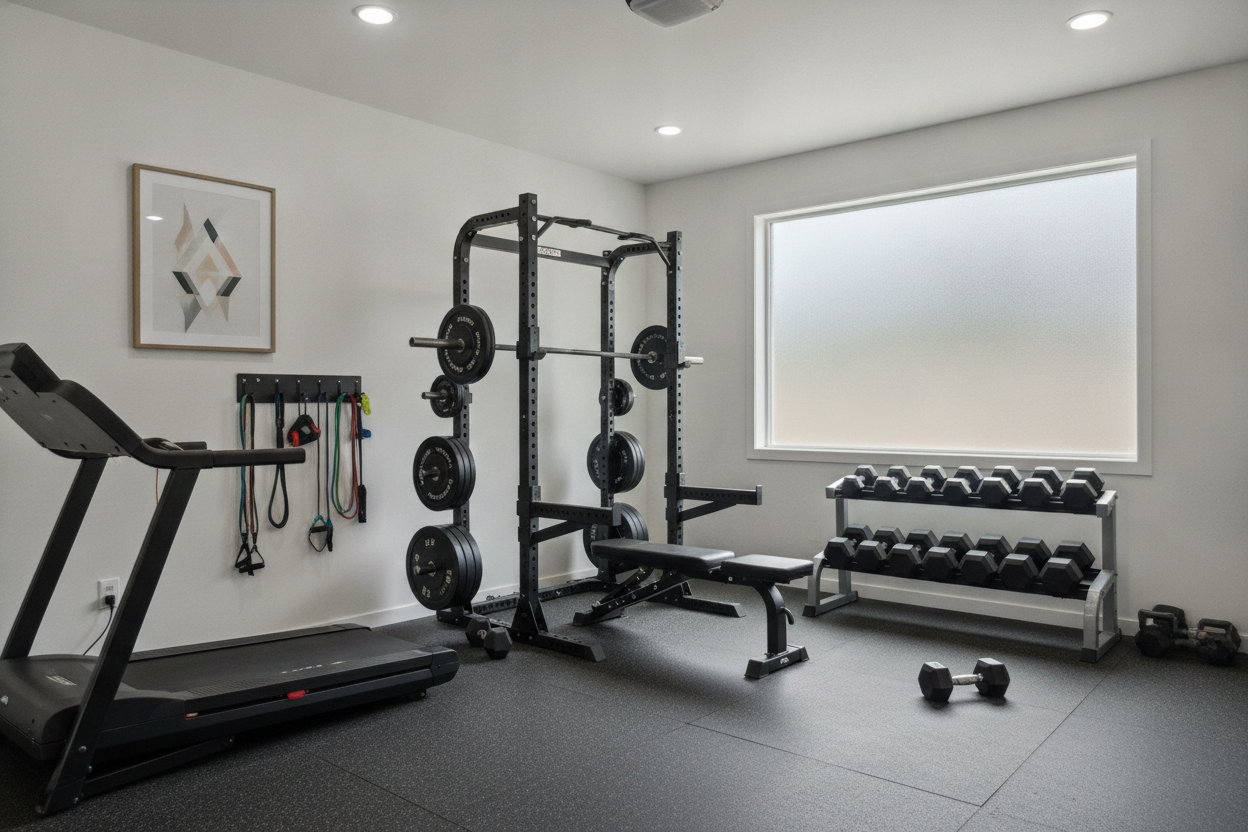
If I were starting my home gym over to train for a muscular strength sport, I'd skip the fancy cable machines. I'd invest in a rock-solid power rack and the right strength equipment that allows for multi-planar movement. You want tools that force you to work for every inch of progress.
Get a heavy sandbag. It doesn't have a handle, the weight shifts constantly, and it’s generally miserable to move. That’s exactly what an opponent feels like. I also recommend picking up some strength training accessories like fat grips or heavy-duty resistance bands. These small additions change the stimulus of your standard lifts, forcing your stabilizers to wake up and your grip to become iron-clad.
FAQ
Can I still do powerlifting meets?
Absolutely, but treat the big three as your foundation, not the entire house. Add sports-specific accessory work to keep your athleticism high.
Are machines completely useless for athletes?
Not completely, but they are low priority. They remove the need to stabilize, which is the exact skill you need to develop for the field or mat.
How many days a week should I train for strength?
For most, 3 to 4 days of high-intensity, full-body work is the sweet spot. It allows for enough recovery to actually practice your sport without burning out your CNS.