Why Your Gym Equipment Setup Feels Clunky (And How to Fix It)
I remember scrolling through Amazon at midnight, eyes bleary, convinced that a new power rack would magically fix my plateau. Then the boxes arrived, and I realized my garage ceiling was two inches too short for the pull-up bar. A solid gym equipment setup isn't about how much cash you drop; it's about spatial awareness. If you're tripping over a 25-lb plate every time you try to bench, you're not training—you're navigating an obstacle course.
- Measure your ceiling height before buying anything with a pull-up bar.
- Keep a 3-foot 'dead zone' around your primary lifting area.
- Store plates within two steps of the barbell.
- Prioritize floor space over 'cool' but rarely used machines.
The Trap of Buying Before Measuring
The biggest mistake I see is the 'collection' phase. You see some home gym equipment deals and suddenly you've bought a leg extension machine, a rower, and a half-rack without checking if they actually fit together. I've been there. I once bought a commercial-grade lat pulldown that was so deep I couldn't actually open my gym door all the way. It sat in the driveway for a week while I figured out which piece of gear to sell to make room.
A good layout starts with a roll of painter's tape and a tape measure, not a credit card. Mark out the 'footprint' of the gear you want on the floor. Don't just measure the base; measure the 'working area.' A barbell is 7 feet long. If your room is 8 feet wide, you've only got 6 inches of clearance on each side. Good luck loading plates without punching a hole in the drywall. You need to account for where your body goes, not just where the steel sits.
Establishing Your Primary Lifting Zone
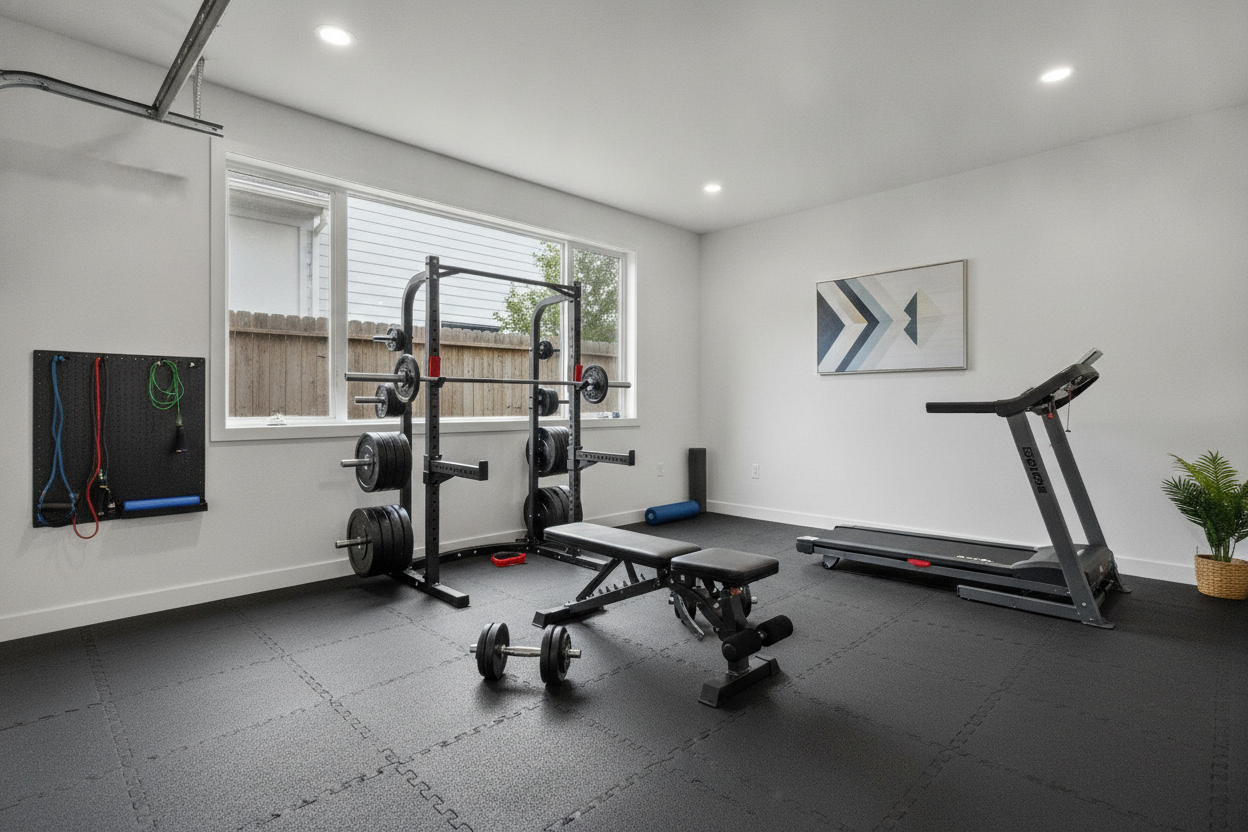
Your rack is the sun; everything else revolves around it. This is where the heavy, high-traffic work happens. You need a buffer. I don't care if you're in a 10x10 spare bedroom or a three-car garage—give your rack at least three feet of clearance on all sides. This isn't just for safety; it's for your sanity when you're gasping for air between sets of squats and don't want to bump into a sharp corner.
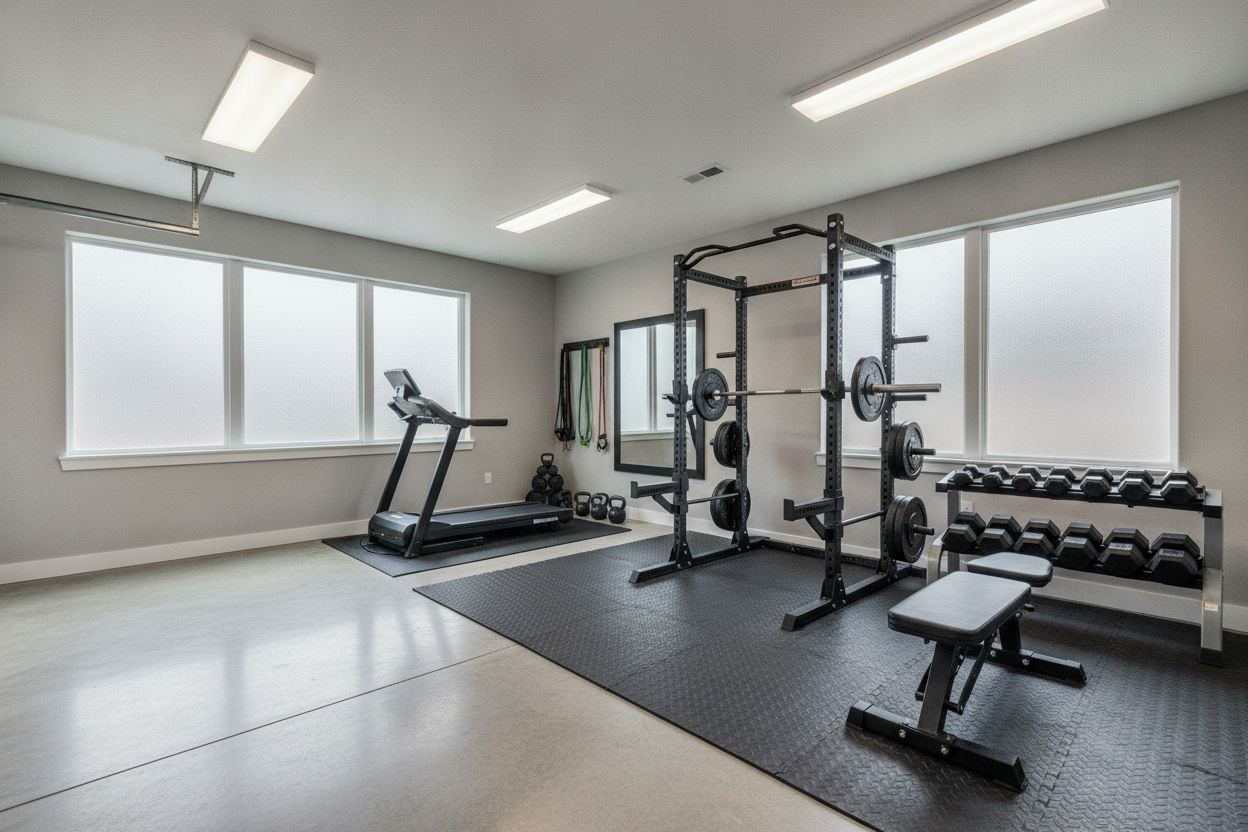
Protect your slab, too. Dropping 315 lbs on bare concrete is a great way to crack your foundation and annoy your neighbors. I always recommend laying down a thick 6x8ft exercise mat right under the rack. It defines the 'work zone' and absorbs the vibration from deadlifts. Plus, it is a hell of a lot easier on your joints than standing on cold cement for an hour. If you can't afford to floor the whole room, floor the zone where the iron hits the ground.
Why Your Gym Machine Setup Dictates Your Floor Plan
Free weights are predictable. A dumbbell stays the same size whether you're curling it or dropping it. Machines are different. A gym machine setup requires you to account for 'swing' and weight stack travel. If you put a functional trainer too close to a wall, the weight stacks might clank against the drywall, or you won't be able to use the full range of motion on chest flies. I've seen guys install beautiful cable systems only to realize they can't do a standing row because the bench is in the way.
If you're tight on space, stop trying to buy five different machines. Look for something that consolidates movements. A Smith machine with pulley is a massive space-saver because it handles your heavy compounds and your accessory cable work in one footprint. You get the stability of a fixed-path machine without needing a 2,000-square-foot commercial facility. This kind of multi-functional gear is the only way to keep a small gym from feeling like a storage unit.
Wall-Mounted vs. Freestanding Footprints
When floor space is at a premium, go vertical. Wall-mounted racks and pulleys can save you about 15-20 square feet of floor space. The trade-off is permanency. Once you bolt that thing into your studs, that's where it lives. When looking for the best cable machine for home gym use, consider if you'd rather have a freestanding unit you can move later or a wall-mounted pulley that stays out of the way. If you have a narrow garage, wall-mounted is the only way to keep the car inside at night.
The Plate and Dumbbell Storage Rule
Efficiency is the killer of excuses. If it takes you three minutes to find the matching 45-lb plate and carry it across the room, your rest periods are going to balloon and your motivation will tank. I follow the 'two-step rule.' You should never have to take more than two steps to load your bar. Weight horns on the rack are the gold standard here because they add stability to the rack while keeping the plates at arm's reach.
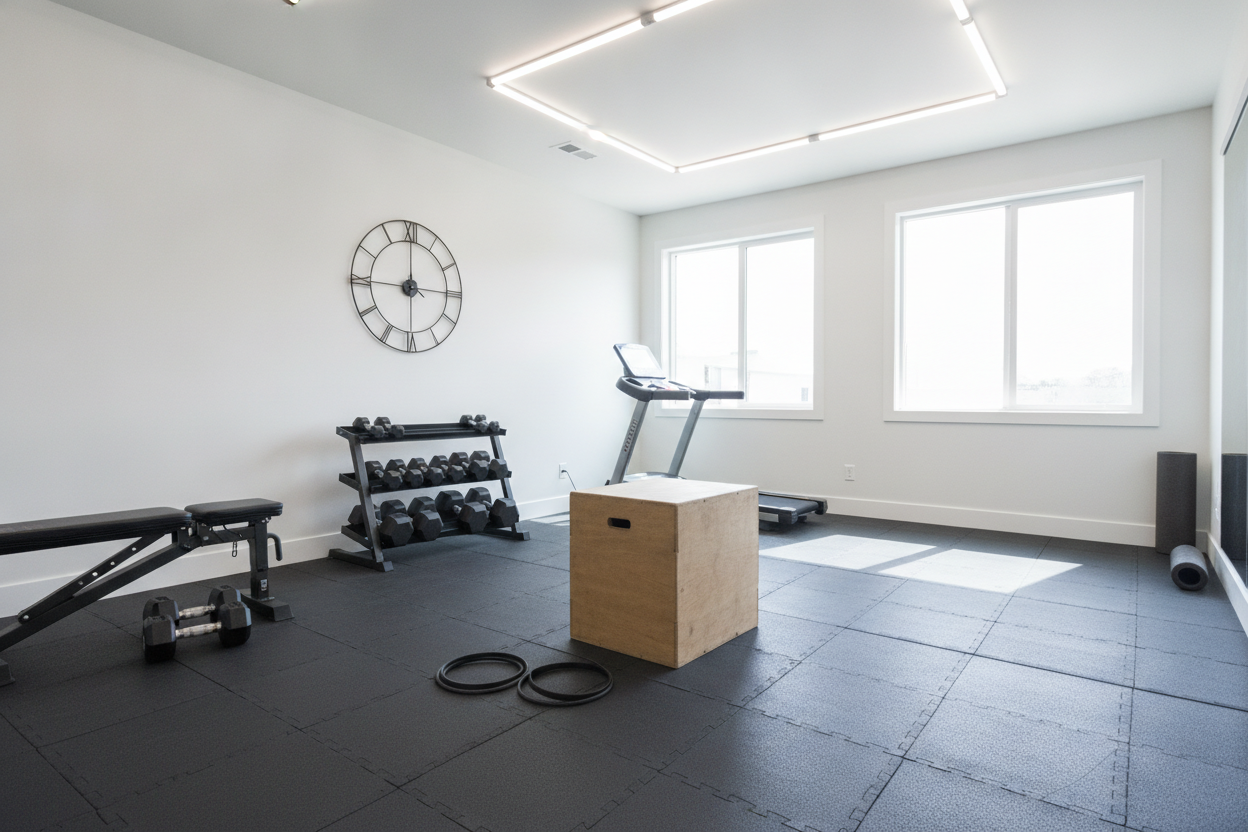
For dumbbells, keep them out of the main walking paths. There is nothing worse than finishing a heavy set of presses, stumbling back, and tripping over a 50-lb hex head. Line them up against a wall, but make sure there's enough room to actually pick them up without smashing your knuckles against the rack. Small details like that make the difference between a gym you love and a gym that frustrates you every single Monday.
Personal Experience: The Overhead Press Incident
I once set up my power rack directly under a low-hanging garage door opener. I didn't realize the mistake until I went for a heavy overhead press and slammed the bar into the metal motor housing. Not only did I almost drop the bar on my head, but I also had to replace a $300 opener. Now, I always do a 'dry run' with an empty bar in every position—squat, bench, press—before I bolt anything down. Learn from my stupidity and check your overhead clearance.
Frequently Asked Questions
How much space do I really need for a home gym?
At minimum, an 8x8 foot area. That gives you enough room for a standard 7-foot barbell and a bench. If you want machines, you are looking at 150+ square feet to avoid feeling like a sardine.
Is rubber flooring necessary?
Yes. Foam tiles are for playrooms. If you are lifting heavy, foam will compress and leave your rack feeling wobbly. Get 3/4-inch stall mats or high-density rubber flooring.
Can I put a gym on the second floor?
Maybe, but be careful. A rack, weights, and a lifter can easily exceed 1,000 lbs in a very small footprint. Check your floor joists and maybe stick to dumbbells if you are worried about the ceiling downstairs.