Best Cable Machines for Home Gym Setup Guide
When planning a serious training space, many lifters discover that barbells and dumbbells leave noticeable gaps in resistance curves. Selecting among the best cable machines for home gym spaces allows you to maintain consistent tension through an entire movement arc. A dedicated home gym cable machine supplies smooth resistance angles matching the feeling of a commercial gym, letting you program rotational work, isolation patterns, and accessory volume with precision.
Finding the best cable machine for your personal training area means balancing footprint, overhead clearance, and loading style. From freestanding functional trainers to modular pulley units mounted to a power rack, matching equipment to your layout ensures versatile utility across your available floor space.
How to Evaluate the Best Cable Machines for Home Gym Layouts
Before selecting a unit, understanding how a modern cable system functions helps you evaluate different styles. Unlike standard free weights, where gravity directs load strictly along a vertical downward path, a cable machine preserves line-of-pull tension regardless of body positioning. This constant mechanical load supports accessory volume, core stability drills, and joint-friendly training angles.
Pulley mechanics also influence lifting feel across various cable movements. Direct-load pulley arrangements match the weight selected plate-for-plate, making them suitable for heavier rows or downward pressing. Conversely, ratio-reduced pulley carriages cut the felt load in half while doubling cable travel distance. Many lifters prefer extended cable reach on functional trainers because longer travel accommodates walking lunges, overhead presses, and broad cable crossover motions without the weight carriage colliding with top stops.
Choosing Between Functional Trainers and Compact Cable Systems
Home lifters generally choose between several primary configurations based on room dimensions and existing strength equipment.
Standalone Functional Trainers with Dual Weight Stacks
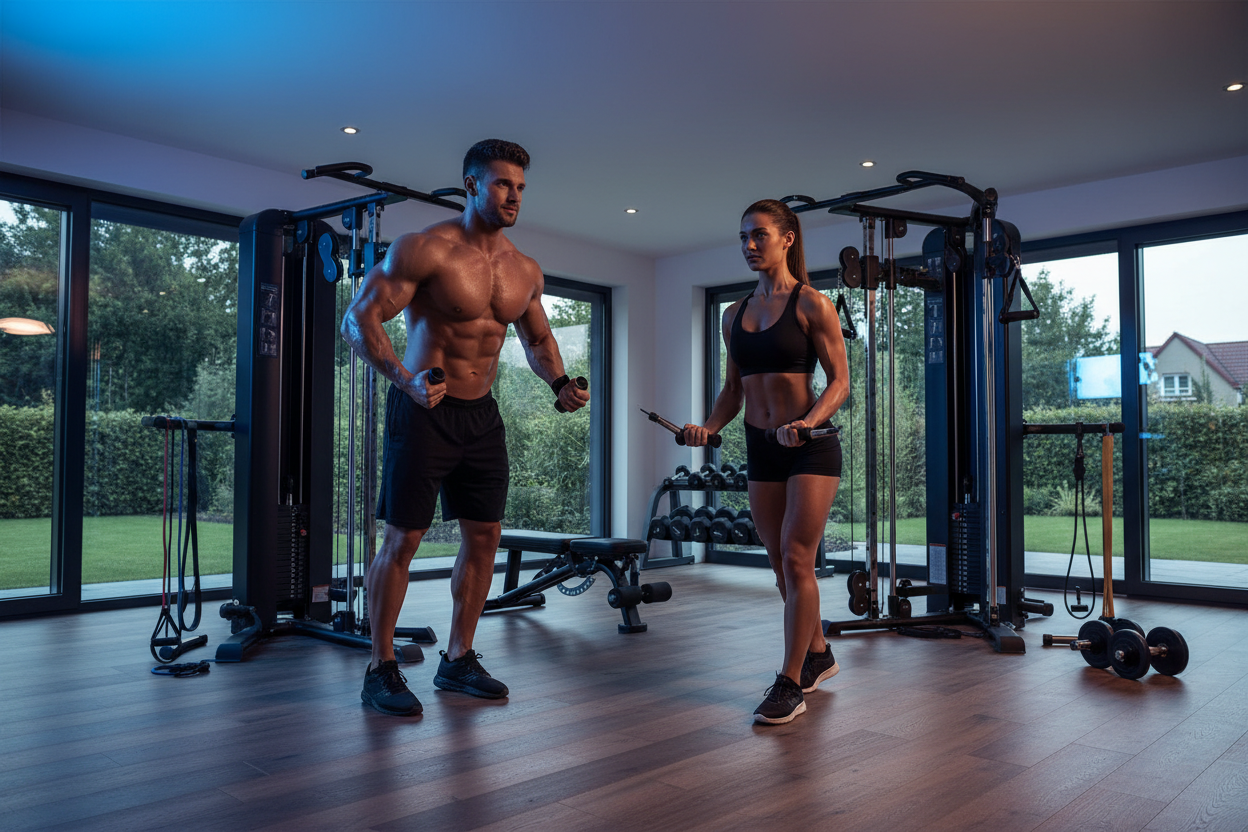
Dedicated functional trainers emulate the versatile training experience found in health clubs. Built with two vertical columns and independently sliding pulleys, these stations accommodate broad chest flyes, bilateral presses, and unilateral rows. Models featuring dual weight stacks allow both sides of the body to work independently or let two training partners complete movements simultaneously without sharing a single stack.
When assessing overall footprint and column dimensions, exploring a dedicated weight lifting machines collection provides a clear picture of how freestanding commercial frames compare to compact home units.
Power Rack and Half Rack Integrated Cable Attachments
If you already train inside a full cage or a half rack, adding an integrated pulley kit helps preserve open flooring. A compatible rack cable assembly often supplies high and low pulley positions without demanding a separate freestanding frame. Attaching cable work capabilities directly to an existing half rack or power cage keeps barbell lifts and cable drills anchored in one central station.
For tight garage or spare-bedroom layouts, reviewing a detailed cable machine space guide clarifies how integrated cages fit real-world room dimensions.
Smith Machine and Cable Hybrid Options
An integrated smith machine combination pairs guided bar tracks with multi-angle cable pulleys. Some all-in-one stations even feature a modular leg press footplate attachment. Lifters who train solo often appreciate these hybrid systems because they consolidate fixed barbell tracks and adjustable cable pulleys into a single shared enclosure.
Wall-Mounted Systems for Minimal Space
When training in an apartment or compact room with minimal space, wall-mounted single or dual towers offer a slim footprint. By fastening upright guide columns directly into wall studs, these stations occupy little floor depth while still accommodating fundamental cable exercises like face pulls, lateral raises, and triceps pressdowns. For layout ideas, our home gym machines floor space guide provides helpful spatial planning advice.
Traditional Cable Machine vs Smart Cable Machine
Digital resistance technology has introduced the modern smart cable machine category. Rather than relying on iron, a digital or smart cable machine creates resistance through motorized or electromagnetic mechanisms. While selecting the best smart cable machine appeals to lifters seeking digital tracking and sleek wall profiles, a traditional cable machine remains a staple for mechanical simplicity, tactile feedback, and durable longevity free from software updates or power cords.
Weight Stacks or Plate Loaded Stations: Which Fits Your Budget?
Resistance delivery directly impacts cost, physical footprint, and workout pacing in any home gym setup.
Selectorized Steel Plate Weight Stacks
Stations built with integrated weight stacks deliver rapid load changes. Shifting a selector pin between steel plate increments takes only seconds, making supersets and drop sets effortless. Enclosed dual weight stacks also eliminate loose weights resting on your gym floor. However, solid steel columns add substantial freight weight and higher upfront cost to your purchase.
Plate Loaded Carriages Using Barbell Weight Plates
A plate loaded design uses weight horns built to hold standard Olympic weight plates. If you already own bumper or cast iron plates for barbell lifting, choosing a plate-loaded station keeps initial investment lower. You simply load the sliding pulley trolley with plates you already have on hand.
Be mindful that plate loaded units require adequate lateral clearance so you can slide plates on and off the horns comfortably. Even with this extra loading clearance, many home gym owners find plate-loaded carriages offer a practical balance of performance and affordability.
Essential Cable Machine Attachments for Versatile Training
A home cable setup reaches its potential through interchangeable handles and grips. Choosing versatile cable machine attachments expands the scope of every workout session.
- D-Handles: Fundamental for unilateral chest flyes, single-arm pulldowns, and rotational chops. Rotating handles help relieve wrist strain across natural pressing angles.
- Straight Bar: Useful for standing curls, cable shrugs, and seated rows. A swiveling straight bar connection prevents the cable from binding as wrist angles shift.
- Triceps Rope: Braided nylon ropes allow hands to spread outward at peak contraction during pushdowns and overhead extensions.
- Lat Pulldown Bar: Crucial for targeting the upper back and latissimus dorsi from overhead pulley positions.
- Ankle Straps: Handy for lower-body accessory drills, including cable hip abductions, glute kickbacks, and standing leg curls.
Keep in mind that while entry-level handles frequently arrive in the main box, specialized cable attachments and premium attachment options are often sold separately, so consider budgeting for your favorite handles during initial planning.
Floor Space, Matting, and Room Planning for Cable Work
Carefully measuring your training area prevents common installation headaches. A freestanding unit requires enough overhead height for full pull-up extension, ample lateral room for side arm raises, and several feet of clear floor in front of the frame for walking lunges, cable rows, and pressing patterns.
Solid floor protection is equally important. In my own garage setup, installing firm, high-density rubber gym mats provided a stable base that prevented the equipment from shifting during heavy pull sets. Dense rubber matting shields your subfloor, absorbs dropped handle impacts, and helps ensure upright guide rods remain square for smooth pulley travel.
Cable Machines FAQs
What is the best cable machine for a home gym?
The right unit depends on available floor area, ceiling clearance, and personal budget. Freestanding dual-pulley towers offer broad exercise variety, while rack-attached systems and wall-mounted towers provide practical, space-conscious options for lifters working with limited square footage.
What is the best all-in-one cable machine for a home gym?
An all-in-one trainer combining dual adjustable pulleys, a guided barbell track, and integrated pull-up bars suits lifters who want a complete strength station within a single structural footprint, consolidating free-weight and cable exercises efficiently.
Is a cable machine good for a home gym?
Yes. Cable systems provide continuous tension throughout an entire repetition arc. They serve as an effective complement to free weights by supporting joint-friendly isolation work, rotational core training, and controlled accessory volume.
What are some good home gym equipment with cables?
Popular cable-equipped options include standalone dual-column functional trainers, plate-loaded cable towers, rack-mounted pulley attachments, compact wall-mounted track units, and multi-station hybrid enclosures.