Why Your Garage Gym Needs Space for a Dynamic Strength Movement
I remember hitting a 405-lb deadlift PR in my garage and then needing five minutes to catch my breath just to take off my shoes. My gym was a temple of iron, but I was basically a statue. If you have spent thousands on a Rogue rack and a stack of calibrated plates only to realize you cannot pick up a dropped pen without your lower back screaming, you have fallen into the padded-room trap. You need to integrate a strength movement that actually translates to the real world.
Quick Takeaways
- Static lifting creates statue strength that lacks real-world utility and causes joint stiffness.
- A dynamic strength movement requires at least a 6x6 foot clear floor space for multi-planar work.
- Sandbags and kettlebells are superior to barbells for building rotational power.
- Ditch single-use machines to reclaim the footprint needed for athletic training.
The Problem with the Padded-Room Powerlifter
Most home gyms are built for the Big Three. Squat, Bench, and Deadlift are the gold standard for moving heavy loads, but they occur almost exclusively in the sagittal plane. You are moving up and down, over and over. Life, however, happens in 360 degrees.
If you never rotate under load or move laterally, your spine and hips will eventually revolt. I have seen guys with 600-pound squats who cannot lunge to the side without a knee clicking like a ratchet strap. By confining yourself to the rack, you are training your nervous system to be rigid. You become a specialist in a world that requires versatility.
What Actually Qualifies as a Dynamic Strength Movement?
A static grind is a max-effort squat. It is predictable, controlled, and stable. A dynamic strength movement is the opposite. It involves balance, coordination, and the ability to produce power through space. Think of a 150-lb sandbag carry where the weight shifts with every step, or a heavy medicine ball rotational toss against a concrete wall.
The goal here is not just to get tired; it is to build strength and movement capacity simultaneously. You are forcing your core to stabilize a shifting load while your limbs produce force in directions other than just 'up.' This builds a type of density in the connective tissue that you simply cannot get from a barbell alone.
Bridging the Gap Between Strength and Movement
Do not mistake this for light cardio. To keep the 'strength' in the equation, you need to keep the loads significant. If you can do 50 reps easily, it is an aerobic session. I prefer programming heavy lateral lunges, zercher carries, or cleans-to-march. These movements require you to own the weight while navigating your environment, bridging the gap between raw force and athletic grace.
How to Reorganize Your Cramped Garage for Athletic Lifts
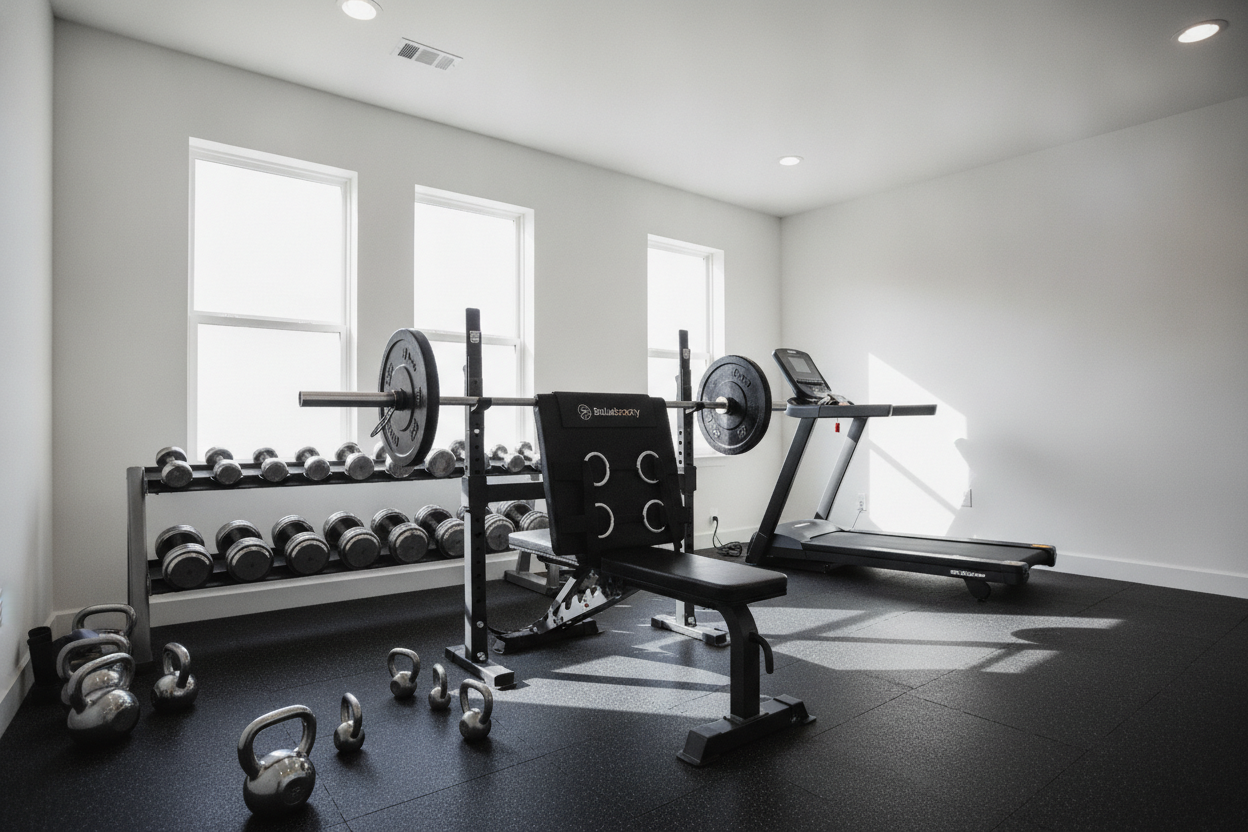
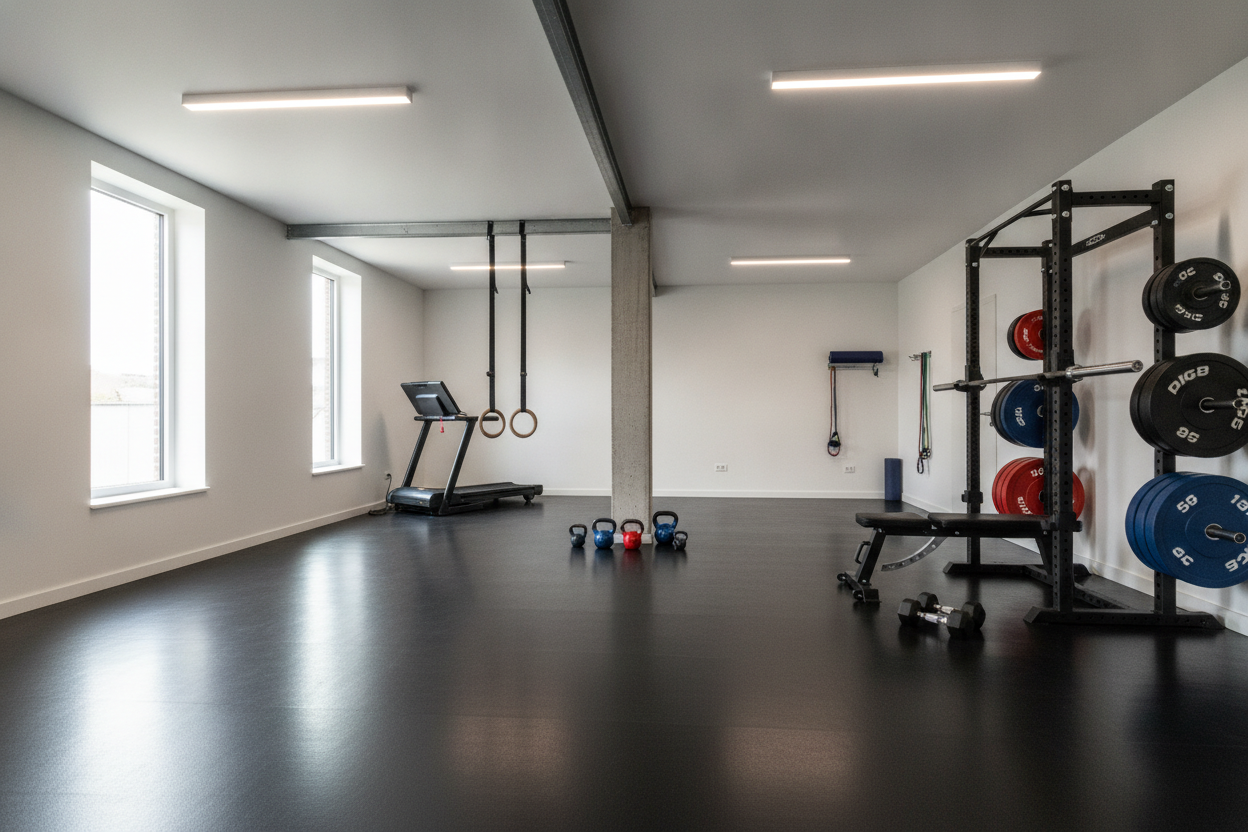
My garage used to be a graveyard of 'maybe later' equipment. I once owned a massive seated row machine that took up 12 square feet and only served one purpose. I sold it. By clearing that space and laying down 3/4-inch stall mats, I created a dedicated movement zone.
You need enough room to pivot your feet without catching a toe on the edge of a platform. If you are tight on space, look at your storage. Get your plates off the floor and onto the wall. Ditch the bulky leg press. A pair of heavy adjustable dumbbells and a clear 8x8 patch of floor will do more for your athleticism than any fixed-track machine ever could.
Mixing High-Intensity Flows with Heavy Iron
You do not have to stop chasing PRs to become athletic. I structure my week by pairing heavy barbell days with dynamic finishers. On a heavy bench day, I might finish with rotational med ball slams to keep my torso mobile. On active recovery days, I often follow a Tabata and Pilates workout to ensure my hips and spine stay lubricated between heavy squat sessions.
If you are short on time but need to break out of that rigid powerlifting shell, a step HIIT with weights routine is a solid way to introduce lateral stimulus. It forces you to move your center of mass over a platform while holding a load, which is exactly the kind of multi-planar work most garage gym owners are missing.
The 'One Kettlebell' Rule for Stiff Lifters
Here is my challenge: end every heavy session with five minutes of unbroken kettlebell work. Grab a 24kg or 32kg bell and do not put it down. Mix swings, snatches, cleans, and halos. This forces your body to find efficiency under fatigue and ensures you never lose your range of motion. It is the ultimate insurance policy against the stiffness that plagues heavy lifters.
Personal Experience: The Leg Press Mistake
I once bought a commercial-grade leg press because I thought I needed it for 'hypertrophy.' It was a beast, but it effectively turned my gym into a narrow hallway. I could not even do a burpee or a lateral lunge without fearing I would crack my skull on the frame. I eventually sold it for half what I paid, bought two heavy sandbags, and reclaimed my floor. My knees feel better moving through space than they ever did on a fixed track.
FAQ
How much space do I really need?
Aim for an 8x8 foot area. This allows for full lateral lunges and rotational tosses without hitting your rack or the garage door.
Will dynamic movements hurt my powerlifting totals?
No. In fact, improving your lateral stability and bracing usually fixes the 'leaks' in your squat and deadlift, leading to higher totals over time.
What is the best tool for a beginner?
A single kettlebell. It is the most versatile tool for shifting weight between hands and moving through different planes of motion without a massive investment.