Why Your First Month of At Home Weight Lifting Will Probably Suck
You finally did it. You canceled the monthly membership, bought a set of dumbbells, and cleared out a corner of the garage. But three days into your at home weight lifting routine, you realize something is wrong. The air is stale, your floor is slippery, and you feel like a total amateur trying to figure out where to put your feet. It’s a jarring transition.
- Commercial gyms offer a psychological 'switch' that home gyms lack.
- Standard flooring like hardwood or carpet is a safety hazard for heavy loads.
- Equipment limitations require smarter programming, not just more iron.
- Success depends on exercise sequencing, not just effort.
The Commercial Gym Hangover
In a commercial gym, everything is laid out for you. You move from the leg press to the cable row without thinking. When you bring that same mindset home, you realize your five-day bodybuilding split is a nightmare when you only have one bench and a pair of adjustable handles. Trying to copy-paste a machine-heavy routine into a spare bedroom is the fastest way to quit.
The reality is that your environment has changed, so your programming must change too. While a private introduction to weight lifting is the best way to master form without an audience, the lack of structured machines means you have to work harder for every rep. You can't just sit in a chest press machine and zone out; you have to stabilize the weight yourself. It’s more taxing on your central nervous system, and that's why you feel more exhausted despite doing less total work.
Ground Control: Why You Can't Lift Heavy on Hardwood
I’ve seen it a dozen times: someone buys a high-end barbell set and then tries to squat in socks on a slick hardwood floor. It’s a recipe for a groin tear or a ruined floor. You cannot generate force if your base is unstable. If your feet are sliding even half an inch during a deadlift, you’re leaking power and risking your spine.
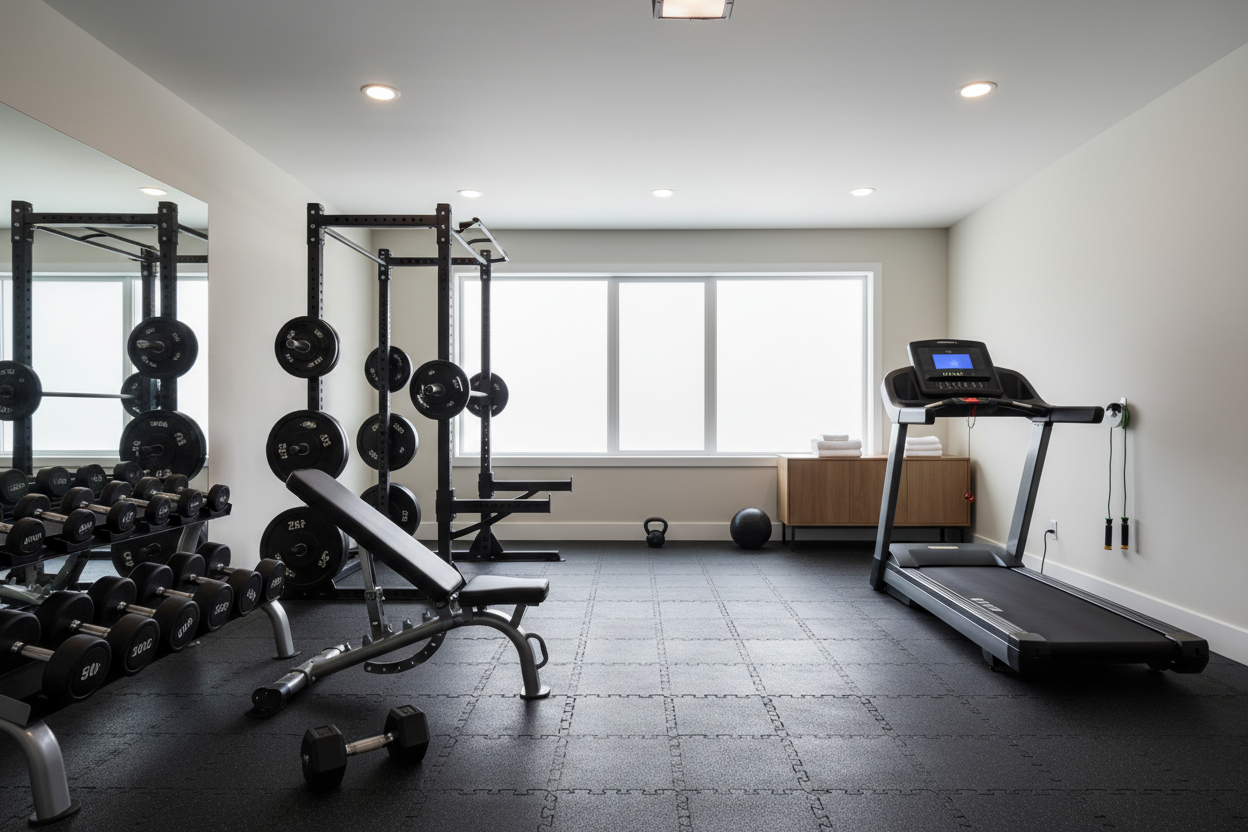
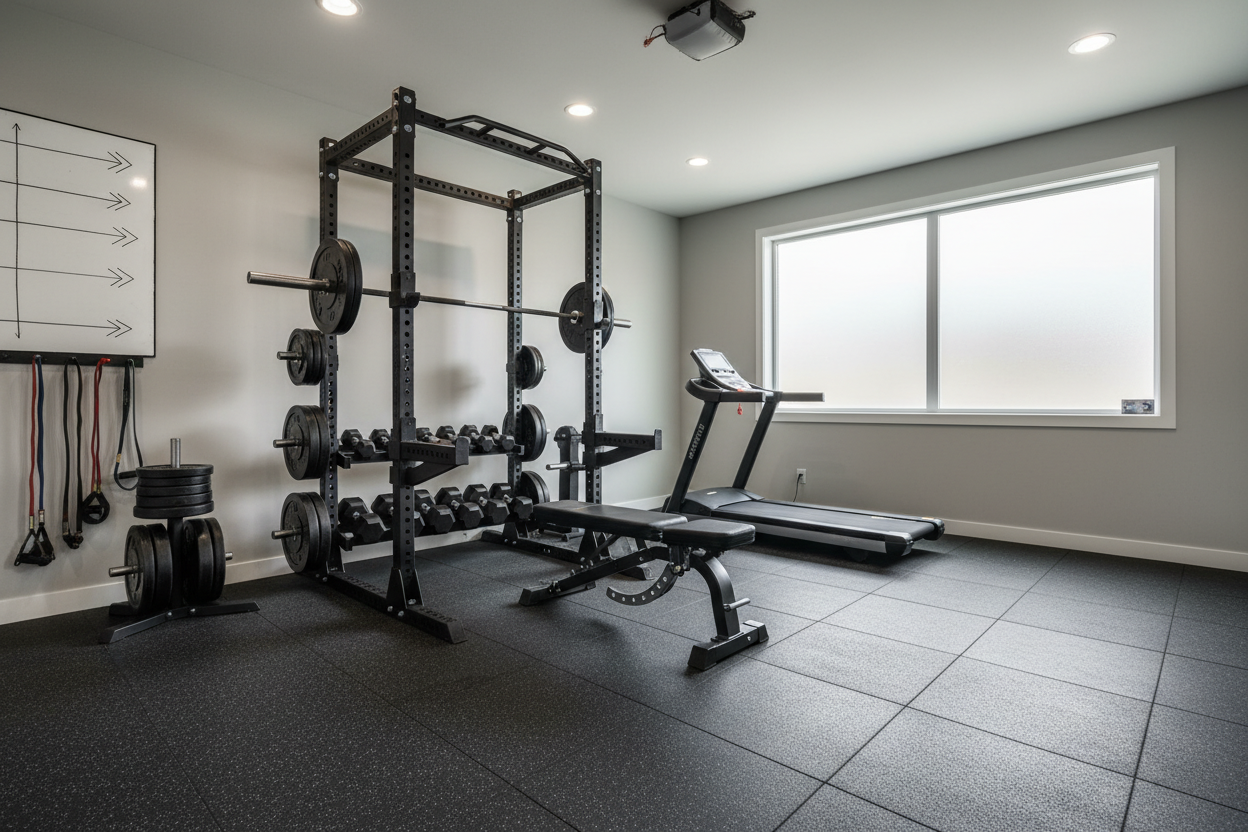
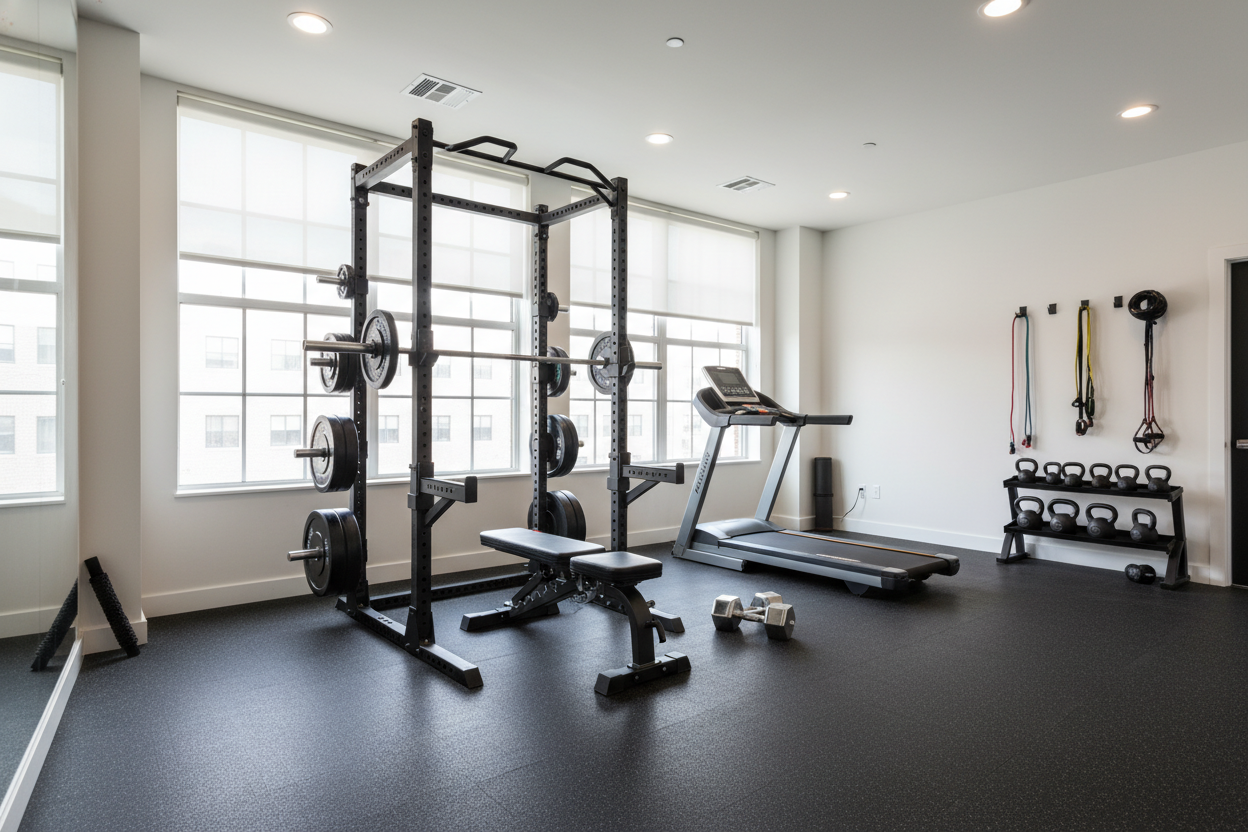
You need a surface that actually bites back. Most people think a thin yoga mat is enough, but those usually stretch and slide under lateral tension. Investing in dedicated gym flooring for home workouts is the most underrated upgrade you can make. A solid 6x8 ft rubber surface provides the friction necessary to plant your heels and drive through the floor, which is non-negotiable once you start moving anything over 50 pounds.
The Reality of How to Do Weights at Home Without Wasting Time
The biggest time-waster in a home gym is the 'plate shuffle.' If you are constantly Googling how to do weights at home, you’ll find plenty of complex circuits, but they rarely account for the logistics of changing weights. If you have to unscrew collars and swap plates every three minutes, a 45-minute workout turns into two hours of manual labor.
To fix this, stop thinking about how to weight lifting at home as a series of isolated moves. Use 'density training' or supersets that use the same weight. Pair a dumbbell overhead press with a dumbbell goblet squat. By using the same load for two different movements, you eliminate the downtime. It keeps your heart rate up and ensures you’re actually training instead of just fiddling with equipment in your socks.
What Happens When You Run Out of Iron?
Unless you have a massive budget, you will eventually 'max out' your home equipment. Your 50-pound dumbbells will start feeling light for lunges or rows. Most people think the only solution is to buy more gear, but you can actually get more out of less by scaling past equipment limits through mechanical disadvantage.
Start using 3-second negatives (eccentrics) on every rep. Add a 2-second pause at the bottom of your squats. Switch to unilateral movements—single-leg RDLs will humble you with a weight that felt easy for a standard deadlift. These techniques increase time under tension and force your muscles to adapt without requiring you to find space for a 500-pound plate stack.
Do You Actually Need to Buy Bulky Equipment?
Eventually, you’ll hit a wall where free weights alone don't cut it for specific goals. If you're trying to isolate your lats or hamstrings without straining your lower back, dumbbells have their limits. This is when you have to decide if you're a 'minimalist' or if you're building a 'powerhouse.'
For many, adding specialized weight lifting machines—like a cable crossover or a leg extension attachment—is the logical next step. Machines allow you to train to absolute failure with much less risk of injury compared to failing a heavy free-weight rep alone in your garage. If you find yourself consistently skipping 'leg day' because you hate the setup for Bulgarian split squats, that’s your sign to invest in dedicated hardware.
My Honest Mistake
When I started, I bought a cheap '300-lb capacity' bench from a big-box store. I weighed 200 lbs and was pressing 150 lbs. The first time I felt the frame flex under me, I realized I’d made a huge error. I spent more money replacing that cheap bench than I would have spent on a high-quality 11-gauge steel bench the first time. Don't skimp on the things that hold your body weight up.
FAQ
Is it safe to lift heavy alone at home?
Yes, provided you have safety spotter arms on a rack or you are using dumbbells that can be safely dropped. Never use collars on a bench press if you don't have a spotter; you need to be able to dump the plates if you get pinned.
How much space do I really need?
A 6x8 ft area is the 'golden zone.' It fits a standard mat, allows for a full arm span with dumbbells, and gives you enough room to move without kicking a wall.
Will lifting on my second floor break the house?
Standard modern construction can handle a rack and some plates, but don't go dropping 400-lb deadlifts from the hip. Use crash pads or thick rubber tiling to dampen the vibration and protect the joists.