Stop Doing 3x10 Sets Weight Lifting If You Want Real Mass
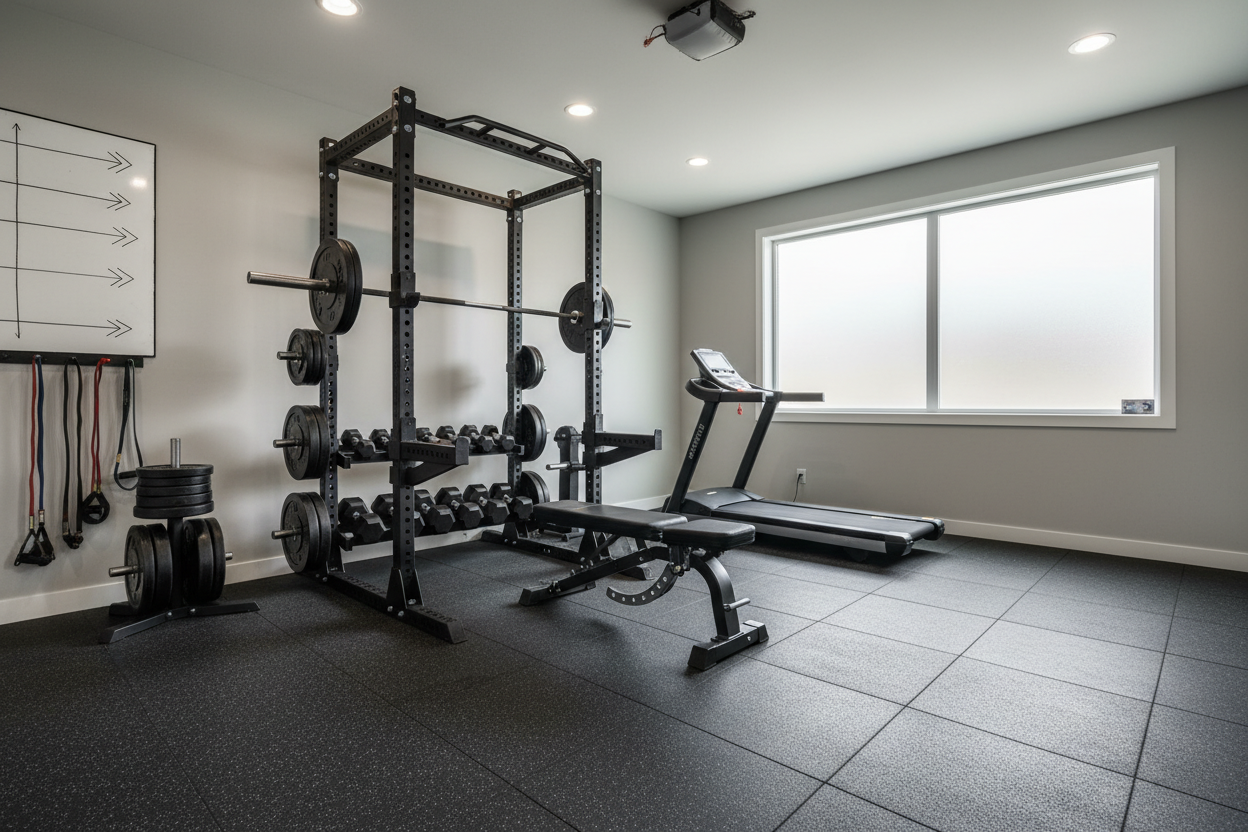
I remember staring at the whiteboard in my garage, chalk on my hands, blindly writing '3x10' for the third year in a row. It felt like I was doing the work, but my shirts weren't getting any tighter and my deadlift was stuck at a plateau that felt like a brick wall. Most of us start our sets weight lifting journeys by copying the first guy we saw on a forum, and usually, that guy was just coasting through junk volume.
The truth is, 3x10 is the 'beige' of the fitness world. It's safe, it's predictable, and eventually, it stops working entirely. If you want to actually see a change in the mirror or on the platform, you have to stop treating your repetition workout like a checklist and start treating it like a stimulus.
Quick Takeaways
- 3x10 often leads to 'junk volume' where intensity is too low for real growth.
- Strength requires lower reps (1-5) and higher intensity (85%+ 1RM).
- Hypertrophy thrives in the 6-12 rep range but requires proximity to failure.
- Rest periods are just as important as the reps themselves for recovery.
The 3x10 Trap: Why We All Do It (And Why It Fails)
We've all been there. You walk into the gym, see the row of weight lifting machines, and settle in for three sets of ten. It's the default setting because it is easy to remember. But here is the problem: if you can hit ten reps on your third set with the same ease as your first, you didn't actually challenge your nervous system or your muscle fibers.
Most lifters sandbag the first two sets just to make sure they can finish the third. This creates junk volume. You are moving weight, sure, but you aren't creating the mechanical tension necessary for hypertrophy. Real growth happens in those last two or three reps where the bar speed slows down despite your best efforts to move it fast.
The Real Difference Between Strength and Size
Lifting for reps sets for strength is a different beast than lifting for a pump. Strength is a skill. It involves training your brain to recruit as many motor units as possible at once. This is why powerlifters often look different than bodybuilders; they are training for neurological efficiency and maximal rep strength.
Muscle size, or hypertrophy, cares more about metabolic stress and time under tension. When you are weight training sets and reps for size, you want to feel the muscle stretching and contracting. When you are training for strength, you just want the weight to move from point A to point B as efficiently as possible.
Dialing In Reps and Sets for Strength Training
If you want to move heavy objects, you need to stop repping weights like you're doing cardio. Strength training sets reps usually fall in the 1 to 5 range. This allows you to handle loads that are 85% to 95% of your one-rep max.
When I am focused on raw power, I am loading up my bumper plate sets for heavy triples. You need longer rest periods here—think 3 to 5 minutes. You aren't trying to get a 'burn'; you are trying to let your ATP stores recover so you can exert maximum force on the next set.
How Many Sets Do You Actually Need to Grow?
The question of 'how many weight reps should i do' is the wrong starting point. You should be asking 'how many hard sets am I performing?' Research suggests that for most people, 10 to 20 hard sets per muscle group per week is the sweet spot for growth. If you do 3x10 but only the last set was actually hard, you only did one set of actual work.
Even if you buy the best strength and weight training equipment for your garage, you won't see results if your intensity is a 4 out of 10. I prefer auto-regulation. If I feel great, I will add a fourth or fifth set. If the bar feels like a house, I might stop at two high-quality sets and call it a day.
Stop Repping Weights Just to Reach a Number
Lifting weights sets and reps should be governed by RPE—Rate of Perceived Exertion. On a scale of 1 to 10, your working sets should usually land at an 8 or 9. That means you could have done maybe one or two more reps, but you stopped before your form broke down.
Sometimes your grip gives out before your back does on rows or deadlifts. This is where strength training accessories like lifting straps become essential. They allow you to keep repping weights until the target muscle is actually exhausted, rather than letting a weak grip dictate your set and reps for strength.
Building Your Own Exercise Reps and Sets Chart
Stop following a static PDF you found in 2012. Use this general exercise reps and sets chart as a logic-based guide for your resistance training sets and reps:
- Strength: 3-5 sets of 1-5 reps (Heavy weight, long rest).
- Hypertrophy (Size): 3-4 sets of 6-12 reps (Moderate weight, 60-90s rest).
- Endurance: 2-3 sets of 15+ reps (Light weight, short rest).
The best weight training reps are the ones that align with your current goal. If you want to be strong, stop doing 12s. If you want to be big, stop doing only singles.
My Personal Experience
I once spent six months doing 'German Volume Training'—10 sets of 10—because a forum told me it was the ultimate mass builder. I didn't get bigger; I just got tendonitis and a deep hatred for squats. I was repping weights that were far too light to trigger growth just to hit the numbers. It was a lesson in quality over quantity. Now, I focus on reps and sets for strength training that actually challenge my limits, even if the total volume looks lower on paper.
FAQ
Is 3 sets of 12 better than 5 sets of 5?
It depends on what you want. 3x12 is generally better for building muscle volume and metabolic stress, while 5x5 is a gold standard for building foundational strength and thickness.
How much rest should I take between sets?
For strength, take 3-5 minutes. For muscle growth, 60-90 seconds is usually enough to clear some lactic acid while keeping the muscle under enough tension to trigger adaptation.
Should I go to failure on every set?
No. Going to absolute failure on every set is a fast track to burnout. Aim to leave 1-2 reps 'in the tank' on most sets to ensure you can maintain high quality across your entire workout without your form falling apart.