Why Your Cardio and Weight Training Schedule for Fat Loss Fails
I remember the day I tried to 'optimize' my fat loss by running a 5k right before a heavy squat session in my garage. I walked up to the rack, felt like my quads were made of dry sponges, and barely finished my warm-up sets. It was a complete waste of time. Most people fail because their cardio and weight training schedule for fat loss is built on the myth that more is always better, regardless of the order.
- Prioritize strength to protect muscle while in a calorie deficit.
- Separate cardio and lifting by at least 6 hours if possible.
- Conditioning should be high intensity but short duration.
- Quality gear beats a room full of cheap, shaking gadgets.
Stop Treating Your Body Like a Hybrid Vehicle
Your body is incredibly adaptable, but it is also easily confused. In the exercise science world, we call this the interference effect. When you try to build massive endurance and peak strength in the same hour, your body doesn't know which signal to follow. It’s like trying to listen to a podcast and heavy metal at the same time; you end up hearing nothing clearly. If your plan for weight loss is overcomplicated, you are likely blunting the very anabolic signals that keep your muscle on your frame during a diet.
I’ve seen guys spend two hours in their home gym doing circuit after circuit, wondering why their bench press is stalling. It’s because they’re chasing two rabbits and catching neither. To lose fat without looking like a deflated balloon, you have to prioritize the strength signal. Lifting heavy tells your body that muscle is necessary for survival. Chronic, moderate-intensity cardio tells your body to become 'efficient,' which often means shedding calorie-expensive muscle tissue. Stop trying to be a hybrid. Be a tank that occasionally runs fast.
The Golden Rule: Weights First, Lungs Second
If you have to do both in one session, the barbell always comes first. This isn't just about 'gains'—it is about safety. When you run or hit the rower for 30 minutes, you exhaust your smaller stabilizer muscles and your central nervous system (CNS). If you then try to get under a 300-lb barbell, your core is already fatigued. That is how you end up with a tweaked lower back or a failed rep that ends with you dumping the bar on your safety pins.
I’ve made the mistake of doing 'pre-exhaust' cardio, thinking it would help me burn more calories during my lift. All it did was ruin my form. When you lift fresh, you move more weight. Moving more weight creates more mechanical tension. More tension equals more muscle retention. Save the gasping for air for the end of the workout. Once the heavy work is done, you can safely redline your heart rate because the worst that happens is you fall off the air bike—you aren't getting pinned under a squat rack.
My Go-To Weekly Setup
A realistic schedule needs to account for recovery. You don't have a team of physical therapists waiting in your kitchen. For most of us training in a garage or basement, a 5-day split is the sweet spot. I prefer a three-day full-body or upper/lower split for the weights, with two dedicated days for hard conditioning. This keeps the 'interference' to a minimum and allows you to actually recover between sessions.
On Monday, Wednesday, and Friday, I focus on the big movers: squats, presses, and pulls. These are the days where you earn your steak. Tuesday and Thursday are for the lungs. By separating them, you can give 100% intensity to both. If you try to go 100% on a run after a 100% leg day, you’re just asking for an overuse injury. I’ve found that this spacing also helps with the mental burnout of dieting. You have different goals for different days, which keeps the training from feeling like a monotonous grind.
A cardio and strength training schedule for weight loss that actually works
Here is the breakdown I’ve used for years: Monday is heavy upper body, Tuesday is a killer HIIT strength workout using kettlebells or sandbags, Wednesday is heavy lower body, Thursday is steady-state cardio or sprints, and Friday is a full-body 'power' day. This cardio and strength training schedule for weight loss ensures you hit every muscle group while keeping your metabolism elevated through EPOC (excess post-exercise oxygen consumption).
This isn't a 'beach body' fluff plan. It’s designed to be hard. On those HIIT days, you’re pushing the pace for 20-30 minutes max. On the lifting days, you’re resting 2-3 minutes between sets to ensure you can move the heaviest load possible. This contrast is what actually changes body composition.
The Gear You Actually Need to Execute This
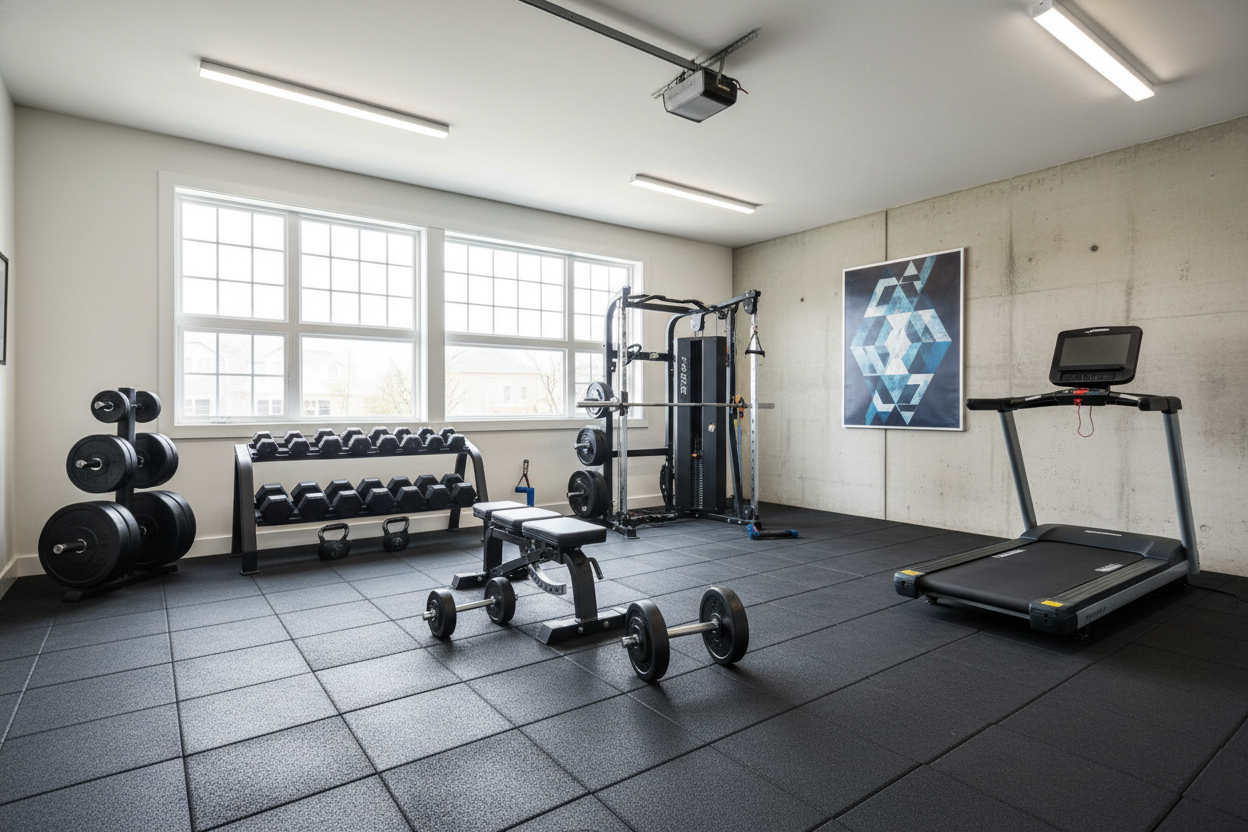
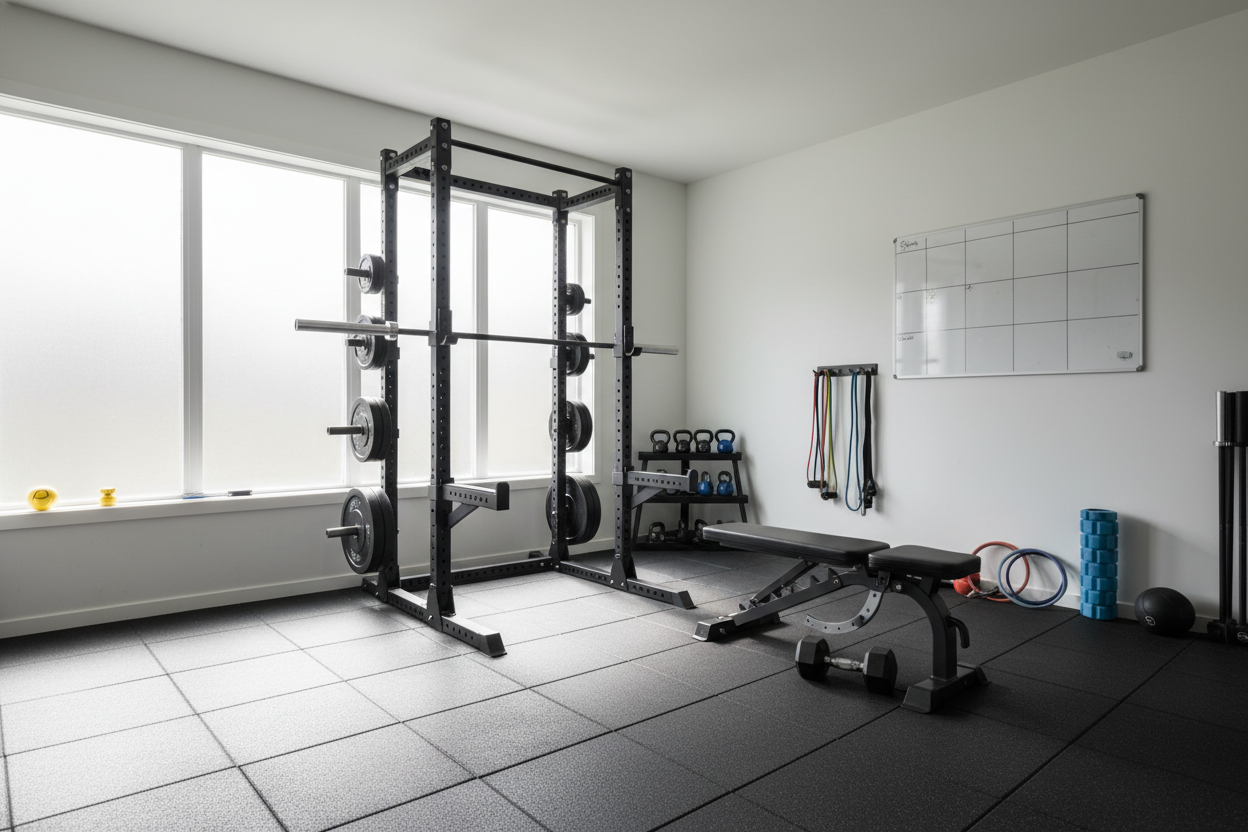
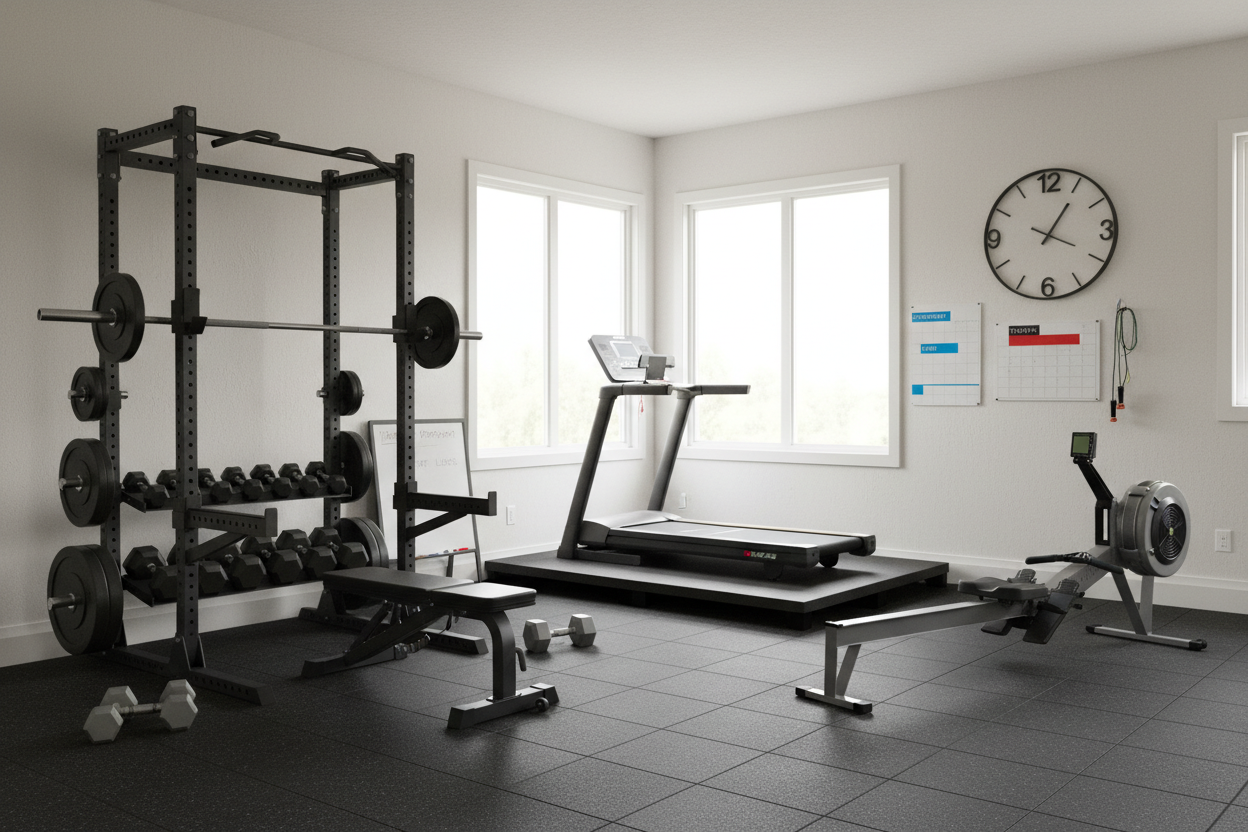
You don't need a $3,000 treadmill that requires a monthly subscription. To execute this plan, you need a basic weight set and bench. Specifically, look for an Olympic barbell with decent knurling and a bench that doesn't wobble when you sit on it. I’ve used the cheap 1-inch diameter bars before; they bend, the collars slip, and they generally feel like toys. Get a real 20kg bar and some iron plates.
For the conditioning side, stop running on the pavement if you can help it. Your joints are already taking a beating from the heavy squats. I highly recommend getting a large exercise mat for cardio. This gives you a dedicated space for jump rope, burpees, or kettlebell work without sliding around on dusty concrete or destroying your knees. A good mat also dampens the sound so you don't wake up the whole house during your 6 AM sprints. Focus on quality over quantity. One solid rack and a good floor space will do more for your fat loss than ten different 'as seen on TV' ab machines.
FAQ
Can I do cardio on an empty stomach?
You can, but it’s not a magic bullet. Fasted cardio doesn't burn more fat over a 24-hour period than fed cardio. If it makes you feel sick or weak, eat a small carb-heavy snack 30 minutes before. If you like the feeling of training fasted, go for it.
Should I do HIIT or steady-state?
Both. HIIT is great for time efficiency and hormonal response, but steady-state (like a brisk walk) is excellent for recovery. I like a mix: two days of 'I want to quit' HIIT and daily 'zone 2' walking.
How long until I see results?
If your diet is on point, you’ll see changes in 3-4 weeks. But don't just look at the scale. Track your strength. If your weights are going up and your waist is shrinking, the plan is working perfectly.