The Single Delt Isolation Exercise I Still Do in My Home Gym
I remember spending 45 minutes just on shoulders at the local big-box gym. I would cycle through front raises, side raises, and three types of rear delt flies until my joints clicked like a Geiger counter. Now that I train in a garage with limited time and a finite amount of energy, I have realized that most delt isolation exercise routines are just fluff designed to keep you in the gym longer than necessary.
The truth is, your shoulders are small muscles. They do not need the same volume as your back or legs. When I finally cut the junk and focused on one specific move, my shoulders actually started to grow for the first time in years. Here is the reality of training shoulders in a home gym environment.
Quick Takeaways
- Compound movements should account for 90% of your shoulder growth.
- Isolation work is for refinement, not the foundation.
- Stability is more important than the weight on the bar.
- One perfectly executed exercise beats five sloppy ones.
The Trap of the Endless Shoulder Day
Most home gym owners fall into the trap of trying to replicate commercial gym bodybuilding routines. You see a pro bodybuilder doing six different deltoid isolation exercises and think that is the path to 'capped' shoulders. In reality, that pro has a decade of foundation and likely some 'assistance' that you do not have in your garage.
In a home gym, your time is your most valuable asset. Spending twenty minutes on front raises—a muscle that already gets hammered by every bench press variation you do—is a waste. Not only does it eat into your recovery, but it also increases the risk of shoulder impingement. I have seen more guys ruin their rotator cuffs chasing a shoulder pump than I have seen them grow actual muscle mass from high-rep raises.
Heavy Compound Lifts vs. Deltoid Isolation Exercises
If you want big shoulders, you need to move big weight. It is that simple. Overhead pressing, whether with a barbell or heavy dumbbells, builds the meat of the front and lateral heads. Heavy rows and weighted pull-ups take care of the rear delts. If you are not getting stronger on these, no amount of lateral raises will save you.
I noticed a massive shift in my physique when I prioritized heavy multi-joint exercises over the pump-chasing fluff. A 200-pound overhead press will do more for your shoulder width than a 20-pound dumbbell raise ever could. Once you accept that compound movements are the engine, isolation work becomes the finishing touch.
Why Combo Moves Do 90 Percent of the Work
Efficiency is king when you are training between a lawnmower and a stack of winter tires. Certain movements hit multiple heads of the shoulder simultaneously, saving you time and joint wear. For instance, a brutal shoulder combo exercise like the clean and press or a high pull builds explosive power while smoking the entire shoulder girdle.
These moves require your delts to stabilize and fire in coordination with your traps and upper back. It is a functional way to build mass that actually translates to moving heavy stuff in the real world, rather than just looking good in a tank top.
The Only Delt Isolation Exercise Worth Your Time
So, what is the one move I kept? The Leaning Cable Lateral Raise (or the leaning dumbbell version if you do not have a cable machine). Most people do lateral raises standing straight up, which means there is almost no tension at the bottom of the movement. By leaning away from the anchor point, you create a constant profile of tension that hits the medial head from start to finish.
This is the only delt isolation exercise I find necessary because the medial head (the side of your shoulder) is the one area that compounds do not always fully maximize. By isolating it with a leaning movement, you get that width without the ego-lifting that usually happens with heavy standing raises. You do not need 50-pound dumbbells for this; I usually stay in the 15 to 25-pound range and focus entirely on the contraction.
Setting Up for Success on a Home Gym Floor
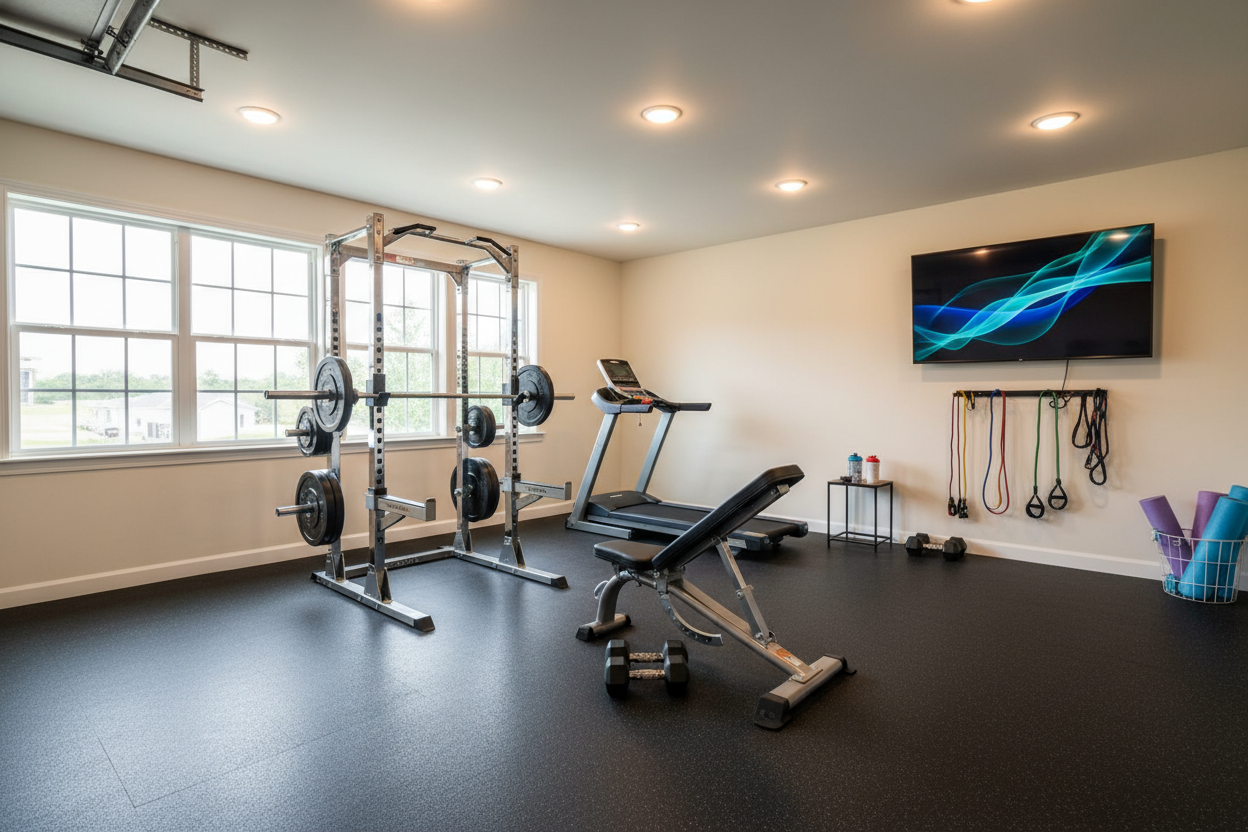
Stability is the secret sauce for isolation. If your feet are sliding or you are wobbling, your nervous system will not allow the target muscle to fire with 100% intensity. In my garage, I make sure I am standing on a large exercise mat to ensure my footing is locked. If you are leaning, you need that grip so you can focus on the muscle, not on whether you are about to slip and face-plant into your power rack.
I also recommend grabbing onto the upright of your rack with your non-working hand. This creates a closed loop of stability, allowing you to move the weight through a strict arc without using your hips to cheat the weight up.
Execution Beats Equipment: Getting the Form Right
The biggest mistake I see is people leading with their hands. To make this delt isolation exercise work, you have to lead with your elbows. Think about pushing the weight 'out' to the walls, rather than 'up' to the ceiling. This keeps the traps out of the movement and puts the load squarely on the deltoid.
Control the eccentric phase. Do not just let the weight drop. Take two full seconds to lower it. That eccentric control is where the micro-tears happen that lead to growth. If you cannot control the weight on the way down, it is too heavy. Drop the ego, grab the lighter weight, and actually feel the muscle work.
Personal Experience: My Shoulder Mistake
I spent two years doing 'Shoulder Saturdays' where I did five different isolation moves. My shoulders stayed flat, and my neck was constantly stiff from my traps taking over. I finally stripped it back to heavy overhead presses on Mondays and three sets of leaning lateral raises on Thursdays. My shoulders finally 'popped,' and the chronic nagging pain disappeared. More is rarely better; better is better.
FAQ
Do I need to do front raises?
Almost certainly not. Your anterior delts get plenty of work from bench pressing and overhead pressing. Adding front raises usually just leads to overtraining and shoulder impingement.
Can I do this with a resistance band?
You can, but the tension profile is backwards. Bands are easiest at the bottom and hardest at the top. A cable or a leaning dumbbell move provides a more consistent challenge through the whole range of motion.
How heavy should I go on isolation moves?
Weight is secondary to feel. If you can't hold the weight at the top for a split second, it is too heavy. Stay in the 12-15 rep range for the best results with the least joint stress.