The 3 Rules I Follow for My Over 50 Bodybuilding Routine
I remember waking up the morning after my 51st birthday feeling like my elbows were filled with crushed glass. I’d just finished a 'heavy' chest day, chasing the same numbers I hit in my 30s, and the price was a week of Ibuprofen and a missed shoulder session. It was the wake-up call I needed: my over 50 bodybuilding routine couldn't just be a diluted version of my younger self's program. It needed a total ground-up rebuild.
- Tension is more important than the number on the plates.
- Stability protects your joints and allows for harder efforts.
- Recovery is a discipline, not an afterthought.
- Machines and cables are tools, not 'cheating.'
The Ego Check Every Older Lifter Has to Make
The hardest part of training after fifty isn't the physical demand; it's the mental shift. You have to stop training for the guy you were twenty years ago. Stubbornly clinging to your old barbell maxes is the fastest way to find yourself wrecking your joints and spending more time with a physical therapist than a squat rack.
I had to learn that nobody in my garage gym cares if I'm benching 225 or 315. The goal now is muscle retention and metabolic health. If a lift causes a 'sharp' pain instead of a 'muscle' pain, I drop it immediately. No exceptions. We are training for longevity now, and that requires a level of maturity that most 25-year-olds simply don't possess.
Rule 1: Chase Muscle Tension, Not Plate Tonnage
Hypertrophy is driven by mechanical tension. Your muscles don't have eyes; they don't know if you're holding a 100-lb dumbbell or a 50-lb dumbbell. They only know how hard they have to contract. To keep my joints happy, I've moved toward high-tension techniques like 3-second eccentrics and internal pauses.
By slowing down the lowering phase of a press or a squat, I can get a massive growth stimulus with significantly less weight. This reduces the sheer force on my tendons while keeping the muscle under fire. I've found that sets of 10-15 reps with a slow, controlled tempo build more actual muscle than the shaky, ego-driven sets of five I used to prioritize.
Rule 2: Your Over 50 Bodybuilding Workout Needs More Stability
Free weights are great, but they require a lot of 'stabilizer' work from your rotator cuffs and lower back. As we age, those small supporting structures are often the first things to wear out. That’s why a smart over 50 bodybuilding workout should incorporate more stable environments like cables, chest-supported rows, and even high-quality machines.
I swapped the traditional standing overhead press for a seated dumbbell press or a landmine press. The extra stability allows me to push the target muscle—the deltoids—to failure without my lower back giving out first. If you're training in a home gym, don't sleep on a good set of adjustable dumbbells or a functional trainer. They allow for a more natural path of motion that doesn't lock your joints into a fixed, painful plane.
Rule 3: Treat Your Garage Floor Like a Recovery Zone
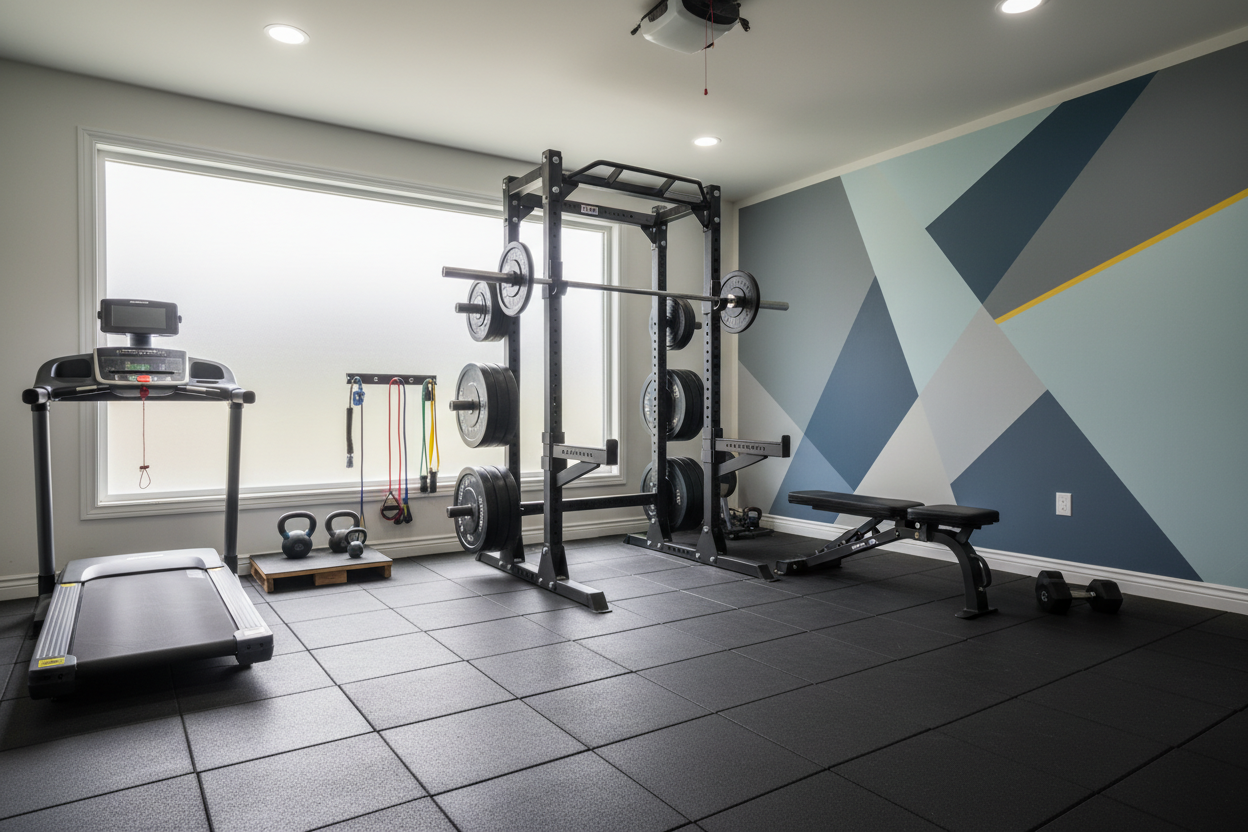
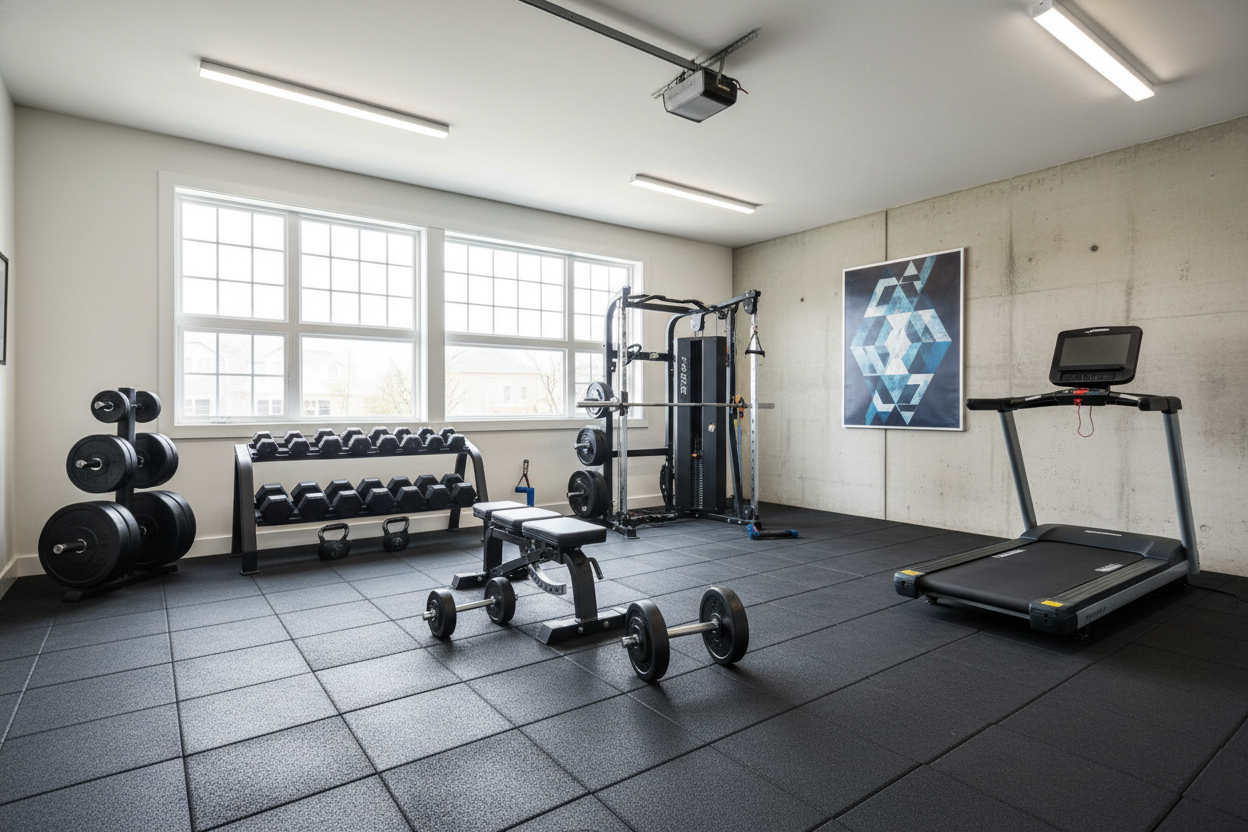
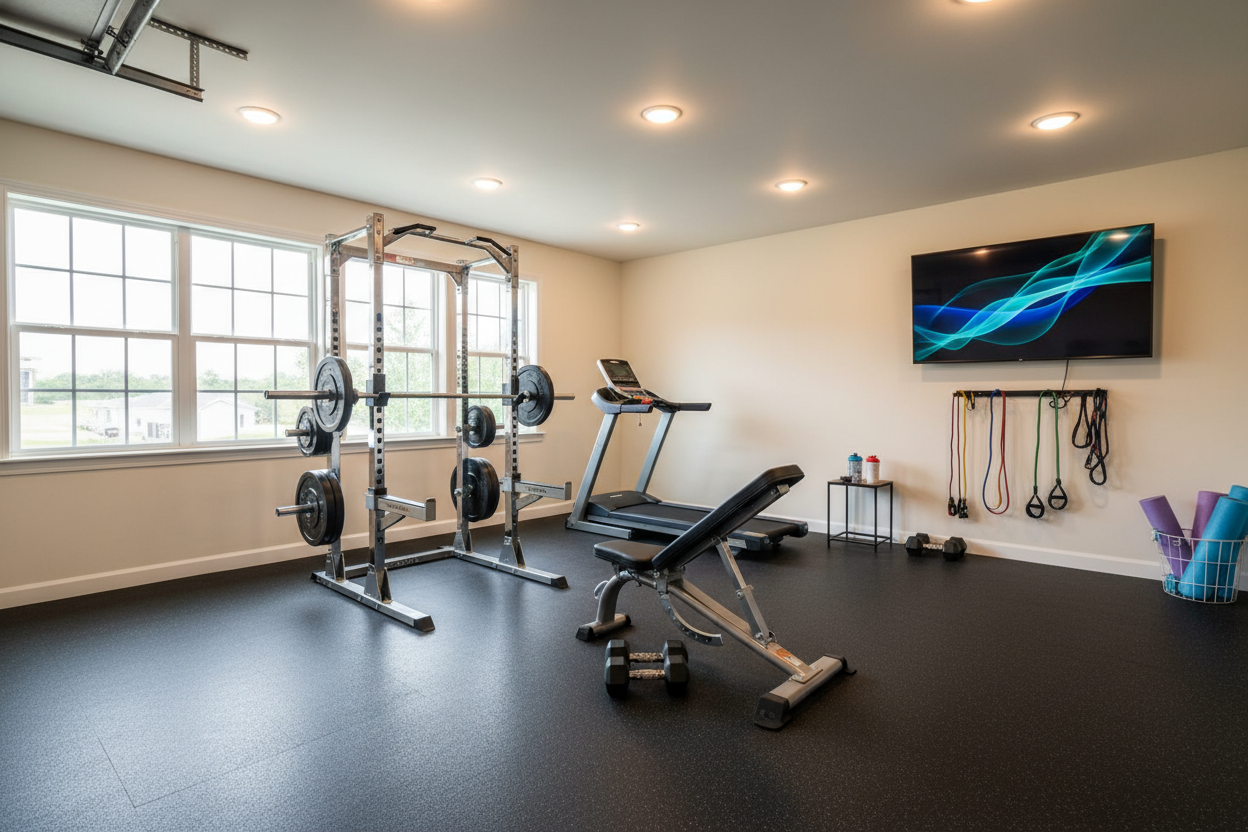
I used to think mobility work was a waste of time. Then I hit 50 and realized that if I don't spend ten minutes prepping my hips, my squats feel like garbage. However, doing those movements on cold, bare concrete is a recipe for bursitis and bruised knees. Upgrading to proper gym flooring for home workout sessions was one of the best investments I made for my aging body.
Having a dedicated, cushioned space makes it much more likely that you'll actually do the 'boring' stuff—the foam rolling, the bird-dogs, and the dead bugs. My recovery starts the moment the last set ends. I prioritize sleep and protein, but I also prioritize keeping my joints moving through their full range of motion on my off days. If you treat your floor like a recovery zone, your body will reward you with less morning stiffness.
Putting It Together: A Sustainable Weekly Split
I currently follow a four-day split: Upper, Lower, Rest, Upper, Lower, Rest, Rest. This ensures I hit every muscle group twice a week but allows for plenty of systemic recovery. On those days when the joints feel particularly cranky or life gets in the way, I don't just skip the gym. I'll pivot to a 30 minute all over body workout that focuses on blood flow and light movement.
The key is staying consistent without being obsessive. If I need an extra rest day, I take it. If a movement feels off, I swap it. This isn't about being the strongest guy on the block anymore; it's about being the guy who's still lifting when he's 80.
How often should I train after 50?
Three to four days a week is usually the sweet spot. It provides enough stimulus to grow muscle while leaving 48-72 hours of recovery time between hitting the same muscle groups again.
Can I still do the 'Big Three' lifts?
You can, but you don't have to. If back squats hurt your spine, do Bulgarian split squats. If flat bench hurts your shoulders, do low-incline dumbbell presses. There are no mandatory exercises in bodybuilding.
What is the best rep range for older lifters?
I find the 8-15 rep range to be the 'goldilocks' zone. It's heavy enough to trigger growth but light enough that you aren't redlining your central nervous system or crushing your joints every session.