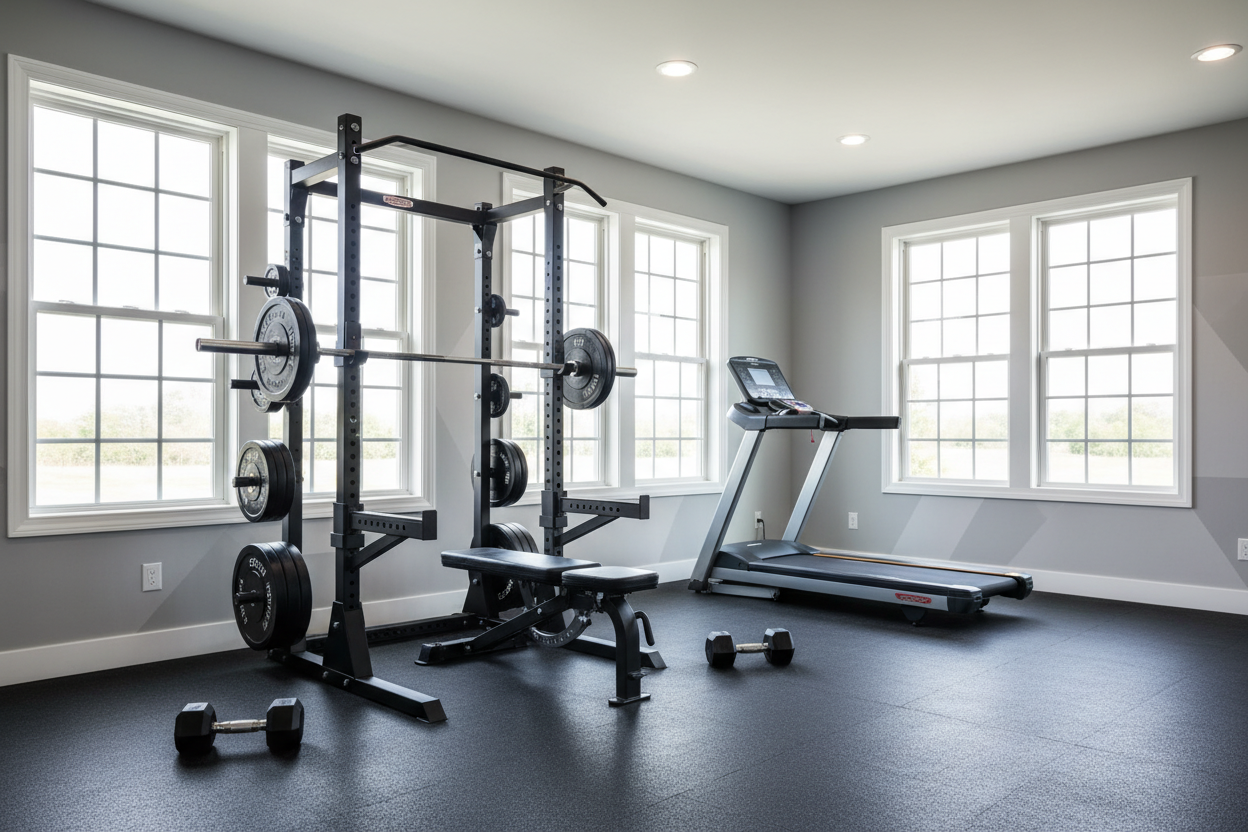
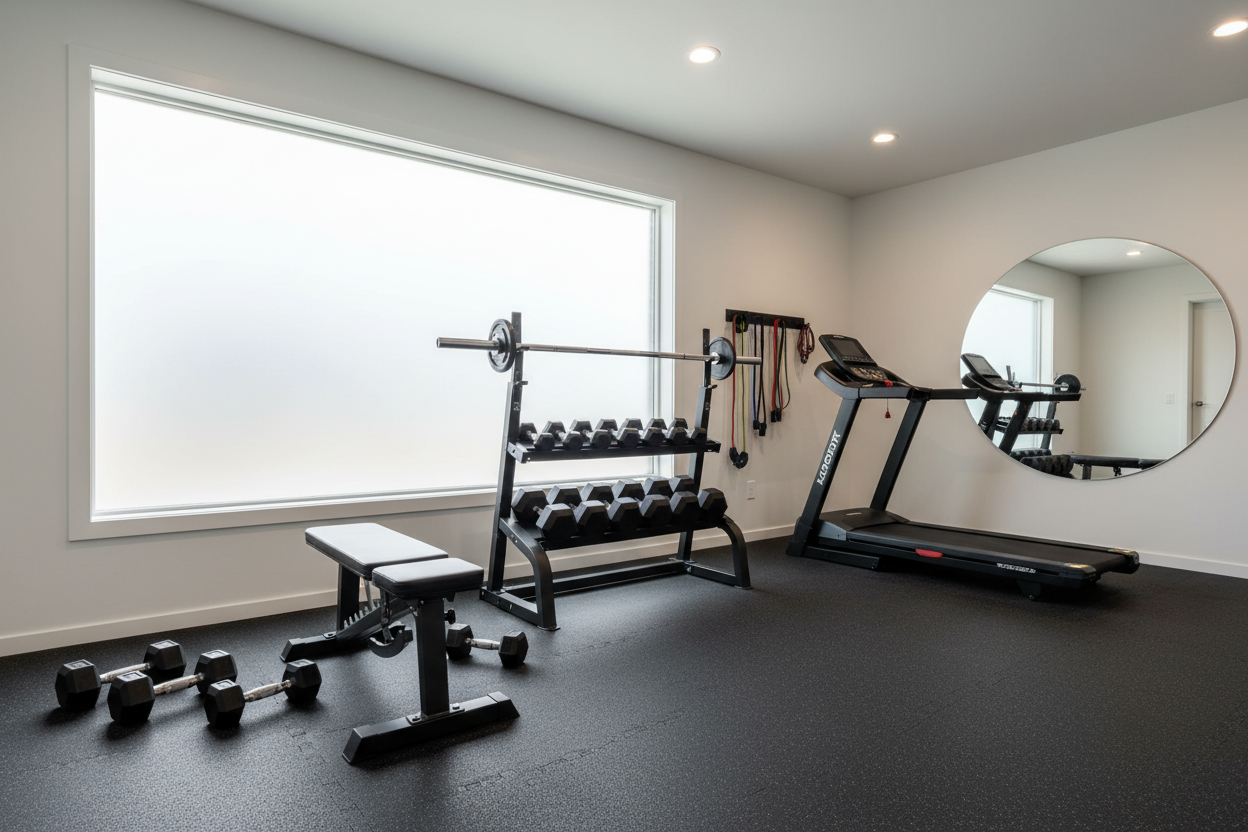
Why Your Body Building Exercise Routine Just Feels Like Labor
I spent three years grinding in my garage before I realized my 315-lb bench press was doing more for my rotator cuffs than my pecs. It is a common trap: you buy the rack, the plates, and the bar, then you treat your body building exercise routine like a construction job rather than a physique-building session. If you are just moving weight from point A to point B to satisfy a spreadsheet, you are essentially paying for the privilege of manual labor in your own home.
Quick Takeaways
- Stop 'moving' weight; start 'loading' the target muscle.
- Identify 'Tension Thieves' like front delts and forearms that hijack your gains.
- Use 30-second iso-holds to wake up sleeping muscle fibers.
- Stability is mandatory—if your feet slip, your nervous system shuts down force.
The Difference Between Moving Weight and Building Muscle
Most guys walk into their garage and think that a heavier bar equals a better workout for bodybuilding. That is powerlifting logic, and while it is great for the ego, it is often terrible for hypertrophy. When you lift purely for the sake of the number, your body finds the path of least resistance. It recruits every secondary muscle, every bit of momentum, and every joint to survive the rep. This turns a bodybuilding exercise plan into a grueling test of joint survival where your elbows take the brunt of the work while your triceps stay soft.
A real bodybuilder workout plan is about mechanical tension and metabolic stress. It is about making a 50-lb dumbbell feel like 100 lbs because the target muscle is under constant, agonizing load. If you are doing a workout for bodybuilding and you do not feel a localized pump by the second set, you are probably just practicing a movement pattern rather than stimulating growth. You need to shift your mindset from 'how much can I lift?' to 'how much can I make this muscle work?'.
This is why so many bodybuilding lifting programs fail in home gyms. Without the machines that force isolation, garage lifters rely on compound movements that are easy to cheat. If your bodybuilding training plan is just a list of exercises without a focus on tempo and tension, you are just doing a strength routine with more reps. You have to learn to shut off the 'helpers' and force the prime mover to carry the entire load.
Identify the 'Tension Thieves' in Your Garage
In a home gym environment, your equipment often dictates your form—and not always in a good way. If you are following a standard leg and back workout bodybuilding template, your forearms and biceps are likely stealing the show. When you are rowing a heavy barbell, your grip often gives out or your biceps take over before your lats even realize they are supposed to be working. This is the definition of a tension thief.
The front delts are another notorious culprit. Every time you press, whether it is on a flat bench or a 700-lb capacity adjustable bench, your delts want to help. If you do not consciously retract your scapula and 'tuck' your shoulders, your chest stays flat while your shoulders get beat up. This is why many bodybuilding workout programs for beginners result in shoulder impingement rather than a massive chest.
To fix this, you have to audit your bodybuilders exercise routine. During your next back session, use a thumbless grip. It sounds minor, but it helps disconnect the 'pulling' sensation from your hands and shifts it to your elbows. If you are following a bodybuilding exercise program that relies heavily on free weights, you must be hyper-aware of where you feel the burn. If it is in the joint or a secondary muscle, the set was a waste of time for your physique.
The Pre-Exhaust Fix for Stubborn Muscle Groups
If you find that your quads never grow regardless of how many squats you do, your glutes or lower back are likely doing the heavy lifting. This is where pre-exhaustion saves your bodybuilding training regimen. Before you touch a barbell for a female leg workout bodybuilding schedule or a heavy male leg day, you need to wake up the quads with a 30-second isolation hold.
Try this: sit in a wall sit or perform a bodyweight leg extension hold at the top for 30 seconds. Do not go to failure; just get the muscle screaming. Then, immediately move into your squats. This neurological activation ensures that when the heavy load comes, your quads are already 'on' and cannot pass the buck to your hips. It completely changes the best bodybuilding schedule from a chore into a targeted strike.
This technique applies to every bodybuilder workout regimen. Struggling with chest? Do 20 reps of light cable flyes or floor flyes before you bench. This is the secret to the best program for bodybuilding—it is not about the exercises themselves, but the order and intent. By pre-exhausting the target muscle, you ensure it reaches failure before the smaller, supporting muscles do. This is the only way to make a bodybuilding-trainingsplan actually deliver on its promise of size.
Why Your Footing Is Secretly Costing You Gains
One thing people overlook in their bodybuilding workout planner is the floor. If you are lifting on slippery concrete or cheap, thin foam tiles that shift under your feet, your nervous system will never allow you to reach maximum intensity. It is a safety mechanism. If your brain senses instability, it downregulates the force your muscles can produce. You cannot build a house on a swamp, and you cannot build legs on a sliding floor.
Investing in high-quality gym flooring for home workout setups is not just about protecting your subfloor; it is about providing the friction necessary for muscle isolation. When your feet are locked into a high-grip surface during split squats or heavy rows, you can actually drive through the floor. This stability allows you to focus 100% of your mental energy on the muscle contraction rather than trying not to fall over.
I have seen guys try to execute the best workout routine bodybuilding has to offer while wearing socks on a hardwood floor. It is a joke. If you want a great bodybuilding programs result, you need a stable base. This is especially true for any bodybuilding lifting routine that involves unilateral work. If you are wobbling, you are not growing.
How to Audit Your Current Routine This Week
You do not need to scrap your entire bodybuilding fitness program. You just need to audit it. Look at your current bodybuilding workout routine and identify the three exercises where you feel the least 'pump.' For most, it is the bench press, the row, and the squat. These are your problem areas. Strip the weight back by 30%, implement a 3-second eccentric (lowering) phase, and add a 1-second pause at the peak contraction.
If your current bodybuilding fitness plan is still leaving you frustrated after these tweaks, it might be time to look at a more structured approach. You can find tested templates and better-organized training programs for bodybuilding over at our workout hub. Sometimes the best bodybuilding plans are the ones that force you to slow down and respect the tempo.
Remember, the best workout chart for bodybuilding is not the one with the highest numbers; it is the one that results in the most localized fatigue. Stop being a weight mover. Start being a muscle builder. If you are not sore in the right places tomorrow, you did not train; you just worked. And work is for people who do not have a home gym.
My Experience: The Ego Trap
I remember when I first bought a 45-lb barbell and a stack of iron plates. I thought heavy barbell rows were the ticket to a massive back. I spent months heaving 225 lbs, using my hips and my lower back to 'cheat' the weight up. My forearms got huge, my lower back stayed perpetually sore, and my lats looked exactly the same. I was following a top bodybuilding routines list, but I was doing it wrong. I eventually dropped the weight to 135 lbs, focused on pulling with my elbows, and finally felt my back muscles flare for the first time. It was a humbling lesson: the muscle does not know how much weight is on the bar, it only knows how hard it is being forced to contract.
FAQ
What is the best bodybuilding schedule for a home gym?
A 4-day or 5-day split that allows you to focus on one or two muscle groups per session is usually best. This gives you enough time to perform the isolation work and pre-exhaustion holds necessary to make up for a lack of commercial machines.
Can I build a pro-level physique with just dumbbells?
Yes, provided you have enough weight. A set that goes up to 50 or 80 lbs is enough for most upper-body isolation work. For legs, you will eventually need a barbell or a very heavy set of adjustable dumbbells to maintain the necessary tension.
How long should a bodybuilding exercise routine take?
If you are training with high intensity and focusing on tension, 45 to 75 minutes is the sweet spot. If you are in the gym for two hours, you are likely spending too much time scrolling on your phone or resting too long between sets.