Why You Only Need One Gym Machine for Upper Body Growth
I remember standing in my garage three years ago, tape measure in hand, trying to figure out how to fit a pec deck, a lat pulldown, and a cable crossover into a single-car space. It was a fool's errand. I almost pulled the trigger on a cheap chest press I found on Marketplace, but I realized I’d be sacrificing half my floor space for a single movement. If you are hunting for a gym machine for upper body development, you have to stop thinking like a commercial gym owner and start thinking like a strategist.
Quick Takeaways
- Versatility beats isolation: One multi-functional machine is worth three single-use units.
- Cable ratios (2:1 vs 1:1) dictate whether you can actually lift heavy.
- Functional trainers offer the most variety, but lat pulldowns offer the most raw weight.
- Don't skip the floor protection; selectorized stacks will crack your foundation.
The Trap of Single-Use Equipment
Commercial gyms love single-use machines because they are easy for beginners to understand. You sit down, you push, you leave. But in a home setup, a dedicated chest press or shoulder press machine is a massive waste of square footage. Unless you have a 5,000-square-foot warehouse, every inch of steel needs to earn its keep.
I’ve seen guys buy a pec deck only to realize they can't do rows, face pulls, or tricep extensions on it. Within three months, it becomes a very expensive coat rack. When looking for an upper body exercise machine, your priority should be the number of planes of motion you can work in. If it doesn't allow you to push, pull, and rotate, it doesn't belong in your gym.
Functional Trainers: The Ultimate Do-It-All Option?
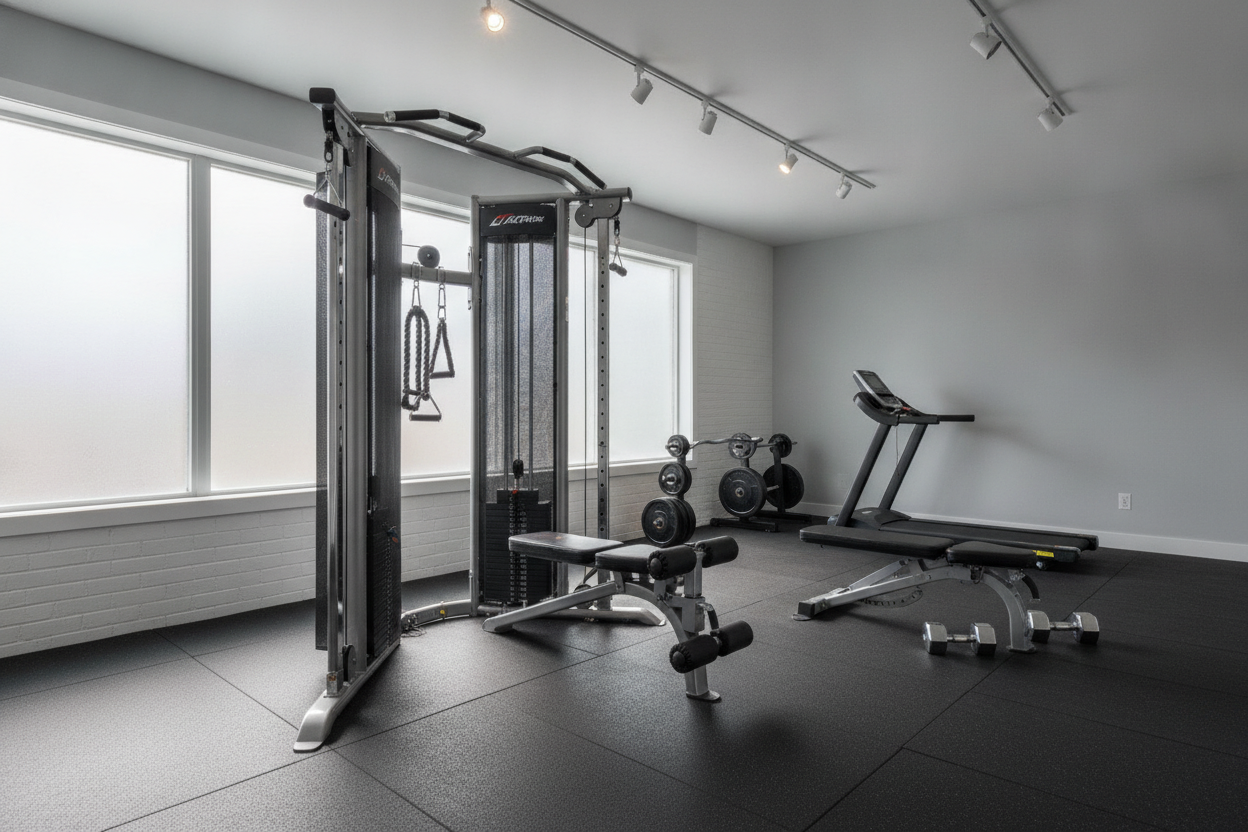
The functional trainer is the undisputed king of upper body workout machines for home use. With two independent weight stacks and adjustable pulleys, you can hit chest flyes, lat pulldowns, and bicep curls without moving more than two feet. It's the most efficient way to handle upper body workout with equipment because it mimics the freedom of dumbbells but keeps constant tension on the muscle.
However, getting the most out of these units isn't always intuitive. You need to know how to set the pulley heights to match your limb length and joint angles. I often tell people that checking out a gym machine for upper body the definitive training guide is essential before you start pulling handles at random. Without a plan, a functional trainer is just a very expensive set of pulleys.
Why Cable Ratios Matter for Upper Body Gains
This is where most people get burned. Most functional trainers use a 2:1 ratio, meaning 100 lbs on the stack feels like 50 lbs in your hand. This is great for smooth, long-travel movements like crossovers or face pulls. But if you’re a heavy lifter trying to do chest presses, you might max out the stack sooner than you think. If you want to move real weight, look for a machine that offers a 1:1 ratio or has a massive stack to compensate for the mechanical advantage.
Lat Pulldown & Low Row Combos for Heavy Lifters
If your goal is raw thickness and a wide back, a dedicated lat pulldown and low row combo might actually beat a functional trainer. These usually come with a 1:1 ratio, meaning every pound on that stack is fighting you. For someone focused on heavy upper body strength equipment, the stability of a thigh pad and a fixed footplate allows you to move significantly more weight than you can on a standing cable machine.
I’ve found that combining a heavy row station with an at home upper body strength workout involving basic free weights is often more effective than trying to do everything on a fancy cable rig. You get the heavy vertical and horizontal pulling power of the machine, then finish off your chest and shoulders with dumbbells or a barbell.
Don't Let Heavy Steel Ruin Your Foundation
Before you bolt a 400lb selectorized unit to your floor, think about what's underneath it. I made the mistake of putting a weight stack directly on thin horse stall mats over a cracked concrete slab. Every time I dropped the stack after a heavy set of rows, I could feel the vibration in my teeth. You need high-density gym flooring for home workout to distribute that load, especially if you’re working in a spare bedroom or a garage with older concrete.
The Final Verdict: Which Machine Wins?
If you want variety and have the budget, get a functional trainer. It is the best upper body exercise machine for accessory work and hypertrophy. If you are a powerlifter or someone who just wants to get as strong as possible, go with a heavy-duty lat pulldown/row combo. It takes up less space and lets you move more weight. My current setup is a 1:1 lat tower and a pair of adjustable dumbbells—it’s simple, it’s heavy, and it works.
Personal Experience: My Cable Machine Regret
I once bought a plate-loaded cable crossover because it was $400 cheaper than a selectorized (weight stack) version. I hated it within a week. Loading and unloading plates every time I wanted to switch from a heavy row to a light face pull was a massive flow-killer. I spent more time moving plates than lifting them. If you can afford it, always go for the weight stack for upper body machines at the gym or at home. The speed of the pin-drop is worth every penny.
FAQ
Can I build a big chest with just a functional trainer?
Absolutely. While the bench press is the gold standard, cables provide constant tension that you just can't get with iron. Cable flyes and presses are incredible for hypertrophy because the muscle never gets a break at the top of the movement.
How much ceiling height do I need for a lat pulldown?
Most standard units are between 80 and 84 inches. Always measure your ceiling twice. If you have low 7-foot ceilings in a basement, look for 'short' or 'compact' versions specifically designed for residential spaces.
Are plate-loaded machines worth the savings?
Only if you are on a strict budget. They save you money upfront, but they take up more 'working space' because you need room to slide plates on and off the pegs. For upper body work where you change weights frequently, a stack is superior.