Why You Need Machines to Exercise (Even if You Love Free Weights)
I spent five years convinced that if an exercise didn't involve a barbell and a bucket of chalk, it was a waste of time. I looked down on anyone using a machine for exercise, thinking they were taking the easy way out. Then my lower back started screaming every time I looked at a squat rack, and my hypertrophy stalled because I was too fatigued to actually reach failure on my accessory work.
- Machines provide constant tension that free weights can't match.
- Cables allow for better isolation of lagging muscle groups.
- Using mechanical support reduces injury risk during high-volume blocks.
- High-quality pulleys are a better investment than a second set of dumbbells.
The Free Weight Purist Trap
Home gym culture has a bit of a toxic obsession with the 'hardcore' aesthetic. We want the rusted plates and the basic power rack because it looks like a dungeon, but this mindset often leads to a plateau. Stubbornly refusing to use machines to exercise limits your ability to isolate muscles that are falling behind. If your grip gives out before your lats do on a row, you aren't training your back; you're training your forearms.
When I was refining The 4-Day Strength Training Exercise Routine I Use to Avoid Plateaus, I realized that my accessory work was failing because I was too tired to stabilize a heavy dumbbell after my main lifts. By moving to a machine for my secondary movements, I could actually push my muscles to the brink without worrying about dropping a weight on my face or tweaking my spine. It turns out, your ego is the only thing the machine is 'easier' on.
Why Your Muscles Don't Care About 'Functional' Fitness
Your muscle fibers are incredibly simple: they respond to mechanical tension, metabolic stress, and muscle damage. They don't have eyes. They don't know if you are balancing a 45-lb cast iron plate or pulling a selectorized weight stack. While 'functional' movements are great for athletes, training machines are often superior for pure muscle growth because they remove the stability requirement.
Think about a dumbbell chest fly. At the top of the movement, there is zero tension on your pecs because gravity is pulling the weight straight down through your joints. On a cable machine, that tension is pulling outward the entire time. By maintaining that stress through the full range of motion, you're getting more 'work' out of every single rep. For anyone trying to fill out a t-shirt, that constant tension is king.
The Only 2 Machines Worth Your Garage Floor Space
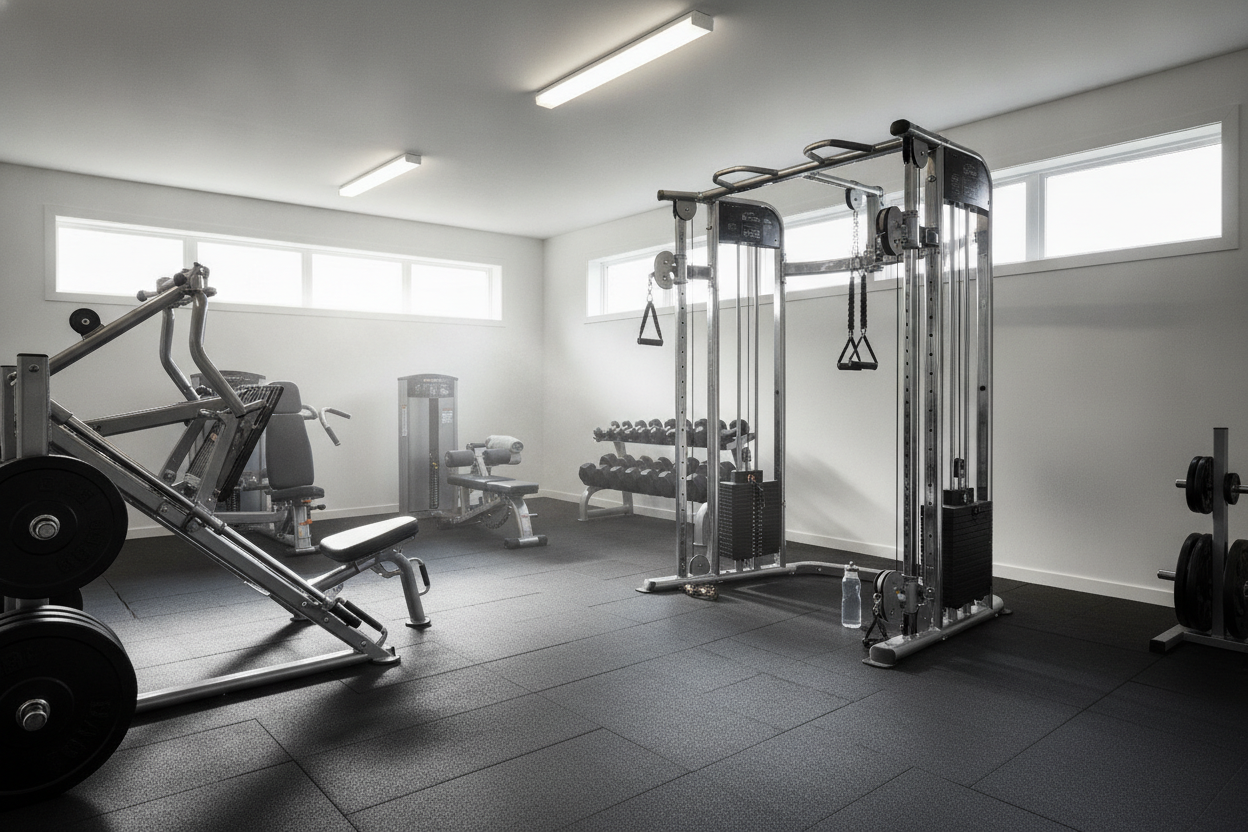
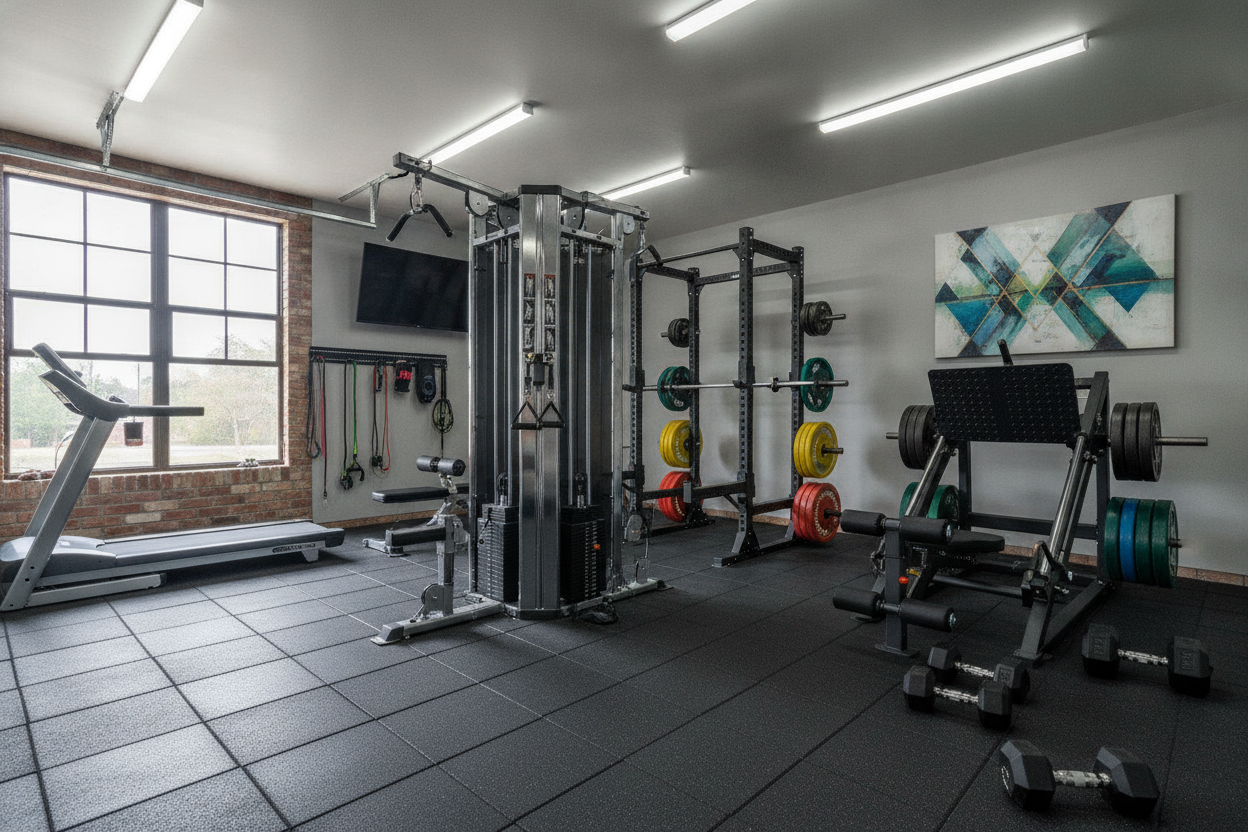
You don't need a 20-unit commercial circuit. You need two specific things to complement your rack. First is a functional trainer or a high-quality cable tower. Look for a unit with at least a 200-lb stack and a 2:1 ratio—this means 100 lbs of actual resistance, which is plenty for single-arm work. It should have a footprint of about 3x4 feet. This single machine replaces dozens of dumbbell variations and gives you better angles for lats, triceps, and delts.
The second is a leg press or hack squat combo. These are floor hogs, often taking up a 7x3 foot area, but they are the only way to truly blast your quads once your lower back is fried from heavy deadlifts. I prefer a 45-degree sled that uses Olympic plates. Look for one with a 1,000-lb weight capacity and adjustable footplates. It allows you to shift your foot position to target the sweep of the quad or the glutes in a way a barbell simply won't allow when you're gassed.
How to Combine Iron and Cables Without Junk Volume
The biggest mistake lifters make when they buy a new machine for exercise is just tacking it onto the end of an already long workout. This leads to 'junk volume'—reps that don't actually stimulate growth because you're already past the point of recovery. You have to be surgical about it. Start your session with your heavy, compound free-weight movements while your nervous system is fresh, then transition to machine-based work to finish the muscle off.
I always tell people that Why Adding Another Exercise for Weight Training Won't Fix Your Plateau is a lesson in restraint. If you add a cable fly, you might need to drop a set of bench press. The goal is to use the machine to get high-quality, safe volume that you couldn't get with a barbell. For example, after three heavy sets of squats, move to the leg press for two sets of 15-20 reps. You get the growth stimulus without the systemic fatigue that would come from doing five sets of heavy squats.
Red Flags: When to Walk Away from Budget Gear
Not all training machines are created equal. If you buy a $200 lat pulldown from a big-box store, you're going to regret it. The first red flag is plastic pulleys. They create friction, they get hot, and they eventually melt or crack. You want aluminum pulleys with high-quality bearings. If the movement doesn't feel smooth when the machine is empty, it's going to feel like dragging a sled through gravel once you put 150 lbs on it.
Check the cable rating too. You want 7x19 strand aircraft cable with a nylon coating. If the manufacturer doesn't list the weight capacity or the cable thickness, walk away. I once bought a budget functional trainer where the '200-lb stack' actually started bowing the guide rods after six months. If the guide rods aren't solid steel, the machine won't survive a serious lifter. It’s better to buy one high-end cable tower than a cheap 'all-in-one' home gym that shakes when you sneeze.
Is a 2:1 or 1:1 cable ratio better?
A 2:1 ratio is better for functional trainers because it allows for more cable travel and finer weight increments, which is perfect for isolation moves. A 1:1 ratio is better for heavy movements like lat pulldowns or low rows where you want the full weight of the stack.
Do machines take up too much space?
Some do, but a wall-mounted cable tower has a footprint of less than one square foot. You can fit a lot of utility into a tiny corner if you skip the bulky 'multi-gym' units and stick to specialized towers.
Can I build a pro physique with just machines?
Absolutely. Many modern bodybuilders rely heavily on machines to minimize injury and maximize isolation. While barbells are great for total-body strength, machines are often more efficient for sculpting specific muscle groups.