Why the Big-Box Store Gym Aisle Is a Complete Trap
I was at a massive retail chain last week picking up laundry detergent and light bulbs when I saw it: a shiny, chrome-plated dumbbell set sitting right next to the protein powder. It looked convenient. It looked cheap. It looked like a shortcut to a better physique. But here is the truth: building a store gym from the aisles of a big-box retailer is usually a recipe for frustration and wasted cash. I’ve spent a decade testing racks, bars, and plates, and I’ve seen what happens when you try to save fifty bucks on a barbell that wasn't meant to handle more than a casual bicep curl. If you are serious about training, you need to stop treating gym shopping like a grocery run.
Quick Takeaways
- Retail plates often vary by 5-10% in actual weight, which completely ruins your ability to track progressive overload.
- Cheap 'standard' bars are often hollow or made of low-grade steel that develops a permanent bend under moderate loads.
- Most big-box flooring is too thin to protect your subfloor from dropped weights.
- Specialty shops offer gear with actual knurling and lifetime warranties that hold their resale value.
The Illusion of Convenience: Why We Stop to Look
It happens to the best of us. You’re already there for a garden hose or a new toaster, and you see a bench on sale. The packaging is glossy, the model on the box looks ripped, and you think, 'Hey, I can just throw this in the cart and start my home gym today.' The convenience is the trap. These stores stock items based on shelf-space efficiency and profit margins, not tensile strength or sleeve rotation. They want you to buy on impulse because they know you won't come back to return a 50-pound box once it's opened.
The moment you get that gear home and realize the '45lb' plate actually weighs 41.2lbs, the convenience disappears. You aren't just buying equipment; you're buying a headache that you'll eventually have to list on Marketplace for pennies on the dollar. I’ve seen guys spend hundreds on these starter sets only to realize the rack wobbles when they rack a measly 135 pounds. That isn't convenience; it is a safety hazard.
What Actually Happens When You Lift Retail-Grade Iron
When you step into a dedicated fitness space, the gear is built to take a beating. When you buy from a general retailer, you’re getting 'lifestyle' equipment. I’ve seen 'Olympic' bars in these stores with sleeves that are pinned on with cheap roll pins rather than snap rings. If you drop that bar once, those sleeves are toast. The steel used in these bars is often 14-gauge or thinner, which is fine for a patio chair but terrifying for a squat rack.
Then there are the weight tolerances. In a real the gym store, a 45lb plate is usually within 1% of its stated weight. In a big-box store, I’ve measured plates that were off by nearly four pounds. If you’re trying to hit a PR and one side of the bar is three pounds heavier than the other, you’re asking for an injury. The welds on the benches are often sloppy and thin, usually rated for a total capacity of 300lbs—including your body weight. If you’re a 200lb lifter benching 135, you’re already over the limit and risking a structural failure mid-set.
The Floor Damage You Did Not Plan For
Most people grab those interlocking foam squares because they’re cheap and easy to carry. Don't do it. Those thin mats are meant for playrooms, not power cleans. If you drop a hex dumbbell on one of those, the energy goes straight through the foam and cracks your foundation or dents your hardwood. I’ve seen beautiful garage floors turned into moon craters because someone thought a 1/2-inch foam tile was enough protection.
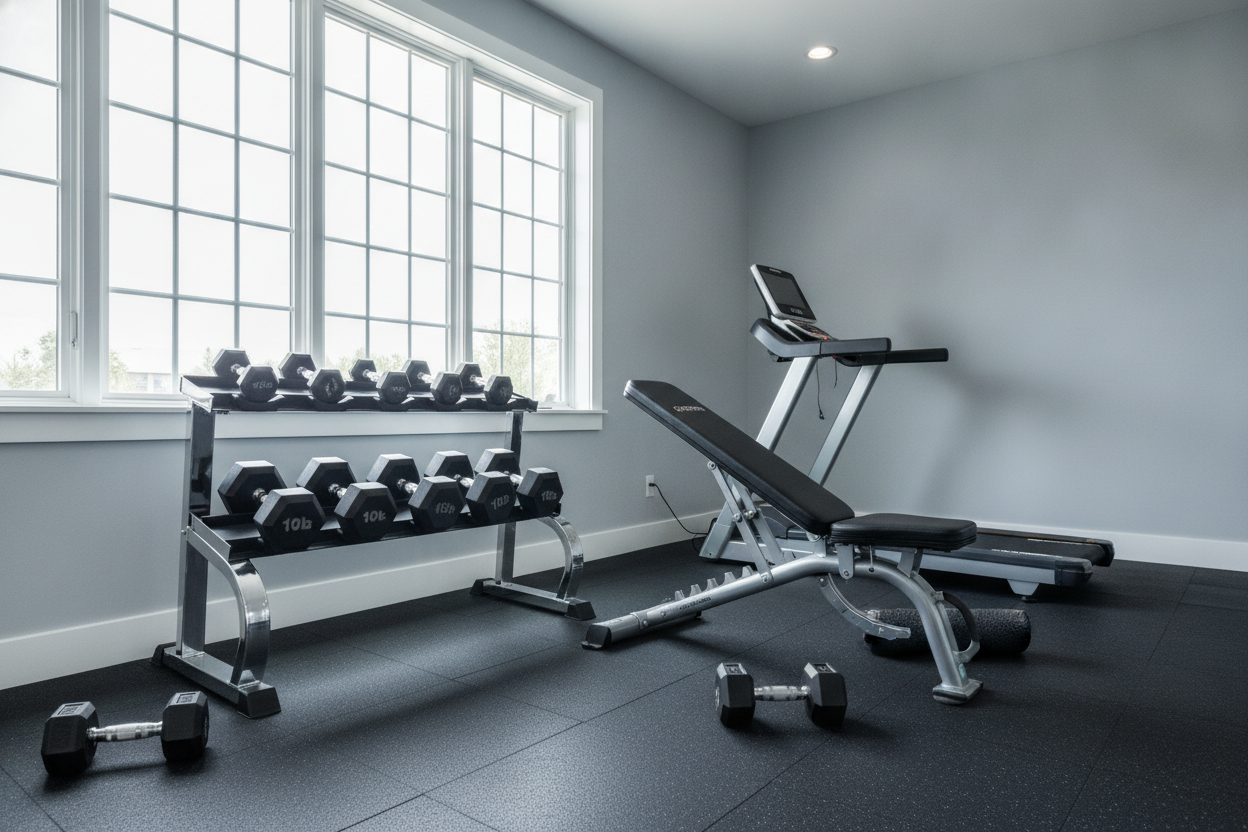
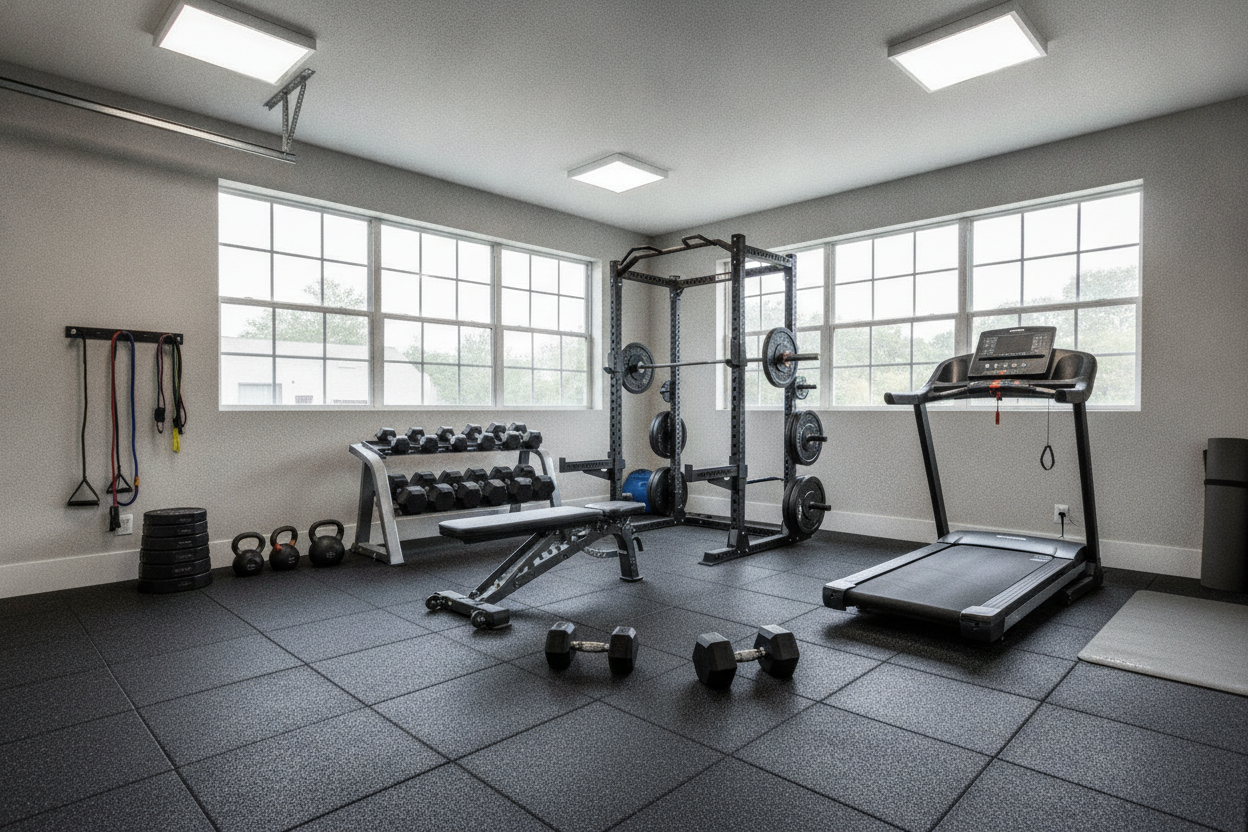
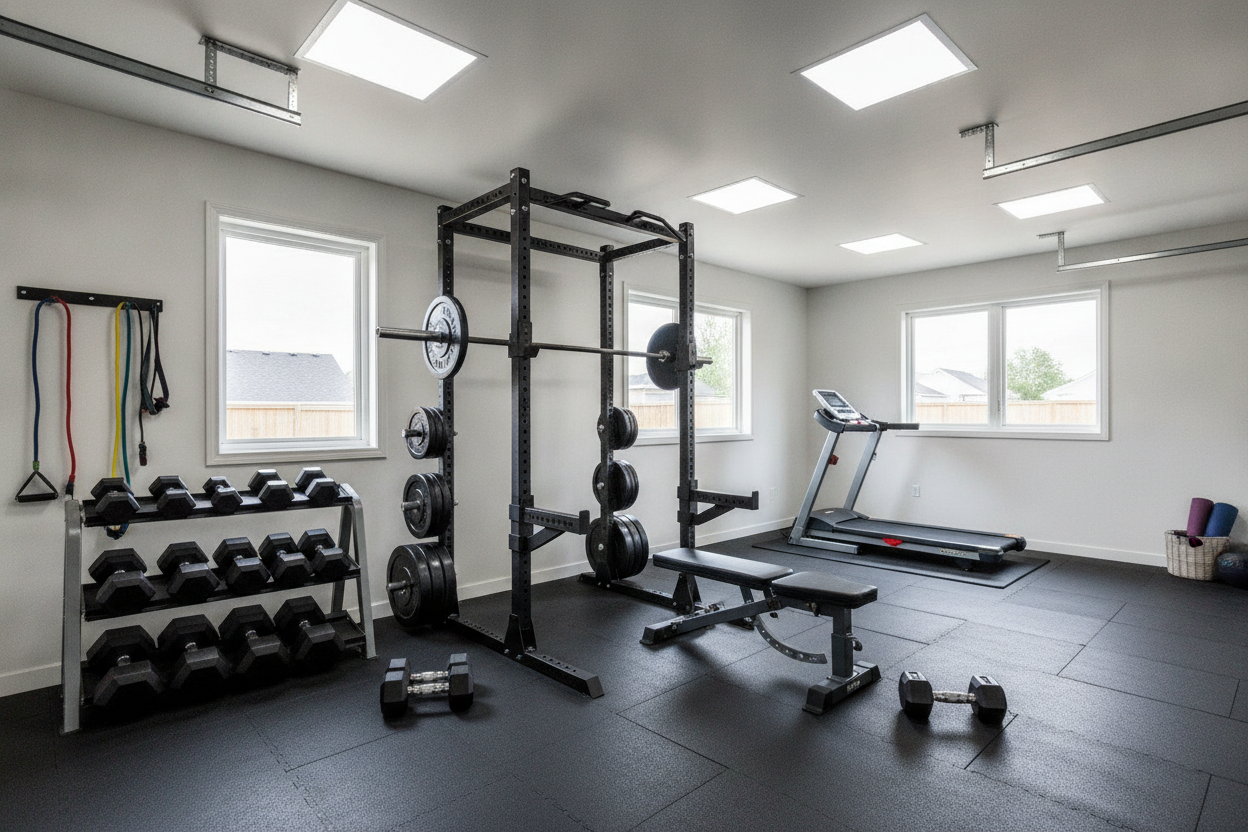
Instead of the puzzle-piece garbage, you need a dense, high-impact surface. Investing in large gym flooring for home workouts is the only way to ensure your house doesn't fall apart while you're getting strong. A real 6x8 mat stays put, doesn't slide around during burpees, and actually absorbs the shock of a dropped 50lb dumbbell. It’s the foundation of your gym—don't skimp on it.
The Department Store vs. The Gym Store
When you go to a department store, the person working the aisle probably spent their last shift folding towels or stocking snacks. They don't know the difference between a bushing and a bearing. They can't tell you if a rack is made of 11-gauge or 14-gauge steel. They are there to move units, not to help you build a legacy of strength. You're buying a product, not a tool.
A specialty fitness shop is different. The people there actually lift. They know that a 28.5mm diameter bar is better for multi-purpose training than a thick 32mm 'squat' bar from a retail shelf. They understand that knurling shouldn't feel like smooth plastic, but it shouldn't cheese-grate your shins either. You pay a bit more upfront at a specialty shop, but you’re buying knowledge and durability. You’re buying gear that your kids might actually inherit one day.
3 Things You Can Safely Buy at a Generic Retailer
I’m not a total snob. There are a few things you can grab while you're buying milk. Basic resistance bands are usually fine, as long as you check for nicks in the rubber before you use them. Foam rollers are another safe bet—a piece of high-density foam is hard to screw up, even for a mass-market brand. These are low-risk items that don't require precision engineering to be effective.
Finally, if you need organization, skip the 'fitness' storage racks and head to the back of the store. Often, visiting a local hardware store or checking the shelving aisle of a big-box shop will net you much stronger storage bins and wall hooks for half the price of the 'gym branded' versions. A heavy-duty utility hook doesn't care if it's holding a garden hose or a set of jump ropes.
How to Actually Handle Your Gym Shopping
Stop buying on impulse. Your home gym is an investment in your health, not a weekend hobby. Start by mapping out your space. If you have a 10x10 room, you don't need five different machines; you need one solid rack, a good bar, and quality flooring. Focus your budget on the things that sit between you and the ground, and the things you actually hold in your hands.
Be patient. Instead of settling for the shaky bench that’s in stock today, wait for seasonal sales and Black Friday deals from brands that specialize in strength. You can often get professional-grade gear for the same price as retail junk if you time it right. Your future self—the one with intact floors and a bar that isn't bent like a noodle—will thank you for having the discipline to shop where the pros shop.
Personal Experience: The 'Smiling' Barbell
When I first started my garage gym, I bought a 300lb weight set from a local sporting goods store for $199. It seemed like a steal at the time. Three months later, I was doing rack pulls with 315lbs. I heard a loud 'ping,' and the bar developed a permanent 2-inch bend. I couldn't even use it for bench press anymore because it would roll in my hands. I ended up spending another $300 on a real bar anyway. I basically paid a 'cheap tax' of $199 for trying to cut corners. Learn from my mistake: buy once, cry once.
FAQ
Is a 1-inch 'Standard' bar okay for beginners?
Only if you never plan on lifting more than 100lbs. They are flimsy, the plates are harder to find, and they don't fit in standard power racks. Skip them and go straight to 2-inch Olympic gear so you don't have to replace everything in six months.
Are plastic-coated dumbbells better for home use?
They look nice on the shelf, but the plastic often cracks if dropped, and the handles can be incredibly slippery when you start to sweat. Stick to rubber-hex or cast iron if you want gear that lasts a lifetime.
Do I really need a 6x8 mat?
Yes. Anything smaller and you'll be constantly stepping off the edge during lunges or deadlifts. A 6x8 footprint is the sweet spot for a single-user workout zone and provides enough room to drop weights safely without hitting the seams.