Why the Best Free Weights Exercises Feel Terrible on Day One
I remember the day I finally quit my commercial gym. I was tired of waiting for the cable crossover and even more tired of the rising monthly fees. I cleared out a 10x10 space in my garage, laid down some stall mats, and bought a used barbell. I thought I was strong because I could max out most best free weights exercises on a guided track. I was wrong.
The first time I tried to squat without a machine, my knees wobbled like a folding chair in a hurricane. That is the reality of the garage gym transition. You realize very quickly that moving weight on a fixed path is a lie. Real strength requires you to control the load in three-dimensional space.
- Machines isolate muscles; free weights integrate your entire nervous system.
- Stabilizer muscles are usually the first thing to fail, not your primary movers.
- Form is a skill, not just a movement—expect a steep learning curve.
- A basic setup of dumbbells and a bench can outperform a $50,000 circuit.
The Day I Realized I Was Only 'Machine Strong'
In my commercial gym days, I spent way too much time on Weight Lifting Machines. I could press hundreds of pounds on a chest press and leg press until the stack clanked. I had a false sense of security. I thought my 'numbers' meant I was ready for anything.
When I moved to a bare-bones home setup, that strength inflation vanished. I tried to bench 225 with a barbell and it felt like I was trying to balance a surfboard on a bowling ball. My stabilizers were non-existent. I wasn't weak; I just wasn't functional. Machines do the balancing for you, which means your core and rotator cuffs are basically on vacation.
The Stabilizer Shock: Why Your First Few Weeks Will Tremble
When you start performing gym exercises with weights that aren't bolted to the floor, your body undergoes a 'stabilizer shock.' Your brain is frantically trying to figure out how to keep the weight from drifting left or right while also trying to push it up. This is why you shake. It is not necessarily because the weight is too heavy, but because your neural pathways are firing like a glitchy motherboard.
This trembling is actually a good thing. It means you are waking up muscles that have been dormant for years. If you stick with it, that shaking disappears within three weeks, replaced by a level of core stability that no machine can replicate. You’ll find that your 'real world' strength—carrying groceries, moving furniture, or picking up your kids—improves drastically.
My Unsexy Shortlist of Foundational Lifts
Forget the stuff you see on social media where people are balancing on bosu balls while doing curls. If you want to get strong in a garage, you need the staples. I stick to a shortlist of movements that have stood the test of time because they work.
The Heavy Goblet Squat
Before you ever put a bar on your back, you need to master the goblet squat. Holding a heavy dumbbell or kettlebell against your chest forces you to stay upright. If you lean forward, you drop the weight. It is a self-correcting exercise that builds massive core tension and teaches you how to breathe under load.
The Incline Press for Shoulder Health
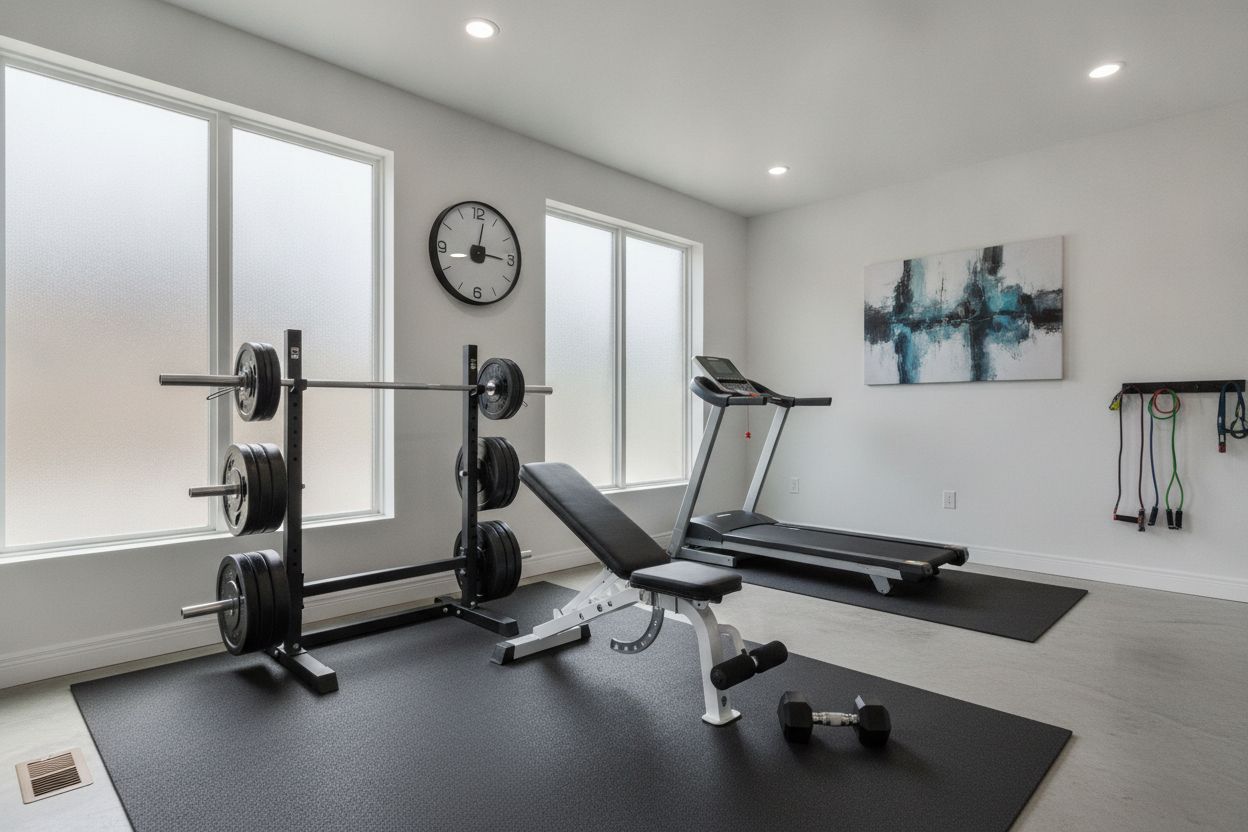
Flat benching is fine, but if you want to keep your shoulders from screaming at you, the incline press is king. These are far superior weight lifting exercises with dumbbells because they allow for a more natural range of motion. You aren't locked into a specific width like you are with a barbell. I use a 30-degree incline to hit the upper pecs while keeping my scapula tucked. For this, I rely on my Gxmmat Adjustable Weight Bench because it doesn't wobble when I'm pressing 90s, which is the last thing you want when you're training alone.
The Dead-Stop Dumbbell Row
Most people cheat on rows by using momentum. The dead-stop row fixes this. You set the dumbbell on the floor between every single rep. You pull from a dead stop, squeeze at the top, and lower it back to the floor. No bouncing, no swinging. It builds a thick, dense back and incredible grip strength.
Programming Different Workouts With Weights
The mistake most people make is trying to do too much at once. They see different workouts with weights online and try to mix them all into one session. You don't need a 20-exercise circuit. You need four or five high-quality movements performed with intensity. I usually split my week into an Upper/Lower or a Push/Pull/Legs routine.
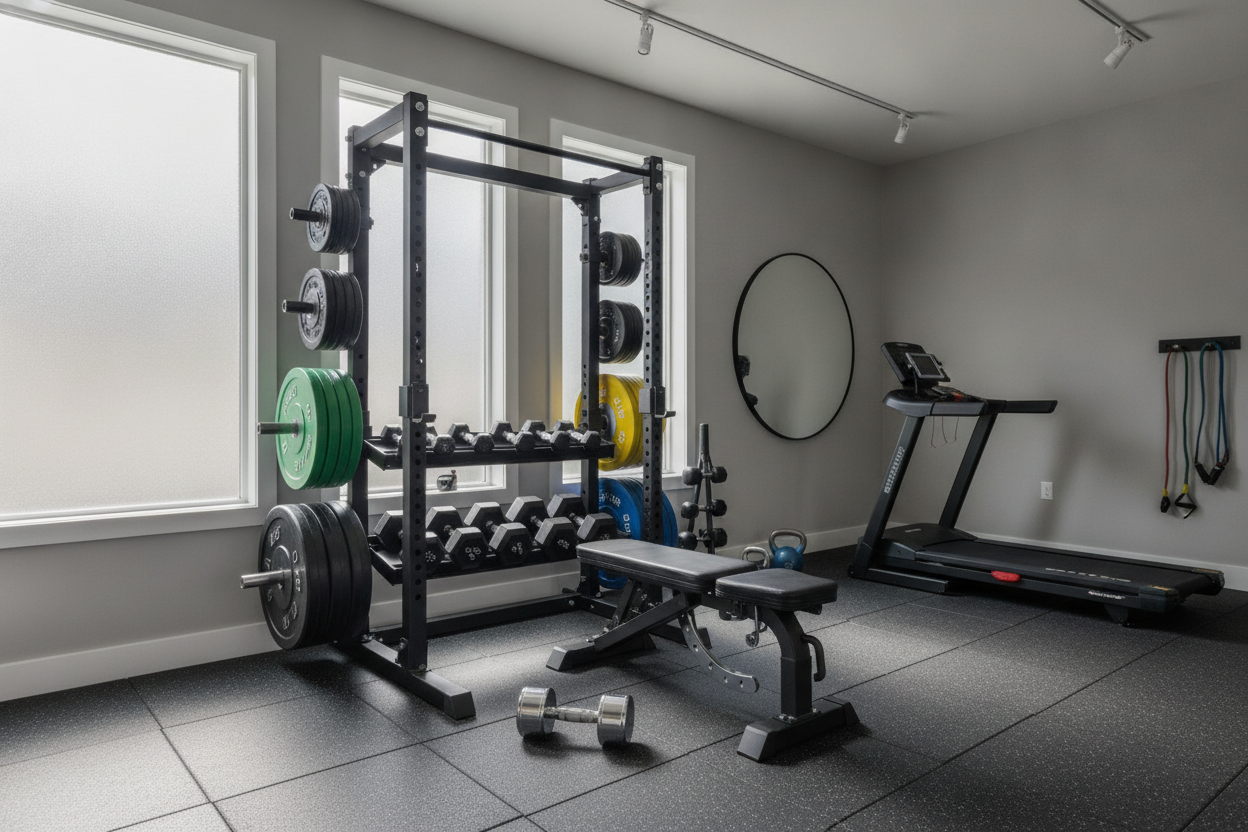
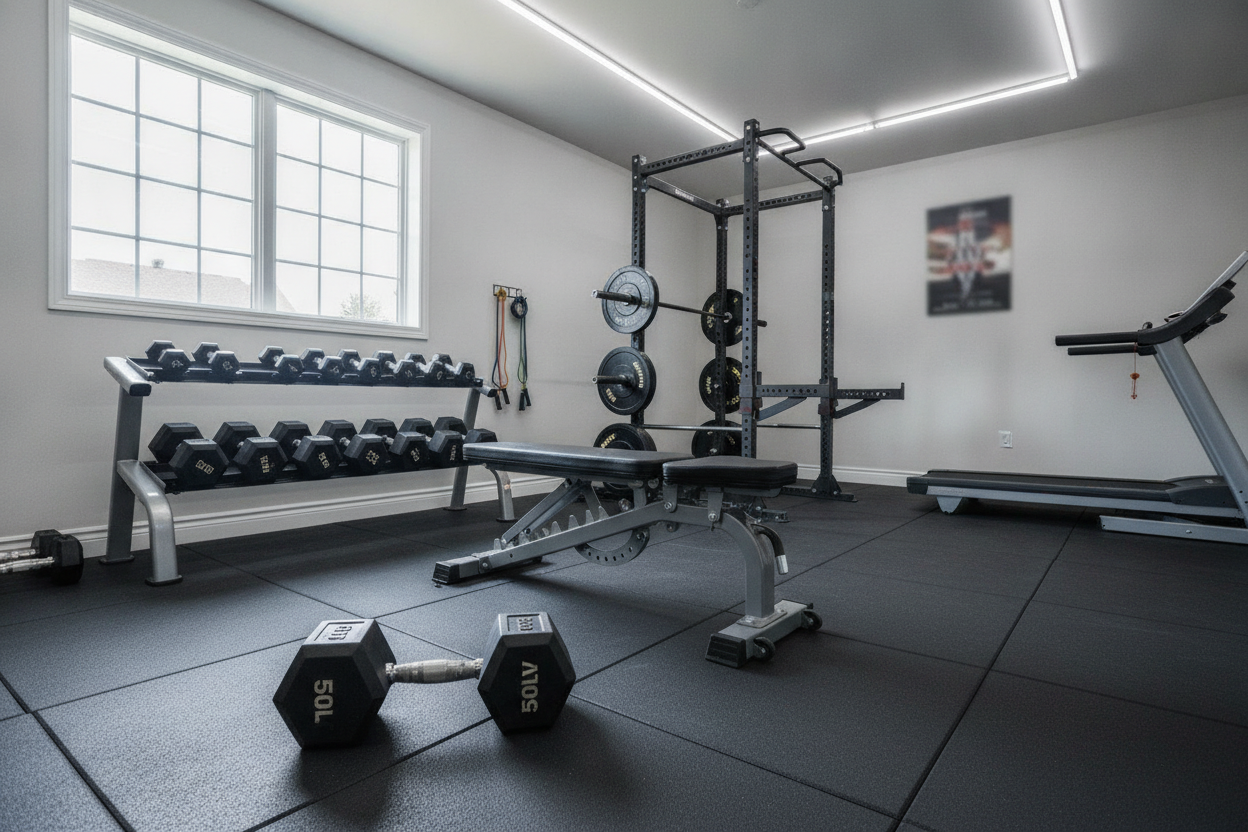
Building good weight workouts is about progressive overload. You don't need to change the exercises every week; you just need to add five pounds or one extra rep. If you are training in a small space, you need gear that scales with you. I eventually upgraded to the Gxmmat X6 Power Rack Weight Bench Package because it gave me a safe footprint to fail in. Having a rack with safety bars means I can push my limits on squats and presses without needing a spotter.
Chasing the Best Dumbbell Workout for Stubborn Muscle Groups
If your chest or shoulders are lagging, the best dumbbell workout is often better than a barbell-only plan. Dumbbells allow for a deeper stretch at the bottom of the movement and a harder contraction at the top. You can rotate your wrists to find the 'sweet spot' where your joints feel the best.
For those struggling with upper body growth, I recommend checking out this guide on how to Build A Stronger Chest With Dumbbell And Free Weight Workouts. It breaks down the specific volume you need to actually trigger hypertrophy without relying on fancy cable machines or pec-decks that take up half your garage.
The 'Embarrassingly Light' Rule for Your First Month
My final piece of advice is the hardest to follow: leave your ego at the door. When you switch to free weights, you must start with weights that feel embarrassingly light. If you used to press 200 lbs on a machine, start with 40-lb dumbbells. Focus on the tempo. Focus on the 'squeeze' at the top. Let your stabilizers catch up to your prime movers. If you rush the process, you’ll end up with a bicep tendon strain or a cranky lower back. Slow down, master the iron, and the results will follow.
FAQ
Do I really need a power rack for free weights?
If you plan on doing heavy barbell squats or bench presses alone, yes. It is a safety requirement. If you are only using dumbbells, a solid bench and some floor space are enough to get started.
How heavy should my first set of dumbbells be?
I always suggest getting an adjustable set that goes up to at least 50 lbs. You will outgrow fixed 20-lb dumbbells in a matter of weeks, and buying individual pairs gets expensive and takes up too much room.
Is it okay to mix machines and free weights?
Absolutely. Use free weights for your big compound lifts at the start of the workout when you are fresh. Save the machines for 'finishing' moves at the end when your stabilizers are too tired to maintain safe form.