Why That Massive Multi-Station Fails as a Full Body Home Gym
I spent three hours last night scrolling through marketplace listings, watching people try to offload their 200-pound plastic monstrosities for pennies on the dollar. It happens every year. Someone decides to build a full body home gym, buys the biggest machine they can find, and realizes three weeks later that it is a glorified clothes rack that feels like garbage to use.
The dream is simple: one machine, every muscle group, zero clutter. But the reality is usually a wobbly frame, cables that drag like they are stuck in sand, and a weight stack that you will outgrow in six months. If you are serious about training, you need to stop looking for a 'Transformer' and start looking for tools that actually move the needle.
Quick Takeaways
- Most all-in-one machines use cheap pulleys that create 'ghost resistance' and jerky movements.
- Fixed movement paths on budget machines often force your joints into unnatural positions.
- A power rack, a solid bench, and adjustable dumbbells offer more versatility than a 50-attachment station.
- Floor protection is non-negotiable once you move from plastic weights to real iron.
The Gimmick of the Giant Transformer Machine
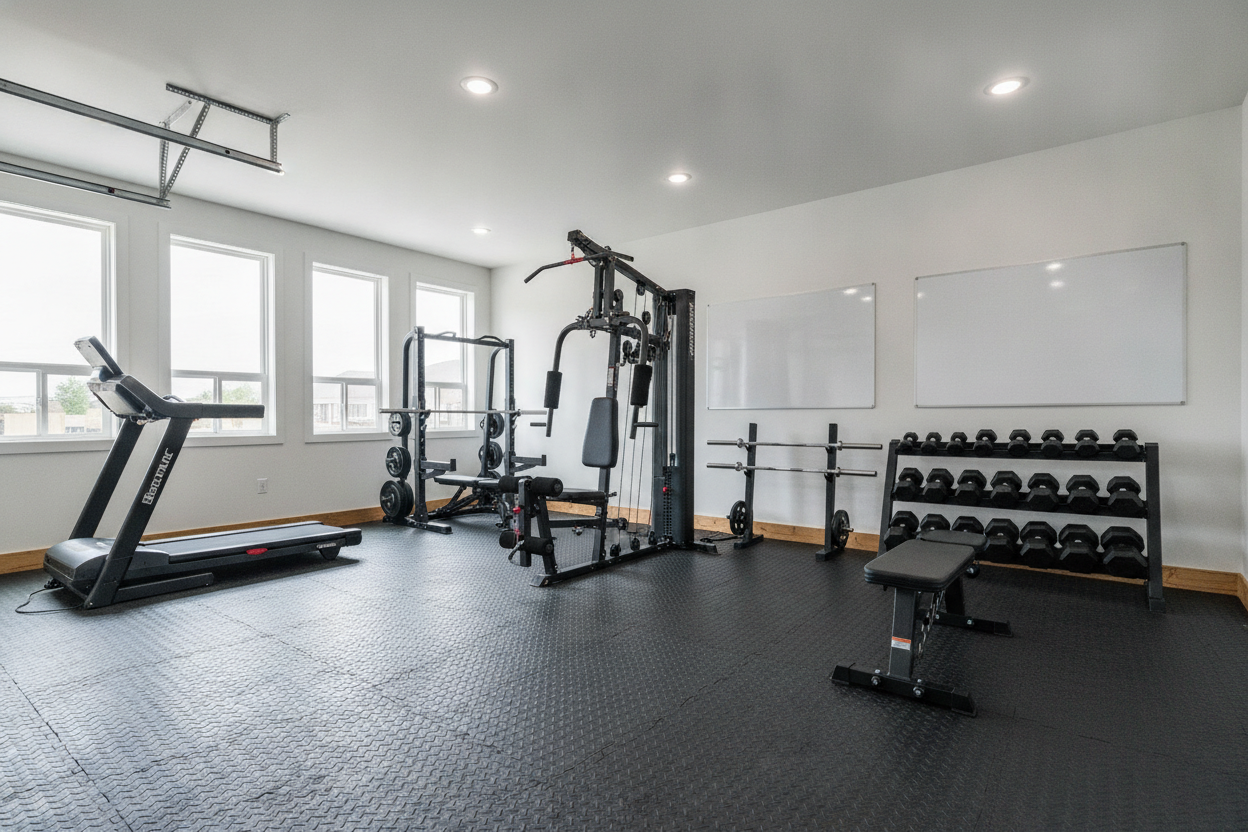
We have all seen the ads. A guy with pro-bodybuilder genetics doing lat pulldowns on a machine that looks like it belongs in a sci-fi movie. These companies promise a commercial-grade experience in a 4x4 footprint. But here is the catch: to hit that price point and size, they compromise on the steel gauge and the pulley quality. You end up with a full exercise machine that shakes the moment you load more than 100 pounds on the carriage.
I have tested units where the '150-pound stack' felt more like 80 pounds because of the friction in the plastic bushings. When the frame is made of thin 14-gauge steel, the whole thing flexes during a simple chest press. That is not just annoying; it is a safety hazard. You want your equipment to be an anchor, not a pendulum.
Why Most Full Body Workout Machines for Home Actually Suck
Biomechanics do not care about your floor space. Most cheap full body workout machines for home use a fixed pivot point. This means the machine decides where your hands and elbows go, regardless of your wingspan or shoulder mobility. Over time, forcing your body into these preset paths is a one-way ticket to tendonitis. Free weights and functional trainers allow your joints to find their natural 'lane,' which is how you stay injury-free for the long haul.
You will see plenty of lists featuring the top 10 full body workout machines for a complete home gym, but very few of them mention the 'feel' of the eccentric phase. On a low-end machine, the weight often drops or hitches because the cables aren't lined up properly. If you can't get a smooth stretch and contraction, you are wasting half of every rep.
How to Build a Real Full Body Home Gym (Without the Clutter)
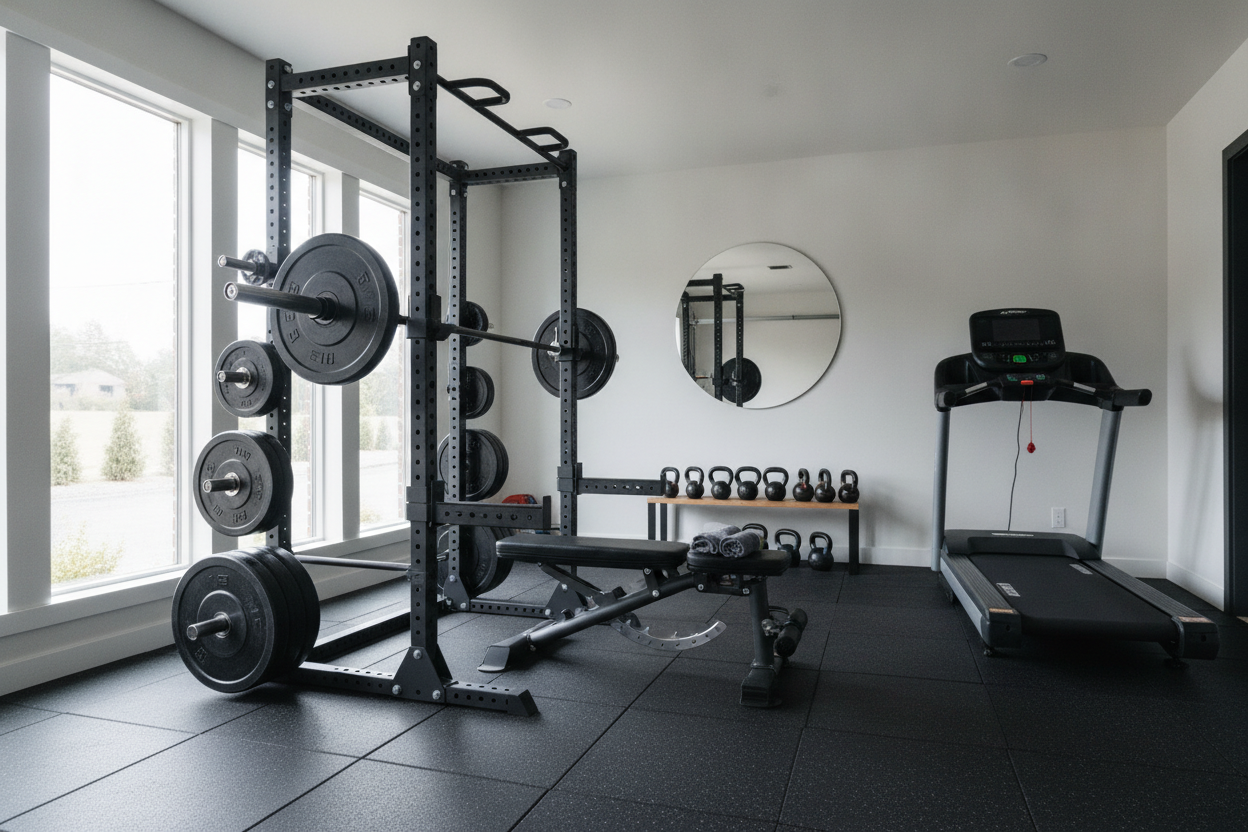
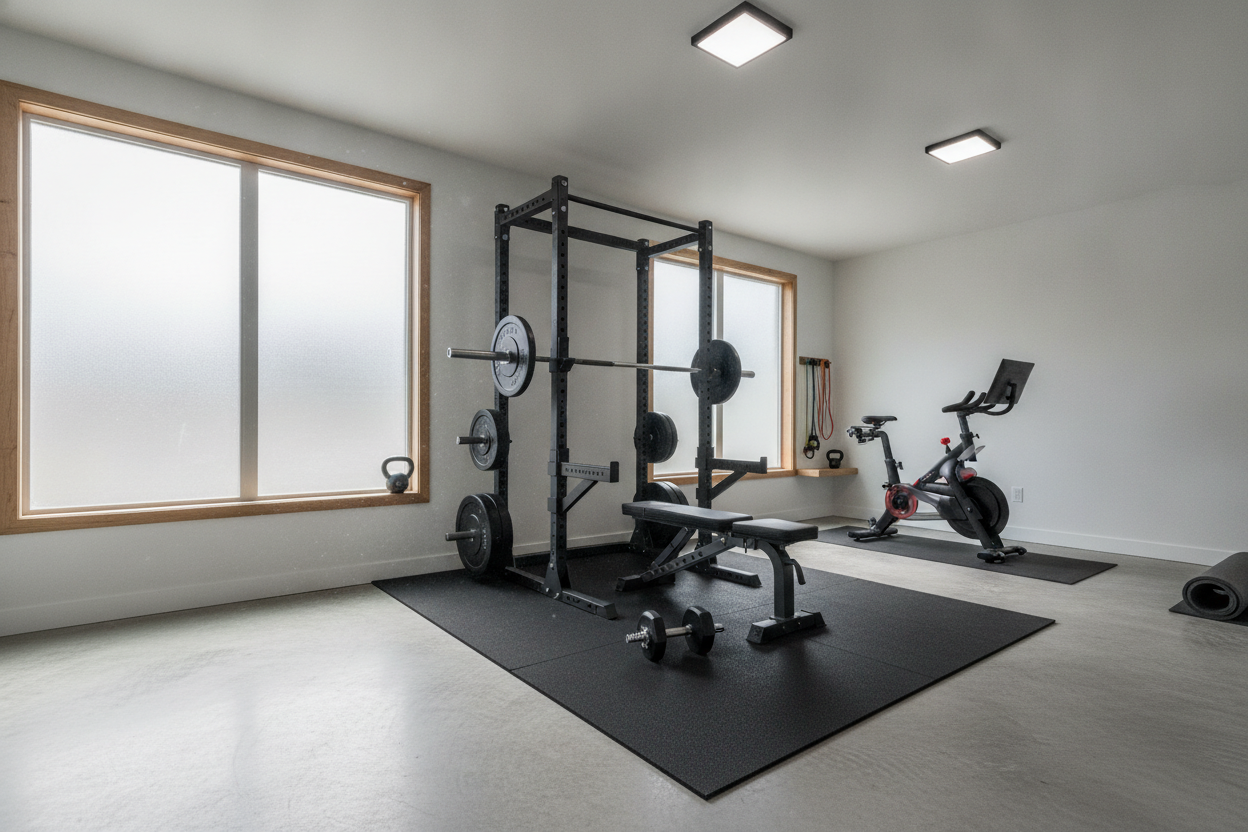
If you want a real training environment, ditch the multi-station and buy a half-rack or a high-quality functional trainer. A 3x3 steel rack with a pull-up bar is the ultimate foundation. Pair that with a set of adjustable dumbbells—something like the Loadable Olympic handles or a quick-change set that goes up to at least 80 pounds. This setup gives you access to hundreds of movements without the mechanical failure points of a complex pulley system.
Once you have the hardware, the magic happens in the programming. You can run a full body machine workout maximize your home gym gains by using the rack for your heavy compounds and the dumbbells for your accessory work. This approach uses body workout equipment that actually holds its value. If you ever decide to upgrade, a name-brand power rack sells in a day; a generic multi-station sits on your curb for weeks.
Don't Let Heavy Iron Destroy Your Subfloor
One thing people forget when they transition from a plastic 'total gym' to real full gym equipment is the sheer weight. A decent rack, a 45-lb barbell, and a few hundred pounds of plates will crack your garage's concrete or ruin your spare bedroom's hardwood faster than you think. You need a dedicated landing zone.
Before you even unbox the rack, lay down a large exercise mat for home gym use. I am not talking about those flimsy foam puzzle tiles that tear when you look at them. You need high-density rubber. A 6X8Ft Exercise Mat Yoga Mat Gym Flooring For Home Workout is usually the perfect size to sit under a rack and bench, providing enough vibration dampening to keep your neighbors happy and your foundation intact.
The Smarter Way to Get a Full Gym Equipment Experience
You don't need a single, massive full workout machine for home to get results. In fact, the more 'all-in-one' a piece of equipment claims to be, the worse it usually performs at any single task. Buy the basics, buy them once, and buy them heavy. A solid barbell and a rack will outlast any cable-driven contraption by decades.
Focus on equipment that allows for progressive overload. If a machine maxes out at 200 pounds and you're already repping that out, it's a dead end. Real strength is built with iron and sweat, not plastic pulleys and marketing fluff.
My Personal Take: The $600 Lesson
Years ago, I bought a budget Smith machine because I thought it was safer for solo lifting. Within a month, the linear bearings started grinding. I had to grease them every three days just to get a smooth rep. Eventually, the cable snapped during a face pull and nearly took my teeth out. I sold it for $100 and bought a used power rack. I've never looked back. Don't trade your safety or your gains for a 'convenient' footprint.
FAQ
Can I build muscle with just a functional trainer?
Yes, but you will eventually hit a ceiling on leg day. Cables are great for isolation and upper body, but nothing replaces a barbell for squats and hinges.
How much space do I actually need?
A standard 8x8 foot area is plenty for a rack, a bench, and a set of weights. If you use a folding rack, you can even park a car in there when you're done.
Are adjustable dumbbells worth the high price?
Absolutely. Buying individual pairs of dumbbells from 5 to 50 lbs would cost twice as much and take up an entire wall. Just don't drop the adjustable ones—they have internal gears that don't like impact.