Stop Chasing Sweat: What Are Good Workouts to Do at Home?
I remember the day I finally quit my local commercial gym. They hiked the monthly dues to nearly a hundred bucks, and for what? A broken cable machine and a squat rack that smelled like a locker room floor. I went home, did 500 burpees in my living room, and felt like I’d actually accomplished something because I was gasping for air. I was wrong. Thinking about what are good workouts to do at home shouldn't just be about how much vomit you can keep down.
Quick Takeaways
- Sweat is a metric of temperature regulation, not muscle growth.
- Mechanical tension beats metabolic fatigue every time for building a physique.
- Tempo is your secret weapon when you lack heavy plates.
- Your floor is your worst enemy if it's slippery or unpadded.
The 'Sweat Equals Success' Trap
Most home workout apps are just 'Jump Around and Get Tired' simulators. They prioritize your heart rate because it's an easy metric to track on a watch, but it's a terrible way to build a body. If you’re just chasing a high heart rate, go run up a hill. It’s free.
When people ask me for advice, they usually want to know how to get that 'pump' or that 'burn.' But metabolic stress is only one-third of the muscle-building equation. If you aren't creating mechanical tension—the kind that makes your muscles feel like they're being physically stretched under load—you're just doing expensive cardio in your pajamas.
Stop equating exhaustion with progress. A session where you do five sets of slow, controlled, agonizingly difficult push-ups is infinitely better for your physique than twenty minutes of frantic star jumps. You want to finish a set feeling like your muscles gave out, not like your lungs exploded.
So, What Are the Best Exercises to Do at Home?
If you want to move the needle, you have to stop thinking about speed and start thinking about time under tension. Since you probably don't have a 300-pound barbell sitting next to your coffee table, you have to make the 'light' weight feel heavy. This is where what are the best exercises to do at home shifts from quantity to quality.
The secret is the eccentric phase—the lowering part of the movement. If you drop like a stone during a squat, you’re letting gravity do the work. If you take four seconds to descend, you’re forcing your muscle fibers to recruit more motor units. For a deeper dive into this, check out What Are Good Workouts to Do At Home? The Tempo Guide.
Focus on structural movements: split squats, hinges, and presses. These are the blue-collar workers of the fitness world. They aren't flashy, but they build a foundation that actually lasts past your 30th birthday.
Pushing Without Wrecking Your Shoulders
When people ask what exercises can i do at home for chest, they usually default to high-rep push-ups. That’s a fast track to shoulder impingement if your form breaks down. Instead of doing 50 sloppy reps, do 10 deficit push-ups using two sturdy books or blocks to increase the range of motion.
I’m also a huge fan of isometric holds at the bottom of the movement. Pause for three seconds with your chest an inch off the floor. It eliminates momentum and forces your triceps and pecs to actually work. It’s much more effective than 'clapping' push-ups, which usually just result in someone hitting their face on the floor.
Pulling When You Don't Have a Bar
Back training is the hardest part of home fitness. You can't 'push' your way to a thick back. If you don't have a pull-up bar, you have to get creative. Door-frame rows are a start, but they lack the resistance needed for real growth.
Try sliding floor pullovers. Lie on a smooth surface, grab a heavy book or a small dumbbell, and use your lats to pull your body across the floor. It sounds ridiculous until you try it. It mimics a lat pulldown better than almost any other bodyweight movement. If you have a towel and a hardwood floor, you have a back machine.
Building Your Base (And Protecting Your Floors)
You can have the best programming in the world, but if you’re trying to do Bulgarian split squats on a slippery rug or a plush carpet, you’re going to fail. Your brain won't let your muscles fire at 100% if it thinks you're about to slip and snap an ankle. Stability is the precursor to force production.
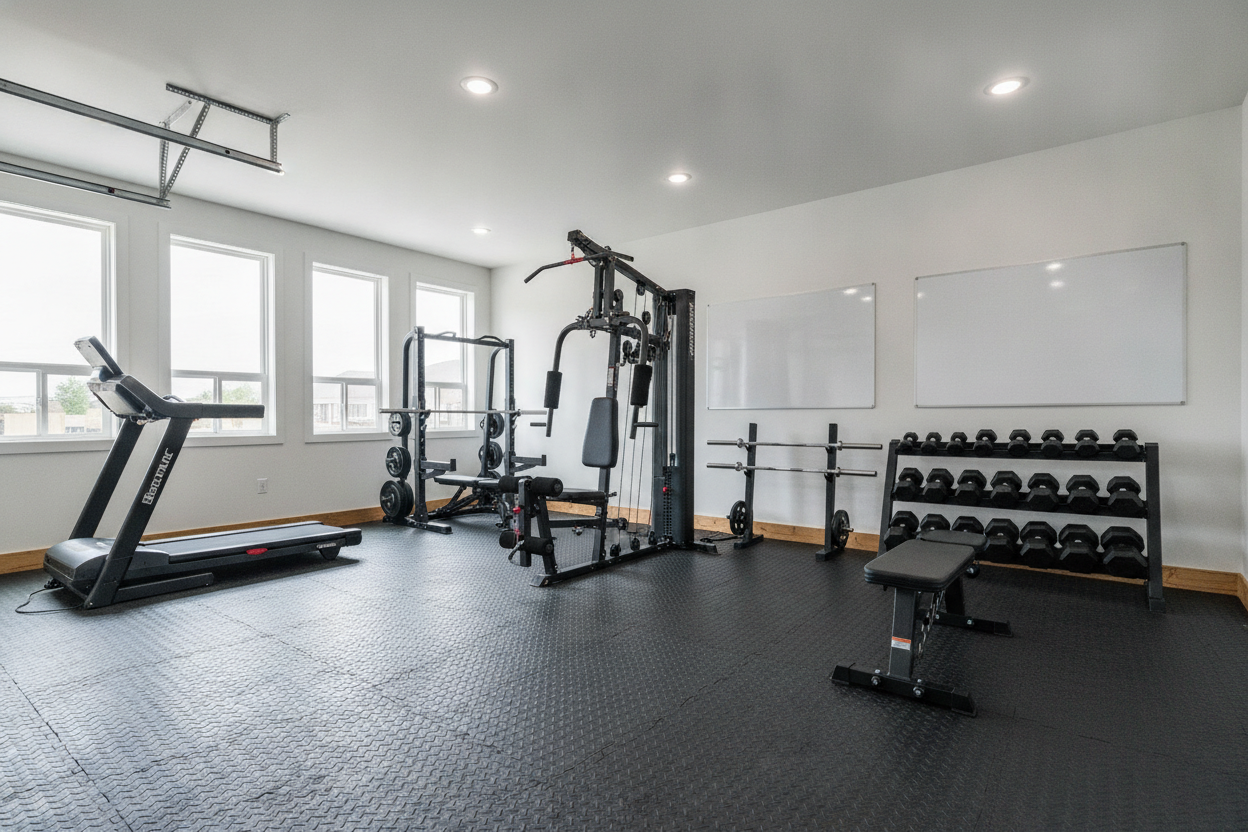
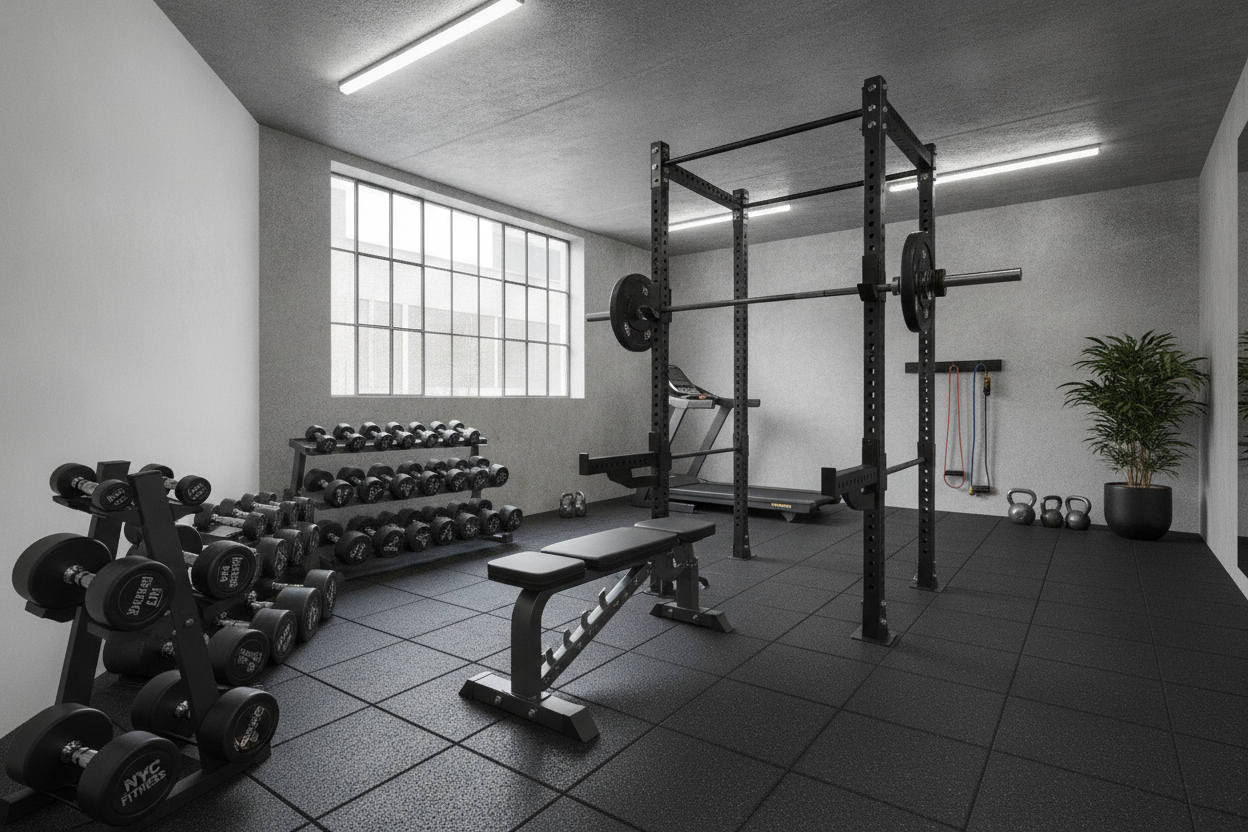
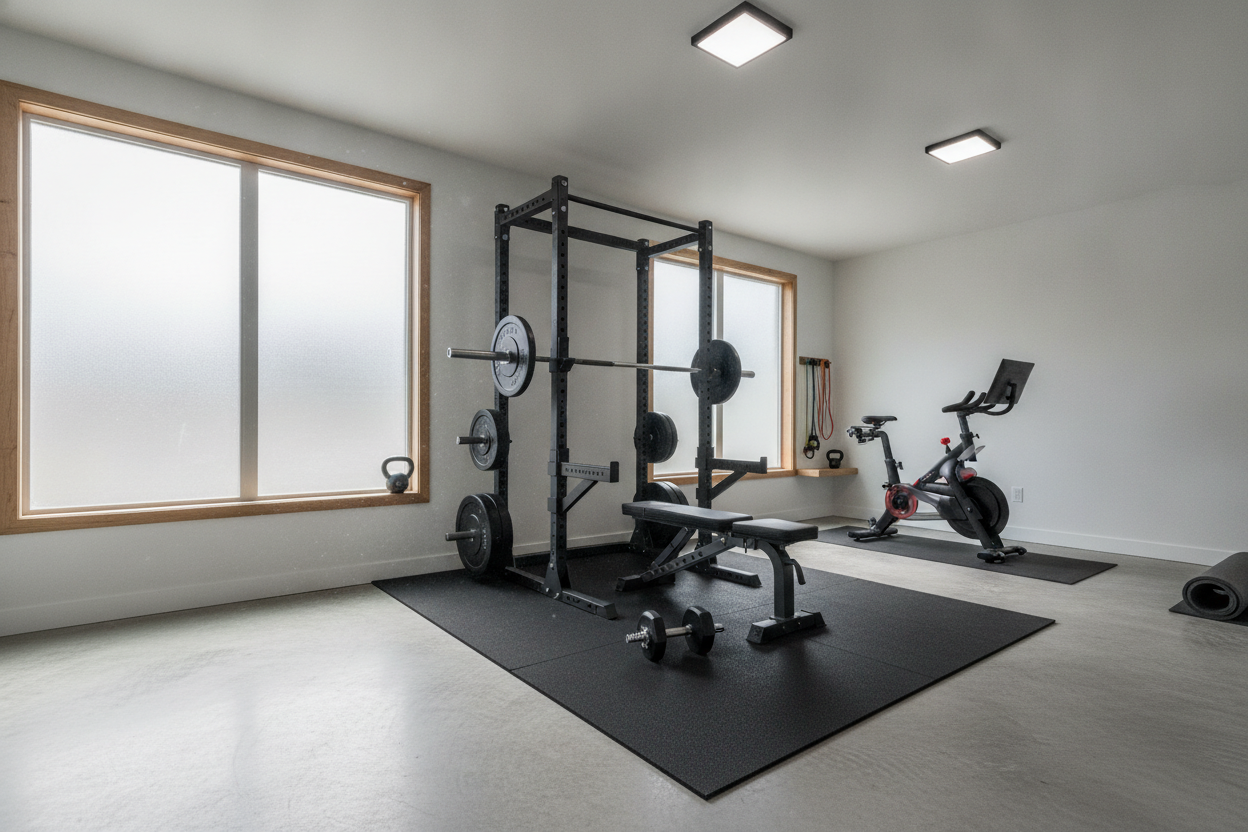
You need a dedicated surface. I always recommend a Large Exercise Mat For Home Gym because it creates a 'zone' that stays put. It protects your joints from the hard subfloor and keeps your sweat from ruining your hardwood. Plus, it dampens the noise so your neighbors don't think you're wrestling a bear.
If you're doing movements that require a lot of lateral travel or wide stances, the 6X8Ft Exercise Mat Yoga Mat Gym Flooring For Home Workout is the gold standard. It’s big enough that you won't step off the edge during a lunge, and it’s thick enough to handle a dropped 25-lb dumbbell without leaving a dent in the floor.
The Single Best Metric for Living Room Gains
People always want a shortcut. They want to know what is the best exercise to do at home like there’s one magical move that fixes everything. There isn't. The 'best' exercise is the one you can progressively overload. This means making it harder every week—either by adding a rep, slowing down the tempo, or decreasing the rest time.
If you can do 10 lunges today, you need to do 11 next week. Or do those same 10 reps with a 3-second pause at the bottom. If your workout looks exactly the same today as it did three months ago, you aren't training; you're just exercising. There's a big difference between the two.
Personal Experience: The Rug Mistake
I once tried to save twenty bucks by using a yoga mat I found in the back of a closet for a high-intensity session. Halfway through a set of lateral lunges, the mat slid, my leg went one way, and my torso went the other. I spent the next three weeks icing a strained groin. Don't be cheap with your foundation. A real mat isn't just 'gear'—it's safety equipment. My current 6x8 setup has survived three years of heavy kettlebell use and still looks new.
FAQ
Do I need weights to get strong at home?
No, but they help. You can build significant muscle using bodyweight alone by manipulating tempo and leverage, but eventually, you'll want some external resistance like bands or adjustable dumbbells to keep the progress going.
How many times a week should I train?
Three to four full-body sessions are usually better than a 'bro-split' for home trainers. It keeps your frequency high and ensures you're hitting every muscle group often enough to trigger growth without needing two hours in the 'gym.'
Can I lose weight just doing home workouts?
Weight loss happens in the kitchen, but home workouts help preserve your muscle while you're in a calorie deficit. Focus on strength training so that the weight you lose is fat, not the hard-earned muscle you're trying to build.