Your 'Beginner' Routine Is Too Hard: Real Simple Exercises in Home
I’ve spent the last decade testing everything from $3,000 power racks to those flimsy $10 resistance bands that snap the second you get a good pump. Most 'beginner' advice online is garbage. You see a video for simple exercises in home and the first move is a burpee. If you haven't moved in years, a burpee isn't an exercise; it's a recipe for a knee surgery. If your heart rate is hitting 180 and you're gasping for air three minutes in, you aren't doing a beginner routine—you're doing a CrossFit workout without the coaching.
- Simple shouldn't mean frustrating or painful.
- Avoid jumping or complex balance moves until your joints are ready.
- Use your furniture (walls, chairs) as stability tools.
- Consistency beats intensity every single time for long-term health.
Why Fitness Influencers Forgot What 'Easy' Actually Means
The disconnect between a fitness pro and a normal person is a mile wide. When a trainer says 'easy,' they usually mean 'low weight.' They don't realize that for someone who has been sedentary, even the coordination required for a lunge is a high bar. You shouldn't need a background in gymnastics to finish a morning circuit. Many people ask me, what is the easiest exercise for someone who hasn't broken a sweat since the Clinton administration? The answer isn't a mountain climber; it's a controlled, supported movement that doesn't make you feel like a failure.
We need to stop pretending that 10 easy exercises should include anything that involves leaving the ground. If you're scrolling through simple daily workouts and seeing people doing 'air squats' with their heels lifting and backs rounding, close the tab. You need a foundation first. The easiest workout is the one you can actually finish without needing an ice pack and an apology to your lower back.
The Criteria: What Are the Simple Exercises, Really?
A movement only makes it onto my 'simple' list if it meets three strict rules. First, it requires zero complex balance. If you're wobbling, you aren't working the muscle; you're just trying not to fall. Second, it needs minimal joint mobility. Most of us have tight hips and stiff shoulders from sitting at desks. Third, it requires no specialized equipment. I love a good barbell, but you shouldn't need a $500 setup to do what is the basic exercise for core stability.
What are the simple exercises that actually work? They are movements that isolate a muscle group while keeping your spine neutral and your joints supported. We are looking for high reward and zero risk. This is about building the 'habit' of movement before we worry about the 'intensity' of the lift.
The Foolproof Easy Exercise List (No Circus Tricks Allowed)
Here is my no-nonsense easy exercise list. I’ve renamed some of these to remove the jargon. These are the 10 easy exercises that build a base without the fluff. You can even find the best exercise in gym routines to bring home by simplifying them even further for your living room.
- Wall Push-ups: Like a regular push-up, but standing. Saves your wrists and shoulders.
- Chair Squats: Sit down in a chair, then stand up. That’s it.
- Glute Bridges: Lying on your back and lifting your hips. Great for 'office chair butt.'
- Dead Bugs: Lying on your back and moving opposite limbs. The ultimate safe core move.
- Countertop Rows: Use your kitchen counter to pull your chest toward the edge.
- Standing Calf Raises: Hold a wall and go up on your toes.
- Bird-Dogs: On hands and knees, extending one arm and the opposite leg.
- Seated Knee Tucks: Sit on the edge of a chair and lift your knees toward your chest.
- Wall Sits: Lean against a wall in a squat position and hold.
- Arm Circles: Simple, effective shoulder mobility.
Floor-Based Movements for Zero-Impact Strength
Floor exercises are the gold standard for beginners because gravity is working with you, not against your balance. Exercises like glute bridges and dead bugs are perfect simple exercises to do everyday because they wake up dormant muscles in your posterior chain and core without stressing your knees. You’ll want a large exercise mat for home gym use to protect your spine and knees from the hard floor. If the surface is uncomfortable, you won't do the workout. Period.
Supported Standing Movements
Standing exercises often fail beginners because of 'balance fatigue.' If you're focused on not falling over during a squat, you aren't actually focusing on your quads. By using a chair for squats or a wall for push-ups, you remove the fear factor. This allows you to focus entirely on the muscle contraction. It's not 'cheating'—it's smart training. You're teaching your brain how to fire the right muscles before you add the stress of free-standing balance.
Stringing It Together: The Easiest Workout You Can Do
If you're wondering what are some easy workouts that don't take an hour, try this 'Rule of 10' circuit. Pick five movements from the list above. Do 10 reps of each. Rest for a minute. Do it three times. That’s a 15-minute routine that hits your whole body. These simple daily workouts are designed to be repeatable. You shouldn't feel destroyed afterward; you should feel 'awake.'
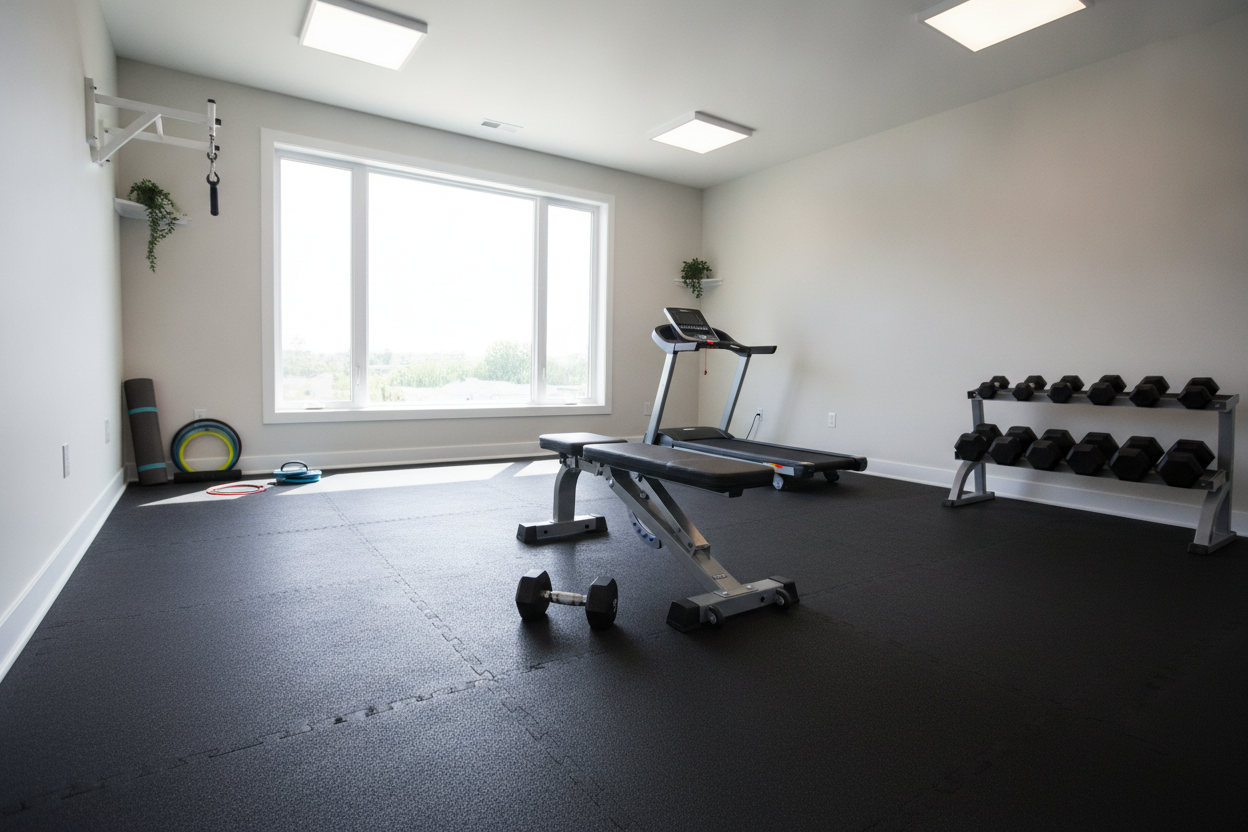
To make this a permanent part of your life, set up a dedicated space. Even a 6x8 ft corner with a heavy-duty exercise mat can define your 'training zone.' Having that visual cue makes it much harder to skip your session. When the mat is already rolled out, the barrier to entry disappears.
When (and How) to Finally Make Things Harder
Don't stay in the 'easy' lane forever. Once you can do 20 wall push-ups without breaking a sweat, move your feet further back from the wall to increase the angle. This is progressive overload. You don't need to go from a chair squat to a 300-lb barbell squat overnight. Just slow the movement down or add a few more reps. After 30 days of the easiest workout, your ligaments will be tougher, and your coordination will be sharp enough to try more demanding variations.
Personal Experience: Starting Over
A few years back, I blew out a disc in my lower back moving a 400-lb fridge. I went from squatting heavy triples to not being able to put on my own socks. I had to swallow my pride and do the 'easy' stuff. I felt ridiculous doing dead bugs on my living room floor while my expensive power rack sat empty in the garage. But those simple movements are what got me back to the heavy iron. Never underestimate the power of the basics when your body is rebuilding.
FAQ
What is the easiest exercise to start with?
Walking is the undisputed king, but if we're talking 'gym' movements, the Wall Push-up is the winner. It builds upper body strength with almost zero risk of injury.
Do I need weights for these simple exercises?
No. Your body weight provides plenty of resistance when you're starting out. Focus on the 'squeeze' of the muscle rather than how much weight you're moving.
How many times a week should I do this?
Since these are low-impact, you can safely do them 5–6 days a week. Just listen to your joints—if they ache, take a day off.