Why Standard mobility exercises for upper body Never Actually Work
I spent three years grinding my rotator cuffs into sawdust because I thought 'tight shoulders' were the reason I couldn't lock out a heavy overhead press. I bought every rubber band and massage gun on the market, spent twenty minutes a day doing passive door-frame stretches, and still felt like my joints were filled with dry sand. It turns out I was attacking the symptom, not the cause.
If you are struggling with mobility exercises for upper body, there is a high probability you are ignoring your thoracic spine. Most lifters treat their shoulders like an isolated hinge, but if your mid-back is locked up like a rusty gate, your shoulder blades can't move. You can stretch your pecs until you are blue in the face, but if your spine is stuck in a 'keyboard slouch,' your range of motion will stay garbage.
- Thoracic spine extension is the secret key to overhead mobility.
- Static stretching often causes joint impingement rather than fixing it.
- Active movements trump passive stretching every single time.
- You can fix your posture while resting between heavy lifting sets.
Stop Stretching Your Shoulders (Seriously)
Most people approach upper body mobility exercises by yanking on their arms. They grab a squat rack upright and lean forward, hoping to 'open up' the shoulder joint. Here is the reality: if your thoracic spine (the part of your back where your ribs attach) is rounded forward, your shoulder blade is tilted. When you try to lift your arm in that position, the bone in your upper arm literally smashes into the top of your shoulder socket.
You cannot stretch your way out of a mechanical blockage. Yanking on a stiff shoulder joint without addressing the surrounding tissues is a fast track to a labrum tear or chronic bursitis. Most gym bros have this backward—they try to fix the small, delicate joint instead of fixing the massive structural foundation of the upper back.
The Real Culprit Behind Your Locked-Up Joints
We live in a world designed to make us look like boiled shrimp. Between 8 hours at a desk and heavy bench press sessions that tighten the pecs, our thoracic spine cements itself into a rounded position. This 'kyphotic' curve makes it physically impossible for your shoulder blades to rotate upward. If your blades don't rotate, your arms don't go overhead without pain.
Traditional stretches fail because they don't address the rib cage or the collarbone. If your chest wall is tight, your shoulders are pulled forward into a permanent internal rotation. To fix this, you need to look at the underrated clavicle stretch technique to release the tension that is pulling your shoulders out of alignment from the front. Once the front is open, we can actually move the spine.
3 mobility exercises for upper body That Actually Work
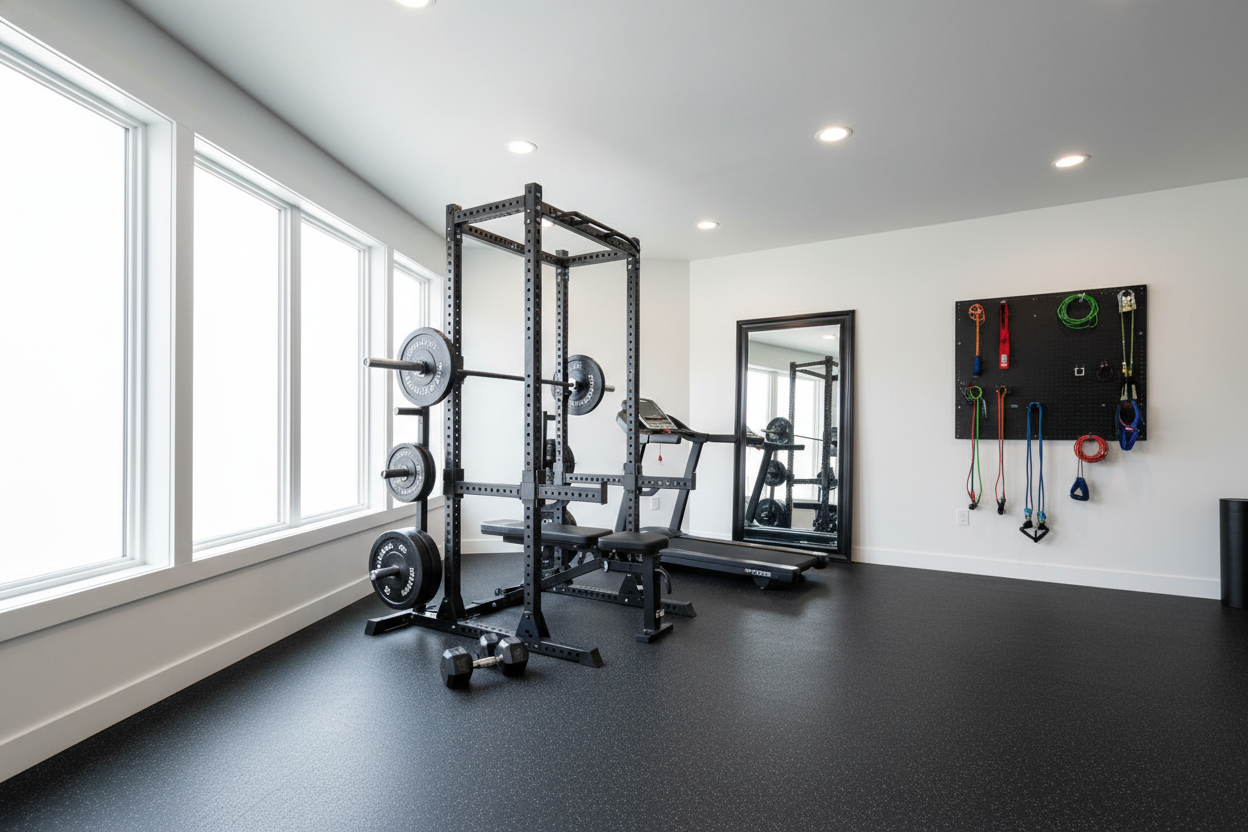
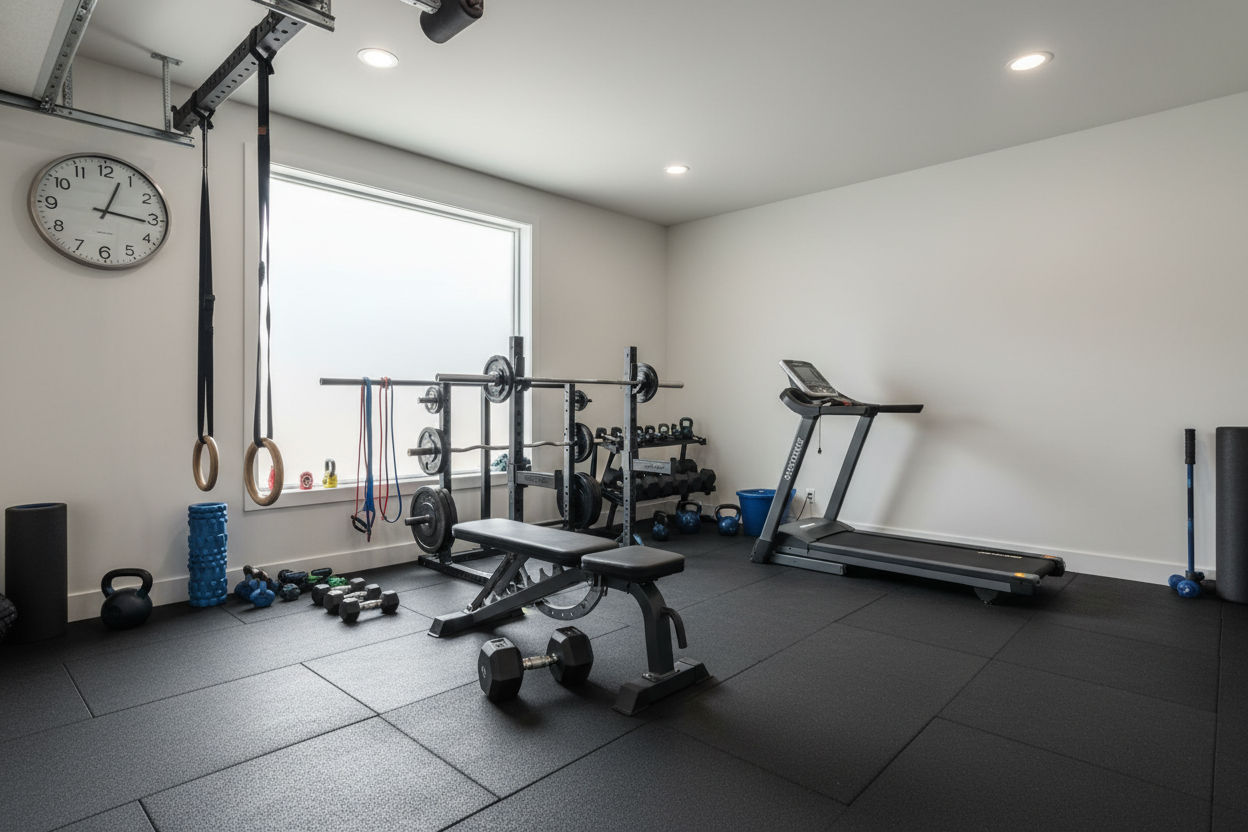
Forget the 30-minute yoga flows. If you are training in a garage or a basement, you want high-impact moves that get you under the bar faster. You need a solid, supportive surface for these—I usually do my floor work on 8mm thick gym flooring for home workout because doing T-spine extensions on bare concrete is a special kind of torture.
The T-Spine Peanut Smash
Take two lacrosse balls and tape them together with athletic tape to create a 'peanut.' Lie on your back with the peanut positioned horizontally across your spine, just below your shoulder blades. Keep your butt on the ground, hug yourself to move your shoulder blades out of the way, and slowly lean back over the balls. You will feel a targeted pressure on the vertebrae. Move it up an inch and repeat. This is 'segmental' mobilization, and it beats a foam roller every day of the week.
The Half-Kneeling Windmill
Get into a half-kneeling position with your side against a wall. Take the arm closest to the wall and trace a massive circle over your head and behind you, keeping your fingertips on the wall the whole time. This forces your thoracic spine to rotate while keeping your lower back stable. It opens the chest and teaches your brain that it’s okay to move into those end-range positions without the rotator cuff seizing up in fear.
The Active Dead Hang
Most people just 'limp hang' from a pull-up bar. That’s fine for spinal decompression, but for mobility, you need to be active. Grab the bar and pull your shoulder blades down and back (away from your ears) while keeping your arms straight. Hold for 30 seconds. This builds strength in the lower trapezius and serratus anterior—the muscles that actually control your shoulder blade movement.
How to Sneak This Upper Body Mobility Routine Into Your Lifts
Stop wasting 20 minutes on a 'warm-up' that you hate. The best way to improve is to use these drills as active rest. If you are doing a heavy pushing session, perform one of these movements between your sets. It keeps the nervous system primed and prevents the tissues from tightening up as you fatigue.
By sequencing these back shoulder stretching exercises between your heavy sets of bench or overhead press, you are essentially 'resetting' your posture while you recover. It turns your rest periods into productive mobility work without adding a single minute to your total gym time.
Personal Experience: The 225-lb Wake-Up Call
A few years ago, I was stuck at a 205-lb overhead press. Every time I tried to jump to 225, my left shoulder would give out, and I’d feel a sharp pinch. I thought I had a weak medial delt. I spent months doing lateral raises, but nothing changed. Finally, a coach told me my mid-back was as stiff as a 2x4. I spent two weeks focusing exclusively on T-spine extension—the 'Peanut Smash' mentioned above—and I hit 225 within a month. My shoulders weren't weak; they were just being held hostage by my back.
FAQ
How often should I do upper body mobility?
Consistency beats intensity. Do 5 minutes every single day, or do one drill between every set of your main lifts. If you wait until you are 'sore' to do mobility, you are already behind the curve.
Do I need expensive tools for this?
No. Two lacrosse balls and a roll of tape will cost you ten bucks and do more for your mobility than a $400 massage gun. A pull-up bar and a flat floor are the only other 'must-haves.'
Why does my shoulder click during these exercises?
Light clicking is often just tendons snapping over bone, which is usually harmless if there is no pain. However, if it hurts, stop. It usually means your thoracic spine isn't extended enough, forcing the shoulder to 'grind' through the movement.