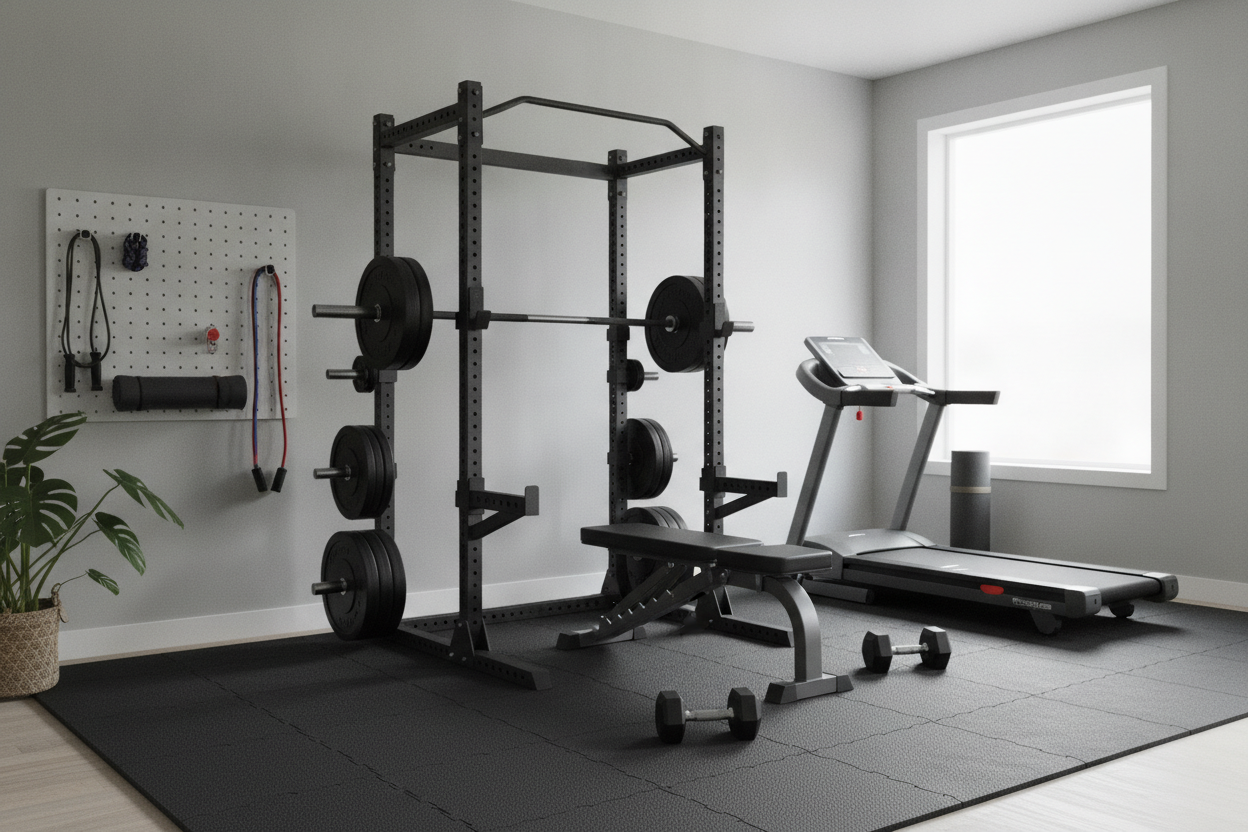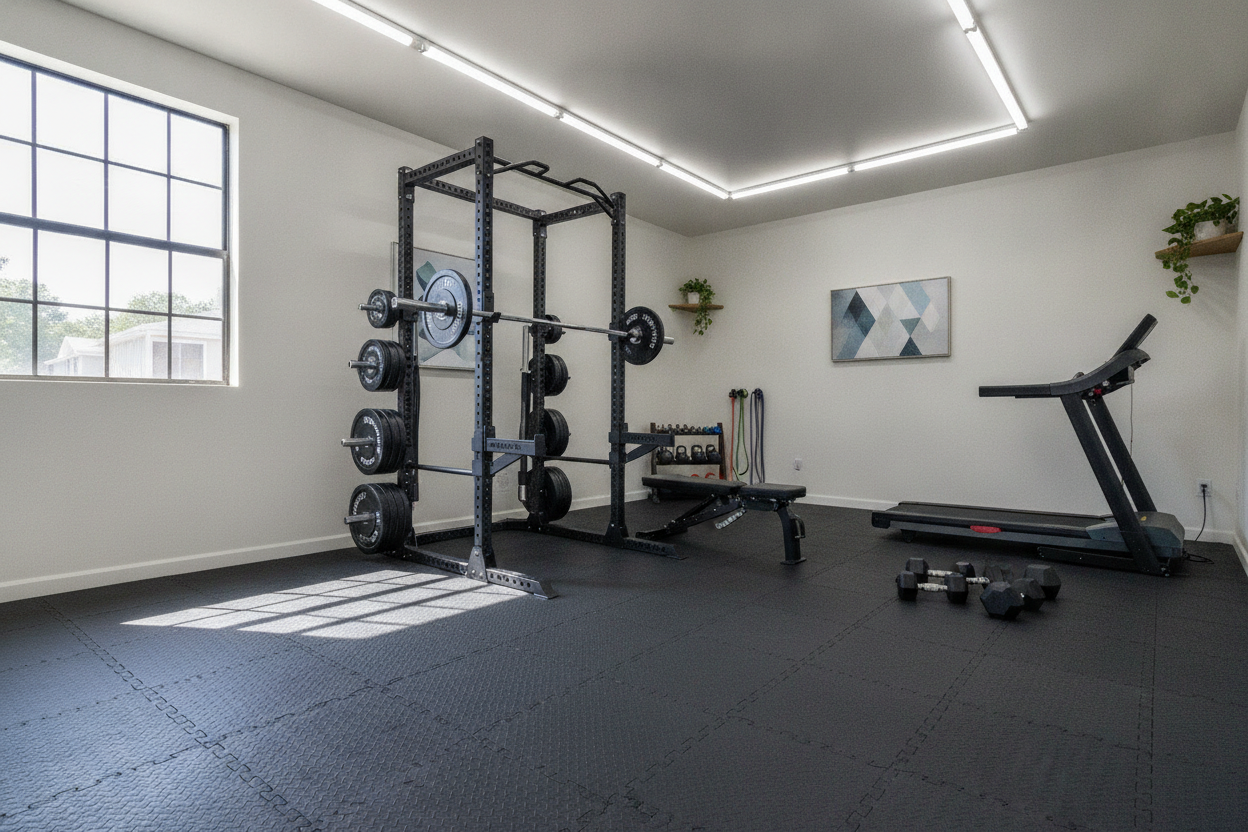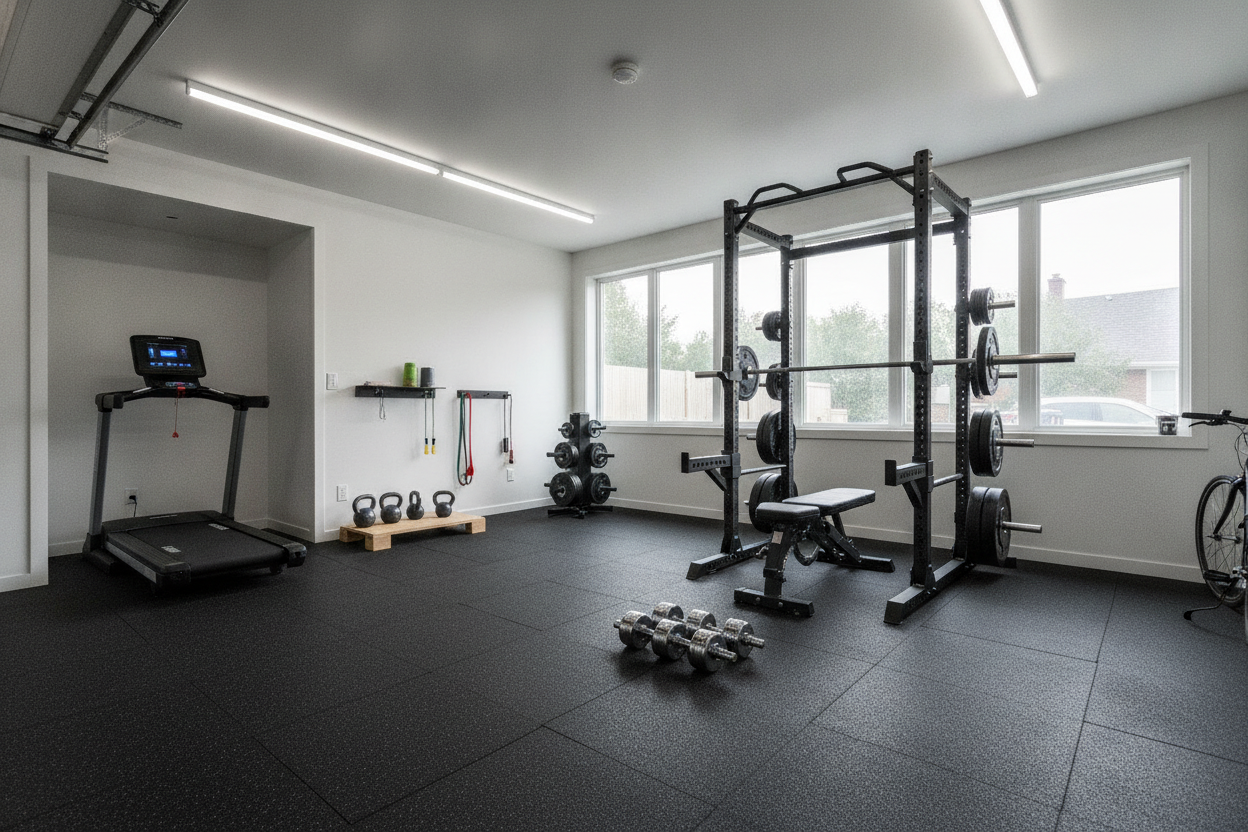
Why Most Workout Machines End Up on Facebook Marketplace
I have spent a decade in damp garages and cramped basement gyms, and I have seen more 'as seen on TV' dust collectors than I care to count. We have all been there—scrolling through listings at midnight, convinced that a single, shiny workout machines setup will be the one thing that finally gets us consistent. Then it arrives, and you realize the steel is thin enough to dent with a hammer and the 'smooth' cables feel like pulling a sled through wet sand.
Quick Takeaways
- Friction is the silent killer; if it uses plastic bushings instead of sealed bearings, it will feel like garbage within a month.
- Cable ratios (2:1 vs 1:1) change the weight felt at the handle significantly.
- Floor protection is not optional unless you enjoy cracked concrete and permanent rust stains.
- Versatility beats specificity every time for home setups.
The 'Infomercial Trap' of Gym Exercise Machines
The biggest lie in the fitness industry is the 'all-in-one' unit that claims to replace thirty different gym exercise machines for under five hundred bucks. These units usually rely on nylon bushings and plastic pulleys. When you are moving weight, you want fluid resistance, not a jerky, stuttering motion that makes your joints scream. Commercial units feel good because they use high-grade aluminum pulleys and heavy steel frames that do not flex under load.
If the machine feels light enough for you to pick up the frame by yourself, it is probably too flimsy for a serious session. You want mass. Mass equals stability. When you are halfway through a heavy set, the last thing you want is the entire unit tipping toward you because the base is too narrow and the steel is 14-gauge junk.
Weight Stacks vs. Plate-Loaded (What Actually Makes Sense?)
Choosing a gym workout machine usually comes down to two choices: a selectorized weight stack or a plate-loaded carriage. Weight stacks are the gold standard for convenience. You move a pin, and you are ready for your next set. However, they are heavy to move into a house and expensive to ship. If you are on a budget, plate-loaded machines are the way to go, but you have to account for the extra space needed to actually slide those 45-lb plates onto the horns.
Pay attention to the cable ratio. A 2:1 ratio means 100 lbs on the stack feels like 50 lbs in your hand, but you get more cable travel. This is perfect for functional movements. A 1:1 ratio is 'true weight' and is better for heavy lat pulldowns or rows. If the manufacturer does not list the ratio, they are probably hiding something.
Protecting Your Floors from a Heavy Setup
A decent leg press or functional trainer can easily weigh 600 lbs before you even add yourself or extra plates. That kind of concentrated pressure will ruin a standard garage floor or leave permanent gouges in hardwood. I have seen guys set up a workout machine directly on concrete only to find a spiderweb of cracks six months later from dropping the stack too hard.
At the very least, you need a heavy-duty 6x8ft exercise mat to distribute that load. You want high-density rubber that will not compress into a pancake over time. It also helps dampen the noise, which your family or neighbors will appreciate when you are hitting a 6:00 AM session.
The Reality of the Fold-Away Illusion
If you are building a machine home gym in a tight space, 'fold-away' gear looks tempting. But here is the truth: most of it is a pain to actually fold. If it takes ten minutes to set up, you will eventually stop using it. I have owned 'compact' units that creaked so loudly I was afraid a bolt would shear off during a chest press.
There are exceptions, though. A well-engineered fold up workout machine that uses a wall-mounted rack system can actually provide the stability of a commercial unit without eating your entire floor. Look for 11-gauge steel and oversized hardware. If the hinge looks small, it is a weak point.
How to Actually Maximize a Single Footprint
Instead of buying five different gym machines, buy one that does the work of five. A high-quality functional trainer is the smartest investment for most people. It takes up a single wall and allows you to hit every muscle group from multiple angles. You can easily program a full body machine workout using just the adjustable pulleys and a decent bench.
Focus on pieces that offer 'open' movements. A machine that locks you into a single, fixed path is rarely as effective as a cable system that lets your joints move naturally. My biggest mistake early on was buying a dedicated leg extension machine that sat in the corner for years because it was a one-trick pony. Don't be that guy.
FAQ
Do I need to grease my workout machines?
Yes. Use a dry silicone spray on the guide rods every few months. Never use WD-40; it attracts dust and turns into a sticky sludge that will ruin the smoothness of your cables.
How much ceiling height do I need?
Most standard functional trainers and lat pulldowns are between 80 and 84 inches tall. Always measure your ceiling height twice, especially if you have a low basement or a garage with a low-hanging door opener.
Are plastic pulleys always bad?
Not always, but they have a shelf life. High-end glass-reinforced nylon pulleys are fine for a few years, but if you have the option to upgrade to aluminum, take it. The difference in 'feel' is night and day.