Is Commercial Exercise Equipment in Home Gyms Actually Worth It?
I remember the first time I sat on a $3,000 commercial leg press at my local club. It felt like a tank—zero wobble, smooth as butter. Naturally, I wanted that same feeling in my garage. But putting heavy-duty exercise equipment in home settings isn't as simple as swiping a credit card. You're dealing with limited space, sensitive floors, and a budget that doesn't have a corporate tax write-off.
- Commercial gear is built for 18 hours of daily use; you probably only need one.
- Floor loading is a real concern—don't crack your slab for a machine you use once a week.
- Focus on prosumer gear that balances durability with a manageable footprint.
- Splurge on the rack and the bar; save on the accessories and benches.
The Allure of Overbuilt Gear (And Why It Tricks Us)
We've all been tricked by the buy once, cry once mantra. It is a psychological trap. You see a 3x3-inch steel power rack with 1-inch hardware and think you need it to survive your Sunday morning squats. The truth is, most residential workout equipment for the home is already overbuilt for a single user. Commercial gear is designed to survive a 300-lb linebacker dropping a loaded bar every twenty minutes for a decade.
Unless you are hosting a small army in your basement, that $5,000 cable crossover is mostly just taking up space. You are paying for a level of durability that you will never actually test. I have seen guys spend five figures on at-home fitness equipment that looks like it belongs in a Gold's Gym, only to realize they could have gotten the same workout on gear that cost a third of the price.
The Footprint Reality Check You Probably Ignored
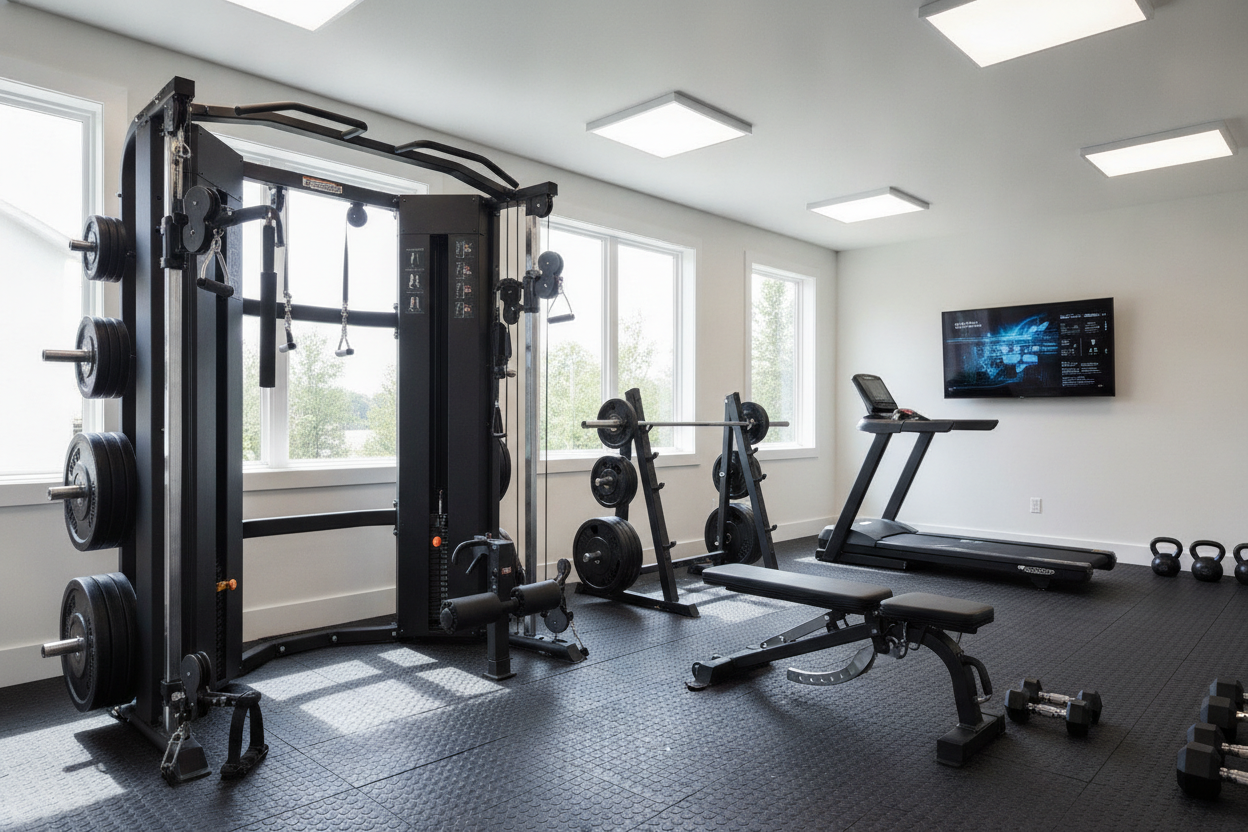
Commercial machines are massive. They assume you have 20,000 square feet and ten-foot ceilings. When you are looking for top home exercise equipment for a complete workout, you have to measure twice and buy once. A commercial functional trainer might have a 60-inch width, but it needs an extra three feet of clearance on every side to actually use the pulleys effectively.
Prioritizing space efficiency and modularity is crucial when selecting fitness equipment for the home. Most home equipment for workout routines needs to be multi-functional. If one machine takes up half your bedroom, you have lost the battle. I prefer workout home gym equipment that stacks vertically or folds away. A commercial-grade leg extension machine is a one-trick pony that eats a 4x6 foot hole in your floor plan.
Protecting Your House from Your Gym
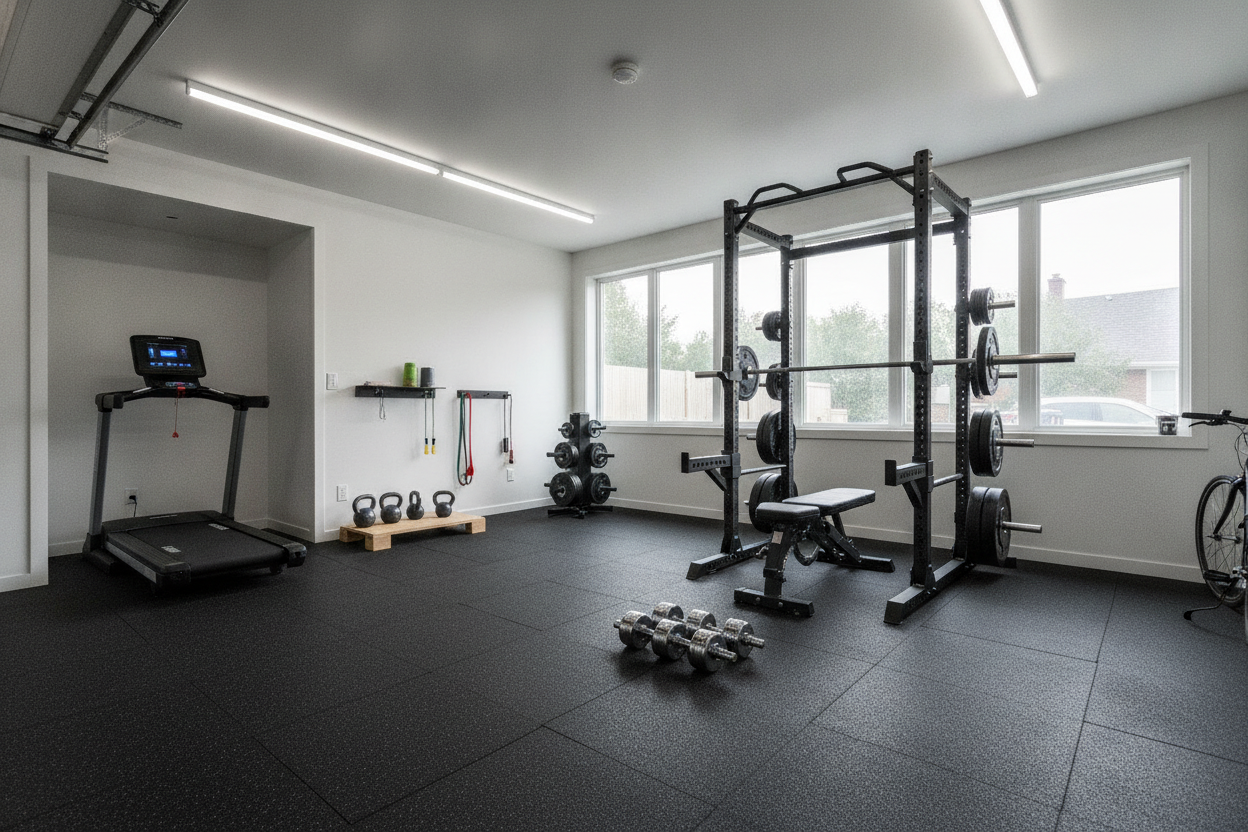
I have seen guys crack their garage slab because they dropped a 100-lb dumbbell off a commercial-grade bench. These machines are incredibly heavy before you even add the plates. You absolutely need high-density gym flooring for home workout setups to distribute that weight. We are not just talking about preventing scuffs on the hardwood.
We are talking about structural integrity. A 500-lb iron machine sitting on a small footprint creates immense point loading. If you are putting at home weight equipment on a second-floor bedroom, you are asking for a very expensive call to a contractor. Use at least 3/4-inch rubber mats. Anything thinner is just a cosmetic bandage for your home exercise gear.
3 Times You Should Actually Splurge on the Heavy Stuff
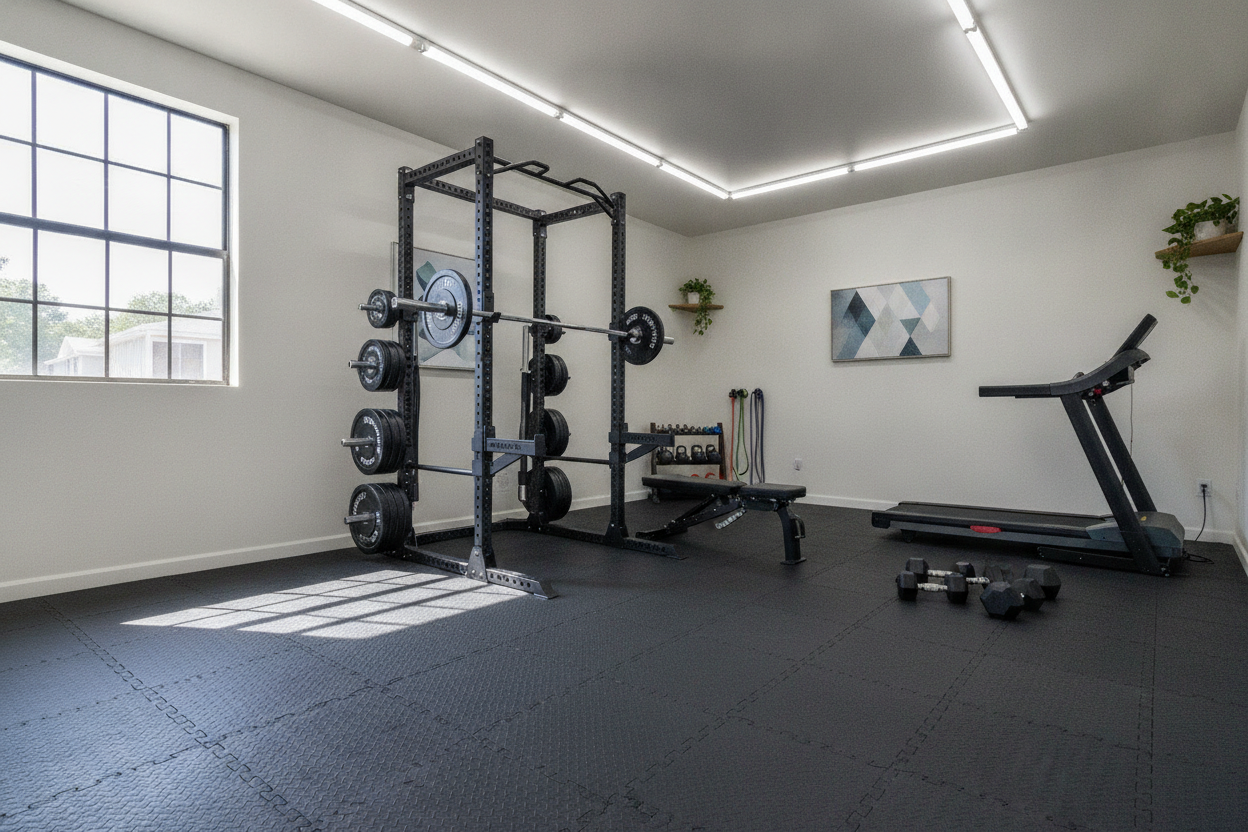
There are specific scenarios where buying commercial-grade indoor fitness equipment is actually the right call. First, the power rack. This is your life insurance policy. If you are moving heavy weight solo, you want 11-gauge steel. Second, high-use cardio machines. Cheap treadmills have motors that burn out if you run more than three miles a day. If you are a marathoner, buy the club-grade deck.
Third, functional trainers with high weight stacks. Most at home training equipment tops out at 160-lb stacks. If you are strong, you will max that out on day one. Splurging on a trainer with 250-lb stacks ensures you won't outgrow your home exercise apparatus in six months. These are the anchor pieces that define a high-quality home exercise set.
Where You Can Safely Cut Corners (and Save Thousands)
You don't need a $400 commercial flat bench. A solid residential version with a 600-lb capacity is plenty for 99% of us. You can find workout equipment for home cheap that still performs safely. Items like dumbbells, basic benches, and resistance bands don't need to be commercial to be effective. A weight is a weight, regardless of the brand stamped on the side.
Instead of wall-to-wall professional rubber, a large exercise mat for home gym use can define your training zone without the massive price tag. Focus your budget on the things that move—bearings, pulleys, and hinges. For static items like weight trees or kettlebells, the budget-friendly home exercise items are usually just as good as the premium stuff.
My Biggest Gear Mistake
I once bought a used commercial treadmill from a local gym liquidation. It weighed 450 pounds. It took four guys and a specialized dolly to get it into my basement. Two months later, the motor controller fried. Parts were discontinued for that specific model year. I ended up paying a junk removal crew $200 just to haul the dead weight away. Now, I stick to high-end residential brands that actually have a customer support line for humans rather than enterprise accounts.
Is commercial gear quieter for home use?
Not always. Sometimes the heavy metal stacks and industrial chains are louder than the nylon bushings found in modern home use exercise equipment. If noise is a concern, look for belt-driven machines rather than chain-driven ones.
Will commercial equipment increase my home value?
No. Most buyers see a gym as a room they have to fix back into a bedroom. If you are planning to sell, make sure your home training gear is easy to disassemble and move.
Can I use standard plates on commercial machines?
Usually no. Most commercial-grade workout gear home setups are designed strictly for 2-inch Olympic plates. If you have 1-inch standard plates, they won't fit the sleeves of high-end equipment to exercise at home.