Why Most Weight Lifting Exercises Routines Are Designed to Fail
I remember scrolling through fitness forums at 2 AM, convinced that a 15-exercise chest day was the secret to getting huge. I’d spend two hours in my garage, chasing a pump that evaporated before I even finished my post-workout shake. The reality? Most modern weight lifting exercises routines are designed to keep you busy, not to make you strong. They are bloated, high-volume messes that prioritize sweat over progress.
Quick Takeaways
- Junk volume is the enemy of recovery and actual muscle growth.
- Focus on four primary movement patterns: squat, hinge, push, and pull.
- A minimalist setup in a garage gym often yields better results than a commercial gym membership.
- Consistency with five basic moves beats a rotating list of twenty exercises.
The Trap of the 12-Move Workout
The fitness industry loves variety because it sells subscriptions. If a trainer tells you that you only need five movements to look like a tank, they lose your attention. So, they pack your weight room workout routine with every cable crossover and machine fly imaginable. This dilution of effort is where progress goes to die. When you’re doing 12 different movements in a single session, you aren’t training; you’re just exercising.
For anyone just starting out, lifting weight exercises for beginners should be about mastery, not variety. You need to learn how to brace your core and find your center of gravity under a barbell. If you spend your first six months jumping between 20 different machines, you never develop the neurological efficiency required to move heavy loads. I tell people to find the best weight lifting exercises for beginners and stick to them for at least twelve weeks. No changes, no 'muscle confusion,' just pure repetition.
Think about it: would you rather be mediocre at twelve different movements or elite at three? The guy who can squat 405 for reps always has bigger legs than the guy doing six different types of leg extensions. Stop trying to hit the muscle from 'every angle' before you even have the muscle to begin with.
Why Your Weight Room Workout Routine Needs an Audit
Junk volume is the silent killer of gains. This refers to any sets you perform that don't actually contribute to a growth stimulus but do contribute to your fatigue. If you’ve already done five heavy sets of bench press, adding three sets of incline dumbbell press, two sets of chest-focused dips, and four sets of cable flies isn't helping. It’s just draining your Central Nervous System (CNS) and ensuring you won't be recovered for your next session. Your weight room workout routine should be a scalpel, not a sledgehammer.
I recently performed an audit on my own training. I realized that by the time I got to my fourth 'accessory' chest move, my intensity had dropped by 40%. I was just going through the motions. I decided to cut the fluff and focus on the best weight lifting exercises that actually moved the needle. My recovery improved, my joints stopped aching, and my primary lifts started climbing again for the first time in a year.
Redundancy is the most common form of junk volume. If you’re doing a barbell row, you don't need a seated cable row and a T-bar row in the same session. Pick one, crush it, and move on. Your body has a limited capacity to recover; don't waste it on movements that are essentially the same as what you already did.
The Core Foundation: Basic Weight Lifting Moves That Actually Matter
If you want to strip away the nonsense, you have to return to the basic weightlifting exercises that have built every world-class physique for the last century. Every successful hypertrophy or strength block is anchored by four pillars: the squat, the hinge, the horizontal push, and the vertical pull. Everything else is just window dressing.
The Squat is your engine. Whether it’s a high-bar back squat or a front squat, this movement builds systemic strength like nothing else. The Hinge—usually a deadlift or a Romanian deadlift—is the king of the posterior chain. If you aren't hinging, you aren't training your hamstrings and glutes properly. These are the basic weight lifting moves that require the most mental energy, which is why people often swap them for easier machine work. Don't be that person.
For the upper body, the horizontal push (bench press or overhead press) and the vertical pull (weighted pull-ups or heavy rows) cover almost everything you need. When you focus on these four categories, you can't hide. You either hit the numbers or you don't. There’s no 'faking' a heavy set of deadlifts like you can fake a set of tricep pushdowns. This transparency is exactly why minimalist routines work so well—they force you to confront your weaknesses head-on.
How to Structure a Minimalist Setup at Home
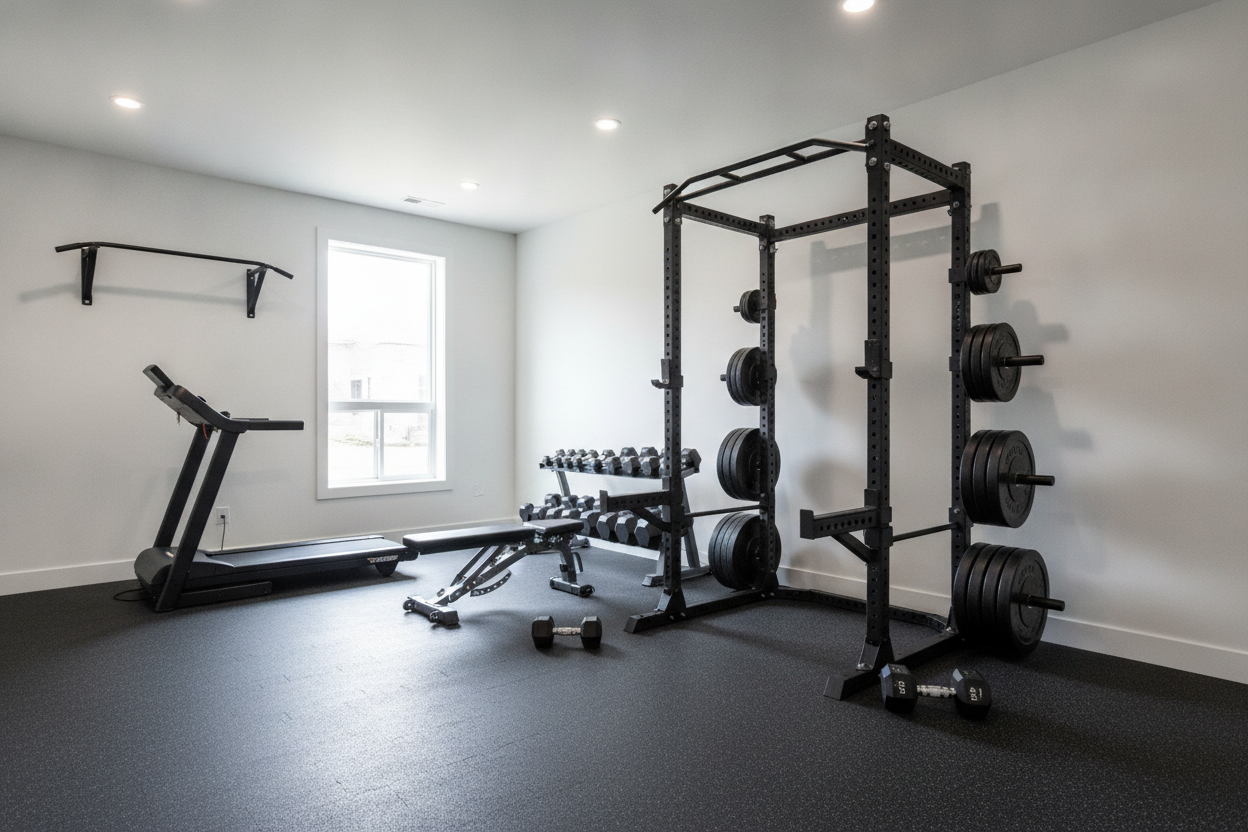
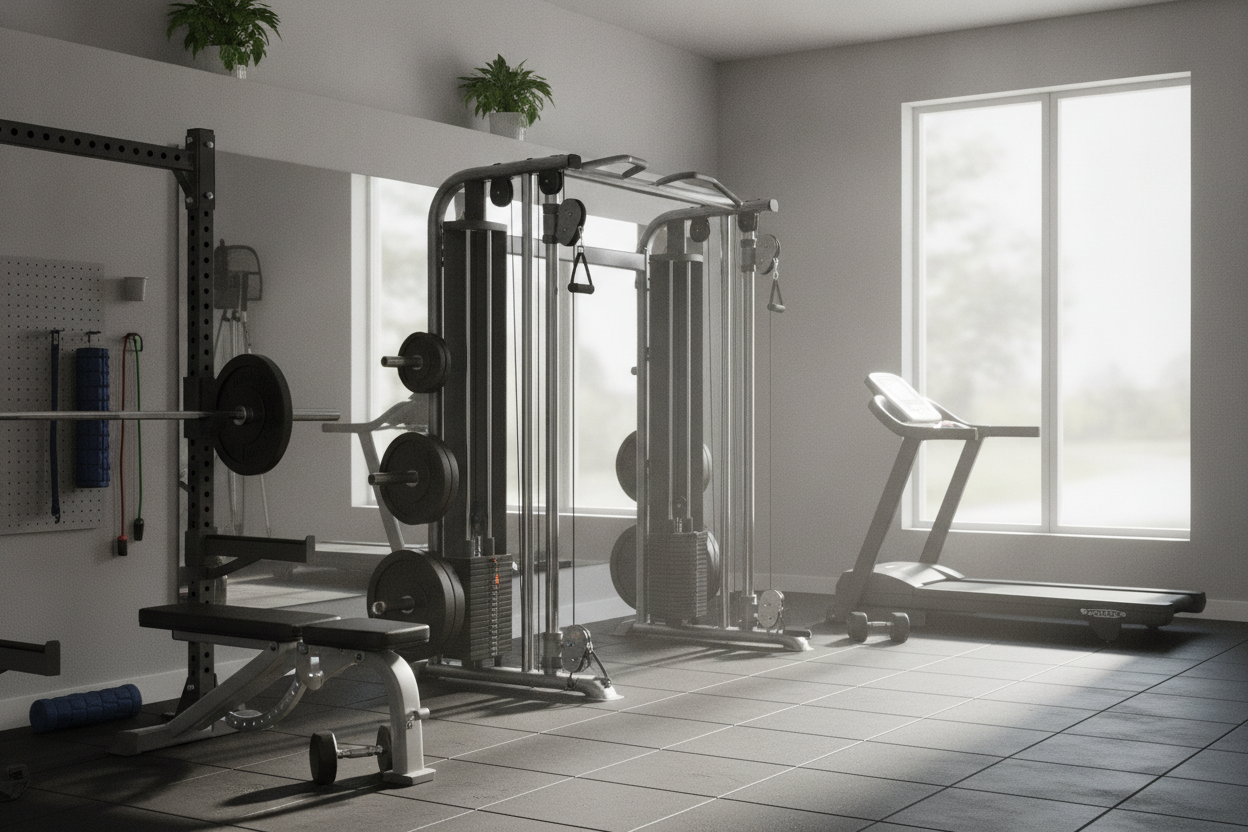
You don't need a 40,000-square-foot commercial facility to run a high-level routine. In fact, most commercial gyms are cluttered with machines that get in the way of real training. In a garage gym, you can optimize for what matters. To execute these heavy, stripped-down routines safely, you need a stable foundation. I’ve trained on cheap, wobbly racks before, and nothing kills your confidence on a heavy squat like the uprights swaying when you re-rack the bar.
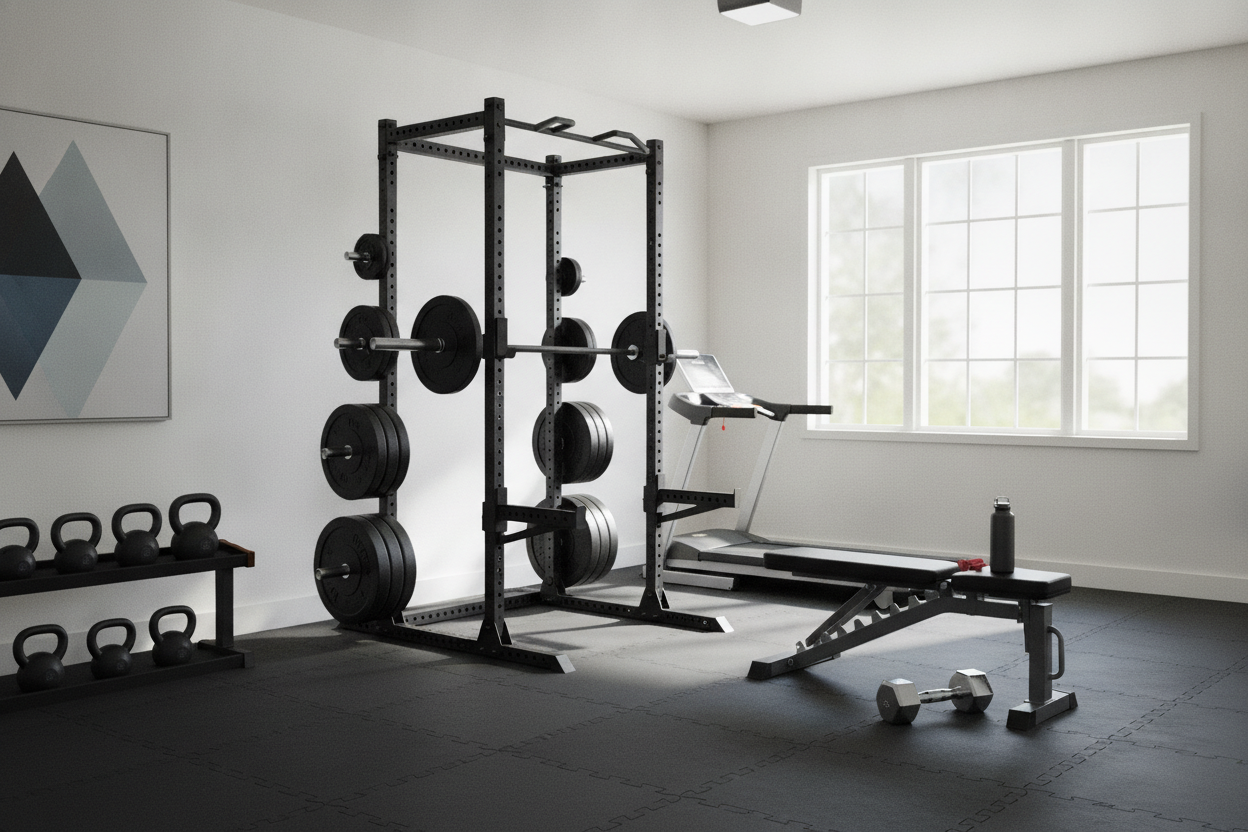
I usually recommend starting with a comprehensive power rack weight bench package. This gives you a safe cage for squats and a reliable spotter for benching alone. You also need a high-quality adjustable weight bench. Look for one with a high weight capacity—at least 600 lbs—and minimal gap between the seat and the backrest. A solid bench makes a massive difference in your stability during heavy presses; if you're worrying about the bench tipping, you aren't focusing on the lift.
A minimalist home setup actually encourages better programming. When you only have a rack, a bar, and some plates, you aren't tempted to go do 50 sets of cable curls. You’re forced to stay in the rack and do the hard work. It’s a feature, not a bug.
Putting It Together: A Routine That Doesn't Suck
So what does this actually look like on paper? A 3-day full-body split is the gold standard for most people. It allows for maximum recovery between sessions while hitting every muscle group frequently enough to trigger growth. You’ll use basic weightlifting exercises and nothing else. No 'finisher' sets, no burnout rounds.
Day A: Squat (3x5), Bench Press (3x5), Barbell Row (3x8). Day B: Deadlift (1x5), Overhead Press (3x5), Pull-ups (3xMax). Rotate these days on Monday, Wednesday, and Friday. It looks too simple, right? That’s the point. The magic isn't in the complexity; it's in the progressive overload. If you add 5 lbs to these lifts every week, you will look drastically different in six months.
When you stop chasing the 'pump' and start chasing the weight on the bar, your physique will follow. Most people fail because they get bored and change their weight lifting exercises routines every three weeks. Stay the course. Mastery is boring, but the results are anything but.
My Personal Lesson in Overtraining
A few years ago, I fell for the 'more is better' trap. I was running a 6-day 'bro split' with 25 sets per workout. My joints hurt, I was constantly tired, and my squat had actually regressed. I was so focused on 'hitting the muscle from every angle' that I forgot the goal was to get stronger. I finally swallowed my pride, cut my routine down to just four moves per session, and focused on intensity. Within two months, I hit a lifetime PR on my deadlift. It was a harsh lesson: you don't grow in the gym; you grow while you sleep. If your workout is too long, you're just digging a hole you can't climb out of.
Frequently Asked Questions
How long should a minimalist workout take?
If you're resting properly (2-3 minutes between heavy sets), you should be done in 45 to 60 minutes. If you’re done in 20, you didn't lift heavy enough. If it takes two hours, you’re talking too much or doing too much junk volume.
Can I build muscle with only 5 exercises?
Absolutely. Some of the most legendary physiques in history were built on the 'Big 5.' Muscle growth is a response to tension and volume. You can get all the tension you need from heavy compound movements.
Do I need to do cardio with this routine?
Yes, but keep it separate. A 20-minute brisk walk or some light sled pulls on your 'off' days will help with recovery and heart health without interfering with your strength gains.