Which Fitness Machine Types Are Actually Worth Using?
I remember the first time I walked into a massive commercial gym. It felt less like a place to train and more like a showroom for expensive, confusing industrial scrap metal. If you are staring at a sea of chrome and wondering what actually builds muscle, you are not alone. Understanding the various fitness machine types is the difference between a productive 45-minute session and wasting half your afternoon poking at buttons on a console.
- Plate-loaded machines offer a more 'raw' feel and higher weight ceilings.
- Selectorized (pin-loaded) machines are king for fast transitions and dropsets.
- Cables generally beat fixed-path machines for back and bicep work.
- Leg presses and hack squats are superior for quad hypertrophy compared to most 'functional' gear.
The Overwhelming Reality of the Gym Floor
Walking into a gym today is confusing. You see different kinds of exercise machines that look like they belong in a medieval torture chamber rather than a fitness center. Most people get hung up on complex gym position names or trying to figure out which lever does what. The truth is, most of the fluff is there to justify a high membership fee, not because it’s essential for your gains.
If you want to actually see progress, you need to look past the marketing. I’ve spent years testing everything from $10,000 commercial units to the budget stuff you find on Amazon. For a deeper dive into the specifics, check out this in-depth breakdown of fitness machine types. The goal is to categorize gear by how it moves your body, not by the flashy logo on the side.
Plate-Loaded vs. Selectorized: What Is the Difference?
When looking at exercise machine types, you’ll notice two main camps. Selectorized machines use a weight stack with a pin. They are convenient. You sit down, move the pin to 150 lbs, and go. They are great for beginners because the weight is balanced, and the risk of dropping a plate on your toe is zero. However, the pulleys can sometimes add friction that makes the weight feel 'sticky.'
Plate-loaded machines require you to manually slide Olympic plates onto pegs. These are common exercise equipment in hardcore lifting gyms. They feel much more like using free weights because there is less mechanical interference. If you’re trying to move serious weight—say, a 500-lb leg press—you’ll almost always want a plate-loaded option. They are also easier to maintain since there are no cables to snap or internal pulleys to grease.
The Pushing Machines (Chest, Shoulders, and Triceps)
For your chest and shoulders, different types of machines at the gym serve different purposes. The 'converging' chest press is my favorite. Instead of the handles moving in a straight line, they arc inward as you push. This mimics the natural path of your joints and saves your shoulders from unnecessary wear and tear.
Avoid the machines that lock you into a perfectly vertical or horizontal path if they feel 'tight' in your joints. A good shoulder press machine should feel like a natural extension of your arms. If you have to contort your body into weird gym position names just to reach the handles, the machine is poorly designed. Cables are also elite here for tricep pushdowns because they keep constant tension on the muscle throughout the entire movement.
The Pulling Machines (Back and Biceps)
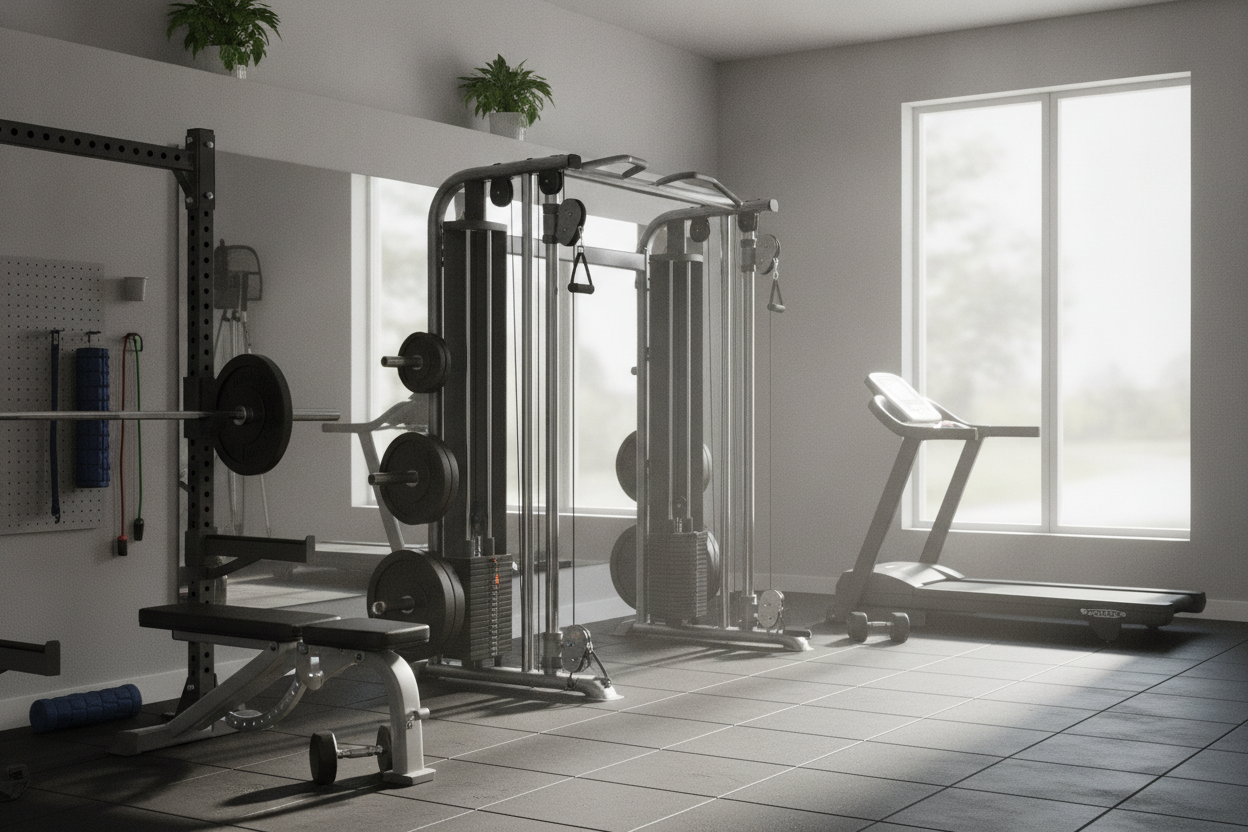
When it comes to types of gym machine for pulling, cables are the undisputed champion. A seated cable row or a lat pulldown allows for slight body movement, which is actually more natural for your spine and scapula. Fixed-lever rows can sometimes feel restrictive, forcing your elbows into paths they don’t want to go.
I’ve found that many popular gym equipment pieces for the back are over-engineered. You don't need a machine with five different pivot points. A simple, heavy-duty lat pulldown with a smooth pulley system will build a bigger back than any 'high-tech' row machine. Look for machines that allow you to change the grip—using a D-handle instead of a fixed bar can save your wrists a lot of grief.
Leg Day Contraptions That Actually Work
Leg day is where different machines in gym settings really shine. While I love a good barbell squat, the leg press and the hack squat allow you to push your quads to absolute failure without your lower back giving out first. A 45-degree leg press is a staple for a reason: it works.
On the flip side, I usually tell people to skip the inner/outer thigh machines unless they have a very specific rehab goal. They take up too much floor space for the value they provide. Focus on the lying leg curl and the leg extension. These provide a level of isolation for the hamstrings and quads that you simply cannot get with free weights alone. If a machine feels jerky or the seat doesn't adjust to your height, move on.
Cardio Equipment That Doesn't Collect Dust
Most cardio machines are boring. There, I said it. But if you're building a home setup or choosing what to use at the club, stick to the basics. An air bike (like a Rogue Echo or an Assault Bike) is a brutal but effective tool. It uses a fan for resistance, so the harder you pedal, the harder it gets. No motors, no complicated screens, just work.
Rowers and heavy-duty treadmills are also solid, but only if they are built to last. I’ve seen too many 'budget' treadmills turn into expensive clothes racks because the motor burned out after three months of light jogging. If it feels flimsy when you step on it, it won't survive a real workout.
How to Protect Your Floors If You Bring These Home
If you are transitioning from the commercial gym to a home setup, you have to think about your foundation. Heavy types of machine in gym environments sit on thick rubber for a reason. A 400-pound leg press plus another 400 pounds of plates will crack your garage floor or ruin your hardwood in a heartbeat.
You absolutely need a large exercise mat for home gym protection. Don't rely on those cheap foam puzzle pieces; they will compress and tear. I recommend a heavy-duty 6x8ft exercise mat for any machine with a significant footprint. It dampens the noise, stops the machine from 'walking' across the floor during use, and keeps your property value intact.
The Final Verdict: Which Machines Do You Really Need?
You don't need every piece of gear on the floor to get results. If I were building a gym from scratch, I’d prioritize a functional trainer (cable machine), a high-quality leg press, and a solid bench. These different types of exercise machines cover 90% of what you need. Most of the 'specialty' machines are just variations on a theme.
Don't get distracted by the bells and whistles. If a machine has a smooth range of motion, fits your body size, and allows you to add weight progressively, it’s a winner. Everything else is just noise.
Personal Experience: The 'All-in-One' Trap
Years ago, I bought one of those 'home gym' systems that claimed to replace 50 different types of machines at the gym. It was a nightmare. The cables were thin, the '300-lb' stack felt like 100 lbs because of the pulley ratios, and it took three hours to assemble. I eventually sold it for a fraction of the price and bought a simple power rack and a cable tower. Lesson learned: specialized machines do their job better than 'do-it-all' junk. Buy once, cry once.
FAQ
Are machines safer than free weights?
Not necessarily. While machines guide your path, they can also force your joints into unnatural positions if not adjusted correctly. Free weights allow your body to find its own natural path, but they require more stability. Both have their place.
Can I build as much muscle with machines?
Absolutely. Your muscles don't know if you're holding a dumbbell or pushing a lever; they only know tension. Many pro bodybuilders rely heavily on machines to move massive weight with less injury risk.
How do I know if a machine fits me?
Most machines have a 'pivot point' marked with a colored cap or bolt. Align your joint (like your elbow or knee) with that pivot point. If you can't align them, the machine is the wrong size for you.