Why Most Routines for Working Out Are Built for Unemployed 20-Year-Olds
I remember the exact moment I realized I was being lied to by the fitness industry. I was standing in my garage at 11:30 PM, staring at a 300-lb barbell, trying to find the energy for my fifth workout of the week. My kid had been up since 5 AM, my boss was breathing down my neck, and I was following a 'pro' split that demanded six days of high-intensity training. I wasn't getting stronger; I was just getting tired. Most routines for working out you find online aren't written for you—they’re written for people who get paid to live in the gym.
Quick Takeaways
- The 'best' routine is the one you can actually finish on a Tuesday night.
- Three days of compound lifting beats six days of half-assed isolation work.
- Ego is the fastest way to ruin a good training routine.
- Your environment determines your consistency—friction is the enemy.
The 'Optimal' Trap Keeping You Out of the Gym
If you spend five minutes on Google searching for what's a great workout routine, you'll be bombarded with 6-day PPL (Push/Pull/Legs) splits and high-volume bodybuilding templates. On paper, they look perfect. They hit every muscle group from three different angles and promise the world. But here's the reality: those plans are built for people with unlimited recovery capacity. When you're an adult with a mortgage and a career, your recovery isn't just about protein shakes; it's about sleep and stress management.
Trying to force a 'perfect workout plan' into an imperfect life is how most people end up quitting by week three. You miss one session, feel like you've ruined the top workout routine, and then decide to just wait until next Monday to start over. It's a cycle of failure. We need to stop looking for what's the best workout routine in a vacuum and start looking at what works in our specific living rooms or garages. Even the best fit plan is worthless if it requires a 45-minute commute to a commercial gym you hate.
For most of us, a good routine for the gym—or the home gym—is one that accounts for the fact that life happens. Maybe you have a 300-lb weight capacity rack and a set of dumbbells. You don't need a complex health workout plan that requires fifteen different machines. You need a handful of movements that deliver the highest return on investment for your time. Stop chasing the 'optimal' and start chasing the sustainable.
Audit Your Schedule Before You Touch a Barbell
Before you commit to a new workout routine to follow, you need to do a brutal audit of your actual availability. Don't tell me what you want to do; tell me what you can do when the kids are sick and the car won't start. Answering 'what should my weekly workout routine be' requires looking at your calendar like a project manager, not a dreamer. If you only have three 45-minute windows a week, then a 5-day split is a fantasy.
I’ve seen guys buy thousands of dollars of equipment—11-gauge steel racks, calibrated plates, the whole nine yards—only to let it collect dust because they tried to start with a grueling two-hour daily habit. The truth is that the best gym workout plan to build muscle starts too light and too simple. You have to earn the right to add volume. If you can't stay consistent with three days a week of basic lifting, you have no business trying to do five. This is about building a foundation, not a highlight reel.
This is where the best fitness plan often fails. It ignores the psychological friction of starting. If your easy workout schedule feels like a chore before you even pick up a weight, you’ve already lost. Start with a volume that feels almost too easy. Build the habit of showing up. Once the habit is locked in, then you can worry about 'optimal' loading and advanced periodization. Your schedule should dictate your training, not the other way around.
Building Your Baseline: The 3-Day Approach
For 90% of busy home gym owners, the best gym workout is a 3-day full-body or upper/lower split. Why? Because it’s resilient. If life gets in the way on Monday, you just shift your schedule to Tuesday, Thursday, and Saturday. You haven't 'missed' a body part because every session hits the major movers. This is the best exercise plan for anyone who isn't a professional athlete or a college student with zero responsibilities.
Focus on the big rocks: Squats, hinges (like deadlifts), pushes (bench or overhead press), and pulls (rows or pull-ups). If you have a solid barbell and some plates, you can run a comprehensive workout plan that builds more muscle in three hours a week than most people get from six hours of faffing about with cable flyes and leg extensions. I personally use a 3-day split because it allows me to go heavy on the days I train while giving my joints plenty of time to recover between sessions. My 40-year-old knees thank me for it.
A good training routine doesn't need to be fancy. It needs to be progressive. If you're adding 5 lbs to the bar every two weeks, you're winning. If you're using a power rack with 2x3 or 3x3 tubing, you have all the safety you need to push yourself without a spotter. Don't get distracted by the latest 'biohacking' trends or 'muscle confusion' nonsense. Stick to the basics, track your lifts in a simple notebook, and watch what happens over six months. Simplicity is the ultimate sophistication in the weight room.
Kill the Friction in Your Workout Space
Your workout plan routine will live or die by how easy it is to start. If you have to move your wife’s car, shift three boxes of holiday decorations, and then hunt for your 2.5-lb plates, you aren't going to work out. You need a dedicated 'go zone.' Even if it's just a corner of the basement, make it permanent. You want to be able to walk in, turn on the lights, and start your first warm-up set within two minutes.
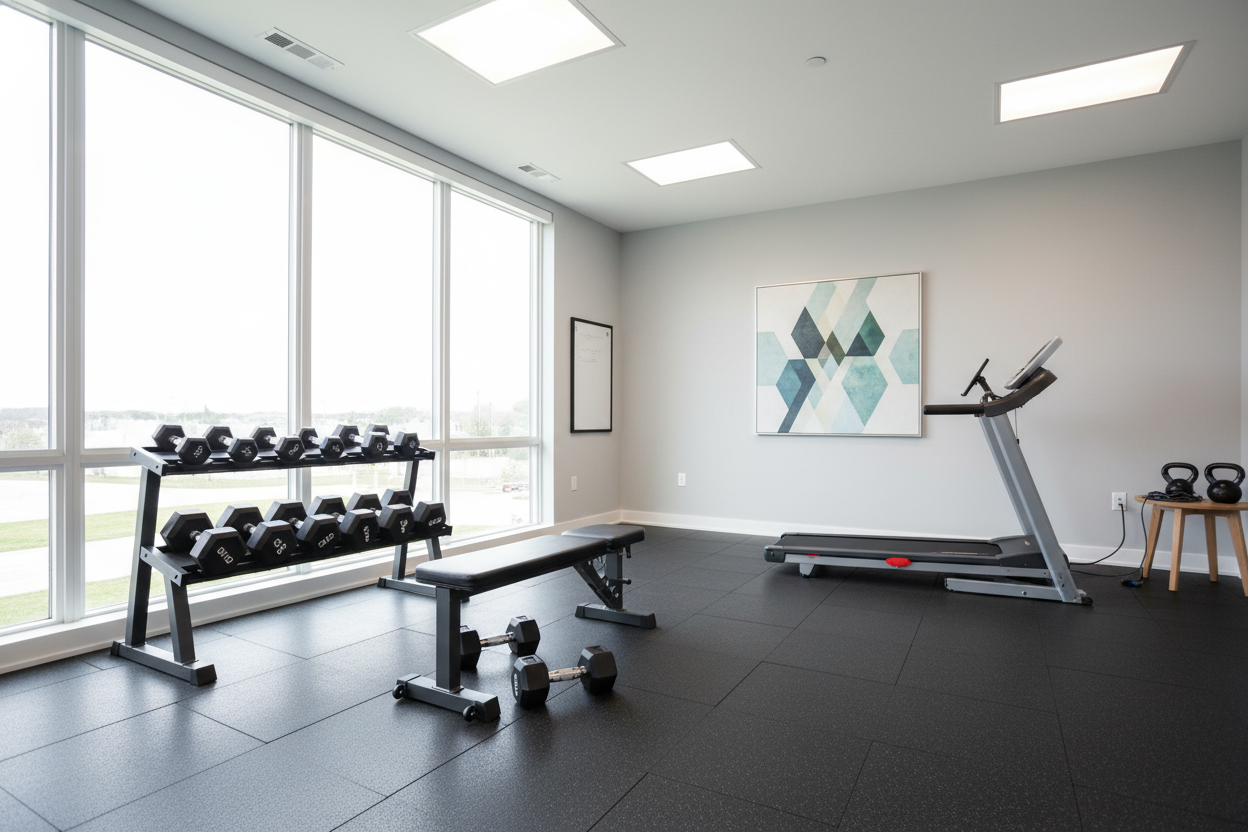
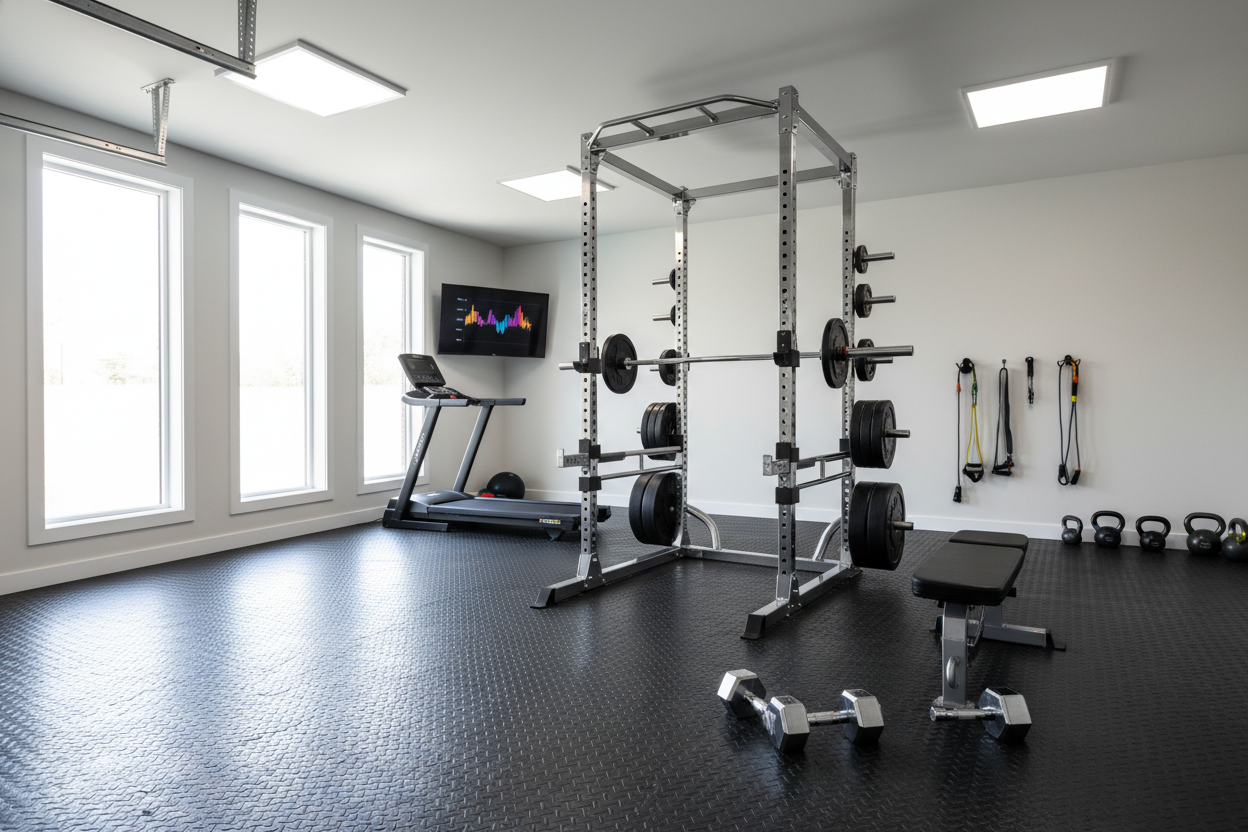
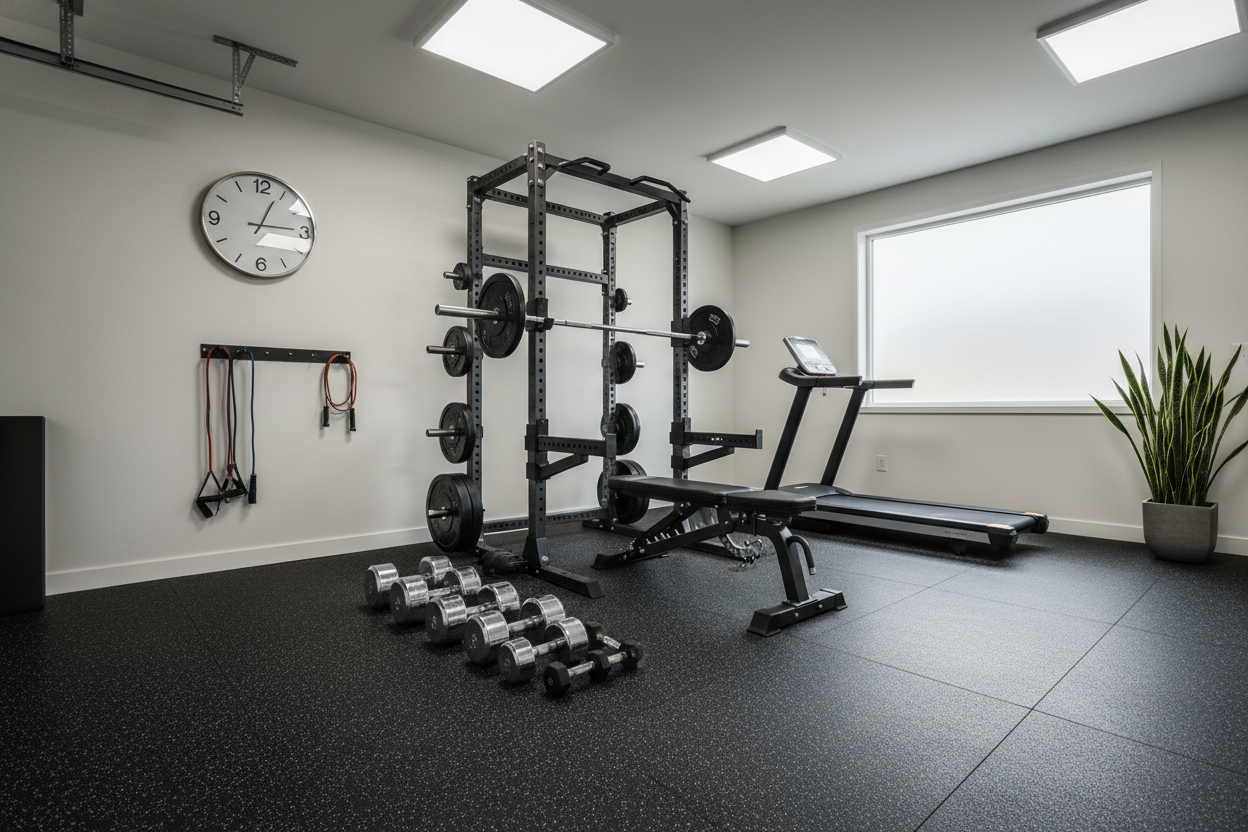
One of the best investments I made was laying down proper gym flooring for home workout sessions. It’s not just about protecting the concrete; it’s about psychological signaling. When I step onto that mat, I'm in the gym. It separates the 'storage area' from the 'training area.' A 6x8 ft space is plenty for a rack or a serious kettlebell session. Keep your chalk, your belt, and your weights organized. If you spend 15 minutes of your 45-minute window looking for gear, you’ve wasted a third of your session. Efficiency is king.
How to Know When It's Actually Time to Switch
People love 'program hopping.' They run a routine for two weeks, don't see a six-pack, and decide they need a new perfect workout plan. Stop it. Any training routine worth its salt needs at least 12 weeks of consistent effort before you can judge it. You aren't testing the program; the program is testing you. Are you actually hitting the prescribed weights? Are you sleeping? Are you eating enough? If the answer is no, the program isn't the problem—your execution is.
I once switched routines every month for a year because I was obsessed with finding the 'magic' rep range. I ended that year exactly where I started—same weight on the bar, same physique in the mirror. It wasn't until I committed to a boring, basic 3-day split for six months that I actually saw my deadlift move from 315 to 405. Consistency isn't sexy, but it's the only thing that actually works. If you're still making progress, don't change a thing.
Personal Experience: The 'Optimal' Failure
A few years ago, I tried to run a high-volume 'Arnold-style' split. I was convinced I needed to be in the gym two hours a day, six days a week. Within a month, my elbows were screaming, I was snapping at my family, and I was dreading my workouts. I was so focused on what was 'optimal' for a professional bodybuilder that I ignored what was sustainable for a guy with a 9-to-5. Switching back to a basic 3-day full-body plan felt like a defeat at first, but my strength skyrocketed because I was actually recovering for the first time in months. Sometimes, less really is more.
FAQ
Can I get results with only 3 days a week?
Absolutely. Most of the strongest people I know train 3 or 4 days. It allows for higher intensity during the sessions and better recovery between them. Quality always beats quantity.
What if I don't have a full power rack?
You can do a lot with a pair of adjustable dumbbells or a single heavy kettlebell. The best exercise plan is the one that uses the gear you actually have access to right now. Don't let a lack of gear be an excuse for a lack of effort.
How long should my workouts take?
If you're focused, you can get a world-class workout done in 45 to 60 minutes. If it's taking two hours, you're likely spending too much time on your phone or doing too much junk volume that doesn't contribute to your goals.