I Stripped Down Free Weight Exercises for Beginners to Just 4 Moves
I remember my first day in a commercial gym. I spent forty minutes wandering between chrome machines that looked like torture devices, eventually settling on a leg extension because it had a diagram on the side. It was a total waste of time. If you want to actually get strong without paying a monthly subscription for access to a pec deck, you need free weight exercises for beginners that build a foundation, not just a temporary pump.
Quick Takeaways
- Free weights build stabilizer muscles that fixed-track machines completely ignore.
- You only need four movements to hit every major muscle group in your body.
- Form and 'bracing' are more important than how many plates are on the bar.
- A single dumbbell and a flat patch of floor are enough to start today.
Why I Ban Machines for Absolute Novices
Machines are like training wheels that never come off. They force your joints into a fixed track determined by an engineer, not your anatomy. If your shoulder wants to move slightly differently than the machine's pivot point, you're asking for an impingement. Simple free weight exercises force your core to fire and your joints to find their natural, safest path.
When you sit in a chest press machine, you aren't learning how to stabilize a load. You’re just pushing. The moment you try to translate that strength to moving a couch or picking up a heavy box, you’ll realize machine strength is often 'fake' strength. Basic free weight exercises develop real-world balance from day one. It’s harder, sure, but it’s the only way to build a body that doesn't break.
The Core 4: Basic Free Weight Exercises to Master First
Stop trying to emulate the guy doing three different types of bicep curls. You need to learn how to spot good free weight exercises by looking for movements that use multiple joints at once. I teach every novice these four moves:
- The Goblet Squat: Hold a dumbbell against your chest like a holy grail. It forces you to keep your spine upright and teaches you how to sit back into your hips.
- The Dumbbell Romanian Deadlift (RDL): This is the 'hinge.' You’re pushing your hips back to pick something up without rounding your spine. It’s the ultimate protector for your lower back.
- The Floor Press: It’s a bench press, but you’re lying on the floor. This prevents you from overextending your shoulders, making it one of the most easy weight exercises to learn safely.
- Supported Dumbbell Row: Put one hand on a sturdy table or chair and pull a weight toward your hip. This builds the 'pulling' strength that most people lack from sitting at desks all day.
How to Exercise With Weights (Without Getting Hurt)
The biggest mistake I see is people 'flopping' through their reps. To do an easy free weight workout correctly, you have to master the eccentric—the lowering phase. Don't just let gravity drop the weight. Count to three on the way down. This creates the tension necessary for free weight exercises for hypertrophy to actually work.
You also need to learn how to 'brace.' Before you move the weight, take a deep breath into your belly (not your chest) and flex your abs like someone is about to punch you. This creates a pressurized 'belt' of muscle around your spine. If you aren't bracing, you aren't lifting; you're just moving heavy objects dangerously.
A Dead-Simple Free Weight Workout to Start Today
Forget the 60-minute exhausting circuits. We are focusing on how to exercise with weights using progressive overload. Perform this workout three times a week with at least one rest day in between.
- Goblet Squats: 3 sets of 10-12 reps
- Floor Press: 3 sets of 10-12 reps
- Dumbbell RDLs: 3 sets of 10-12 reps
- Supported Rows: 3 sets of 10-12 reps per arm
Once you can do 12 reps with perfect form, increase the weight by 5 lbs. That’s it. No fancy apps or complicated math required.
When to Finally Upgrade Your Home Gym Setup
You can get a lot of work done on the living room floor, but eventually, the floor becomes a limitation. To get a full range of motion on your presses and rows, you'll want a Gxmmat Adjustable Weight Bench. It provides the stability you need to push your limits without worrying about sliding around on the carpet.
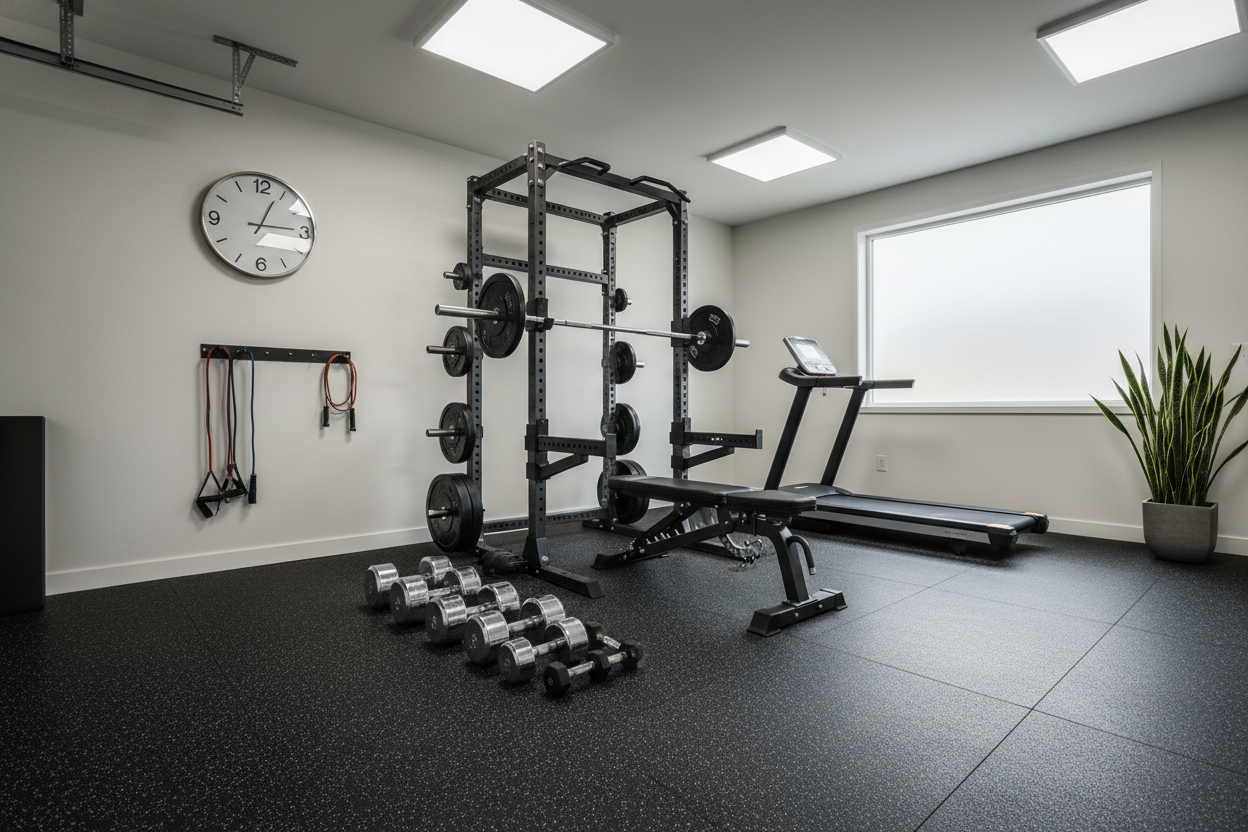
If you catch the lifting bug and start outgrowing your dumbbells, the logical next step is the Gxmmat X6 Power Rack Weight Bench Package. It’s the transition from 'exercising' to 'training.' Having a rack means you can safely move toward heavy barbell squats and presses, which is where the real strength gains live.
My Personal Take
I spent my first year lifting on a cheap, plastic-coated weight set I bought for $30. The weights rattled, the bar was thin, and I hated using them. I eventually learned that quality gear actually makes you want to train. Don't feel like you need a $5,000 setup to start, but don't buy gear that feels like a toy. If you don't trust the equipment, you'll never lift with the intensity required to see results.
FAQ
What weight should I start with?
Start with a weight you can move for 12 reps while maintaining a conversation. If your form breaks down or you have to hold your breath to finish the rep, it’s too heavy.
Can I do these exercises every day?
No. Your muscles grow while you rest, not while you're in the gym. Stick to 3 or 4 days a week maximum when starting out.
Are dumbbells better than barbells for beginners?
Usually, yes. Dumbbells allow your joints to move more freely and they quickly expose if one arm is stronger than the other, which helps prevent long-term imbalances.