A One-Spot Gym Circuit for Beginners That Won't Annoy Anyone
I’ve seen it a thousand times: someone prints out a 'Full Body Blast' and tries to reserve three different machines at 5:30 PM on a Monday. They leave their towel on the lat pulldown, walk over to the bench press, and come back five minutes later to find their towel in a heap on the floor and a 250-pound powerlifter mid-set. It’s awkward, it’s frustrating, and it’s why most people quit after a week. If you want to run a gym circuit for beginners, you need a strategy that doesn't involve starting a turf war.
- Pick one set of dumbbells and stay put.
- Stake out a small corner to avoid foot traffic.
- Focus on compound movements that hit every muscle.
- Ignore the 'machine hoarding' advice from 2012 magazines.
The Problem with Fitness Magazine Circuits
Most weight lifting circuit for beginners guides are written by people who train in empty private studios or have a key to the gym at 3 AM. They tell you to superset a barbell back squat with a 50-yard sled push and a cable fly. In a real commercial facility, that is a fantasy. By the time you finish your squats, someone has already hijacked the sled and three people are waiting for the cable machine.
Bouncing between stations at peak hours is the fastest way to lose your equipment and your momentum. You end up standing around, losing your heart rate, and getting annoyed. Worse, you become 'that person' who tries to claim half the gym floor while others are just trying to get a quick set in. We can do better by staying in one spot.
The 'One-Spot' Rule for Crowded Floors
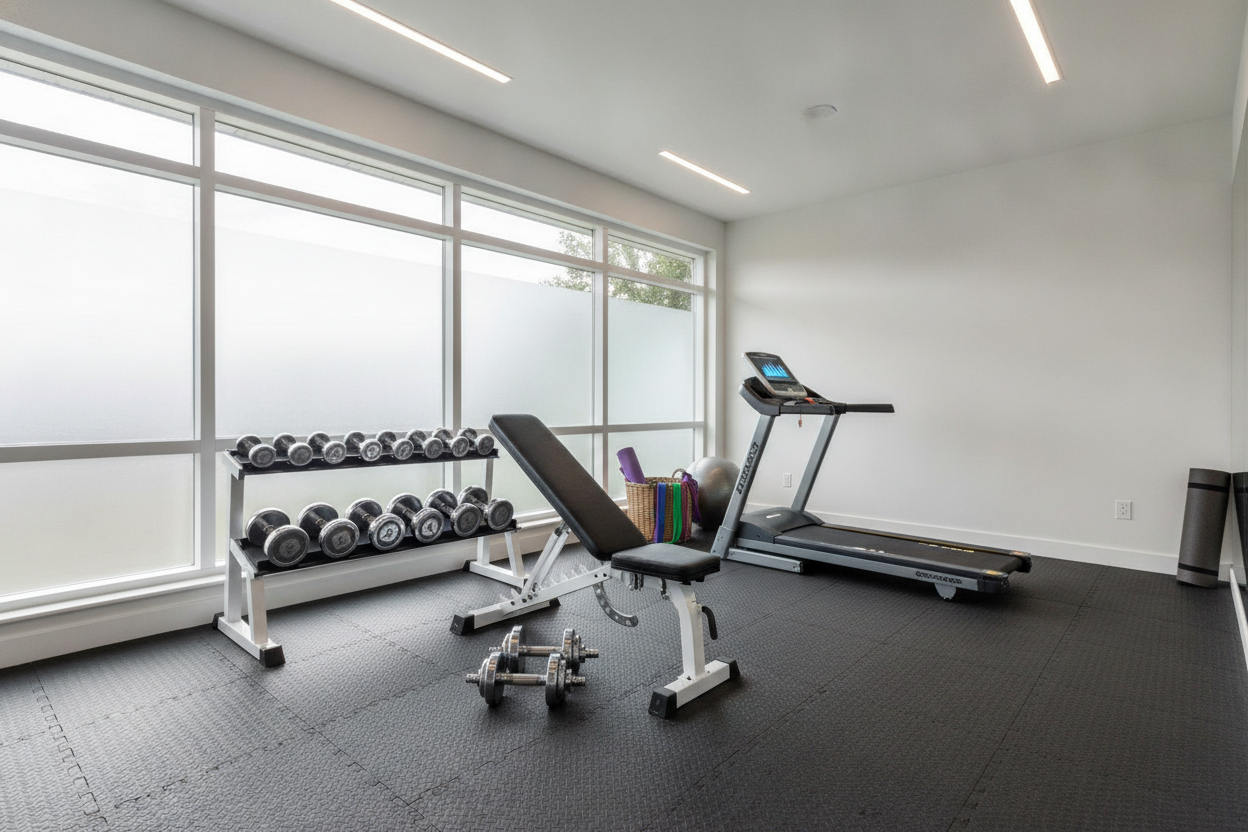
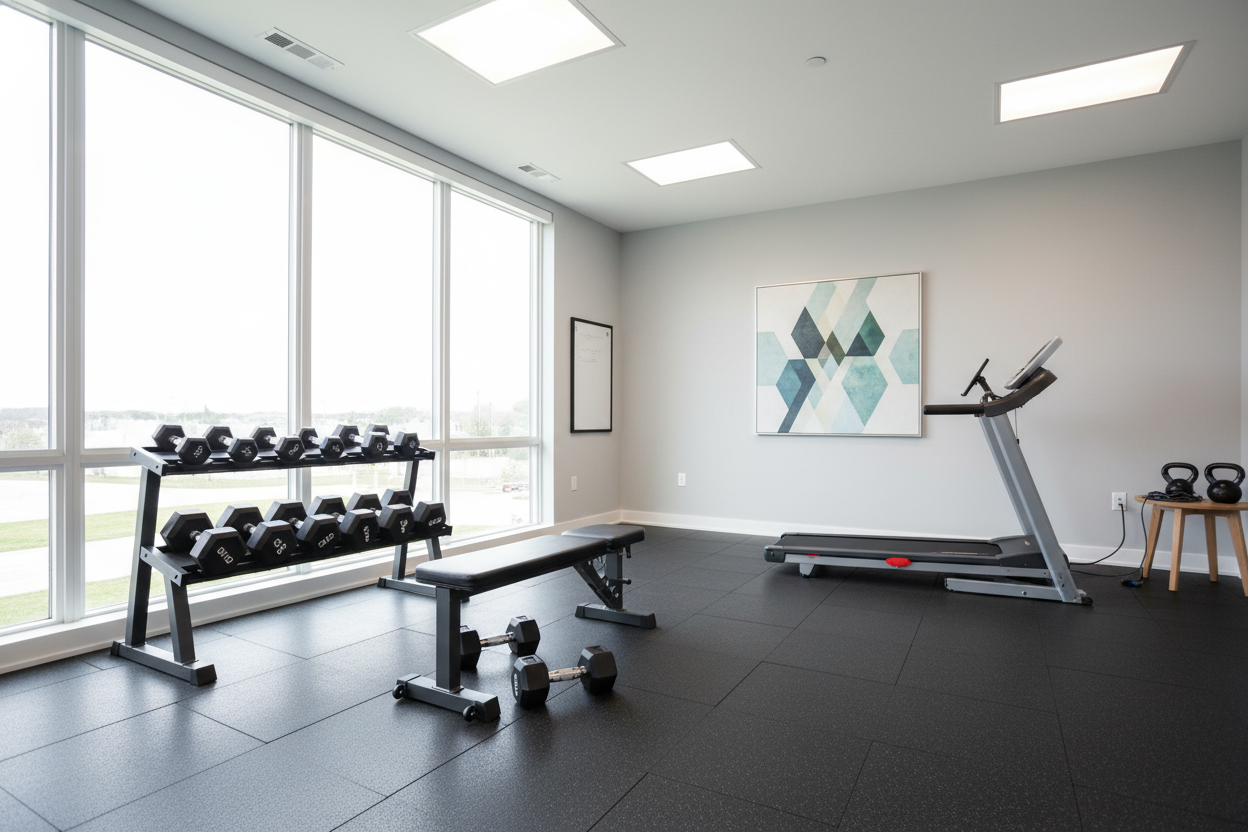
The secret to a successful beginner gym circuit is anchoring. You find one small footprint and you don't leave it until your timer hits zero. I usually look for a quiet corner near the dumbbell rack or even a spot in the group fitness room if it's empty. You want enough space to move your arms without hitting a rack, but not so much that you're blocking the walkway.
I’ve found that claiming a small, defined zone like a 6x4ft exercise mat is the best way to establish your personal workout space. It signals to others that this is your station. Once you have your spot and one pair of dumbbells, you have everything you need. No more sprinting across the gym to see if the leg extension is free.
The 4-Move Foundation Routine
For this circuit, grab a pair of dumbbells that feel challenging but allow for clean form. We are going to hit the entire body with four moves: the Goblet Squat, the Floor Press, the Bent-Over Row, and the Farmer’s Carry. Perform 10-12 reps of each, moving immediately to the next exercise. Rest for 90 seconds after the carry, then repeat for 4 rounds.
The Goblet Squat builds leg strength and core stability. The Floor Press is a safer alternative to the bench press for beginners because the floor stops your elbows from overextending. The Row hits your back, and the Carry—simply walking in a small circle or on the spot with the weights—builds grip and posture. You should stop overthinking weight lifting training programs and just master these four. They are the meat and potatoes of strength.
Do I Need to Move to the Heavy Racks Eventually?
A common fear for newcomers is that they aren't 'really' lifting unless they are under a 45-pound Olympic barbell. I’ve spent years under a barbell, and I’ll tell you a secret: your muscles don't know the difference between a 50-pound dumbbell and a 50-pound barbell. Dumbbells actually force your stabilizer muscles to work harder because each arm has to handle the weight independently.
You can build a serious baseline of strength and a respectable physique using nothing but dumbbells for months, if not years. If you're wondering are barbells actually required for progress, the answer is no—especially not in the first six months. Stick to the circuit, increase the weight of your dumbbells every few weeks, and you’ll see more progress than the guy constantly waiting for the squat rack to open up.
What If the Free Weight Area Is Too Chaotic?
Some days, the dumbbell rack looks like a mosh pit. If you can't even get a pair of 15s without getting elbowed, pivot. Don't skip the workout. Most commercial gyms have a row of weight lifting machines that are often less crowded than the free weight section. You can run the same circuit logic there: a chest press machine, a seated row machine, and a leg press.
The goal isn't perfection; it's consistency. If the 'One-Spot' dumbbell plan is blocked, pick three machines that are close to each other and cycle through them. As long as you aren't leaving a pile of personal items on a machine while you're across the room, most regulars won't mind if you jump back and forth between two nearby stations.
Personal Experience: The Day I Got Kicked Off the Bench
Early in my training, I tried to run a 'fancy' circuit I found online. I had a bench, a pull-up bar, and a kettlebell all 'reserved.' I walked five steps to the pull-up bar, did my set, and turned around to find a guy already mid-set on my bench. I tried to tell him I was using it, and he just looked at me and said, 'You weren't here.' He was right. I felt like an idiot and my workout was ruined. That was the day I switched to the one-spot method. It’s less stress, more sweat, and zero arguments.
FAQ
How heavy should my dumbbells be?
Pick a weight you can press over your head at least 10 times with perfect form. If you're struggling by rep 5, it's too heavy for a circuit.
How many times a week should I do this?
Three days a week is the sweet spot. Your muscles need 48 hours to recover and grow between sessions.
What if someone asks to 'work in'?
If you're using dumbbells in a corner, they can't really work in. If you're on a machine, be polite and let them do their set while you rest. It's the unwritten rule of the gym.