Stop Copying Fluffy Exercise Routines at the Gym for Women
I have lost count of how many times I have seen a woman walk into a commercial gym, grab the 5-pound pink dumbbells, and spend forty minutes doing 'toning' circuits that would not challenge a toddler. Most exercise routines at the gym for women are marketed as a way to 'sculpt' or 'lean out' without 'bulking,' which is a polite way of saying they are designed to make you sweat without actually changing your body composition.
- Ditch the high-rep, low-weight circuits for actual compound lifts.
- Progressive overload is the only way to see muscle growth or fat loss.
- Three heavy sessions beat six 'sweaty' ones every single time.
- Focus on movements like squats, deadlifts, and overhead presses.
Why Most Commercial Gym Plans for Women Are Designed to Fail
The fitness industry loves to keep you in a cycle of 'feeling the burn' without getting stronger. A typical ladies gym workout routine often looks like a chaotic list of glute kickbacks, side-lying leg raises, and endless cardio. While it makes you tired, it does not provide the mechanical tension needed to build muscle or bone density.
Muscle is your metabolic engine. If your women's gym routine does not involve adding weight to a bar or a machine over time, you are just spinning your wheels. These plans are sold because they are easy to follow and require zero technical coaching, but they rarely deliver the physique changes most women are actually looking for. Real strength requires real resistance.
Red Flags to Look For in a Female Gym Plan
If your women's gym workout plan looks like a laundry list of 20 different exercises with 20 reps each, walk away. That is not a plan; it is a distraction. Real progress comes from doing a few things exceptionally well, not doing forty things poorly. You need a blueprint for sustainable gains that prioritizes the big lifts over 'finisher' movements that just leave you breathless.
Another red flag is the complete absence of a rest day or a recovery strategy. If any women's workout plans for the gym suggest you need to be in the building seven days a week to see results, it is ignoring how human biology works. You grow while you sleep and recover, not while you are grinding on a stair climber for the ninth hour this week. If you are constantly sore and never getting stronger, your plan is broken.
The Anatomy of a Real Women's Gym Routine
A legitimate women's workout routine gym setup should be built around the 'Big Four': squats, hinges (like deadlifts), pushes (overhead press or bench), and pulls (rows or pull-ups). These compound movements recruit the most muscle fibers and trigger the best hormonal response. I do not care if you are using a barbell or heavy dumbbells—the principles of loading remain the same.
A solid workout gym plan female lifters can actually stick to usually involves 3 to 5 sets of 5 to 10 reps. This is the sweet spot for hypertrophy and strength. When I am testing gear, I look for equipment that can handle these loads safely. You do not need 'women-specific' gear; you need a rack that does not wobble and a barbell with decent knurling so your grip doesn't fail before your legs do.
How to Build a Gym Exercise Schedule for Women Who Are Busy
Most of us have jobs and lives outside the squat rack. A gym exercise schedule for women should not feel like a second full-time job. A three-day full-body split is often more effective than a five-day 'bro split' because it allows for more recovery. If you are really crunched for time, a 30-minute gym workout female routine can be incredibly effective if you cut out the fluff and focus on high-intensity compound sets.
Quality over quantity is the only mantra that matters here. If you can only get to the gym twice a week, make those two days count. Heavy carries, goblet squats, and push-ups will do more for your women's exercise workout routines than an hour of 'fat-burning' treadmill walking ever will. Focus on moving heavy things and moving them well.
Hate the Commute? How to Bring the Routine Home
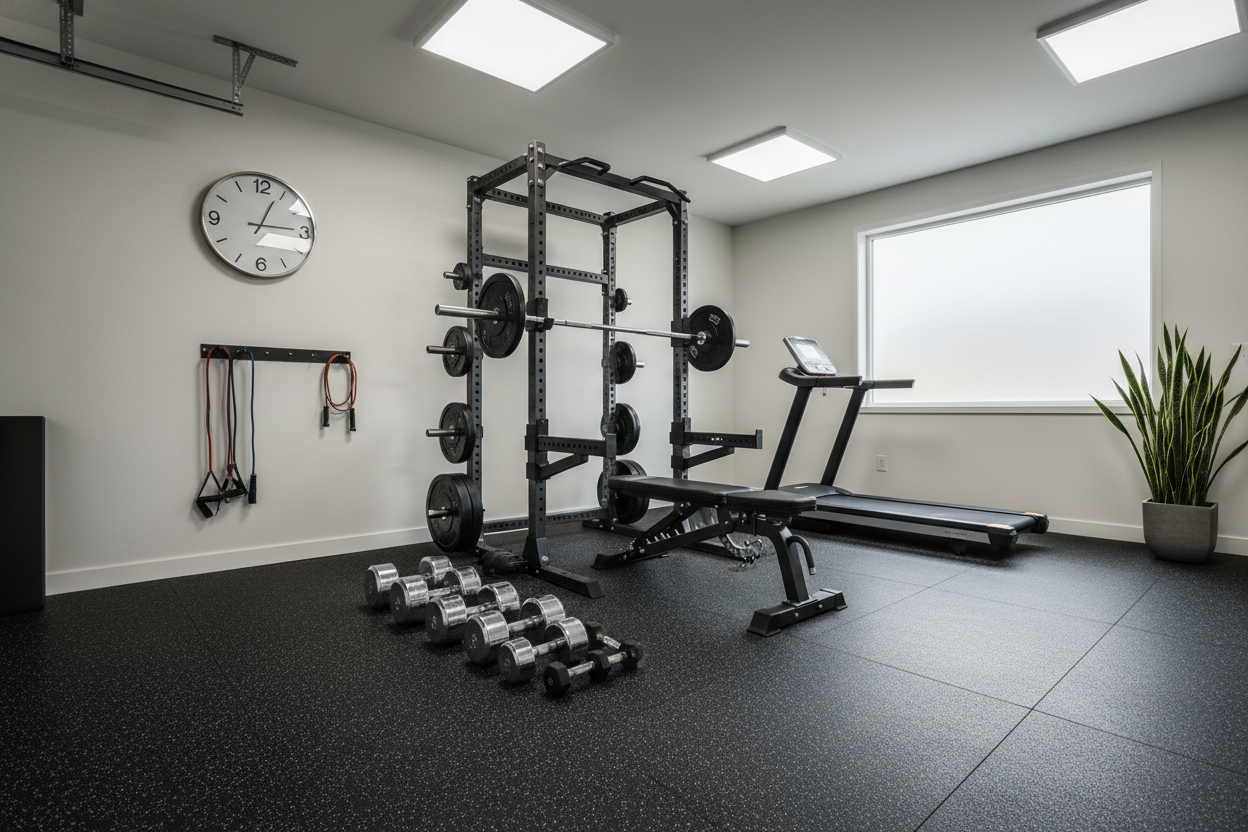
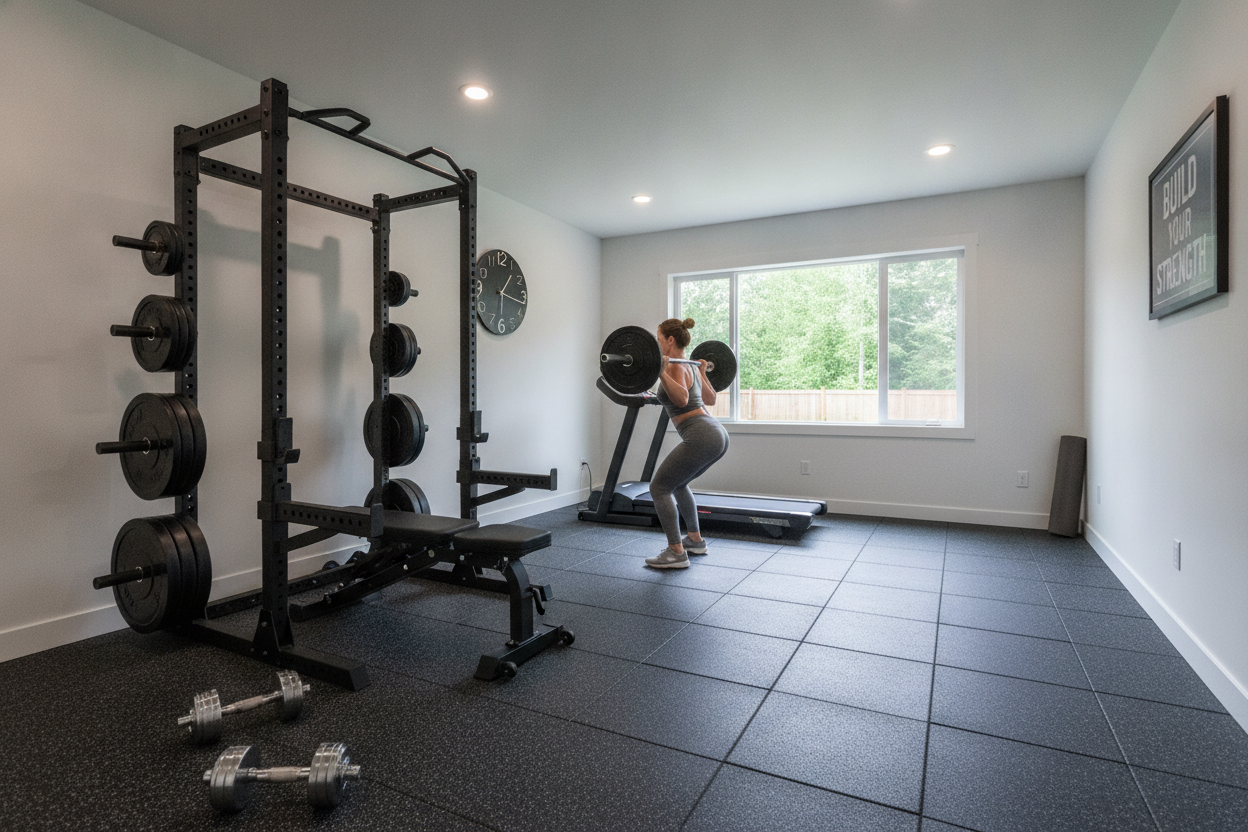
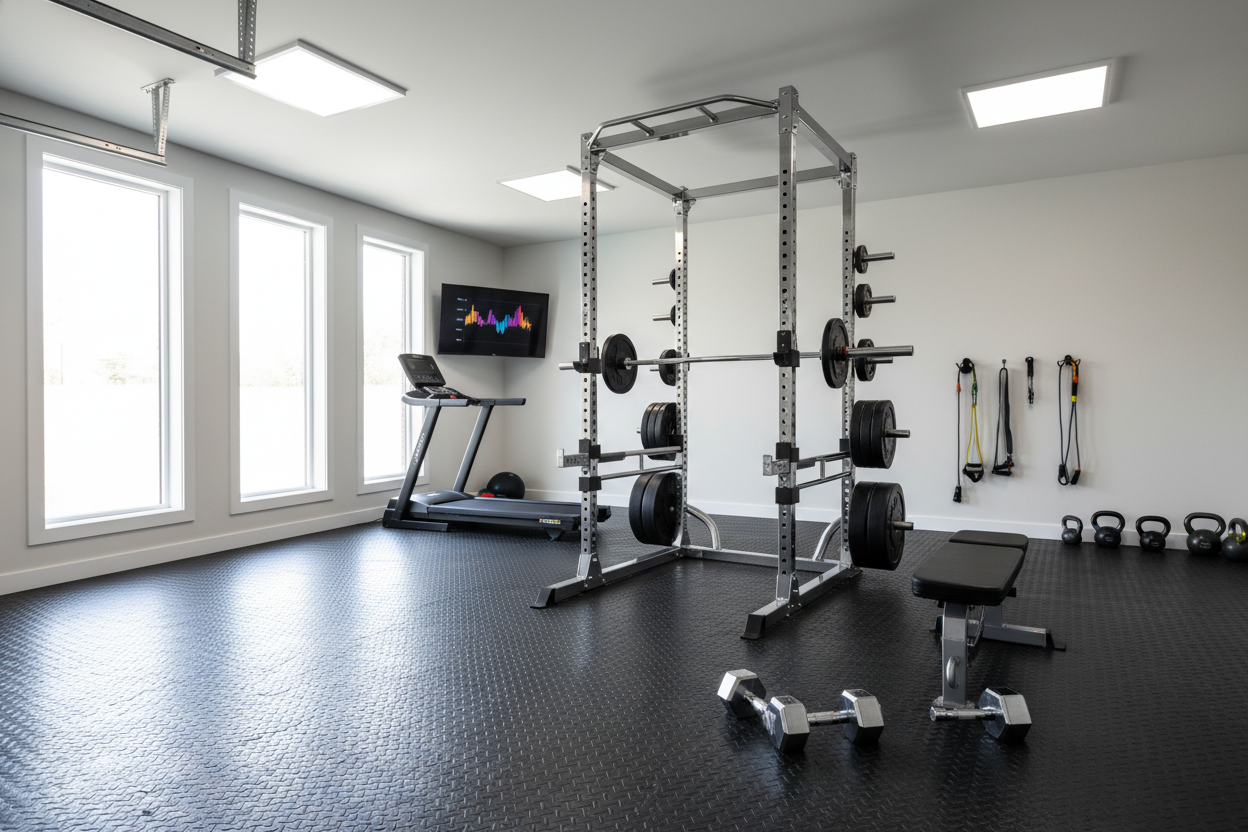
Eventually, the commercial gym experience gets old. The crowds, the broken machines, and the terrible music drive a lot of us to build a home setup. Once you have a solid women's gym plan, you realize you do not need fifty machines. You need a rack, a bench, and a floor that can handle the impact.
The first thing I tell anyone building a home gym is to invest in flooring. You cannot drop a 45-lb plate on bare concrete or hardwood without consequences. Getting a large exercise mat for home gym use is the smartest move you will make. It protects your gear, your floor, and your joints when you are doing those heavy accessory movements or dropping your deadlifts after a PR.
My Personal Experience
Early in my training, I followed a popular influencer plan that had me doing 15 different variations of a glute bridge every Monday. I was exhausted, but my squat numbers did not move for six months. It was not until I stripped everything back to a basic linear progression—squatting twice a week and actually eating enough protein—that I saw real muscle definition. My mistake was thinking more variety meant better results. It does not. I wasted months on 'toning' when I should have been lifting.
FAQ
Will heavy lifting make me look bulky?
No. Most women do not have the testosterone levels to accidentally look like a bodybuilder. Lifting heavy just makes you look 'toned' by building the muscle density underneath your skin.
How many days a week should I train?
Three days is the sweet spot for most. It allows for high intensity during the session and plenty of recovery time between workouts to actually see results.
Do I need a personal trainer?
Not necessarily. A good program and a mirror—or a camera to record your form—are often enough to get started safely. Focus on the basics first.