Why Most Exercise Equipment Routines Are Completely Worthless
I’ve spent the last decade crawling through garage gyms and commercial megaclubs, and I’ve noticed a depressing trend. You see it every Monday night: someone walks up to a pristine Life Fitness chest press, moves the pin to a weight that feels 'okay,' and mindlessly pumps out ten reps while checking their phone. They do this for four different machines and wonder why their physique hasn't changed since the Obama administration. The truth is that most exercise equipment routines are treated like an afterthought, and that is exactly why they fail.
Quick Takeaways
- Stop treating machines like 'easy' alternatives; they are tools for maximum mechanical tension.
- Standardize your setup (seat height, pad position) or your tracking is useless.
- Machines allow you to train closer to failure safely—use that advantage.
- Progressive overload applies to weight stacks just as much as it does to barbells.
The 'Just Do 3 Sets of 10' Trap
The biggest issue with a standard exercise machine routine is the lack of intent. People approach a machine gym workout plan with the mindset that the machine is doing the work for them. They pick a weight that is comfortably heavy, do three sets of ten because that’s what the sticker on the side of the shroud suggests, and they never break a sweat. This is training to check a box, not training to grow.
When you use a gym machine routine, you lose the stabilization requirement of a barbell. That’s not a bad thing—it actually allows you to isolate the target muscle better. But because you aren't worried about balancing a bar, you have to make up for that 'lost' effort by increasing the intensity. If you finish a set of machine presses and you aren't struggling to complete the final rep, you just wasted your time. Most machine workout routines fail because the user never actually reaches a point of muscular fatigue.
We also have a psychological bias where we treat weight stacks like toys. A 45-lb plate feels serious. A pin in a stack at the '100' mark feels like a suggestion. If you want a machine gym workout routine to actually work, you have to stop 'using' the machines and start 'attacking' them. Every rep needs to be controlled, and every set needs to have a purpose. If you aren't tracking the weight, the reps, and the rest periods, you aren't following a gym machine workout program—you’re just exercising.
Treat the Weight Stack Like a Barbell
If you were squatting, you wouldn't just guess the weight every week. You’d know exactly what was on the bar. You need that same level of precision for your weight machine workout routines. The weight stack is just a different delivery system for gravity. Whether it’s a cable, a belt, or a cam-driven lever, 200 pounds is 200 pounds of tension on the muscle.
Progressive overload is the only law that matters in the gym. If you did 120 pounds for 10 reps last week, you better do 120 for 11 or 125 for 10 this week. Many people struggle with this because machine stacks often have huge jumps—sometimes 15 or 20 pounds between plates. This is where people give up on their weight machine workout plan. Don't let the equipment dictate your progress. Buy a pair of 1.25-lb fractional plates or a magnetic 'adder' weight to bridge those gaps.
Treating the stack like a barbell also means respecting the tempo. Don't let the weight slam back down. The eccentric (lowering) phase of a machine movement is where a massive amount of hypertrophy happens. If you’re letting the stack crash, you’re cutting your results in half. A good machine workout routine emphasizes a slow, controlled negative to keep the tension where it belongs: on your muscle fibers, not the machine's frame.
Why Seat Height Matters More Than You Think
If you want a workout routine for machines at the gym to be accurate, you must standardize your setup. I see people jump on a lat pulldown and never check the thigh pad height. If your legs are lifting off the seat, you’re using your body weight to cheat the movement. Suddenly, that 'PR' you hit isn't real strength; it's just physics.
Changing the seat height by even one notch alters the joint angles and the mechanical leverage of the exercise. If you sit higher on a chest press, you’re hitting more lower pec; sit lower, and it shifts to the shoulders. If you don't record these settings, your workout routine with machines is just a series of random variables. Pick a setting, write it down (e.g., 'Seat 5, Pad 3'), and keep it there until you actually get stronger.
You Have Zero Excuses to Avoid Failure
This is the hill I will die on: machine training should be harder than free weight training. Why? Because it’s safer. If you’re benching 315 pounds and you hit failure, you might die if you don't have a spotter. If you hit failure on a selectorized chest press, you just let the handles go and the weight stack stops. There is no risk of being crushed.
Because of this safety net, your machine workout plans should involve taking sets to absolute muscular failure. You can use intensity techniques like drop sets, rest-pause, or partial reps at the end of a set that would be suicidal with a barbell. If your workout routine on machines doesn't involve at least one set per exercise where you literally cannot move the weight another inch, you’re leaving gains on the table. The stability of the machine allows you to push your nervous system and muscle tissue to the absolute limit without the fear of injury.
Building a Realistic Machine-Only Split
You don't need a barbell to get huge. Some of the most successful bodybuilders in the world, like Dorian Yates, relied heavily on machines. A solid machine workout program should be structured logically, usually in a Push/Pull/Legs or Upper/Lower split. This ensures you’re hitting every muscle group with enough volume and recovery time.
For a 'Push' day, you might start with a heavy plate-loaded incline press, move to a cable fly, and finish with a tricep overhead extension. For 'Pull,' you’re looking at chest-supported rows (to take the lower back out of it) and lat pulldowns. For 'Legs,' the leg press and hack squat are your bread and butter. The key is to select machines that fit your specific biomechanics. Not every machine is built for every body type. If a specific machine gym workout plan feels 'clunky' or hurts your joints, find a different one. The variety in modern gyms is vast, so there’s no reason to suffer through a poorly designed piece of gear.
If you’re tired of guessing what to do next, you can download my gym machine workout routine PDF to see how I structure these sessions for my clients. It takes the guesswork out of the equation so you can focus on the effort. A weight machine workout program is only as good as the data you put into it, so keep your logbook handy and stop 'wandering' from machine to machine.
Preparing Your Home Space for Heavy Machines
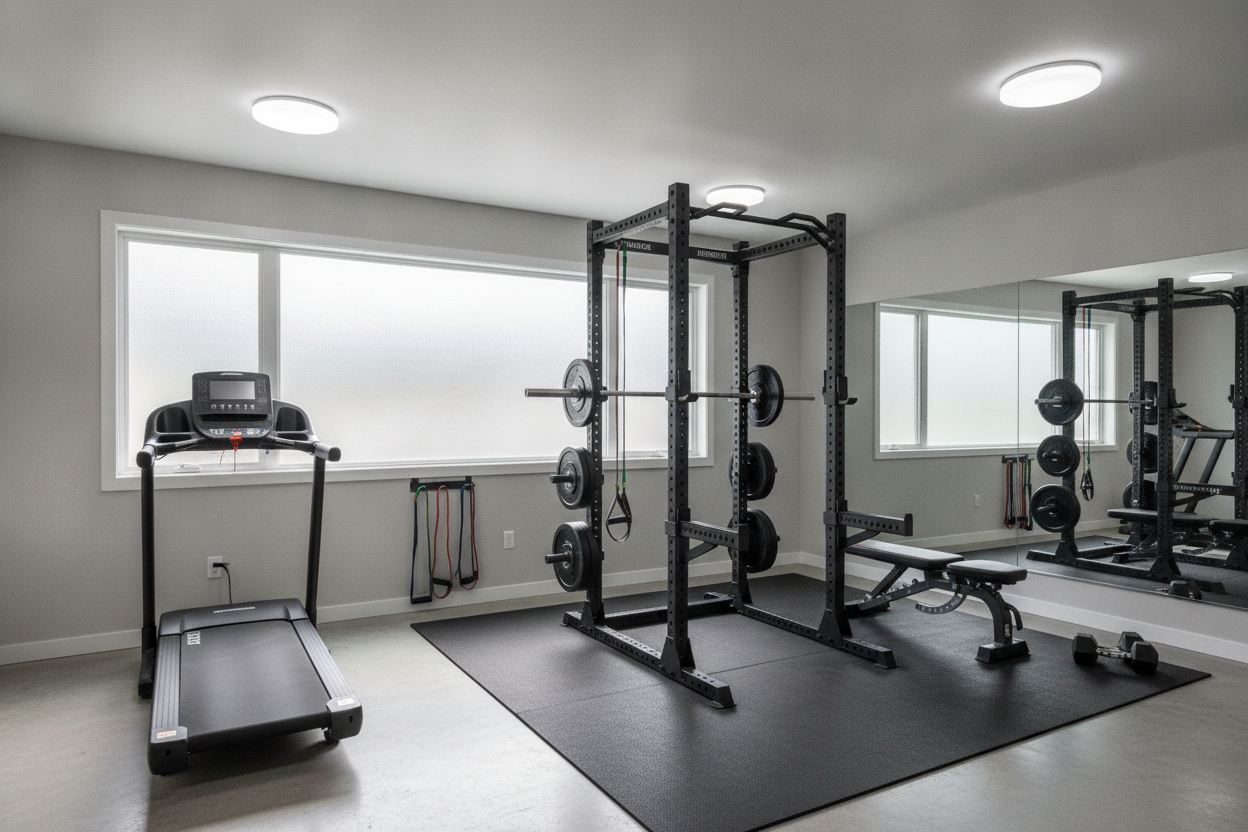
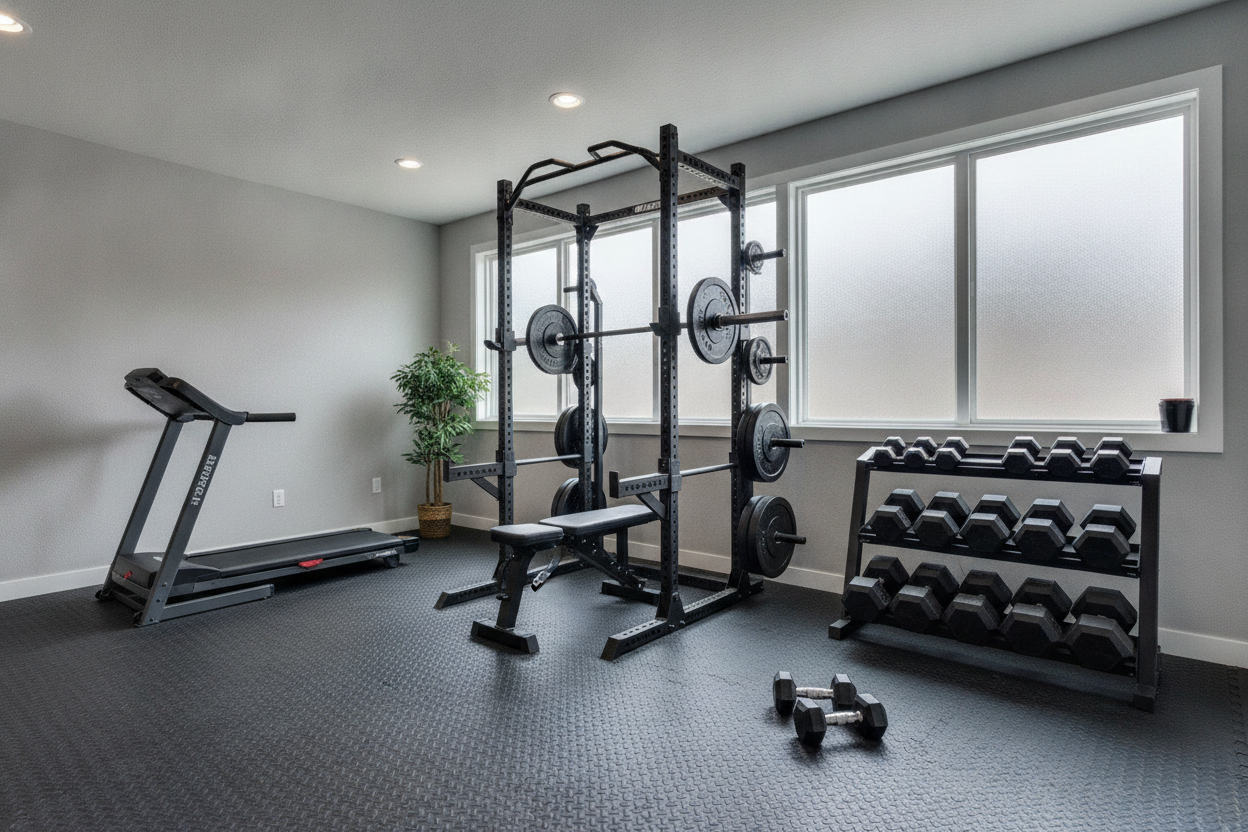
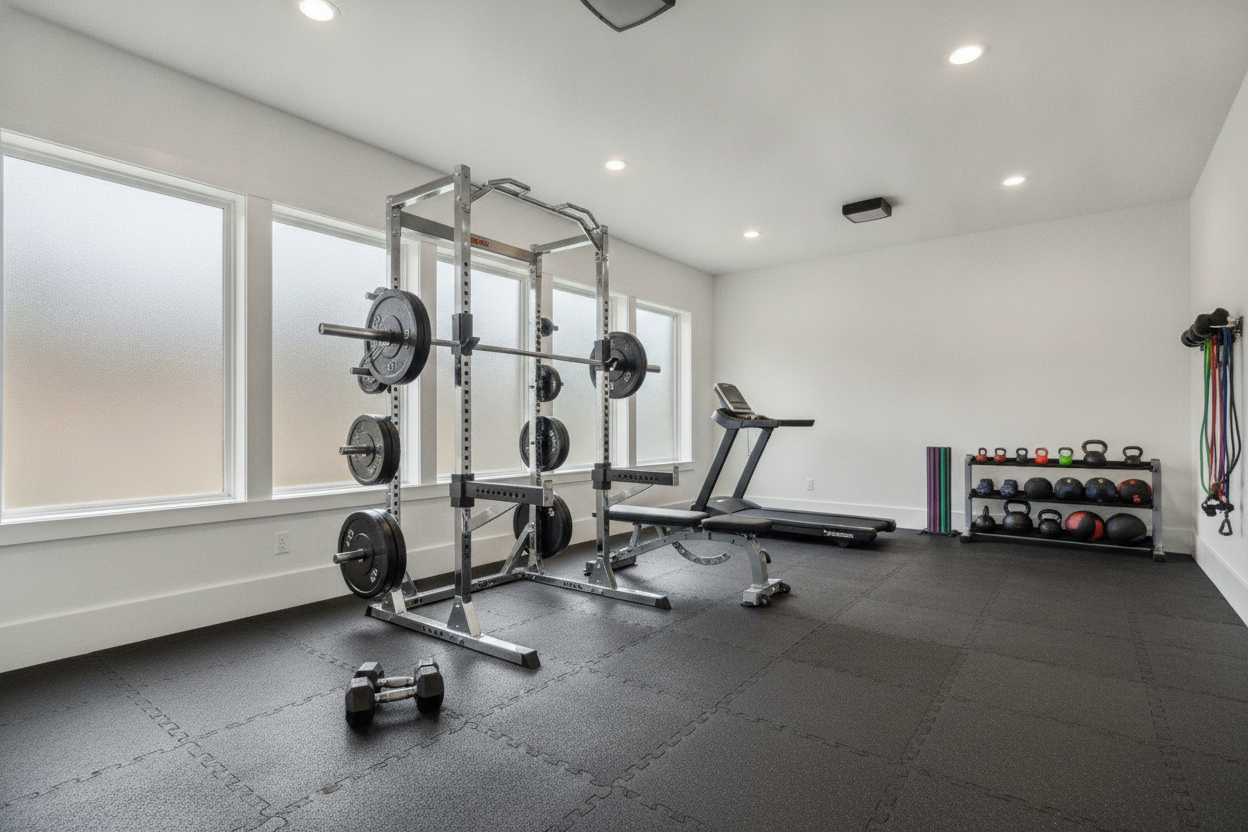
If you're building a home gym and moving away from a life fitness workout routine at a commercial club, you need to be smart about your floor. Commercial machines are heavy, but the weight stacks are the real floor-killers. A 250-lb stack concentrated on four small feet can crack a garage floor or leave permanent indentations in thin carpet. I learned this the hard way after a functional trainer left four deep divots in my hardwood.
Before you bolt anything down, invest in thick gym flooring for home workout spaces. You want at least 3/4-inch stall mats or high-impact rubber. This doesn't just protect the floor; it also dampens the noise. If you're doing a machine weight training routine at 6 AM, your family won't appreciate the 'clack-clack' of the weight stack echoing through the house. Proper flooring absorbs that vibration and keeps the machine stable during heavy sets.
Stop Guessing and Start Tracking
The difference between someone who looks like they lift and someone who just 'goes to the gym' is a notebook. Whether it's an app or a physical log, you must track every single variable. That is the secret to making workout routines using machines actually work. Stop looking for the 'perfect' machine and start looking for the perfect set.
If you’re ready to stop spinning your wheels, visit our complete workout hub for ideas on how to integrate different types of equipment into your schedule. Whether you have a full commercial setup or a single cable tower, the principles remain the same: track your lifts, standardize your setup, and push yourself until you have nothing left. That’s how you turn a mediocre machine workout into a professional-grade transformation tool.
My Personal Experience: The Seat Height Lesson
I used to be a 'machine hater.' I thought if I wasn't squatting a bar, I wasn't working. Then I tore my labrum and was forced into a machine-only routine for six months. I hated it at first, but then I started getting nerdy with the data. I realized that my 'strength' was fluctuating wildly because I wasn't paying attention to the machine's settings. One week I’d dominate the leg extension, the next I’d struggle. I finally realized I was moving the seat back just one notch, which changed my leverage significantly. Once I standardized my settings and treated the stack like a heavy barbell, I actually put on more quad mass in those six months than I had in the previous two years of squatting. Machines aren't the problem—the way we use them is.
FAQ
Are machines better than free weights for building muscle?
They aren't 'better,' but they are different. Machines offer more stability, which allows you to focus entirely on the target muscle without being limited by your grip or your core strength. For pure hypertrophy (muscle growth), machines are often superior because they allow for more localized fatigue.
Can a beginner start with a machine workout program?
Absolutely. In fact, it's often safer for beginners because the path of motion is fixed. It helps build a foundation of strength and muscle mind-connection before moving on to the complex balance requirements of free weights.
How often should I change my exercise machine routine?
Don't change it just because you're bored. Change it when you stop making progress. If you’ve added weight or reps every week for two months and suddenly hit a wall for three weeks straight, it might be time to swap that specific machine for a different variation.