What to Actually Buy at a Big-Box Store for Exercise Equipment
You’re standing in a massive store for exercise equipment, staring at a Smith machine that costs less than your monthly grocery bill. It’s tempting. You want to start your program tomorrow, not in three weeks when a freight truck finally decides to show up at your driveway. I’ve been there. I’ve walked those aisles, felt the hollow steel of a $200 rack, and wondered if I could make it work. Spoiler: I usually couldn’t.
Quick Takeaways
- Stick to 'dumb' iron: Cast iron plates and kettlebells are hard to ruin.
- Avoid anything with a cable or a pulley unless you enjoy maintenance.
- Check the steel gauge: If it’s thinner than 11-gauge, it’s a hobbyist tool, not a gym tool.
- Retail flooring is a win: Save the shipping costs on heavy rubber mats.
The Big-Box Retail Trap (And Why We Still Fall for It)
The allure of the local sporting goods store is convenience, plain and simple. When you decide to start lifting, you want the iron in your hands that afternoon. You don't want to deal with LTL freight carriers, missed delivery windows, or damaged pallets. So, you head to the local shop. But here is the reality: most big-box stores treat fitness gear like seasonal patio furniture. It’s designed to look good in a glossy circular and fit inside a standard SUV, not to survive five years of heavy deadlifts.
When buying exercise equipment from these retailers, you’re usually buying a brand name that has been licensed out to a generic manufacturer. That bench with the famous bodybuilder’s name on it? He didn’t design it. A corporate sourcing agent did, and they were trying to hit a price point of $99.99. To hit that price, they use thinner steel, plastic bushings instead of bearings, and cheap foam that will bottom out within three months of use.
I’ve seen racks that sway when you rack a measly 135 pounds. I’ve seen barbells with 'chrome' finishes that start peeling like a bad sunburn after two weeks in a garage. These stores thrive on the fact that most people who buy a home gym will stop using it after six weeks. If you’re the person who actually sticks with it, you’ll outgrow this gear faster than a pair of toddler shoes. It’s a trap of planned obsolescence that leaves your garage full of 'gym-shaped' trash.
Decoding the 'Fitness Equipment to Buy' Display
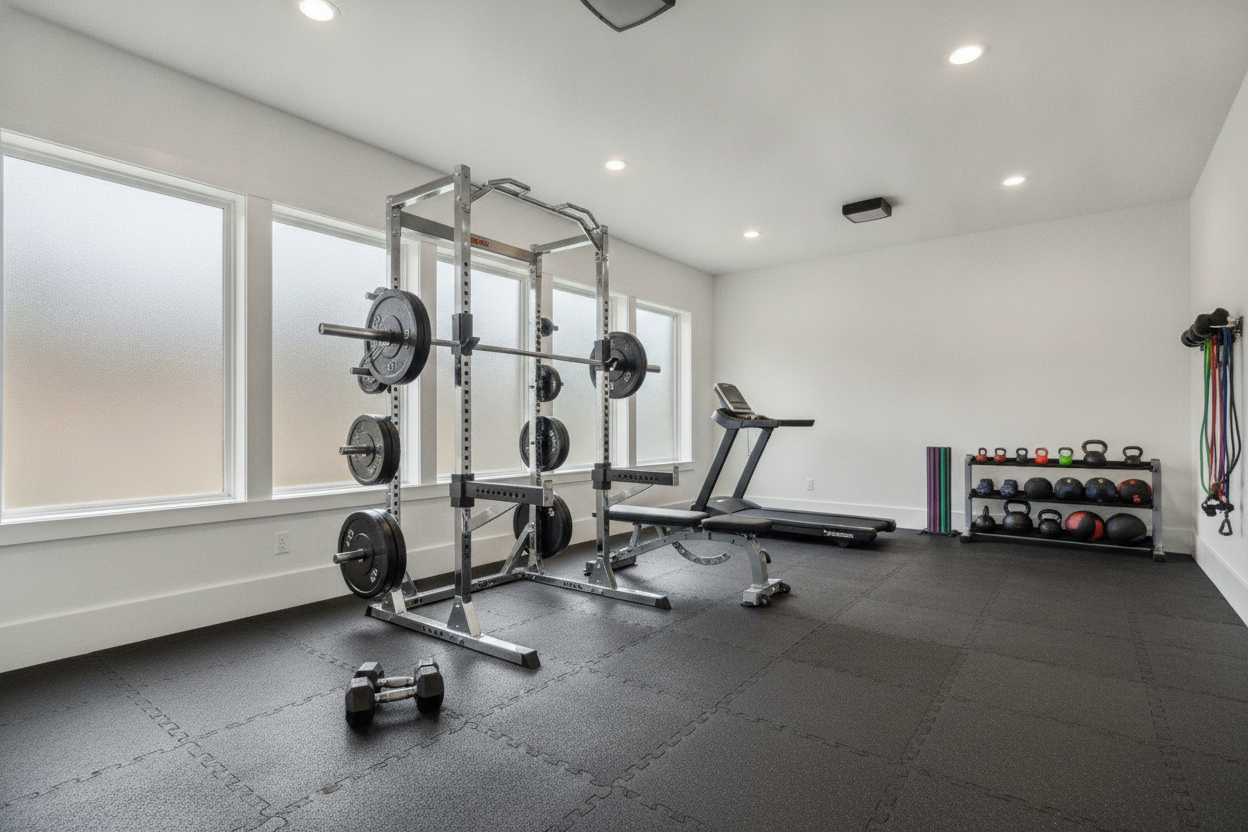
Don't let the lighting and the cardboard cutouts fool you. When you’re looking for fitness equipment to buy, you need to be a skeptic. Walk up to the floor model and give it a literal shake. If a power rack wobbles when you push it with one hand, imagine what it will do when you’re trying to re-rack a heavy set of squats when you’re gassed. Look at the welds. Are they clean, consistent beads, or do they look like a pile of melted chewing gum? Bad welds are a safety hazard, full stop.
Check the weight capacities printed on the boxes. If a bench is rated for 300 pounds, and you weigh 200 pounds, that only leaves 100 pounds for the barbell. That’s a joke. You want a bench rated for at least 600 to 1,000 pounds to ensure it has a structural safety margin. Also, look at the hardware. If the bolts are tiny 1/2-inch zinc-plated screws, that machine isn't built for longevity. Real gym equipment uses 5/8-inch or 1-inch Grade 5 hardware. If it looks like it belongs on a child's swing set, leave it on the shelf.
Safe Bets: What You Can Actually Grab Off the Shelf
It’s not all doom and gloom. There are some things that big-box stores actually do well because they are hard to mess up. Cast iron is the prime example. A 45-pound plate made of gray iron is going to weigh roughly 45 pounds whether it comes from a boutique manufacturer or a retail shelf. While the weight tolerance might be a bit wider on the cheap stuff—meaning your 45lb plate might actually be 43.5lbs—for 90% of lifters, that doesn't matter. It’s heavy, and it works.
Kettlebells are another solid win. As long as the handle doesn't have a sharp seam that will tear up your palms, a retail kettlebell is a perfectly fine tool. These are often the most versatile exercise equipment for any fitness goal because they allow for conditioning, strength, and mobility work without taking up any floor space. I’ve grabbed several 16kg and 24kg bells from local shops over the years, and they still look and perform exactly like they did on day one.
Resistance bands, jump ropes, and foam rollers are also safe bets. These are commodity items. You might pay a $5 premium to get them today versus ordering online, but you’re not sacrificing quality. A PVC jump rope is a PVC jump rope. Just avoid the 'weighted' handles with cheap plastic bearings that will seize up the first time you get a sweat on them.
Flooring and Mats: The One Aisle You Shouldn't Skip
If there is one reason to visit a local shop, it’s for the flooring. Shipping a 4x6 foot rubber mat that weighs 60 pounds is a logistical nightmare that usually costs more than the mat itself. Most retail stores stock interlocking EVA foam tiles or basic rubber rolls. While the foam tiles are too soft for heavy lifting—they’ll compress under a rack and stay squished—they are fine for a yoga corner.
If you can find a solid 1/2-inch or 3/4-inch large exercise mat for home gym use, grab it. Being able to inspect the density of the rubber in person is huge. You want something that doesn't smell like a chemical factory and has enough grip that your feet won't slide during a plank. Buying these locally saves you a massive headache with shipping damage and freight costs.
Absolute Avoids: What Will Collapse Under Real Weight
Now for the 'no-go' list. First on the list is the two-piece squat stand. These are two independent uprights that aren't connected at the base. They are notoriously unstable. If you don’t hit both stands perfectly at the same time when racking the bar, you can tip one over. It’s a disaster waiting to happen. If a fitness equipment buy seems too cheap to be true for a rack, it’s because they cut corners on the base stability.
Next, avoid the 1-inch 'standard' barbells and plates. The fitness industry moved to the 2-inch Olympic standard decades ago for a reason. Standard bars have a very low weight capacity—often as low as 200 pounds—and they will bend permanently if you drop them. Plus, once you decide to upgrade to real equipment, your 1-inch plates will be useless because they won’t fit on an Olympic bar. It’s a dead-end investment.
Finally, stay away from low-end adjustable benches with 'gap' designs. Many retail benches have a massive 3-inch gap between the seat and the back pad when laid flat. This isn't just uncomfortable; it’s unstable for your lower back during a bench press. If the bench feels light enough to pick up with two fingers, it’s not going to support you and a heavy set of dumbbells. I’ve seen these frames literally twist under lateral tension. Your safety is worth more than the $60 you saved.
The Golden Rule for Buying Exercise Equipment Locally
The framework I use is simple: The 'Body Weight Plus' rule. If a piece of equipment is responsible for supporting your body weight plus external load—think racks, benches, and barbells—you should almost always buy from a specialized manufacturer online. The engineering required to make those items safe is rarely found in a generic retail store. However, if the item is 'static' or 'accessory'—plates, mats, bands—the local store is your best friend.
You have to balance the immediate gratification of a local purchase with the long-term durability of the gear. A fitness equipment buy should be viewed as a five-to-ten-year investment. If you buy a cheap retail rack today for $300, but have to replace it in two years because you’ve gotten stronger and it’s now shaking, you’ve actually spent more than if you’d just bought a $600 professional-grade rack to begin with. Seek out the best home exercise equipment for every fitness level that can grow with you, rather than gear that limits your progress.
Personal Experience: My $150 Mistake
Early in my lifting days, I bought a 'Gold Standard' branded adjustable bench from a local big-box store. It looked great in the box. Once I got it home and assembled it, I realized the 'steel' was about as thick as a soda can. The first time I tried to do seated shoulder presses with 50-pound dumbbells, the backrest creaked and shifted two inches to the left. I never felt safe on it again. I ended up giving it away for free on Craigslist and buying a real 11-gauge steel bench. I wasted $150 and three hours of assembly time just to learn that 'cheap' usually means 'twice as expensive' in the long run.
FAQ
Is there any difference between 'store brand' iron plates and expensive ones?
For most people, no. The main difference is weight accuracy. Cheap plates might be off by 2-3%, whereas 'calibrated' plates are accurate to within grams. Unless you are training for a powerlifting meet, the cheap iron is fine.
Should I buy a treadmill or elliptical at a retail store?
Generally, no. The motors in retail-grade cardio equipment are often underpowered and will burn out if used daily by a heavy runner. You’re better off looking for a used commercial unit from a gym liquidation.
What should I look for in a retail barbell?
Check the sleeves. If they are attached with a bolt at the end rather than a snap ring, it's a low-end bar. Also, look at the 'knurling' (the grip). If it feels smooth or like sandpaper, it won't give you a good grip when your hands get sweaty.