Why Most Easy Workouts Routines At Home Fail (And A Fix)
I spent years thinking I could get away with doing whatever 10-minute circuit popped up in my social feed. I had the cheap adjustable dumbbells that rattled and a yoga mat that felt like a wet noodle. Most easy workouts routines at home fail because they prioritize 'sweating' over actual progress. You end up tired, but you don't actually get stronger or leaner because there is no structure.
- Pick four movements and stick to them for a month.
- Stop scrolling through random workout lists to do at home.
- Invest in a dedicated floor space so you don't slip on your rug.
- Resistance is mandatory; bodyweight only goes so far.
The 'Easy' Trap: Why Your Living Room Routine Isn't Working
Most people fail because they confuse 'low friction' with 'low effort.' A low-friction routine means it is easy to start—your gear is ready, your space is clear, and you know exactly what to do. A low-effort routine is those fluff circuits that never get harder. If you are just picking from random workout lists to do at home every morning, you are essentially spinning your wheels.
The human body is smart. It adapts to stress. If you do the same 20 air squats every day without adding weight or reps, your body stops changing after about two weeks. You need a simple home exercise program that actually forces you to do one more rep than you did last time. Anything else is just active procrastination.
The Real Secret to a Simple Home Exercise Program
Decision fatigue is the silent killer of home fitness. If you have to spend ten minutes deciding what to do, you probably won't do it. The best way to exercise at home is to standardize your movements. I tell people to pick one push, one pull, one squat, and one hinge. That is it.
By narrowing your focus, you can actually track progress. Instead of wondering if you 'feel' fitter, you can look at your notebook and see that you did 12 pushups instead of 10. This is the best way to workout from home because it removes the guesswork. You don't need a 50-page manual; you need four movements and a stopwatch.
Setting Up Your Space for Zero-Friction Sessions
I used to try training on my living room rug. Big mistake. I nearly tore a groin muscle when my foot slipped during a lateral lunge. If you want to take this seriously, you need a defined zone. I am a huge advocate for a dedicated 6x8ft exercise mat. It protects your floors from sweat and dropped weights, but more importantly, it creates a mental 'gym zone.'
When you step onto a high-density 7mm mat, your brain clicks into work mode. It is the difference between working from your bed and sitting at a desk. Plus, having a 6x8ft space means you have enough room for burpees or sprawls without hitting the coffee table. If you're slipping on hardwood, you're not training; you're just trying not to fall.
Do You Actually Need Equipment for This?
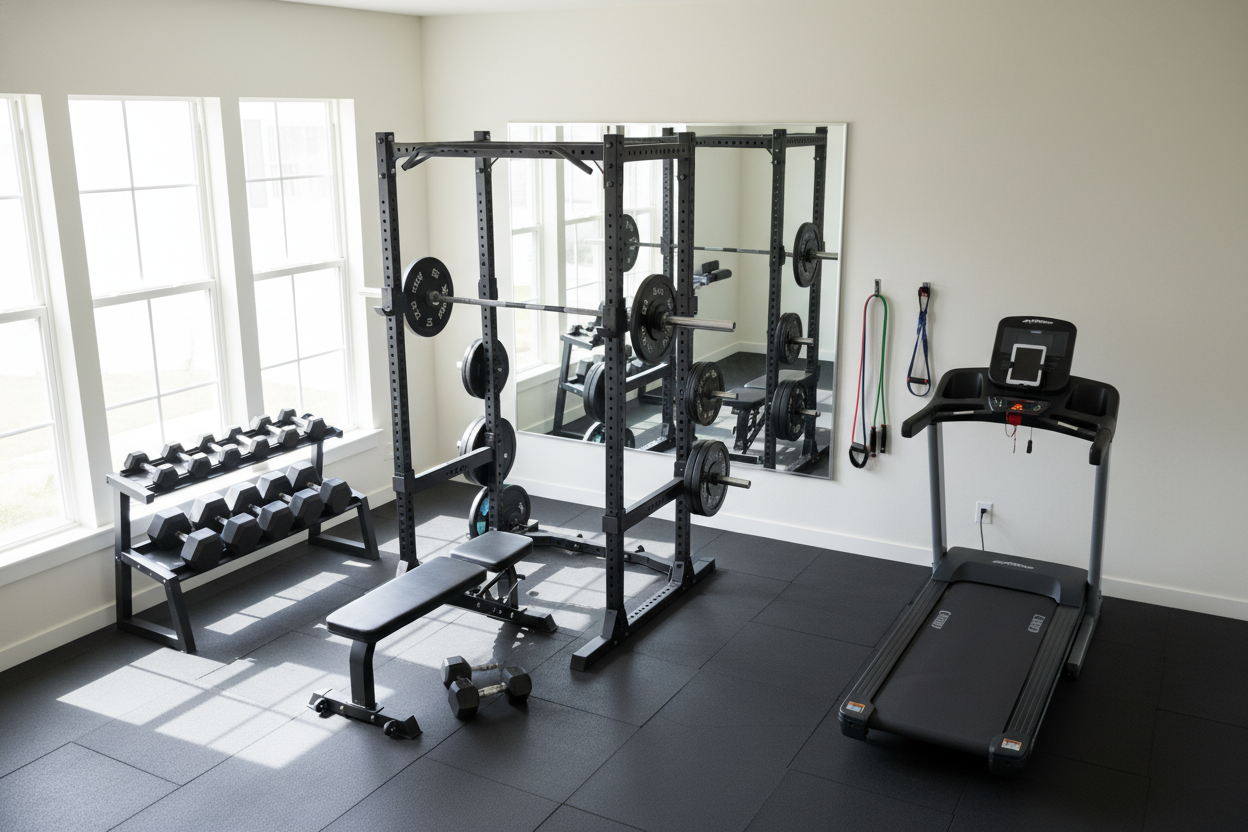
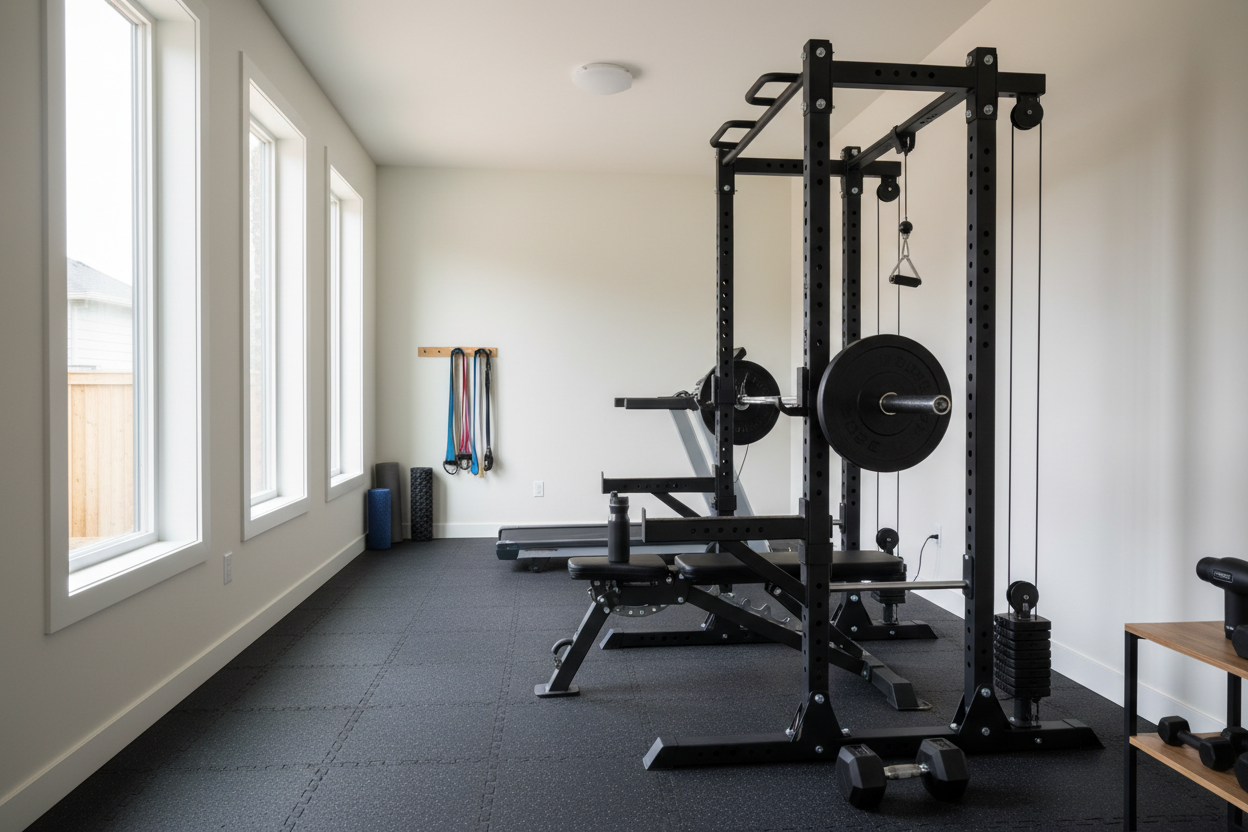
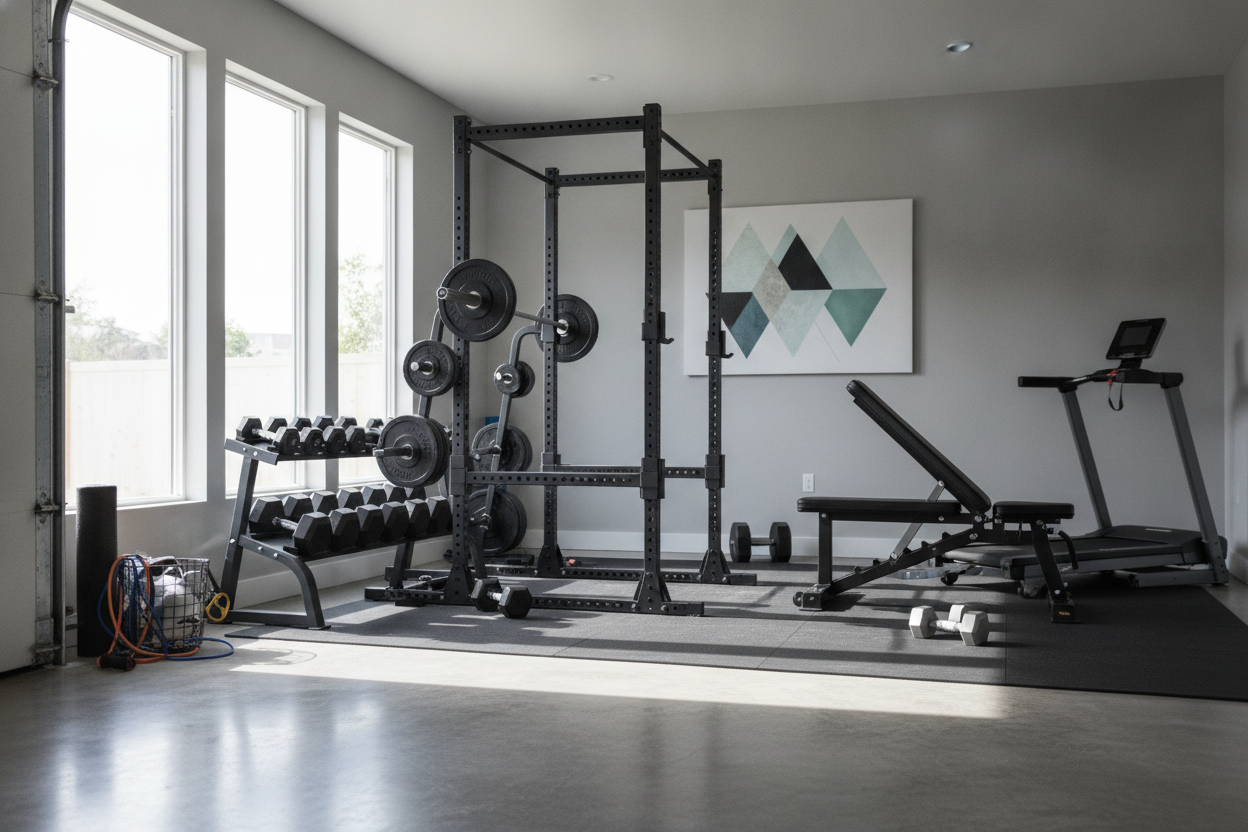
Bodyweight is great for the first three weeks. After that, you hit a wall. Gravity doesn't change, so you have to change the load. You don't need a 1,000-lb power rack, but a pair of adjustable dumbbells or a heavy kettlebell makes a world of difference. If you are looking to graduate from the floor, some of the best at home exercise machines like a compact rower or a cable tower can provide that constant tension bodyweight lacks.
The Bare-Minimum Routine You Can Start Today
This is the best exercise routine at home for anyone who is short on time but high on ambition. Set a timer for 20 minutes. Perform 3-4 sets of the following movements with 60 seconds of rest between sets.
- Push: Pushups (elevate your hands on a couch if floor pushups are too hard).
- Pull: Inverted rows under a sturdy table or door-frame rows.
- Squat: Goblet squats holding literally anything heavy.
- Hinge: Glute bridges or single-leg deadlifts.
Focus on the 'eccentric' or the lowering phase. Take three seconds to go down. This creates more muscle damage (the good kind) and makes a light weight feel heavy. That is how you get results without a garage full of iron.
My Honest Mistake
When I first started, I bought a cheap set of plastic-coated 'cement' weights. Within a month, the plastic cracked and sand started leaking onto my carpet. It was a mess. I learned the hard way that 'cheap' often means 'twice as expensive' because you have to buy it again. Buy decent gear once, even if it's just one heavy kettlebell, and it will outlive you.
FAQ
How many days a week should I do this?
Three days is the sweet spot. It gives your central nervous system time to recover while keeping the habit alive. Consistency over intensity.
What if I don't have 20 minutes?
Do 10 minutes. Doing one set of each movement is infinitely better than doing zero sets. Just don't make it a habit to cut it short.
Can I do this in a small apartment?
Absolutely. If you have enough space to lie down, you have enough space for this routine. A 6x8ft mat fits in most bedrooms or living rooms easily.