Junk Reps vs. A Real Volume Shoulder Workout: What You're Getting Wrong
I have spent years in my garage, sweating over a pair of rusted PowerBlocks and trying to figure out why my shoulders wouldn't grow despite the constant soreness. I used to think the answer was just more of everything—more sets, more weight, more hours in the gym. I was wrong. Most of what I was doing was just 'junk volume.' A real volume shoulder workout is about precision and metabolic stress, not just seeing how many times you can swing a dumbbell before your rotator cuff screams for mercy.
Quick Takeaways
- Intensity is about muscle tension, not just the number on the dumbbell.
- Stop using 'body English'—if you have to swing your hips, the weight is too heavy.
- Short rest periods (45-60 seconds) are mandatory for hypertrophy.
- Stability is your best friend; sit down to isolate the delts.
Why Chasing the Pump Usually Backfires
Most lifters equate a 'pump' with progress. While blood flow is great, it's often a false flag. I see guys in commercial gyms grabbing the 35-pounders for lateral raises, leaning into every rep, and shrugging their traps to their ears. They feel a burn, sure, but it's mostly in their upper traps and levator scapulae. They're fatiguing their nervous system without actually stimulating the medial deltoid.
This is the definition of junk reps. You're moving weight, but you aren't creating the mechanical tension necessary for growth. When you chase the pump by using momentum, you're essentially performing a high-rep shrug. Your shoulders stay narrow, your neck gets tight, and you wonder why your shirts still fit the same way they did last year. Real volume requires you to own every inch of the range of motion.
The Anatomy of a High-Rep Deltoid
The deltoids are a unique muscle group. They consist of three distinct heads—anterior, lateral, and posterior—and they have a high concentration of both Type I and Type II muscle fibers. While heavy overhead pressing is the bread and butter of any strength program, it often leaves the lateral and rear heads underdeveloped. These smaller heads respond incredibly well to extended time under tension and high-frequency stimulus.
If you want that 3D look, you can't just rely on a heavy set of five. You need to accumulate volume that forces the muscle to adapt to metabolic stress. This means high-rep sets where the muscle never truly gets a break. By focusing on building 3D delts with a targeted routine, you're ensuring that the lateral and rear delts aren't just an afterthought to your bench press.
The 3 Rules of a True Volume Shoulder Workout
Rule number one: Control the eccentric. If you're letting the weights drop like a stone, you're missing half the rep. Rule number two: Keep your rest periods strict. I use a cheap digital timer on my rack because sixty seconds feels like three minutes when you're checking your phone. Rule number three: Maintain a rock-solid base. The moment your spine starts to whip, the set is over.
I learned these rules the hard way after a nagging rotator cuff tweak that sidelined my bench for two months. I realized I was trying to out-lift my joint capacity. Shifting my focus toward protecting my joints during high rep sets actually led to more growth than my 'heavy-at-all-costs' phase ever did. When you prioritize the muscle over the ego, the gains actually show up.
Leave Your Ego at the Door (Seriously)
There is no award for the heaviest lateral raise in the world. In fact, if you're using more than 20 or 25 pounds for strict side raises, you're either a pro bodybuilder or you're cheating. I frequently drop down to 15-pound dumbbells. It feels pathetic for the first five reps. By rep fifteen, my delts feel like they're being hit with a blowtorch. That isolation is what creates the 'cap' on the shoulder.
Anchor Yourself to the Floor
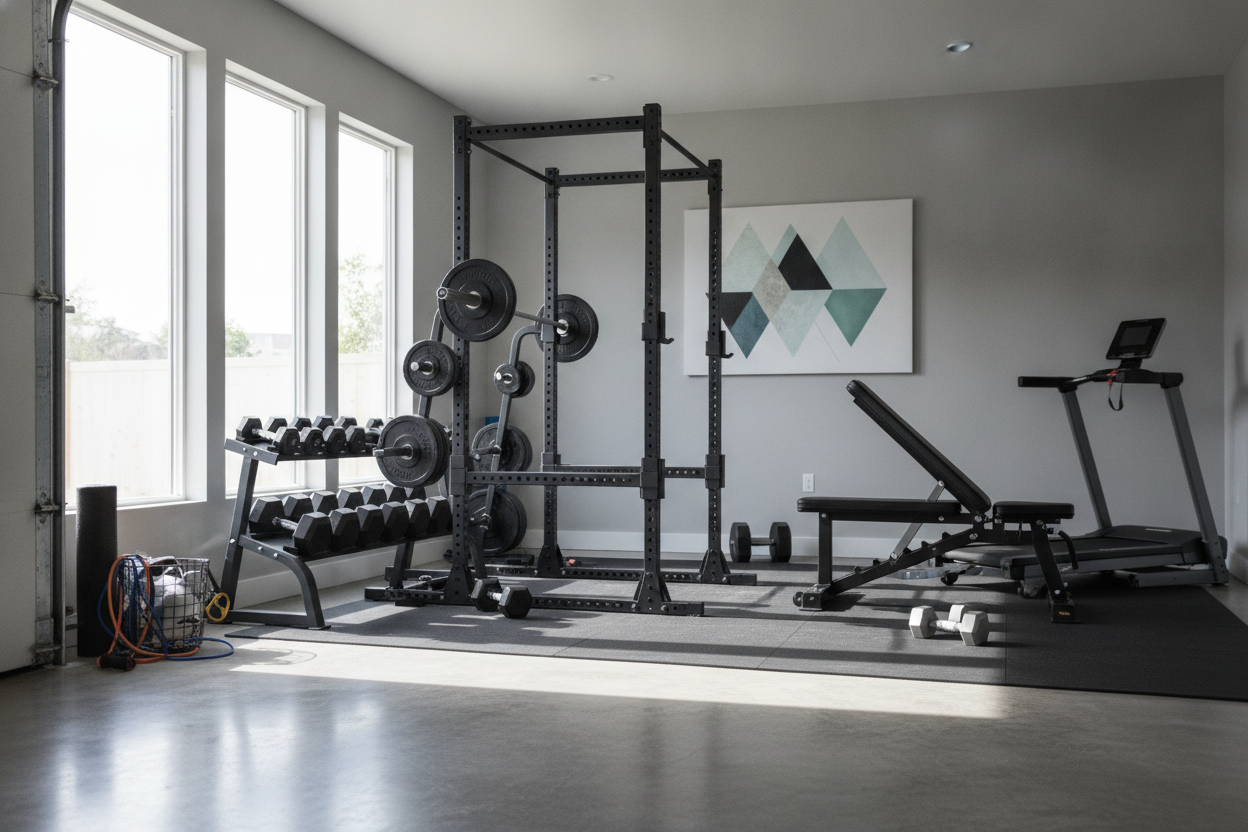
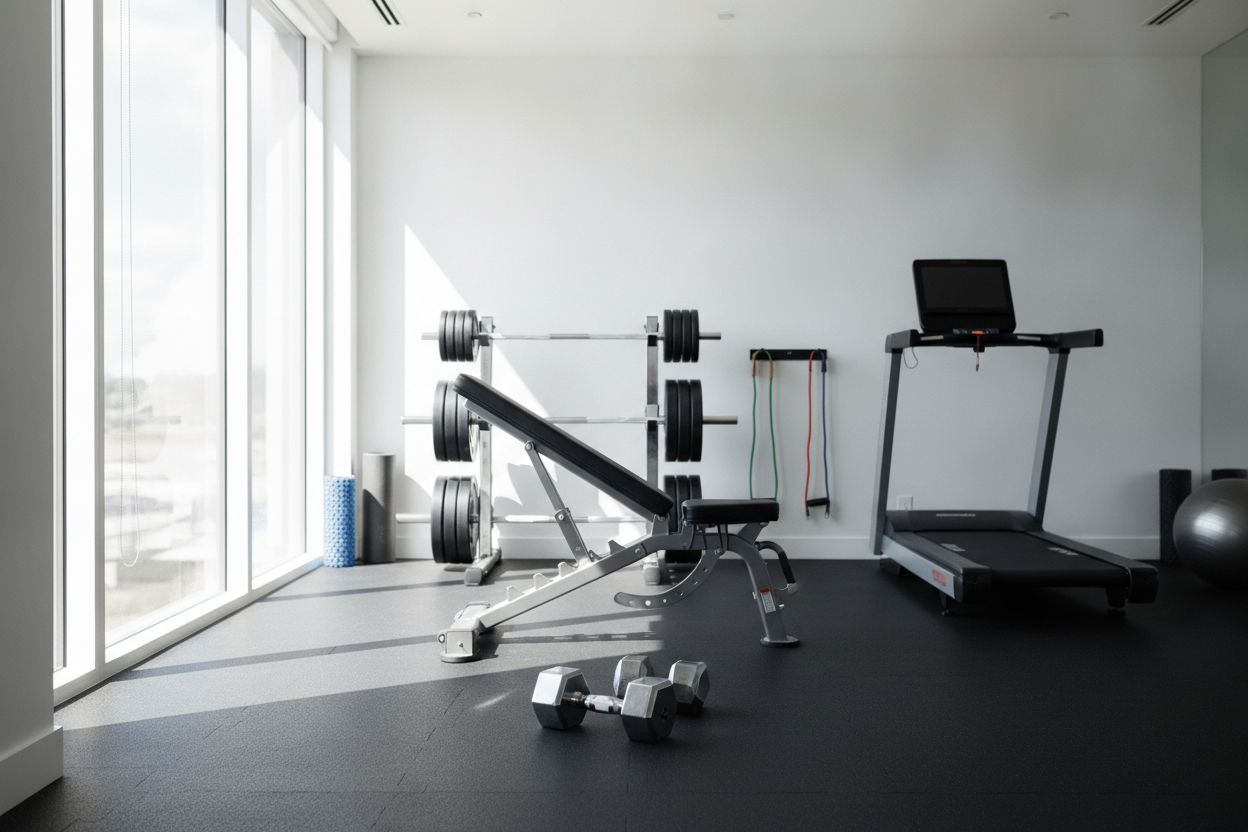
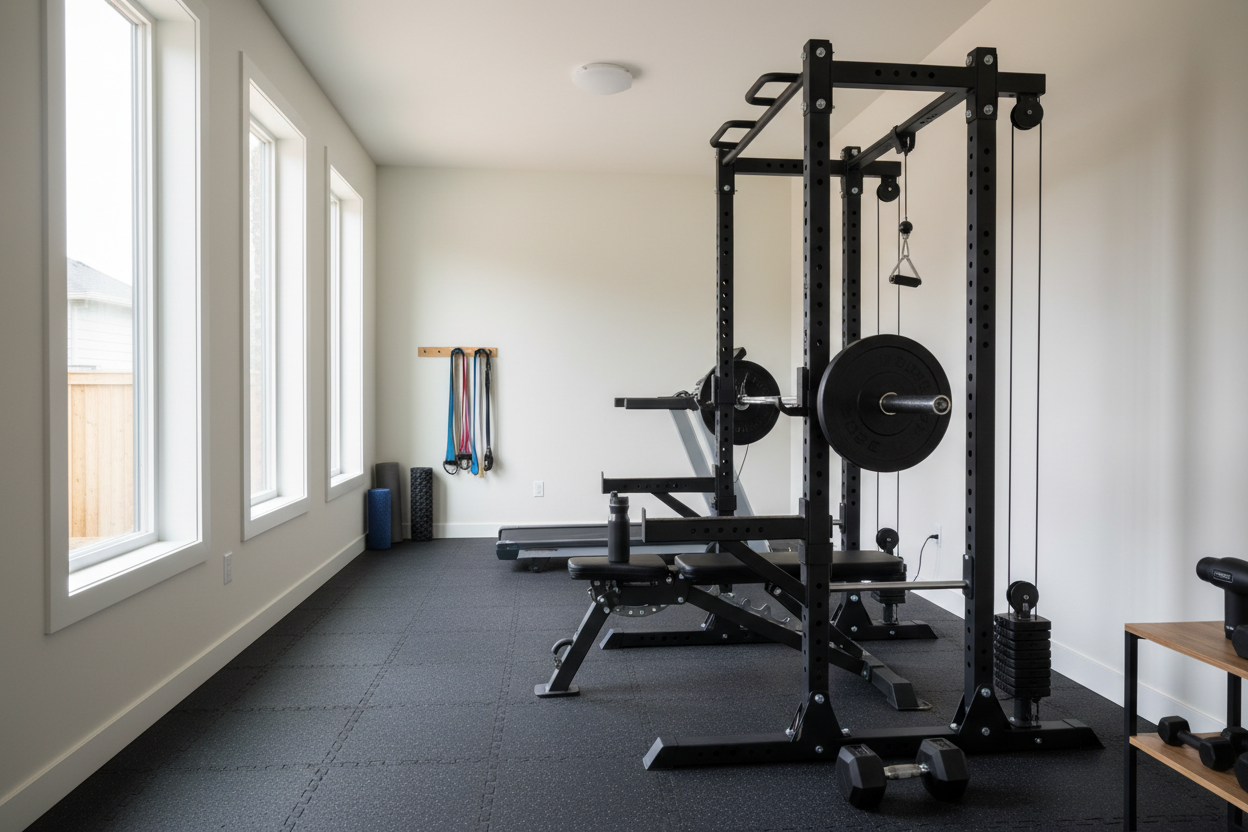
When you stand up, your body naturally finds ways to make the lift easier. You'll use a tiny knee bend or a slight hip hinge to get the weight moving. To kill this, I do almost all my volume work seated or kneeling. If you're kneeling on a hard garage floor, your knees are going to be the limiting factor, not your shoulders. I highly recommend laying down a thick gym flooring mat. Having that stable, cushioned surface allows you to anchor your lower body and put 100% of your focus into the delt contraction.
The 'Shoulder Smoker' Garage Gym Routine
This routine is designed to be done after your primary heavy lift or as a standalone hypertrophy day. Use a 2-0-2-0 tempo (two seconds up, zero at the top, two seconds down).
- Seated Dumbbell Press: 4 sets of 12 reps. Don't lockout at the top; keep the tension on the muscle.
- Lean-Away Lateral Raises: 4 sets of 20 reps per arm. Hold onto a rack with one hand and lean out to increase the range of motion.
- Face Pulls (Bands or Cables): 4 sets of 25 reps. Focus on pulling the handles apart and squeezing your rear delts.
- Dumbbell Rear Delt Flyes: 4 sets of 20 reps. Lay chest-down on an incline bench to eliminate any swinging.
Keep the rest to 45 seconds between every single set. You will want to quit by the second exercise. Don't.
How Often Should You Do This?
High-volume work is taxing, but since the absolute load is lower, you can usually recover faster than you would from a heavy session. I slot this routine in once a week, usually three days after my heavy overhead press day. This gives the joints enough time to recover while keeping the muscle protein synthesis elevated throughout the week. For those looking for complete training splits, this fits perfectly into a Push/Pull/Legs rotation.
Personal Experience: My 1,000-Rep Mistake
A few years ago, I fell for a '1,000-rep shoulder challenge' I saw online. I spent nearly two hours doing endless sets of light raises. The result? I didn't get bigger shoulders. I got a massive case of bursitis and couldn't sleep on my side for a month. It taught me that volume without intent is just a recipe for injury. Now, I do fewer reps, but I make every single one of them hurt. Quality volume beats quantity volume every day of the week.
FAQ
Do I need heavy weights for this?
No. In fact, heavy weights usually ruin a volume workout because other muscles take over. Stick to weights you can handle for 15+ reps with perfect form.
Can I use resistance bands?
Bands are actually great for the end of the workout. The ascending resistance matches the strength curve of the lateral delt perfectly.
How long should this take?
If you're sticking to the 45-second rest periods, you should be done in about 35 to 40 minutes. It's intense, fast, and effective.