Best Way to Exercise at Home: The Foundation-First Method
I remember standing in my 500-square-foot apartment living room back in 2018, trying to figure out where I could do a simple set of burpees without kicking my coffee table or waking up the downstairs neighbors. Like many of my clients, I was convinced I needed an expensive folding treadmill or a massive multi-station cable machine to get fit. I was wrong. The best way to exercise at home doesn't start with buying bulky equipment that eventually turns into an overpriced laundry rack. It starts with a concept I call the 'Foundation-First' method.
Over the last six years, I've built and tested dozens of home gyms for clients ranging from busy parents to remote software engineers. I've found that prioritizing premium, permanent floor space removes the friction of working out and unlocks hundreds of highly effective ground-based movements. If you want to know how can you do exercise at home consistently, the secret is right under your feet.
Quick Takeaways
- Invest in high-density flooring before buying a single dumbbell to protect your joints and your property.
- Leave your workout space set up permanently; removing the 5-minute setup phase drastically improves consistency.
- Master bodyweight push, pull, squat, and hinge movements before adding external loads.
- Track your progress through rep counts, shorter rest periods, and form improvements rather than daily weigh-ins.
Why the Floor is Your Most Important Apparatus
When new clients ask me how do exercise at home effectively, they usually expect me to send them a link to a $2,000 smart mirror or a set of adjustable dumbbells. Instead, I tell them to look at their floor. Hardwood, tile, and thin living room carpets are terrible surfaces for training. They lack shock absorption, get slippery when you sweat, and make floor-based core work painful on your spine and tailbone.
Your floor is the primary apparatus for your fitness routine. Think about it: push-ups, planks, lunges, and mobility flows all require a stable, comfortable surface. If your knees hurt every time you drop into a lunge, you simply won't do them. That's why the absolute first step in building a home gym is laying down a proper foundation. I always recommend my clients invest in a large exercise mat for home gym setups.
You need a surface that is dense enough to support a heavy kettlebell drop but forgiving enough to cushion your joints during plyometrics. A 7mm high-density PVC or rubber mat is usually the sweet spot. It deadens the sound of jumping, which keeps your downstairs neighbors happy, and provides the grip necessary for wide-stance squats or mountain climbers. By treating the ground as your main piece of equipment, you instantly expand the catalog of movements you can perform safely.
Setting Up a Frictionless Workout Environment
One of the most common reasons home workout routines fail is setup friction. If you have to drag a heavy coffee table across the room, unroll a flimsy yoga mat, and hunt down your resistance bands every single time you want to train, you're going to skip workouts. Human psychology dictates that we take the path of least resistance.
One of the easy ways to workout at home is to create a permanent, dedicated training zone. Even if you only have a spare corner in your bedroom or a section of your home office, claim that space and leave it ready. I personally tested this theory with a client who lived in a tiny studio apartment. We mapped out a permanent 6x8 foot rectangle at the foot of his bed. I had him drop down a 6x8ft exercise mat for home workouts and leave it there 24/7.
That specific size is critical because it allows for multi-directional movement. You can do lateral lunges, broad jumps, and full Turkish get-ups without stepping off the edges onto a hard floor. The visual cue of seeing that mat every time he walked into the room acted as a constant, silent reminder to train.
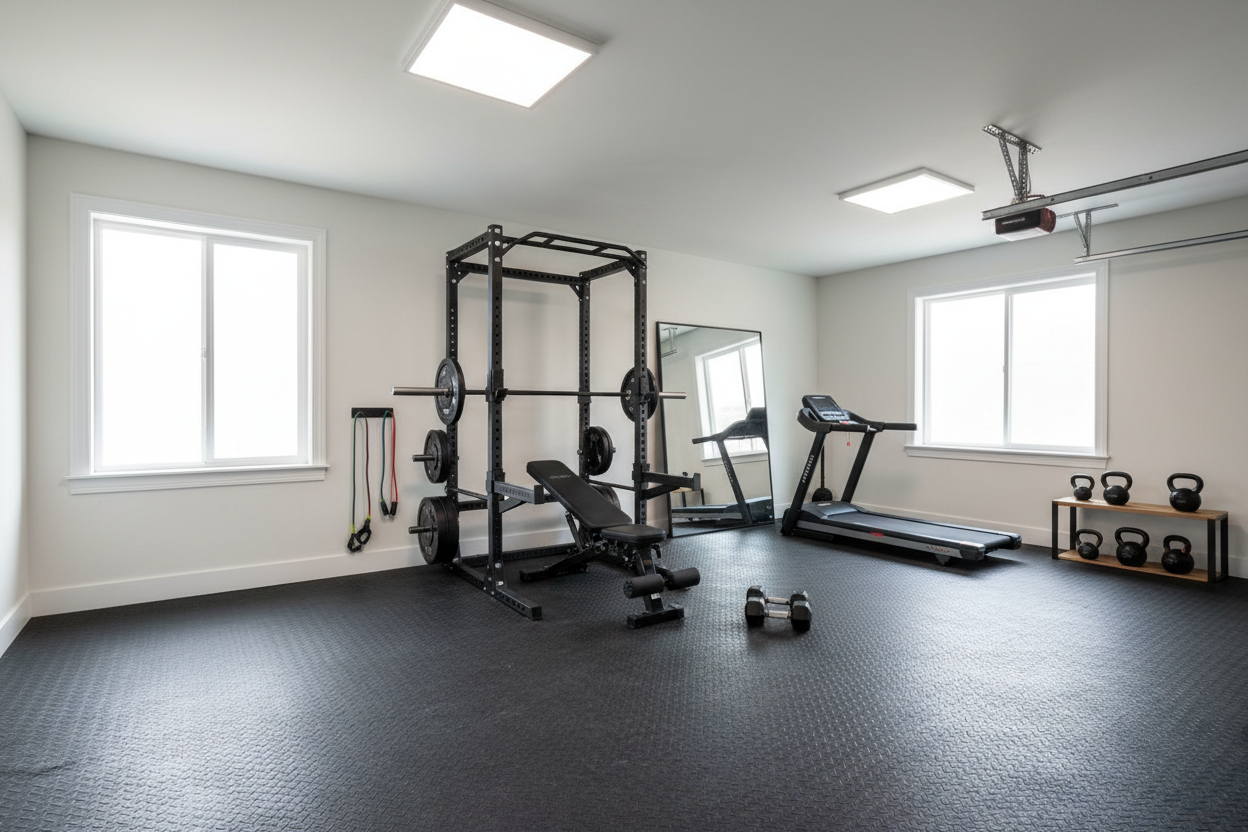
I use a 6x8 high-density mat in my own garage gym. The honest downside? They are heavy and cumbersome to move once unrolled, weighing around 25 to 30 pounds. But that weight is exactly why they don't slide around when you're doing aggressive burpees. Set it, forget it, and let the space pull you into your daily routine.
The Foundation-First Bodyweight Protocol
Once your floor space is established, the next step is learning exactly how to do exercises at home using just gravity and friction. You don't need iron right away. You need to master the four fundamental movement patterns: pushing, pulling, hinging, and squatting.
For the lower body, start with tempo bodyweight squats and reverse lunges. Taking three full seconds to lower your hips, pausing for one second at the bottom, and exploding up will humble even intermediate lifters. For the hinge, single-leg Romanian deadlifts develop incredible hamstring strength and balance without a barbell.
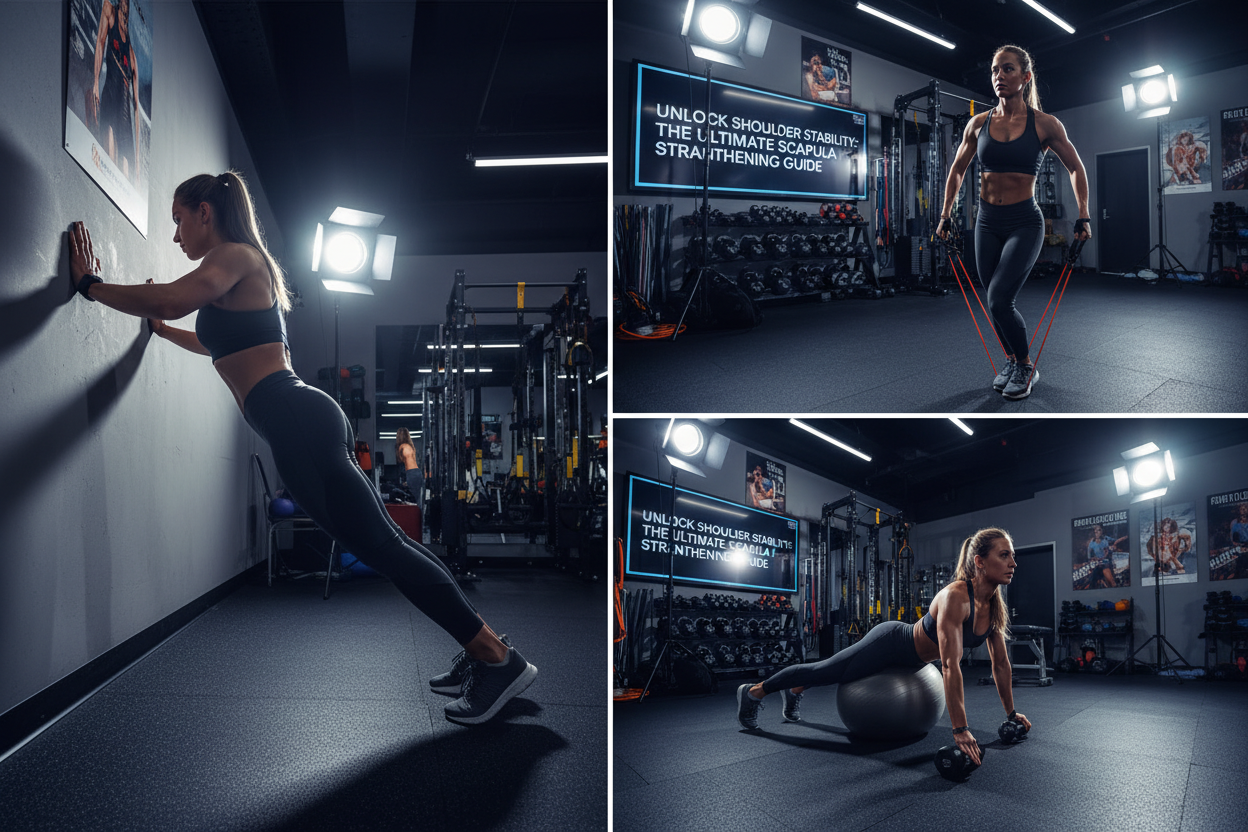
Upper body pushing is handled by the classic push-up. If standard push-ups are too difficult, elevate your hands on a sturdy chair or couch rather than dropping to your knees. This maintains core tension and builds better pressing mechanics. When it comes to the upper body, many people struggle to hit their deltoids without weights. However, pike push-ups are a fantastic at home exercise for shoulders that require zero equipment and build massive overhead pressing strength.
Pulling is the trickiest bodyweight movement. If you don't have a pull-up bar, you can perform sliding floor pulldowns. Lie on your stomach on a smooth floor (or use sliders on your mat), reach your hands out front, press your palms into the ground, and drag your body forward. It mimics a lat pulldown perfectly.
Progressing Beyond Bodyweight Basics
Eventually, bodyweight squats and push-ups will get easy. When clients ask me how can we do exercise at home once they can easily knock out 20 perfect push-ups, I introduce minimal, high-yield equipment.
You don't need a full rack of dumbbells. A single pair of adjustable dumbbells—specifically the ones that range from 5 to 52.5 pounds—can replace an entire wall of weights. Pair those with a set of loop resistance bands ranging from 10 to 50 pounds of tension, and you have a complete gym.
With these tools, you can seamlessly transition into hypertrophy training. You can start doing goblet squats, dumbbell Romanian deadlifts, and banded rows. If your goal is to build real muscle with exercise at home, progressive overload is non-negotiable. You must slowly increase the weight, reps, or time under tension week over week.
Designing Your Weekly Home Training Schedule
Having the space and the exercises means nothing without a schedule. The best ways to exercise at home consistently involve a structured, balanced split. I usually start my clients on a 4-day upper/lower split.
Monday is Lower Body A, focusing on squat variations and core. Tuesday is Upper Body A, hitting horizontal pushes and pulls. Wednesday is active recovery—think a 20-minute mobility flow or a brisk walk. Thursday is Lower Body B, focusing on hinges and unilateral leg work. Friday is Upper Body B, targeting vertical pushes and pulls.
Keep your workouts under 45 minutes. You don't need two-hour marathon sessions. If you are tight on space, say in a high-rise apartment, you might only have room for a 6x4 space. Grabbing reliable gym flooring for home workouts that fits that footprint is still enough to execute this exact 4-day split. The key is intensity and consistency, not duration.
Measuring Progress Without a Gym Scale
One of the easy ways to exercise at home without getting discouraged is to throw away your scale. Body weight fluctuates wildly based on hydration, sodium, and stress. Instead, track performance metrics.
Keep a simple notebook near your mat. Write down how many reps you got on your last set of push-ups. If you did 12 reps last week and 14 reps this week, you got stronger. Track your rest periods. If you completed your 4-round circuit in 15 minutes instead of 18, your cardiovascular conditioning improved. Record your form. If your heels finally stayed flat on the ground during a deep squat, your mobility increased. These are the true indicators of a successful home fitness routine.
Frequently Asked Questions
How many days a week should I work out at home?
For most beginners, three to four days of structured resistance training is optimal. This allows for adequate muscle stimulus while leaving plenty of time for recovery.
Can I really build muscle without heavy gym equipment?
Yes. Muscle tissue only recognizes tension, not the source of the resistance. By utilizing strict tempos, paused reps, and eventually adding adjustable dumbbells or bands, you can stimulate significant hypertrophy at home.
What do I do if my joints hurt working out on the floor?
Joint pain during floor exercises is almost always caused by inadequate flooring. Upgrading from a thin 3mm yoga mat to a dense 7mm PVC exercise mat provides the necessary shock absorption for your knees and wrists.