The 4-Day Strength Training Exercise Routine I Use to Avoid Plateaus
I've spent years staring at the same 225-lb barbell, wondering why my chest felt like it was made of stubborn plywood instead of muscle. I used to think the answer was more—more sets, more 'finisher' movements, more time spent scrolling through influencer feeds for a secret hack. It wasn't. This strength training exercise routine is the result of stripping away the fluff and focusing on the heavy, boring stuff that actually works.
- Focus on compound movements first.
- Prioritize recovery between heavy sessions.
- Track every lift to ensure progressive overload.
- Keep your equipment simple and high-quality.
Why Most Lifting Schedules Break Down After Month Two
Most guys fail because they treat their gym time like a tapas menu. They do a bit of this and a bit of that, chasing a pump rather than a performance goal. After six weeks, the 'newbie gains' evaporate, and they're left wondering why the scale isn't moving. You don't need a high-intensity circuit that leaves you gasping for air on the floor; you need a dedicated exercise routine for strength.
The problem is often 'program hopping.' You see a guy with massive traps doing some weird cable shrug, and suddenly your routine is derailed. Strength is built on repetition and mastery of a few key movements. If you're changing your gym strength exercises every two weeks, you aren't getting stronger—you're just getting good at being a beginner. I learned the hard way that a 3x5 squat program beats a 10-exercise 'leg day' every single time.
The Anatomy of My Go-To 4-Day Split
This routine is built on an Upper/Lower split. It’s the sweet spot for most of us who aren't professional bodybuilders but still want to move serious weight. You lift four days a week, which leaves three days for your central nervous system to stop screaming at you. I’ve found that hitting a muscle group twice a week is the gold standard for hypertrophy and power.
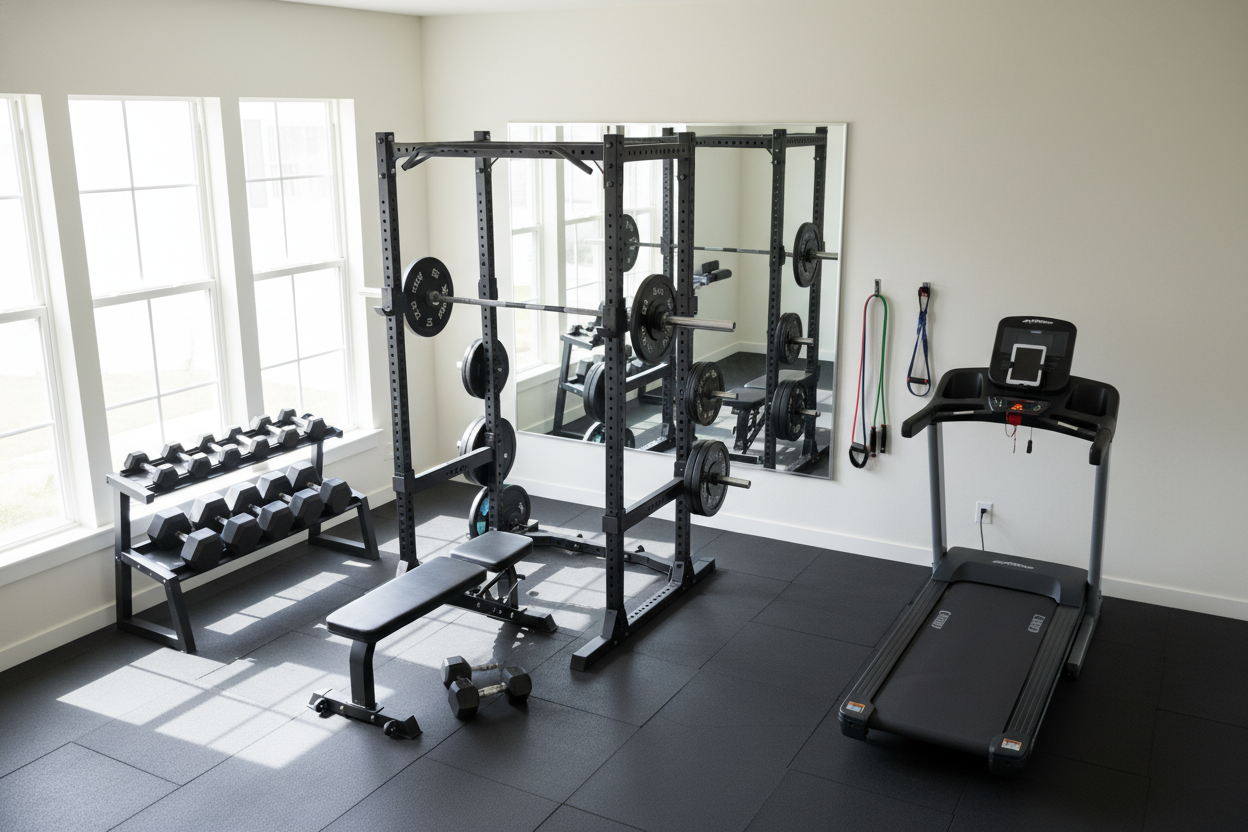
The backbone of this split relies on reliable strength equipment. You don't need a dozen machines with fancy digital screens. Give me a rack, a solid barbell with decent knurling, and some plates that don't rattle like a bucket of bolts. When you're pushing for a PR, the last thing you want is a bench that wobbles or a bar that feels like it’s going to snap under 315 lbs. Focus on gear that can handle a beating.
Upper and Lower Body Breakdown
Here is how I structure the actual gym strength exercises. It’s not complicated, but it is heavy. On Lower Day A, I focus on back squats (3 sets of 5) and RDLs (3 sets of 8). On Upper Day A, it’s the flat bench press (3x5) and weighted pull-ups. Lower Day B shifts to conventional deadlifts (1 heavy set of 5) and front squats. Upper Day B focuses on the overhead press and barbell rows.
I’m a big believer in using strength training accessories when the weight gets north of 80% of your max. I don't care what the 'purists' say—if a 10mm lever belt or some decent wrist wraps allow you to maintain form and move an extra 20 lbs safely, use them. My grip usually gives out before my back does on heavy rows, so I’m not ashamed to throw on some figure-8 straps to finish the set properly.
How to Run This Program in a Crowded Commercial Gym
Executing strength training exercises at the gym during the 5:00 PM rush is a test of patience. If the power rack has a line three people deep, don't just stand there checking your phone. You have to be adaptable. If the barbell bench is taken, grab the heaviest dumbbells you can find and do a neutral grip press. It’s a different stimulus, but it keeps the momentum going.
I’ve written before about how 4 pieces of strength training equipment at the gym can basically cover your entire routine. If you have a bench, a rack, a bar, and a pull-up station, you’re 95% of the way there. Don't let a lack of specific machines be an excuse to skip a session. Strength training exercises at the gym are about the effort you put into the movement, not the brand name on the side of the machine.
Protecting Your Joints (and Your Floor)
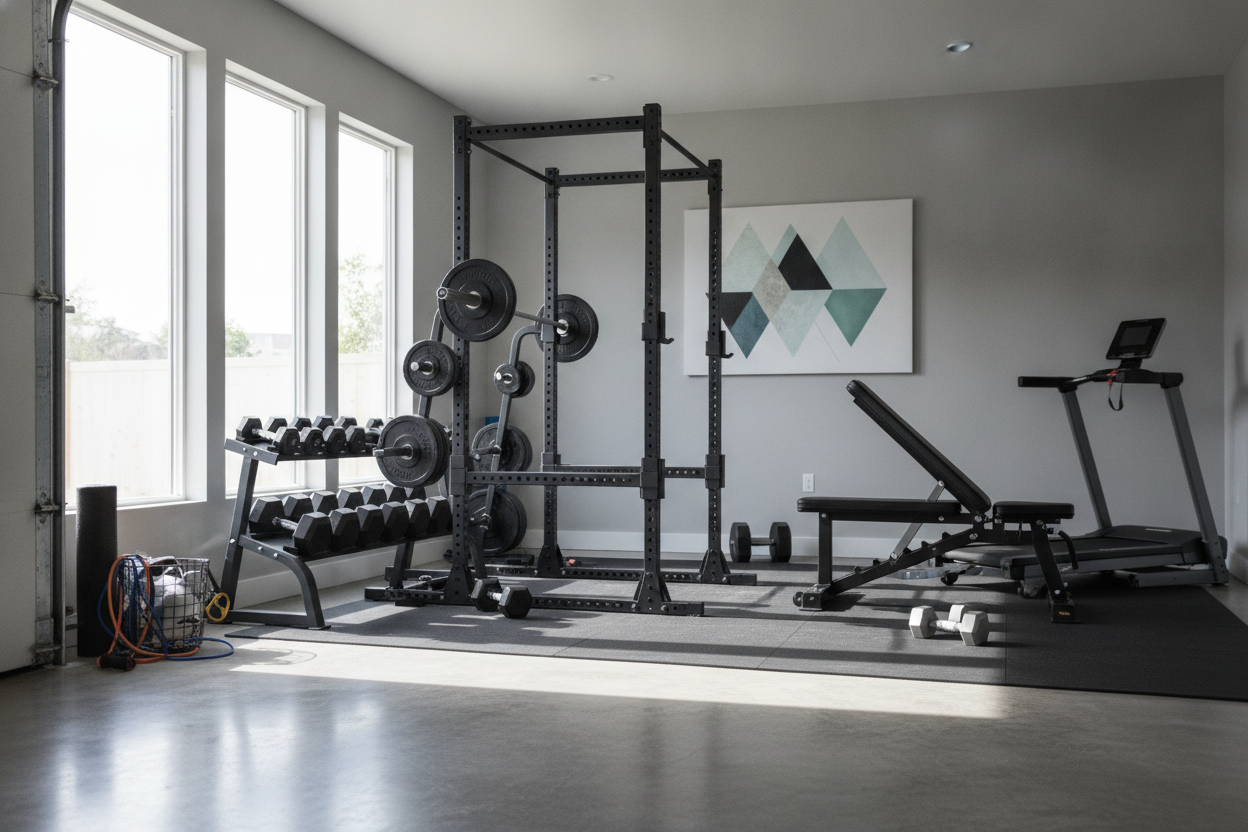
If you're like me and moved your training to the garage, you quickly realize that concrete is unforgiving. Performing heavy strength training exercises at gym facilities usually means you have thick rubber underfoot, but at home, you’re one dropped deadlift away from a foundation repair bill. Your joints feel it, too. Lifting heavy on a hard, slick surface is a recipe for a slipped disc or a blown-out knee.
I finally invested in dense gym flooring for home workouts, and it changed the vibe of my space immediately. It provides the traction you need for heavy squats so your feet don't slide outward. Plus, it deadens the noise so you aren't waking up the neighbors during those 6:00 AM sessions. A solid foundation is literally the most important part of your home gym setup.
My Honest Mistake
For the first two years of my training, I refused to take deload weeks. I thought they were for the weak. I ended up with tendonitis in both elbows so bad I couldn't even pick up a coffee cup without pain. Now, every fourth or fifth week, I cut my volume in half. It feels like a waste of time in the moment, but it’s the only reason I’m still lifting heavy in my 30s. Don't be a hero; listen to your joints.
FAQ
How long should I rest between sets?
For the big compound lifts, take 3 to 5 minutes. You want your heart rate to settle so your muscles are the bottleneck, not your lungs. For accessory work, 60 to 90 seconds is plenty.
Can I swap deadlifts for something else?
If you have lower back issues, try trap bar deadlifts. They put you in a more upright position and are much more forgiving on the spine while still building massive posterior chain strength.
What if I can only lift three days a week?
Just rotate the days. Monday is Lower A, Wednesday is Upper A, Friday is Lower B. Then the following Monday is Upper B. You'll hit everything every 9 days instead of 7, but progress will still happen.