Why I Teach the 'Get Up' as the Top Exercise for an Elderly Woman
I’ve spent a decade watching the fitness industry fail older adults. They sell you $2,000 vibrating plates and 2-pound pink dumbbells, promising 'toning' while ignoring the fact that many seniors are one slip away from a life-altering event. If you are looking for the most important exercise for elderly woman training, skip the machines. We’re going to the floor.
- Floor recovery is the ultimate measure of physical independence.
- Building leg drive is more important than 'balance' gadgets.
- Safety starts with a high-traction, firm surface.
- Progressions should be bodyweight-first to ensure mastery.
Why the Floor is the Ultimate Test of Independence
The ability to get off the floor isn't just about fitness; it's about survival. When I work with clients over 65, I don't care how many miles they can walk on a treadmill if they can't recover from a trip. For exercise for elderly women, the goal should be 'functional resilience.' If you fall and can't get back up, that's a medical emergency. If you can get back up, it's just a bad afternoon.
Seated leg extensions in a gym might make your quads burn, but they don't teach your brain how to coordinate a half-kneeling stand. We call the alternative the 'long lie'—the period where a person is stuck on the ground, unable to reach a phone or get to their feet. It is the leading cause of complications after a fall. We train the floor so the floor stops being a threat and starts being just another piece of equipment.
Building the Leg Power to Actually Stand Up
You can’t get off the ground with weak glutes. Most people try to use their arms to pull themselves up using furniture, which is a recipe for a shoulder injury or a tipped-over end table. You need enough 'push' in your legs to drive your center of mass upward without the 'heave-ho' momentum that causes most people to lose their balance halfway through the movement.
I focus on a fundamental leg exercise for women that emphasizes the eccentric—the lowering phase. If you can control your weight on the way down to a chair without 'plopping,' you’re building the prerequisite strength to push back up from a kneel. We aren't looking for max-effort squats; we are looking for the ability to hold a half-kneeling position for 30 seconds. That isometric strength is the secret to not wobbling when you finally make your move to stand.
Stop Slipping: Why Your Living Room Rug is a Hazard
I’ve seen too many people try to practice their mobility on a Persian rug or a slick hardwood floor. That’s a disaster waiting to happen. If your feet slide while you're trying to find your base, you’re going to panic and potentially pull a muscle. A standard yoga mat is often too thin, leaving your knees screaming against the floor, and too narrow to actually move around on.
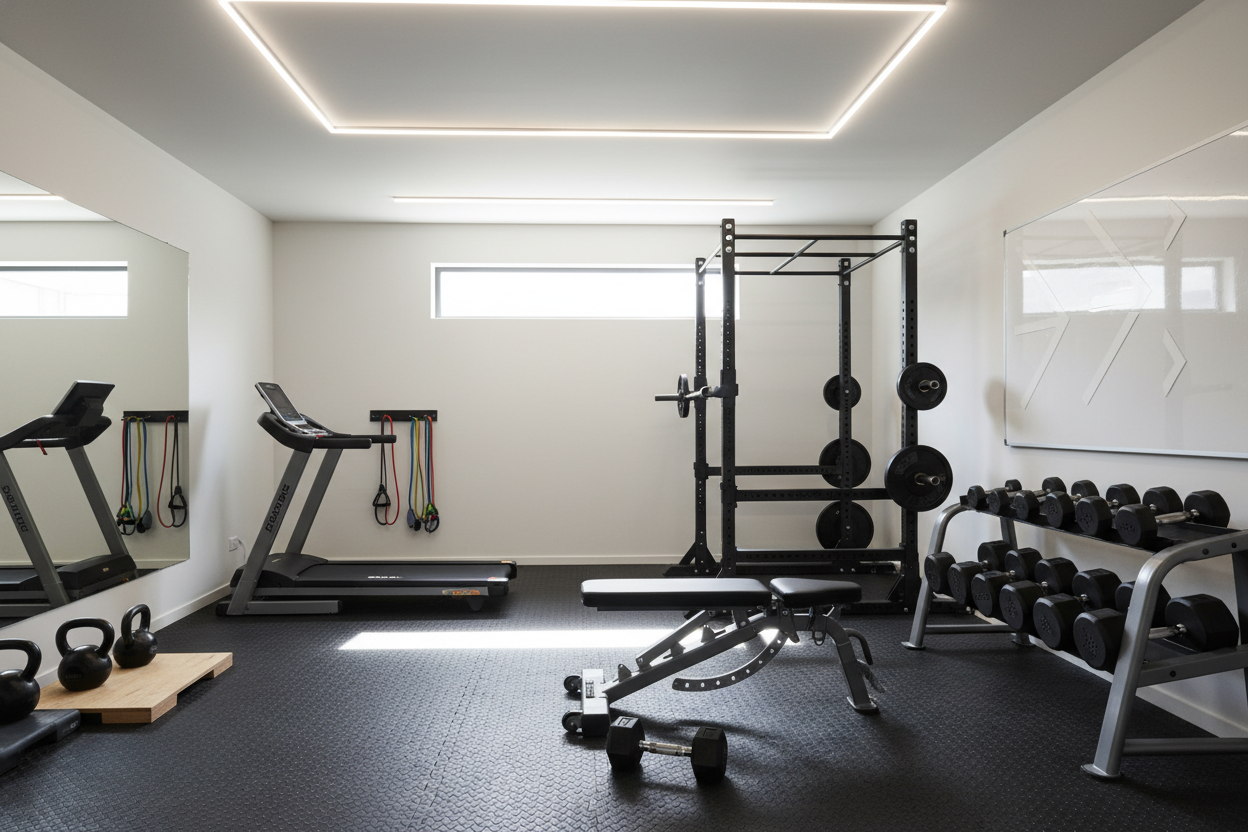
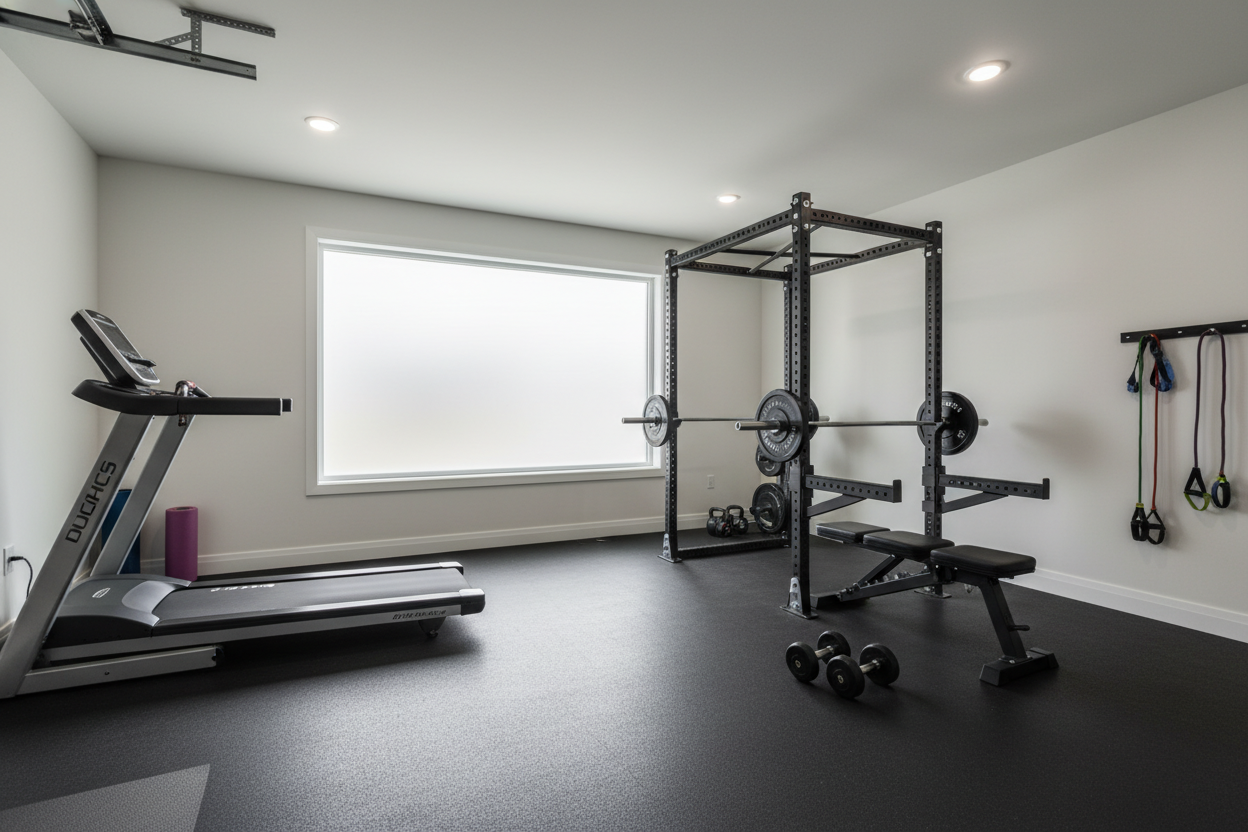
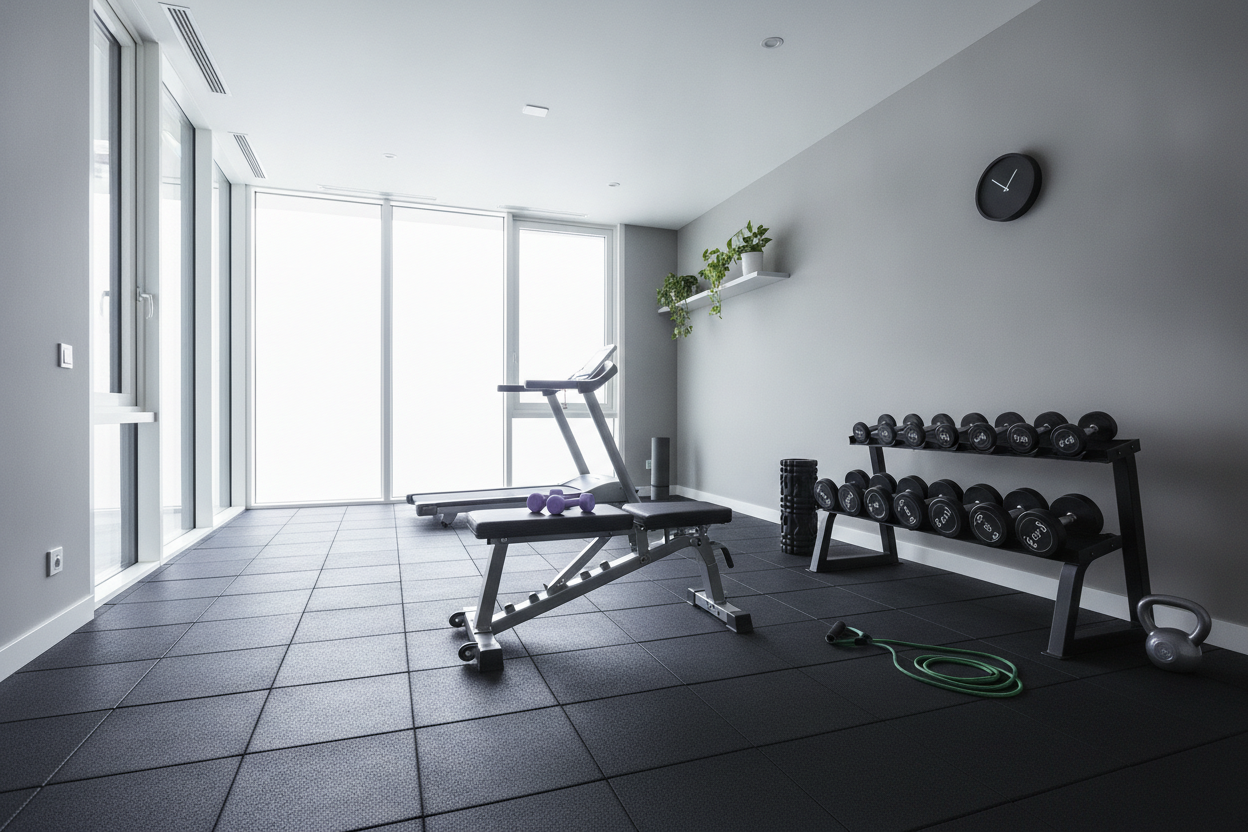
You need a dedicated space with real grip. I usually recommend getting reliable gym flooring for home workout because it provides a 6x8 ft boundary of safety. It’s firm enough that your knees won’t sink and wobble, but tacky enough that your feet stay glued where you put them. When you're 70, you don't need 'cushy'—you need stable. A 7mm thick high-density mat is the sweet spot for protecting joints without sacrificing the 'road feel' of the floor.
The 4-Step 'Get Up' Blueprint for Older Lifters
We don't just 'stand up.' We break it into phases. First, you learn to roll from your back to a side-lying position. This uses your core and hips in a way that most 'ab workouts' never touch. From there, you push up onto your elbow, then your hand. This builds the tricep and shoulder stability needed to support your frame.
The third step is the 'sweep'—bringing one knee under your hip so you’re in a solid half-kneeling position. This is the hardest part for most. Finally, you use a sturdy bench or a couch for a light touch of balance as you drive through your front heel to stand. It’s methodical, it’s safe, and it builds more real-world confidence than any 'silver' aerobics class I've ever seen. By practicing these transitions, you are essentially 'armoring' yourself against the fear of falling.
How to Make It Harder Without Adding Heavy Weights
Once you can get up comfortably, don't rush to grab a kettlebell. Most seniors don't need to overhead press 40 pounds; they need more time under tension. I use 'tempo' work—take five full seconds to lower yourself from a standing position to the floor. It’s brutal, but it builds incredible stability in the connective tissues around the knee.
You can also use the 1.5 rep technique. Go halfway down, come back up to a quarter-squat, then go all the way down to the floor. This is one of those exercise routines for women at home that builds massive strength without needing a rack of dumbbells. It forces your muscles to work through the 'sticking points' where you’re usually weakest. If you can handle the 1.5 rep 'Get Up,' you are officially stronger than 90% of the people your age at the local mall.
Personal Experience: The Kettlebell Mistake
A few years ago, I tried to teach my mother the full Turkish Get Up using a light kettlebell. I thought I was being a 'pro coach.' Halfway through, her wrist wobbled, she lost her focus, and I had to dive in to catch the weight. It was a wake-up call. I realized that for most people, the weight isn't the point—the movement is. We ditched the iron, went back to bodyweight floor transitions on a high-traction mat, and her confidence skyrocketed. Don't let ego get in the way of the basics. Master the body, then maybe think about the weights.
FAQ
Is this safe if I have bad knees?
Yes, but use padding. A thick mat or a folded towel under the kneeling knee makes a world of difference. If you have a total knee replacement, check with your PT first, but usually, the goal of those surgeries is to regain this exact mobility.
How many times a week should I do this?
Three times is the sweet spot. You aren't trying to win a bodybuilding show; you're maintaining a life-saving skill. Treat it like a practice session, not a 'workout' to exhaustion. Five clean reps is better than twenty sloppy ones.
Do I need a partner to help me?
For the first few times, absolutely. Have someone nearby or use a very sturdy piece of furniture like a heavy dining table for support. Once you can do it 5 times in a row without 'plopping' down or losing your breath, you're likely safe to go solo.