Leg Exercise for Women: The Blueprint for Strength and Definition
You have likely been told that high-repetition bodyweight squats or hours on the elliptical are the only path to toned legs. That advice is outdated and, frankly, ineffective for changing your body composition. Real results require resistance, intensity, and a focus on biomechanics.
When we talk about effective leg exercise for women, we aren't talking about spot reduction. We are talking about building lean muscle tissue that metabolizes fat and creates that athletic shape. Whether your goal is strength, aesthetics, or injury prevention, the principles of movement remain the same. This guide cuts through the noise to show you exactly how to train your lower body effectively.
Key Takeaways
- Compound over Isolation: Prioritize multi-joint movements like squats and lunges over leg extensions.
- Volume and Frequency: Train legs twice a week to maximize muscle protein synthesis.
- Progressive Overload: You must increase weight or reps over time; doing the same routine for months yields no results.
- Anatomy Matters: Women often have a wider Q-angle (hip width), requiring specific attention to knee stability and glute activation.
The Science Behind Female Leg Training
Women are generally quad-dominant due to the mechanics of the pelvic structure. While this helps with stability, it often leads to neglected posterior chains (hamstrings and glutes). If you want balanced leg development, you have to actively fight this natural tendency.
Effective training requires shifting the focus to the back of the leg. This not only improves aesthetics but stabilizes the knee joint, reducing the risk of ACL injuries which are statistically higher in female athletes.
Foundational Movements You Cannot Skip
Finding good leg exercises for women isn't about using the most complicated machine in the gym. It is about mastering the fundamental movement patterns: the squat, the hinge, and the lunge.
1. The Squat Pattern (Goblet or Barbell)
The squat is non-negotiable. However, form is everything. Many women collapse their knees inward (valgus collapse) at the bottom of the movement. You need to actively drive your knees outward to track over your toes. This engages the glute medius and protects your joints.
2. The Hinge (Romanian Deadlift)
If you want to shape the back of your legs, you must hinge. The Romanian Deadlift (RDL) isolates the hamstrings and glutes without putting excessive stress on the quads. The cue here is to imagine closing a car door with your butt. Keep a soft bend in the knees and send your hips back until you feel a deep stretch in the hamstrings.
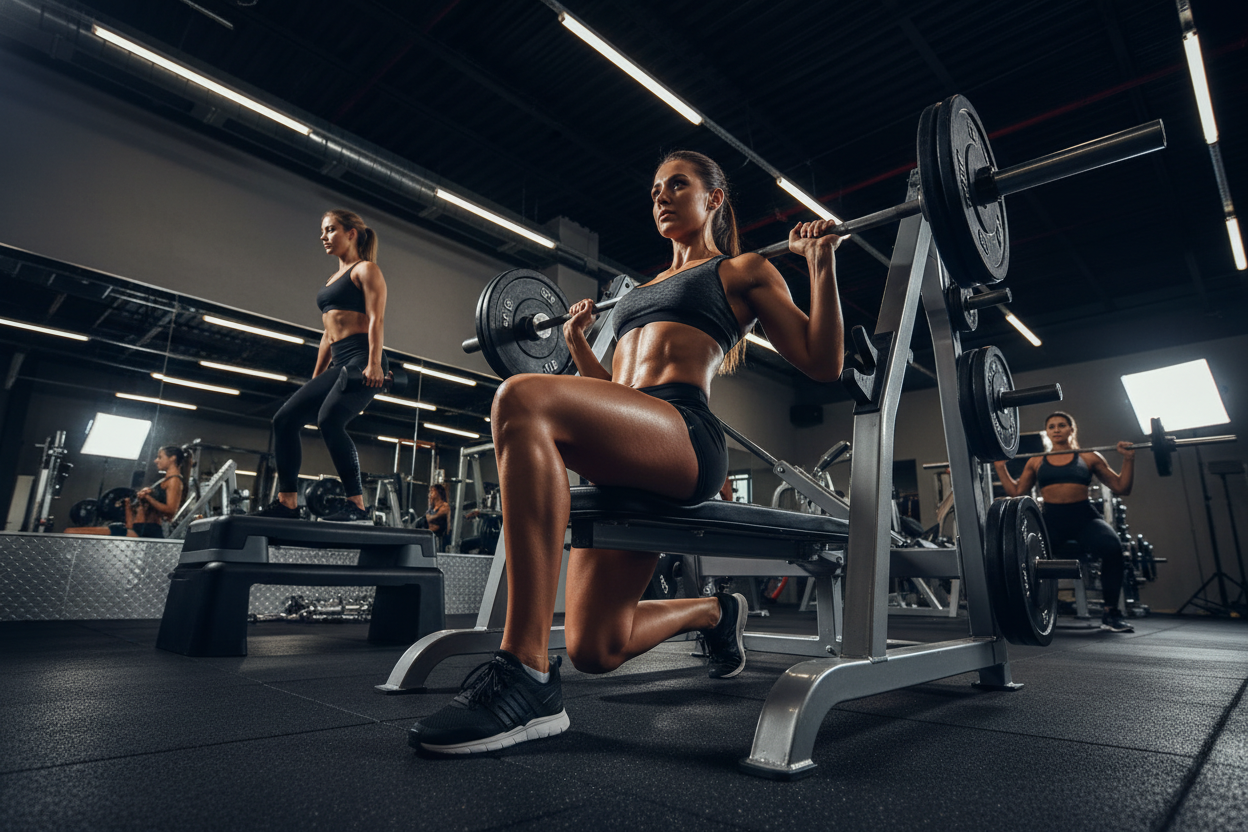
3. Unilateral Work (Bulgarian Split Squats)
Single-leg work is the great equalizer. It fixes muscle imbalances and forces your stabilizers to work overtime. The Bulgarian Split Squat is notoriously difficult but incredibly effective. It places the load directly on the front leg's glute and quad while stretching the hip flexor of the rear leg.
The "Bulky" Myth vs. Reality
I hear this concern constantly: "Will lifting heavy make my legs look bulky?" The short answer is no. Women generally lack the testosterone levels required to put on massive amounts of size without deliberate, years-long effort and surplus caloric intake.
Lifting heavy weights (in the 6-10 rep range) builds density and strength. It creates the "toned" look everyone chases. High reps with pink dumbbells usually just build endurance, not shape.
My Personal Experience with leg exercise for women
I want to be real about what a proper leg day actually feels like because Instagram often makes it look glamorous. It isn't.
When I first started taking leg training seriously, specifically with Romanian Deadlifts (RDLs), the struggle wasn't just in my hamstrings. It was my grip. I remember the specific, burning frustration of my hands giving out before my legs did. The knurling on the barbell felt like it was shredding my skin, and I had to learn to swallow my pride and use lifting straps just to make sure my legs got the stimulus they needed.
There is also the wardrobe reality. During deep squats, I quickly learned that not all high-waisted leggings are created equal. There is a distinct annoyance when the waistband rolls down right at the bottom of the hole, breaking your concentration. Real training involves sweat, calluses, and occasionally adjusting your gear between sets. If you leave the gym looking perfectly polished, you probably didn't push hard enough.
Conclusion
Building strong, defined legs is a marathon, not a sprint. It requires executing the basics with savage consistency. Focus on your form, increase your weights gradually, and don't fear the heavy iron. Your body is capable of immense strength; it is time to train like it.
Frequently Asked Questions
How many times a week should I train legs?
For most women, training legs twice a week is the sweet spot. This allows you to hit the muscles with enough volume to stimulate growth while providing adequate rest days for recovery. A typical split might be Monday (Leg focus) and Thursday (Leg focus).
What if I have knee pain during squats?
Knee pain often stems from poor hip mobility or weak glutes, causing the knees to take the load. Try switching to box squats to control your depth or Goblet squats to improve your center of gravity. If pain persists, consult a physiotherapist.
Can I get results doing these exercises at home?
Absolutely. While barbells are great, you can perform squats, lunges, and RDLs with dumbbells or kettlebells at home. The key is intensity; if you don't have heavy weights, you must slow down the tempo (e.g., take 3 seconds to lower yourself) to make the exercise harder.