Stop Doing 12 Exercises: A Better Womens Full Body Workout
I remember scrolling through my feed at 11 PM, watching a 'glute specialist' perform a 14-step circuit involving three different resistance bands and a bosu ball. It looked exhausting, complicated, and entirely unnecessary. If you’ve ever felt like your womens full body workout is just a collection of random movements you saw on TikTok, you aren't alone. Most people are doing way too much junk volume and not nearly enough actual work.
The truth is, you don't need a 'Frankenstein' routine to see results. You need a few heavy things, a solid floor, and a plan that doesn't require a PhD in kinesiology to follow. I’ve spent years testing racks, bars, and programs in my own garage, and the most effective routines are always the simplest ones.
Quick Takeaways
- Stop doing 12 exercises per session; aim for 4 to 5 high-impact moves.
- Prioritize compound lifts like squats and deadlifts over isolation 'burn' exercises.
- Consistency beats variety every single time.
- Your environment matters—stop lifting on slippery floors.
- Recovery is part of the program, not an obstacle to it.
The Frankenstein Routine (Why You're Stalled)
We’ve all been there. You see a 'perfect body workout plan female' post on Instagram and try to replicate it. By the time you reach exercise nine, you’re just going through the motions. This 'Frankenstein' approach—stitching together 12 different isolation moves—creates massive fatigue without providing the stimulus needed for actual growth. You're sweating, sure, but you aren't getting stronger.
A focused full body gym workout plan female lifters can actually recover from should prioritize quality over quantity. When you do three different types of glute kickbacks but skip the heavy squats, you're majoring in the minors. Fatigue is not the same thing as progress. If your routine leaves you too trashed to add five pounds to the bar next week, the routine is broken. You need a plan that builds momentum, not just exhaustion.
The 'Big Four' Approach to Real Strength
If you want a full body weight training workout female protocol that actually moves the needle, you have to embrace the 'Big Four.' Every session should center around a squat, a hinge, a push, and a pull. This covers every major muscle group without the need for endless accessory work. It’s about efficiency. Why spend 20 minutes on four different machines when a heavy set of Romanian deadlifts hits your hamstrings, glutes, and core all at once?
When you focus on these pillars, you create a balanced physique. I’ve found that a weight training workout routine that actually works is one that treats the body as a single unit. Pairing a vertical push (like an overhead press) with a vertical pull (like a lat pulldown or pull-up) ensures your shoulders stay healthy and your posture stays upright. You don't need a 'leg day' and an 'arm day' when you're hitting everything with intensity three times a week.
A 3-Day Template You Won't Hate
The goal is to maximize your full body strength training by rotating your primary heavy lift each session. This prevents central nervous system burnout and keeps the gym from feeling like a chore. For a women's strength training routine full body template, try this: Day A focuses on a heavy squat, Day B on a heavy hinge (deadlift variant), and Day C on a heavy press. You still do the other movements, but you vary the intensity.
For example, on Day A, you might do heavy Back Squats for 5 reps, followed by moderate-weight Overhead Presses and Rows for 10 reps. On Day B, you flip it. This rotation ensures you’re always fresh for your big lift. I’ve seen better results from this 3-day split than from any 6-day 'bro split' I’ve ever tried. It gives your joints a break and actually allows your muscles to repair themselves between sessions.
Day 1 & Day 3: Modifying for Weak Points
Not every full body gym routine female template needs to be identical. If you have lagging areas—maybe you want more quad definition or stronger shoulders—this is where you add one or two 'plug-ins' at the end of the workout. But keep it brief. We’re talking two sets of 12-15 reps, not another hour of work. This is the only time you should be looking at isolation movements.
If you have access to lower body strength machines, a few sets of leg extensions or lying leg curls can be a great way to finish off a session without the technical demand of a barbell. Just don't let the 'extra' stuff become the main event. The heavy compound lift is the steak; the machine work is the garnish. If you’re too tired for your squats because you did three sets of leg extensions first, you’ve missed the point.
Stop Lifting on Slippery Hardwood
I see it all the time in home gym setups: someone trying to hit a PR in socks on a hardwood floor or a cheap, thin yoga mat. You cannot execute a full body women's gym workout effectively if your foundation is unstable. If your feet are sliding during a split squat, you aren't focusing on your quads; you're focusing on not falling on your face. That’s a recipe for a sub-par workout and a potential injury.
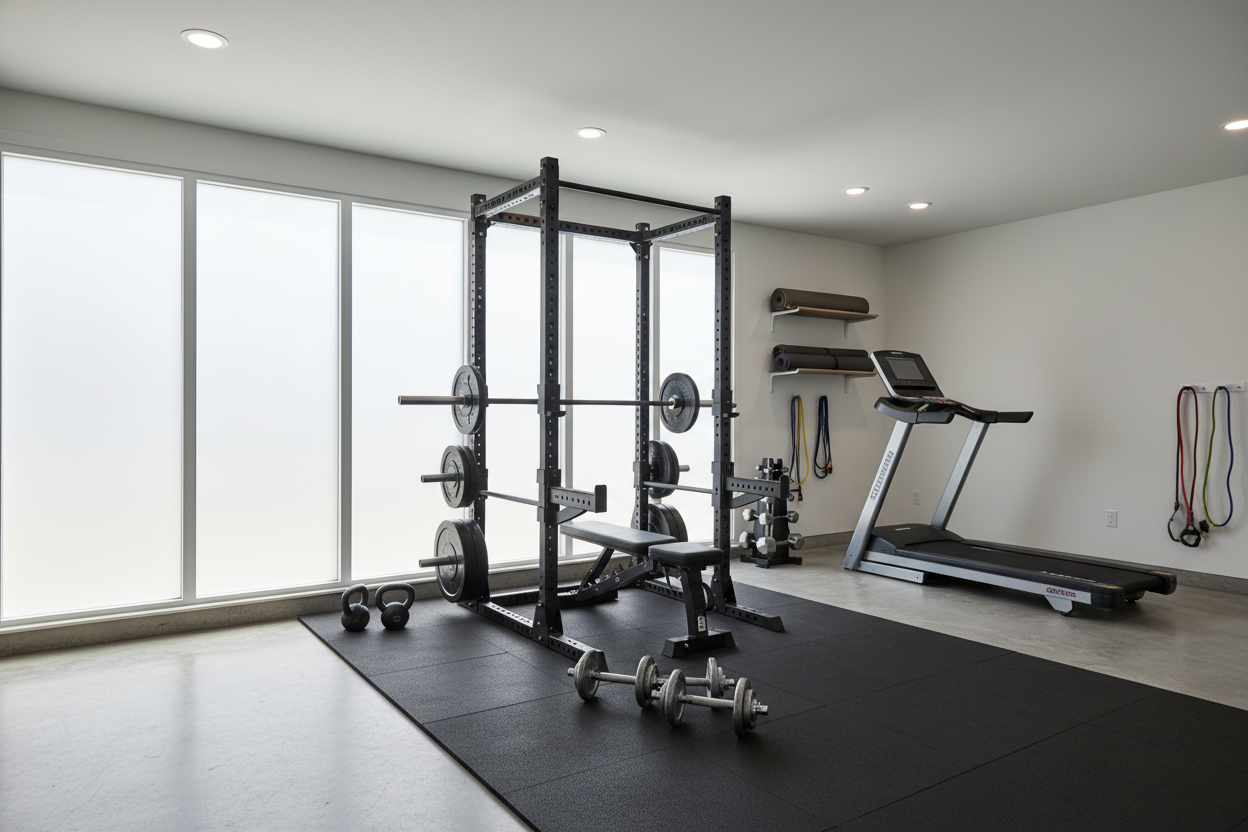
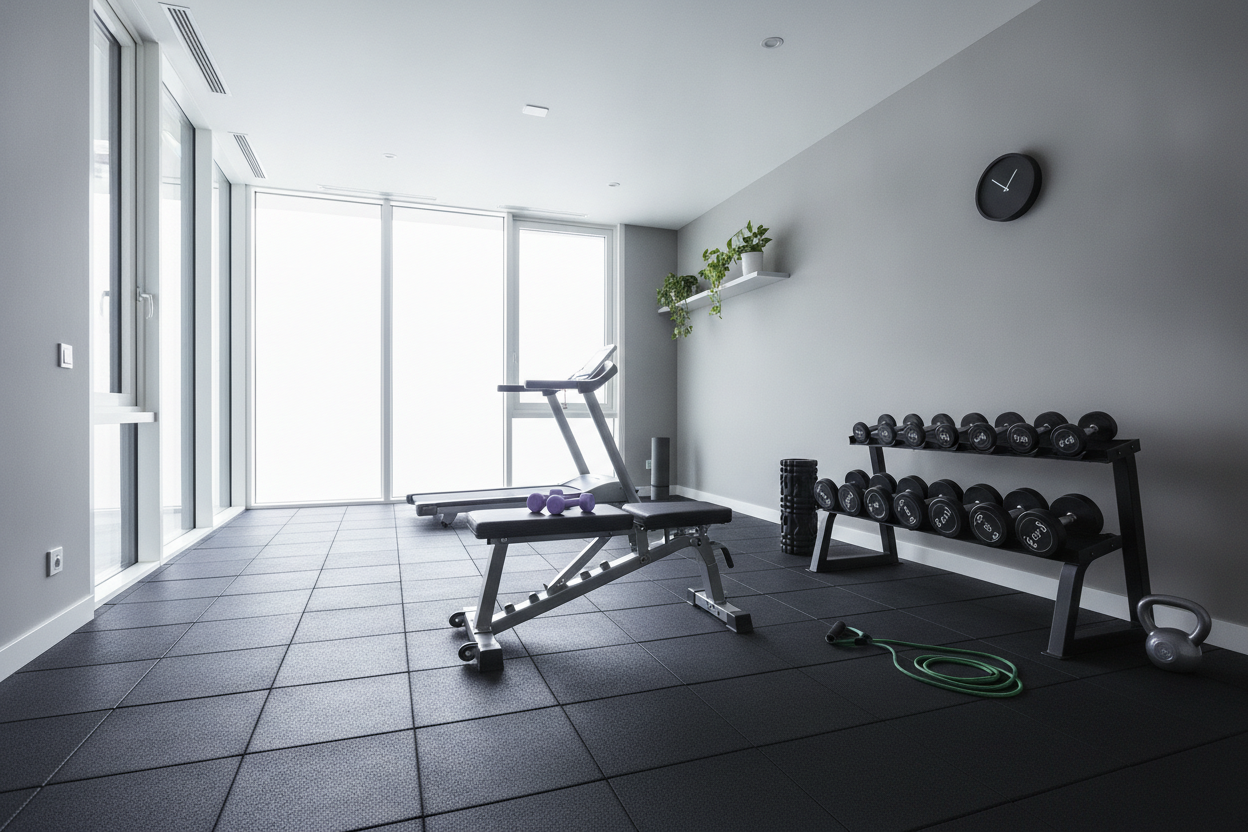
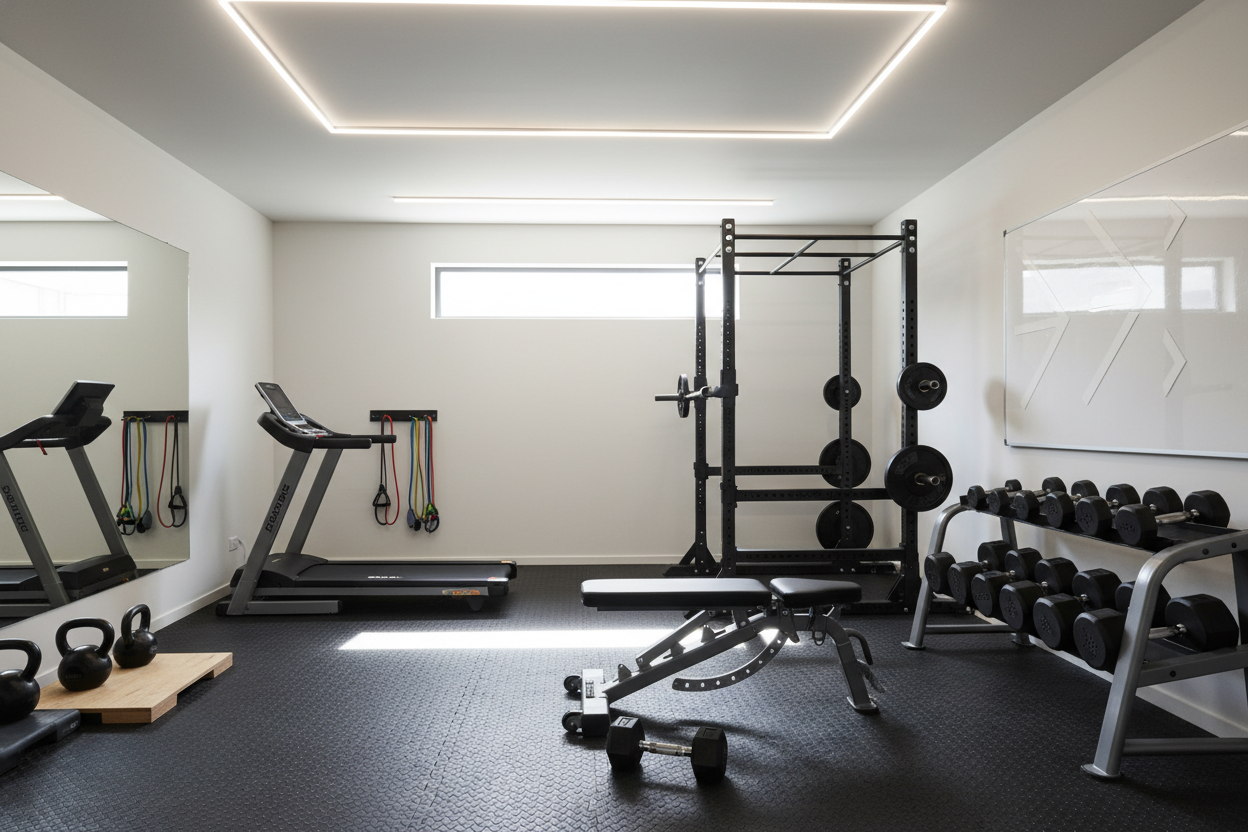
Invest in real gym flooring for home workouts. A high-traction, dense mat allows you to plant your feet and generate force. When I finally moved from my slippery garage concrete to a dedicated 6x8ft mat, my deadlift went up almost immediately because I could actually pull against the floor without sliding. It sounds simple, but your equipment—or lack thereof—often dictates your ceiling for progress.
My Personal Experience
Early in my training, I was the queen of the 15-exercise circuit. I had a different 'glute day' for every day of the week ending in 'y.' I was constantly sore, but my weights never went up. I was using the same 20-lb dumbbells for months. The biggest mistake I made was thinking that 'feeling the burn' meant I was getting stronger. It wasn't until I stripped everything back to a basic 3-day full body split that I actually saw my body change. I stopped chasing the sweat and started chasing the numbers on the bar. My back stopped hurting, my clothes fit better, and I spent half as much time in the gym.
FAQ
Do I need to do this 5 days a week?
No. For most people, three days a week is the sweet spot. It allows for 48 hours of recovery between sessions, which is when the actual muscle building happens. If you want to do something on your off days, go for a walk or do some light mobility work.
Will lifting heavy make me look 'bulky'?
This is the oldest myth in the book. Building significant muscle mass requires a massive caloric surplus and years of dedicated hypertrophy training. Lifting heavy will make you look dense and 'toned' because you're actually building the muscle that sits under your skin.
Can I do this with just dumbbells?
Absolutely. You can squat, hinge (RDLs), push (DB Press), and pull (DB Rows) with a solid set of dumbbells. Just make sure you have weights heavy enough to actually challenge you. If you can do 20 reps easily, it's time to buy heavier weights.