
Why I Stripped My Delt Dumbbell Workout Down to 3 Moves
I used to be the guy spending two hours on 'shoulder day,' chasing a pump with every cable attachment and lateral raise variation known to man. My shoulders usually felt like they were filled with crushed glass by the end, but the actual growth was non-existent. I was doing a high-volume mess, not a delt dumbbell workout that actually built width.
After a particularly nasty rotator cuff tweak that kept me from benching for two months, I realized the 'kitchen sink' approach was killing my progress. I stripped everything back to three core moves. No fluff, no ego, just strict, braced movements that actually force the delts to grow without grinding the joints into dust.
Quick Takeaways
- Quality over quantity: Three moves done perfectly beat six moves done with momentum.
- Bracing is mandatory: If your torso is moving, your delts aren't working.
- Stop pressing at 90 degrees: A slight incline saves your rotator cuffs and hits the front delts harder.
- Rear delts need weight: Stop using pink dumbbells for reverse flyes; try heavy rows instead.
The Trap of the 'Kitchen Sink' Shoulder Day
Most guys walk into the gym and think more is better. They start with a standing press, move to three types of raises, and finish with some cable work. They often bounce between various Weight Lifting Machines and sloppy free weight sets without actually mastering the mechanics of either. It looks busy, but it is rarely effective.
The problem with high-volume delt exercises dumbbells is that the shoulder is a relatively small muscle group. When you do six different variations, you aren't just hitting the muscle; you're fatiguing the stabilizing tissues and the rotator cuff. By the third exercise, your form is usually garbage. You start shrugging the weight up with your traps or swinging your hips to get the dumbbells moving.
I had to learn the hard way that stepping away from the complex machines and focusing on three strict deltoid dumbbell movements was the only way to get the scale to move. You don't need twelve sets of lateral raises. You need three sets where the medial delt is actually doing 100% of the work. Taking the 'body english' out of your deltoid exercises with dumbbells is a humbling experience, but it’s the only way to build that 3D look.
Move 1: The Braced Seated Overhead Press
This is your primary mass builder for the anterior deltoid. But here is the mistake most people make: they set the bench to a perfectly vertical 90 degrees. This puts the shoulder in a compromised position called the 'scapular plane'—or rather, it forces you out of it. It’s a recipe for impingement.
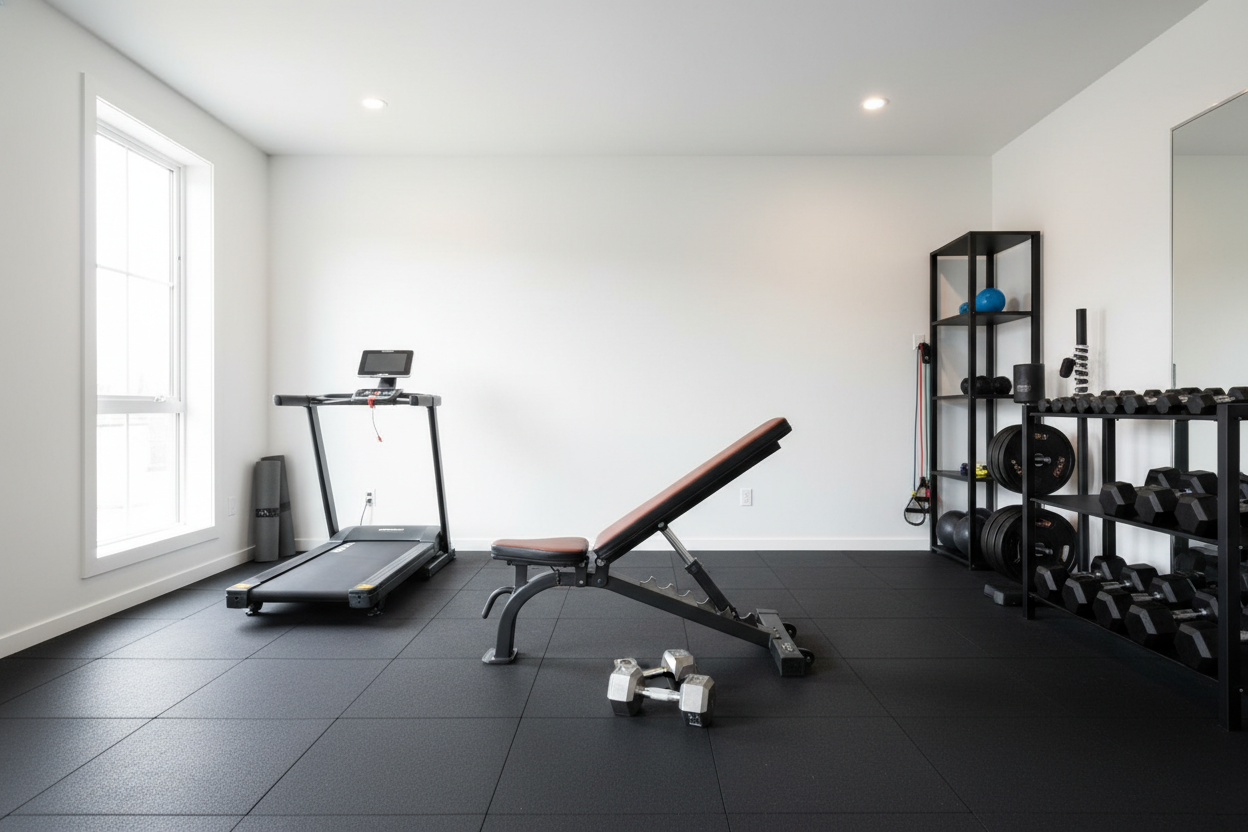
Instead, I recommend using a solid Gxmmat Adjustable Weight Bench and setting the backrest to about 75 or 80 degrees. This slight tilt allows your elbows to tuck slightly forward, which is a much more natural path for the shoulder joint. It protects the rotator cuff while allowing you to move significantly more weight.
When you press, don't just throw the weights up. Keep your back glued to that bench. Drive your feet into the floor. By bracing your spine against the bench, you eliminate the temptation to arch your back and turn this into an incline chest press. This makes it a pure deltoid muscle dumbbell workout. Focus on a controlled descent, stopping just before the dumbbells touch your shoulders, and then drive up with intent. This is the foundation of any serious deltoid dumbbell workout.
Move 2: The Chest-Supported Lateral Sweep
If you want width, you need medial delt work. But standing lateral raises are the most cheated exercise in the gym. People use their legs, their traps, and their neck to move the weight. To fix this, we're going chest-down on an incline bench.
Set your bench to a 45-degree angle and lean your chest against it. Let the dumbbells hang straight down. Now, instead of 'lifting' them up, think about 'sweeping' them out to the walls. Taking the legs out of the equation makes these deltoid exercises with free weights infinitely harder. You will probably have to drop your usual weight by 30%, and that's a good thing.
This variation ensures that the medial deltoid is under constant tension. Because you are leaning forward, you are also hitting the delt in a range where it is usually weak. This is the secret to that capped shoulder look. When you do deltoid exercises with weights this way, the burn is localized exactly where it should be—not in your upper traps or your lower back. It is the most honest dumbbell deltoid exercises variation you can do.
Move 3: The Heavy Dumbbell Rear Delt Row
Most people treat rear delts as an afterthought, doing high-rep reverse flyes with 5-pound weights. Your rear delts are part of your posterior chain; they can handle some actual load. I swapped the flyes for a flared-elbow row, and my rear delts finally started to pop.
For this deltoid free weight exercises staple, you can stay on that same incline bench. Instead of a straight-arm fly, you are going to pull the dumbbells up while keeping your elbows flared out at a 90-degree angle to your torso. Think about pulling with your elbows, not your hands. This shift in mechanics moves the load from the lats to the posterior deltoids and the rhomboids.
By using a rowing motion, you can use significantly heavier weights than a standard fly. This provides the mechanical tension needed for real growth. It’s one of the most underrated dumbbell delt workouts for filling out the back of the shoulder. Just make sure you aren't squeezing your shoulder blades together too hard at the top—keep the focus on the back of the shoulder cap itself.
How to Program This Without Overtraining
You cannot hit this routine every day. The shoulders are involved in every single pressing and pulling movement you do. If you're hitting a heavy chest day on Monday, don't jump into this delt workout on Tuesday. Your front delts are already fried.
I like to slot this in 48 hours after my main chest session. For example, if you Build A Stronger Chest With Dumbbell And Free Weight Workouts on Monday, hit this shoulder routine on Thursday. This gives your joints time to recover so you can actually move heavy weight during your delts dumbbell workout without feeling that 'clicking' or 'grinding' in the socket.
Stick to 3 sets of 8-12 reps for the press, and 3-4 sets of 12-15 reps for the raises and rows. Focus on the mind-muscle connection. If you can't pause at the top of the movement for a split second, the weight is too heavy. This is about precision, not just moving mass from point A to point B.
My Personal Experience
I spent years thinking my shoulders were just 'small' because of genetics. The truth was I was just a sloppy lifter. I'd grab the 80s for overhead press, arch my back like a circus performer, and wonder why my front delts weren't growing. It wasn't until I sat down, braced my back, and dropped to the 60s with perfect form that my shoulders actually started to widen. I also realized that my rear delts were non-existent because I was only doing light 'rehab' style movements. Switching to heavy rows changed my physique more in six months than the previous three years of flyes did.
FAQ
Can I do this delt dumbbell workout twice a week?
Only if you have incredible recovery and a low-volume chest routine. For most people, once a week with high intensity is plenty, given how much the shoulders work during bench and rows.
Do I need to do front raises?
Probably not. If you are doing heavy overhead pressing and any kind of chest pressing, your anterior delts are getting hammered. Adding front raises is usually just 'junk volume' that leads to overuse injuries.
What if my shoulders click during the overhead press?
Lower the weight and check your bench angle. Most clicking happens because people press in the wrong plane or have zero upper back stability. Ensure your shoulder blades are tucked into your back pockets before you start the rep.

