Why I Quit Doing Complex Workout Daily Routines for the Gym
I used to be the guy with the 12-page PDF and a color-coded spreadsheet. I spent more time scrolling through my phone to see which variation of a cable fly I was supposed to do next than I did actually holding a barbell. My joints felt like they were filled with dry gravel, and despite spending ten hours a week training, my numbers were stuck. I was chasing a fantasy of 'optimization' that didn't exist for someone who has a job and a life. I realized my workout daily routines for the gym were designed for pro athletes with full-time recovery teams, not a guy in a garage gym.
- Stop chasing variety; start chasing weight on the bar.
- Junk volume is the fastest way to stall your progress.
- A 45-minute timer is your best training partner.
- Three heavy movements always beat ten mediocre ones.
The Trap of the 'Optimal' Daily Routine of Gym Life
Social media has convinced us that if we aren't hitting the muscle from seventeen different angles, we're leaving gains on the table. We see influencers posting their 'typical' daily routine of gym sessions featuring eight different exercises, three types of supersets, and a warm-up that looks like a yoga retreat. It’s a trap. Most of that is 'junk volume'—work that makes you tired but doesn't actually trigger new muscle growth. I fell for it for years, thinking that if I didn't feel completely destroyed by the end of a session, I hadn't worked hard enough.
This obsession with 'optimal' leads to chronic program-hopping. You try a routine for two weeks, don't look like a Greek god yet, and swap it for the next shiny object. The truth is that a bodybuilder daily routine fails outside the gym because it assumes you have perfect sleep, perfect food, and no stress. When you try to force a hyper-fragmented isolation routine into a busy life, you end up doing a lot of mediocre work rather than a small amount of high-quality work. I had to learn that the hard way after my bench press stayed at 225 lbs for three years while I was busy doing 'optimal' tricep kickbacks.
What Actually Happens to Your Gym Daily Schedule When You Do Too Much
Your Central Nervous System (CNS) doesn't care about your aesthetic goals. When your gym daily schedule is packed with high-intensity sets and endless isolation movements, you aren't just taxing your muscles; you're frying your brain's ability to signal those muscles to fire. I used to wonder why I felt like a zombie by Wednesday. It wasn't because I was 'grinding' harder than everyone else; it was because I was overtrained and under-recovered. Trying to hit every muscle group from five angles every single day is a recipe for stagnation.
When you do too much, the quality of your main lifts suffers. If you’ve already done four sets of leg extensions and three sets of lunges before you even get to the squat rack because some 'daily workout gym' influencer said to 'pre-exhaust' the muscle, your squats are going to be trash. You won’t have the stability or the raw power to move heavy loads. Heavy loads are what build real, dense muscle and actual strength. Junk volume just makes you good at being tired. I stopped seeing progress until I cut my total weekly sets in half and focused on the quality of every single rep. Recovery isn't a luxury; it's where the actual muscle building happens.
My 3 Non-Negotiable Rules for a Daily Workout Gym Plan
I finally got fed up and stripped everything back to the basics. I stopped looking for the most 'advanced' routine and started looking for the most effective one. My current framework is brutally simple. It focuses on large compound movements, progressive overload with small plates (yes, those 1.25-lb fractional plates matter), and getting the hell out of the gym before my mental focus wanes. If I can't get it done in under an hour, it doesn't belong in my program.
Rule 1: Set a Ruthless 45-Minute Timer
Parkinson’s Law states that work expands to fill the time allotted for its completion. Lifting is no different. If you give yourself two hours to train, you'll find ways to waste time—scrolling Instagram, chatting about the latest rack specs, or taking three-minute rest periods when you only need ninety seconds. By setting a 45-minute timer for my daily workout gym session, I forced myself to train with a sense of urgency. This doesn't mean rushing your reps; it means being purposeful with your time.
This urgency forces you to prioritize. You don't have time for fluff when the clock is ticking. You go from the rack to the bench to the pull-up bar with focus. Whether you’re following a heavy powerlifting split or a 30 minute gym workout female routine, brevity is the ultimate driver of intensity. When I started timing my sessions, my heart rate stayed higher, my focus stayed sharper, and I actually started enjoying the gym again because it wasn't a part-time job.
Rule 2: Pick Three Movements and Leave
This was the hardest rule to follow but the one that yielded the most results. I adopted the 'One Main, Two Accessories' rule. Every session starts with a heavy compound lift—squat, bench, deadlift, or overhead press. I put 90% of my energy here. After that, I pick two accessory movements that support that main lift. For example, on a bench day, I might do weighted dips and some rows. That’s it. No 'finisher' sets, no five-exercise circuit at the end.
By focusing all my energy on three movements, I could actually track my progress. It’s easy to see if you’re getting stronger when you only have three variables to manage. When I was doing ten exercises per session, I couldn't tell if I was stalling or just tired. Now, if my main lift goes up, the session was a success. I’ve found that my 'pump' is actually better doing three heavy, high-quality movements than it ever was doing endless sets of light isolation work. It’s about density, not duration.
How to Run This Minimalist Schedule in a Home Gym
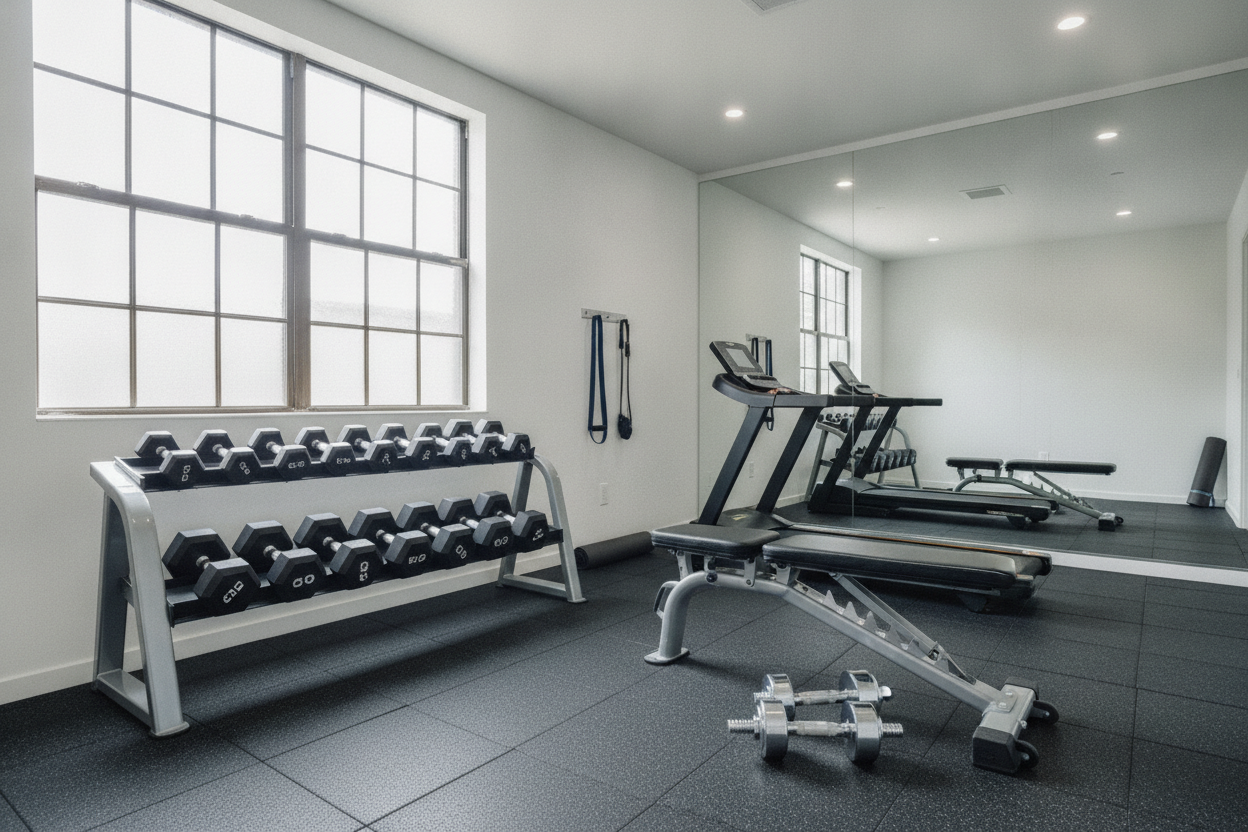
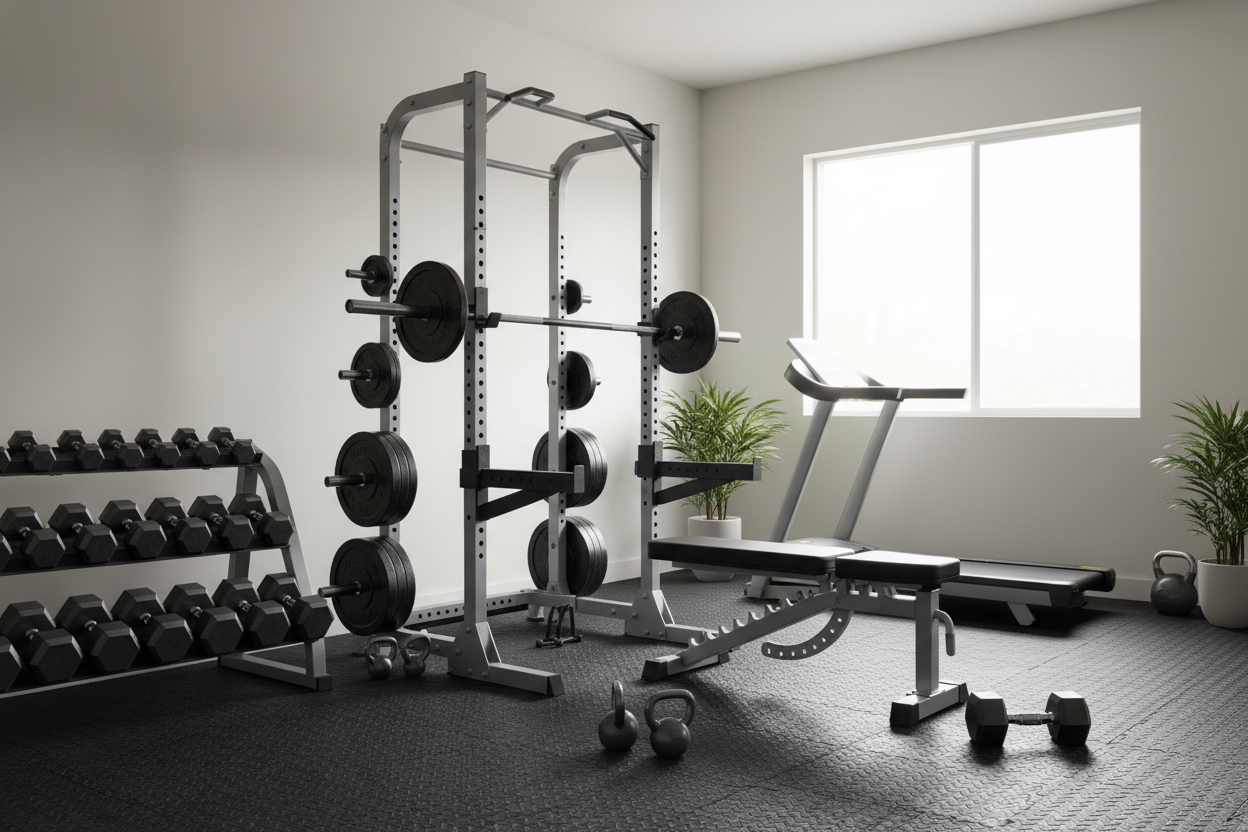
This minimalist gym daily schedule is even more effective if you train at home. In a commercial gym, you’re often fighting for equipment, which makes a timed, three-exercise routine difficult to execute. In my garage, I don't have to wait for the squat rack. I can move from my primary lift to my accessories without losing a second. Having your own gear allows you to be ruthless with your time. You don't need a massive commercial facility to get results; you need a solid rack, a good bar, and the discipline to stop when the work is done.
For those days when I want to add a little extra core work or some dumbbell finishers, I just clear a space on my large exercise mat for home gym and get to work. You don't need fancy machines to build a physique. A heavy floor-based routine or some simple kettlebell work on a durable mat can be the perfect 'accessory' to your main heavy lifts. The goal of a home setup is efficiency. If you find yourself spending more time cleaning your gym than training in it, you're doing too much. Keep it simple, keep it heavy, and get back to your life.
FAQ
Is 45 minutes really enough to build muscle?
Absolutely. If you are lifting heavy and keeping your rest periods disciplined, 45 minutes is more than enough time to stimulate growth. Most people spend half their gym time doing nothing. High intensity beats high volume every time.
What if I feel like I can do more after three exercises?
Then you didn't lift heavy enough on your main movement. If you finish three sets of heavy, high-effort squats and still feel like you need five more exercises, add 10 pounds to the bar next time. The 'need' for more is usually a sign of low intensity.
Can I do this routine every day?
I wouldn't. Even with a minimalist approach, your body needs rest. I've found that 3-4 days a week of this high-intensity, low-volume training works best for most people who aren't on performance-enhancing drugs.