Everyone Asks What Are Some Beginner Exercises. Just Do These 4.
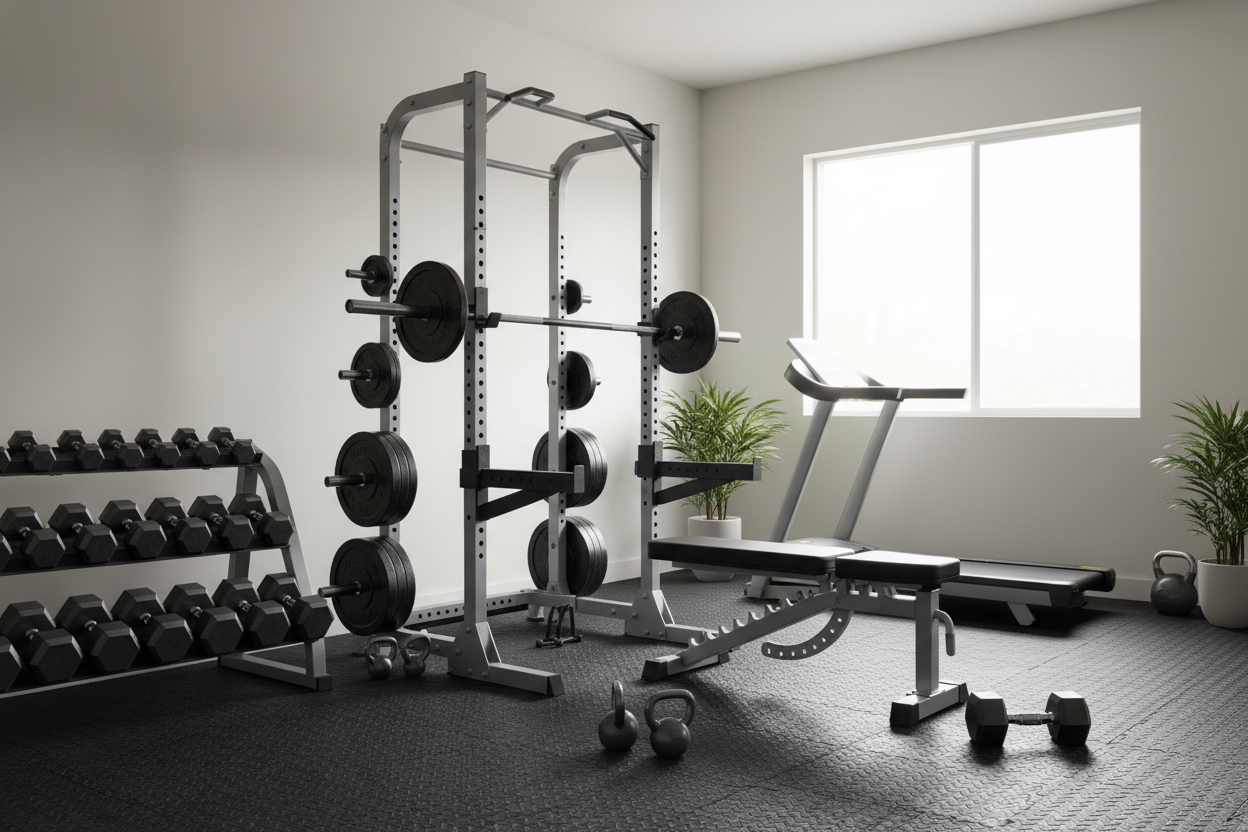
I remember staring at a $2,000 power rack on Amazon at 2 AM, obsessing over whether I needed 11-gauge steel or if 14-gauge would suffice for my garage. Then it hit me: I was procrastinating by shopping. I didn't need a commercial-grade cage; I needed to move my body. Most people asking what are some beginner exercises are being sold a complex lifestyle by influencers when they really just need a starting line.
Stop scrolling through 'optimal' biomechanics threads. If you are paralyzed by the sheer volume of conflicting advice, you are already losing. You don't need a fancy gym membership or a rack that takes up half your garage to see progress this week.
Quick Takeaways
- Focus on four fundamental movement patterns: squat, push, pull, and hinge.
- Don't train to failure; focus on 'greasing the groove' and perfect form.
- You only need about 20 minutes and enough floor space for a mat.
- Consistency beats intensity every single time for the first 30 days.
The Trap of the 'Perfect' Day One
The internet has a way of making simple things feel like rocket science. You'll see guys on YouTube arguing about internal rotation and the exact degree of your elbow flare before you've even done a single rep. This optimization culture is a barrier to entry. It makes you feel like if you don't have the perfect 5-day split, you're wasting your time.
I've seen guys spend three months researching the 'best' program only to quit after two weeks because it was too complicated. A novice doesn't need to worry about periodization or accessory movements for their rear delts. You need to teach your nervous system how to move under control. That's it. Forget the noise and focus on the literal basics.
So, What Are Some Beginner Exercises That Won't Break You?
If you want to build a foundation, you have to stop thinking about muscles and start thinking about movements. Your body doesn't know what a 'bicep' is; it knows how to pull things. A solid workout routine at home for beginners should focus on the big four: the squat, the push, the pull, and the hinge.
These patterns cover every major muscle group in the body. By mastering these, you develop 'functional strength'—the kind that helps you carry groceries or move a couch without throwing your back out. We aren't trying to win a bodybuilding show on day one. We're trying to build a body that isn't made of glass. Stick to these four patterns and you'll see more progress than the guy doing 15 different types of bicep curls.
The Easiest Exercises for Beginners (A No-BS List)
Here are the easiest exercises for beginners that require zero specialized equipment. I recommend clearing a dedicated space—rolling out a 6X8Ft Exercise Mat is a great way to signal to your brain that it's time to work. It saves your joints from the hard garage floor and gives you a clear boundary for your movement.
- Box Squats: Sit down on a chair or a bench and stand back up. It sounds silly, but most people have terrible squat form. Using a box ensures you sit back into your hips and keeps your knees safe.
- Incline Push-Ups: Don't start on the floor if you can't do 10 perfect reps. Use a sturdy table or a countertop. The higher the surface, the easier it is. This builds the chest and triceps without destroying your shoulders.
- Glute Bridges: Lie on your back, knees bent, and lift your hips toward the ceiling. This is the simplest way to learn the 'hinge' pattern and wake up your glutes, which probably haven't fired since the 90s.
- Doorway Rows: Stand in a doorway, grab the frame, and lean back. Pull yourself toward the frame. It's a vertical pull that builds the upper back and counters the 'computer slouch' most of us have.
Putting It Together: A Simple Easy Workout Routine
Now that you have the moves, you need a plan. This simple easy workout routine is designed to be done three times a week. Give yourself at least one day of rest between sessions. Your muscles don't grow while you're working; they grow while you're sleeping.
Perform 3 sets of 10 to 12 reps for each exercise. Rest for 60 to 90 seconds between sets. If you can't hit 10 reps, make the exercise easier (higher incline for push-ups, higher box for squats). If 12 reps feel like a breeze, make it harder (lower incline, lower box). For more visual breakdowns, check out our Workout Hub where we show these movements in action.
The goal isn't to be crawling out of your workout. You should finish feeling like you could have done a little more. That 'little more' is what you'll bring to the table next week. This is about building a habit, not a highlight reel.
How Long Should You Stick to the Easiest Workout Routine?
Stick to this easiest workout routine for at least 4 to 6 weeks. You'll know you've outgrown it when you can breeze through 3 sets of 15 reps with perfect form and zero struggle. That’s when it’s time to add load—maybe grab a pair of dumbbells or a kettlebell.
Don't rush to the 'advanced' stuff. The basics work forever. Even the guys you see squatting 500 lbs still do these fundamental movements; they just do them with a lot more weight on their backs. Master the mechanics now, and you won't be the person at the physical therapist's office in six months.
Personal Experience: My 'Ego' Mistake
When I first started training in my garage, I bought a 300-lb Olympic weight set before I could even do a proper bodyweight lunges. I tried to follow a professional powerlifter's program I found online. I ended up with a strained lower back and a very expensive coat rack for three weeks. I had to swallow my pride, put the barbell away, and go back to basic glute bridges and squats. It felt 'too easy' at first, but that was the point. It allowed me to actually train consistently instead of being sidelined by injury.
FAQ
Do I need shoes for these exercises?
If you're on a grippy surface like a gym mat, going barefoot or wearing socks is actually better. It helps you feel the floor and balance better during squats.
Is it okay if I'm sore the next day?
A little stiffness is normal, but if you can't walk down stairs, you went too hard. Scale back the intensity. You want 'productive' soreness, not 'I can't move' soreness.
Can I do this every day?
I wouldn't. Your central nervous system needs time to adapt to new movements. Stick to 3 or 4 days a week to start. Rest is part of the program.