Why I Finally Simplified My Muscle and Strength Training
I spent three years in my garage trying to serve two masters. I would start with a heavy 1-rep max attempt on the bench and then spend the next ninety minutes chasing a pump with high-rep flyes and tricep pushdowns until I couldn't move my arms. By the end, I wasn't getting stronger or bigger; I was just exhausted and frustrated. Real muscle and strength training requires a bit more nuance than just throwing every exercise at the wall to see what sticks.
- Stop trying to peak your strength and build maximum size in the same workout.
- Focus on 4-6 week blocks to allow your central nervous system to recover.
- Prioritize compound movements like the squat, bench, and deadlift.
- Invest in a solid barbell and a stable floor before buying fancy cable machines.
The Problem With the 'Kitchen Sink' Routine
The biggest trap for home gym owners is the 'Powerbuilding' urge. You have all this gear—the rack, the specialty bars, the bands—and you want to use it all at once. You try to hit a heavy triple at 90% of your max and then immediately pivot to 4 sets of 15 reps. It sounds efficient, but it is actually a collision course for your recovery.
When you train for a heavy 1-rep max, you are taxing your nervous system. When you train for size, you are taxing your metabolic systems and causing muscle damage. Doing both at high intensities in one session means you do neither well. My progress stalled for eighteen months because I was too tired to grow and too beat up to lift heavy. A successful workout for muscle strength needs a clear objective, not a crowded to-do list.
Why Sequencing Beats Cramming in Your Garage
Instead of doing everything daily, I switched to basic block periodization. This isn't just for Olympic athletes; it is for anyone who doesn't want to feel like they got hit by a truck every Tuesday morning. You dedicate a few weeks to building muscle, then a few weeks to making that muscle 'stronger' by teaching your brain how to use it. You can browse our workout hub to see how these blocks are laid out in practice.
A dedicated muscle strength workout block allows your joints to heal from the high-volume 'pump' work of the previous weeks. It keeps the training fresh. When you know you only have five weeks to hit a specific rep goal, you train with more intent. It turns the monotonous grind into a series of short, winnable sprints.
Phase 1: Building the Engine (Tissue Growth)
This is the hypertrophy phase. The goal here is simple: more cross-sectional muscle area. You are looking at sets in the 8-12 rep range with about 60-75% of your max. It is about time under tension and controlled eccentrics. If you are looking for a starting point, this full body workout for muscle and strength is a solid example of how to structure this building phase.
More muscle doesn't automatically mean you can lift more weight tomorrow, but it increases your potential to lift more later. Think of it like putting a bigger engine in a car. The engine is there, but you still need to tune the transmission to handle the power. That is what the next phase is for.
Phase 2: Revving the Engine (Neurological Output)
Now we drop the reps and crank the weight. A true muscle strength training workout focuses on neurological adaptation. You are teaching your motor units to fire in sync. We are talking 1-5 reps at 85% or higher. Because you built new tissue in Phase 1, you now have more 'meat' to recruit for these heavy efforts.
This phase is shorter and more intense. You will feel the weight in your bones, not just your muscles. Rest periods need to jump from 90 seconds to at least 3-5 minutes. If you rush these sets, you are just practicing being weak. Give your ATP stores time to replenish so every rep is crisp and fast.
The Bare-Bones Gear You Actually Need
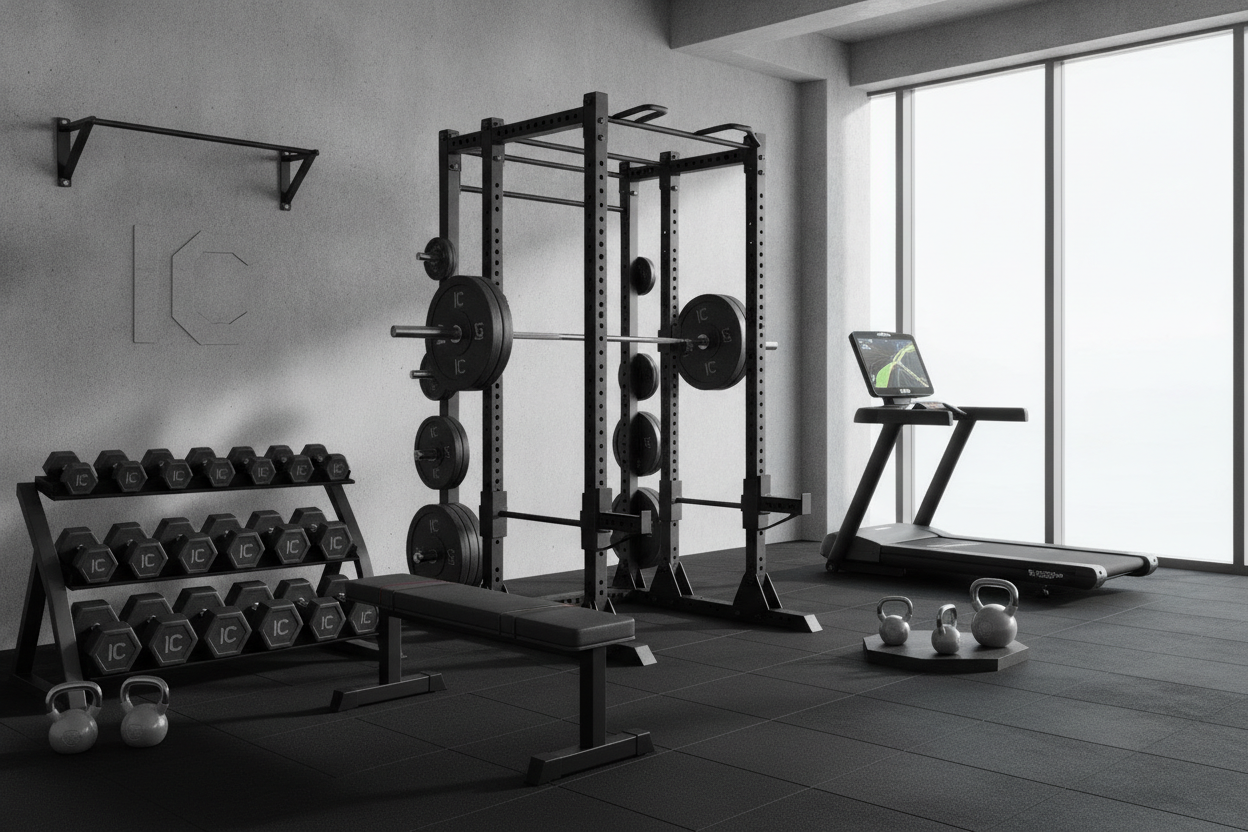
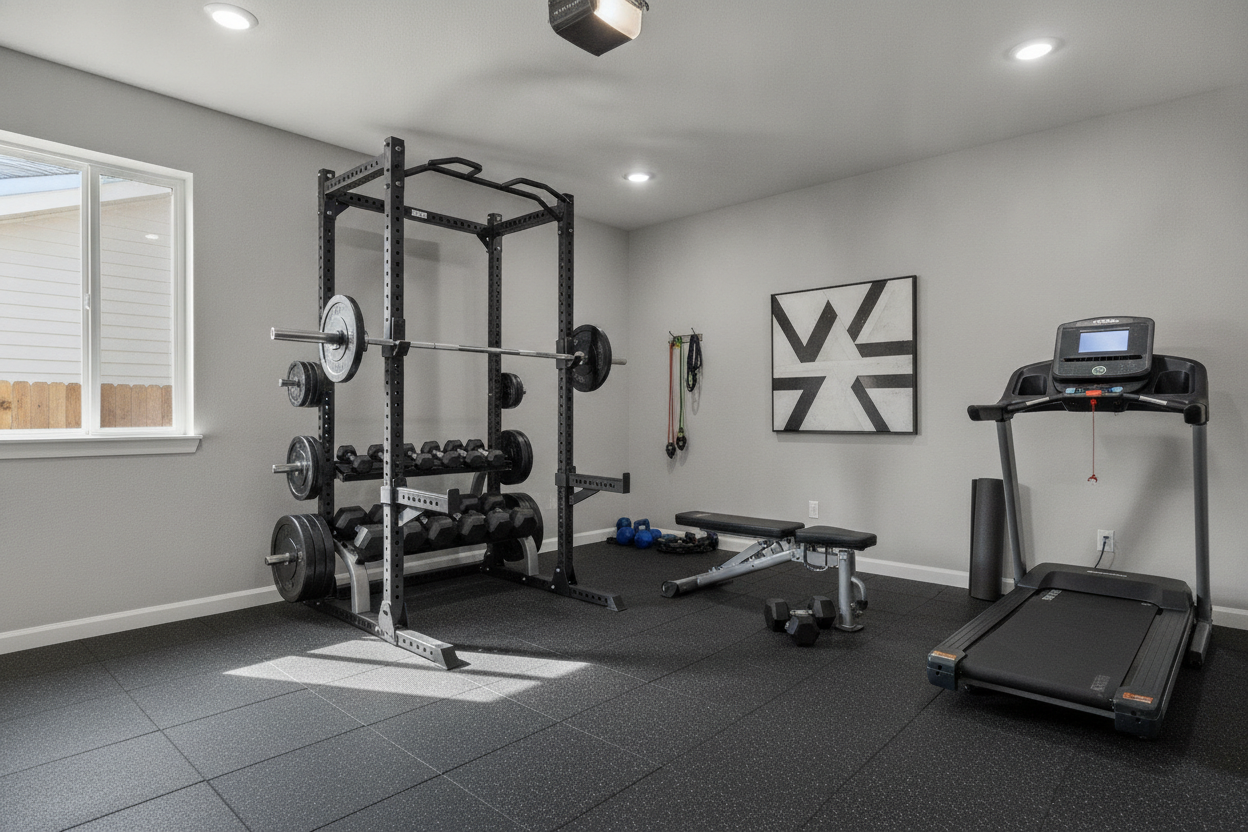
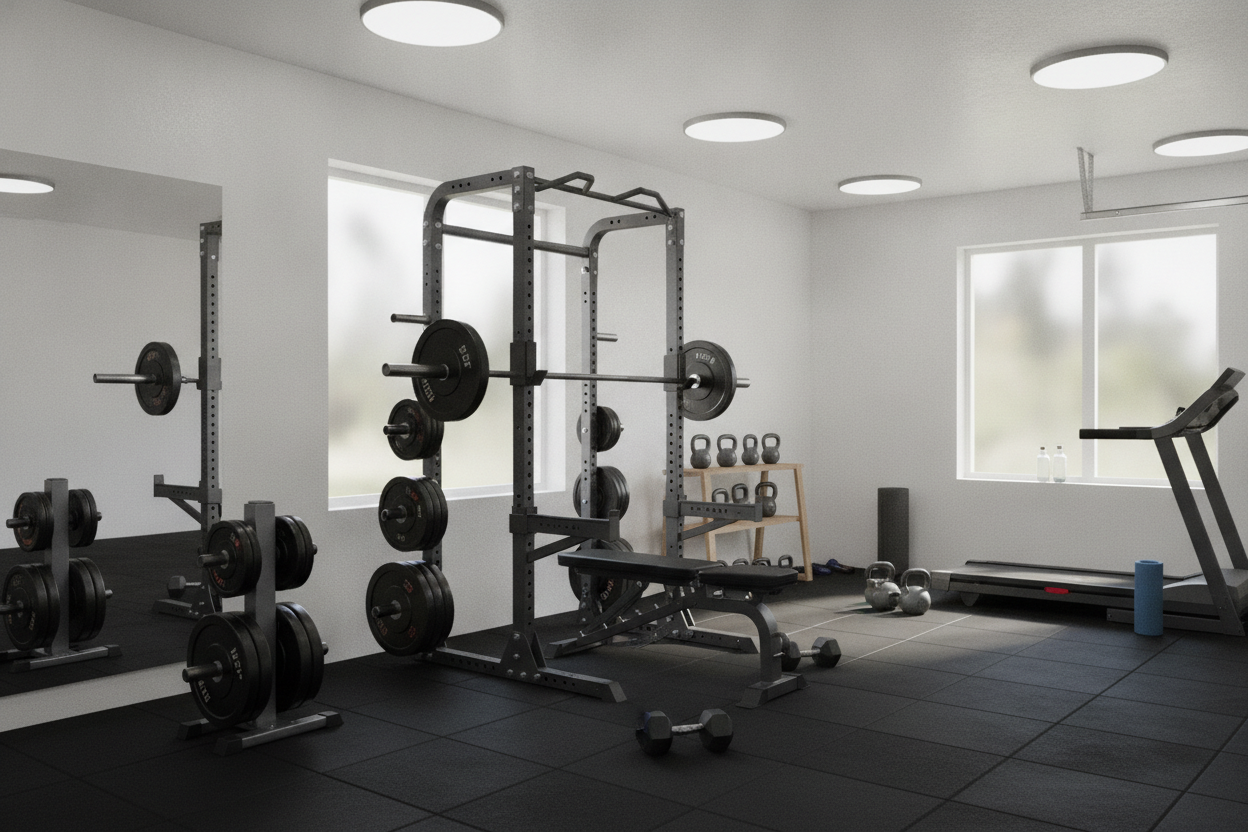
You don't need a $3,000 functional trainer to get this done. To execute an effective workout for muscle strength, you need a power rack with 11-gauge steel, a barbell with decent knurling, and enough iron to make the floor groan. I prefer 45-lb plates that are actually 45 lbs—cheap cast iron can be off by 3-5 lbs, which ruins your percentage-based training.
Stability is the most underrated part of home lifting. If your feet are sliding during a heavy squat, you are leaving pounds on the platform. I use a heavy-duty 6x8ft exercise mat to keep my rack from dancing and to give my lifting shoes something to bite into. It is a small investment that makes a massive difference when you are under a heavy bar.
A Sample 8-Week Blueprint to Follow
Weeks 1-4: Focus on volume. Hit your compounds for 3 sets of 10, then add three accessory moves for 3 sets of 12. Keep the rest short and the sweat high. This is where you eat big and sleep hard to support that new growth. If you are looking for a variation, the muscle and strength women's workout offers a great perspective on adjusting volume for different recovery profiles.
Weeks 5-8: Cut the accessory work in half and double down on the main lifts. Move to 5 sets of 3 or 3 sets of 2. Your goal is to move the bar as fast as possible. By week 8, you should be hitting weights that felt impossible in week 1. This simple flip-flop between volume and intensity is the 'secret' most people ignore in favor of the latest shiny app.
My Personal Mistake
I once tried to run a high-intensity Bulgarian-style squat program while also doing a high-volume bodybuilding chest day. Within three weeks, my elbows were screaming and I couldn't even unrack the bar without pain. I learned the hard way that 'more' is rarely 'better.' Now, if I am pushing for a heavy bench PR, my accessory work is almost non-existent. I save the high-rep isolation stuff for the months when the heavy weights stay on the rack.
FAQ
Can I do this with just dumbbells?
You can, but it is harder to load heavy. Most home sets stop at 50 or 80 lbs. For true strength blocks, you will eventually need the infinite scalability of a barbell and plates.
How long should I rest between sets?
During the size phase, 60-90 seconds is plenty. For the strength phase, do not touch the bar until at least 3 minutes have passed. Your nervous system needs more time than your lungs.
Do I need a lifting belt?
Not for the size phase. For the strength phase, once you cross 80% of your max, a 10mm or 13mm leather belt helps create the intra-abdominal pressure needed to stay safe and rigid.