How to Actually Use Common Gym Equipment (Without Looking Dumb)
I remember my first day walking into a big-box commercial gym. I spent twenty minutes on a treadmill I didn't even want to use just because I was too embarrassed to admit I had no clue how to adjust the seat on the leg press. It is a specific kind of anxiety, standing there in the middle of the floor while everyone else seems to have a PhD in biomechanics. The truth is, most common gym equipment is designed to be intuitive, but the manufacturers often hide the simplicity behind shiny chrome and confusing labels.
- Free weights are the foundation of every real strength program.
- Cable machines offer constant tension that you can't get from gravity alone.
- Selectorized machines (the ones with pins) are tools for isolation, not just for 'beginners.'
- The power rack is your safest ally, not a cage to be feared.
Why the Floor Plan Always Feels Overwhelming
Walking into a new facility feels like a geometry test where you haven't studied. Most owners organize their space into specific zones. You have the cardio deck, the selectorized machine circuit, the cable jungle, and the free weight area. Understanding these different parts of a gym is the first step to lowering your heart rate before you even pick up a weight.
The typical gym layout is designed for flow, but it often ends up looking like a maze. The machines are usually grouped by body part—all the leg stuff in one corner, chest and shoulders in another. If you're feeling lost, look at the placards on the machines. They almost always have a diagram showing which muscle is being worked. If it shows a red highlight on the quads, you're looking at a leg machine. It is that simple.
Free Weights: The Undisputed Kings of a Common Gym
If I could only pick one area to train in for the rest of my life, it would be the free weight section. This is where you find the barbells, plates, and dumbbells. Unlike machines that lock you into a fixed path, free weights require you to stabilize the load yourself. This builds the 'functional' strength people are always talking about. It’s the difference between pushing a cart and actually carrying a heavy box up a flight of stairs.
The Power Rack and Barbell Setup
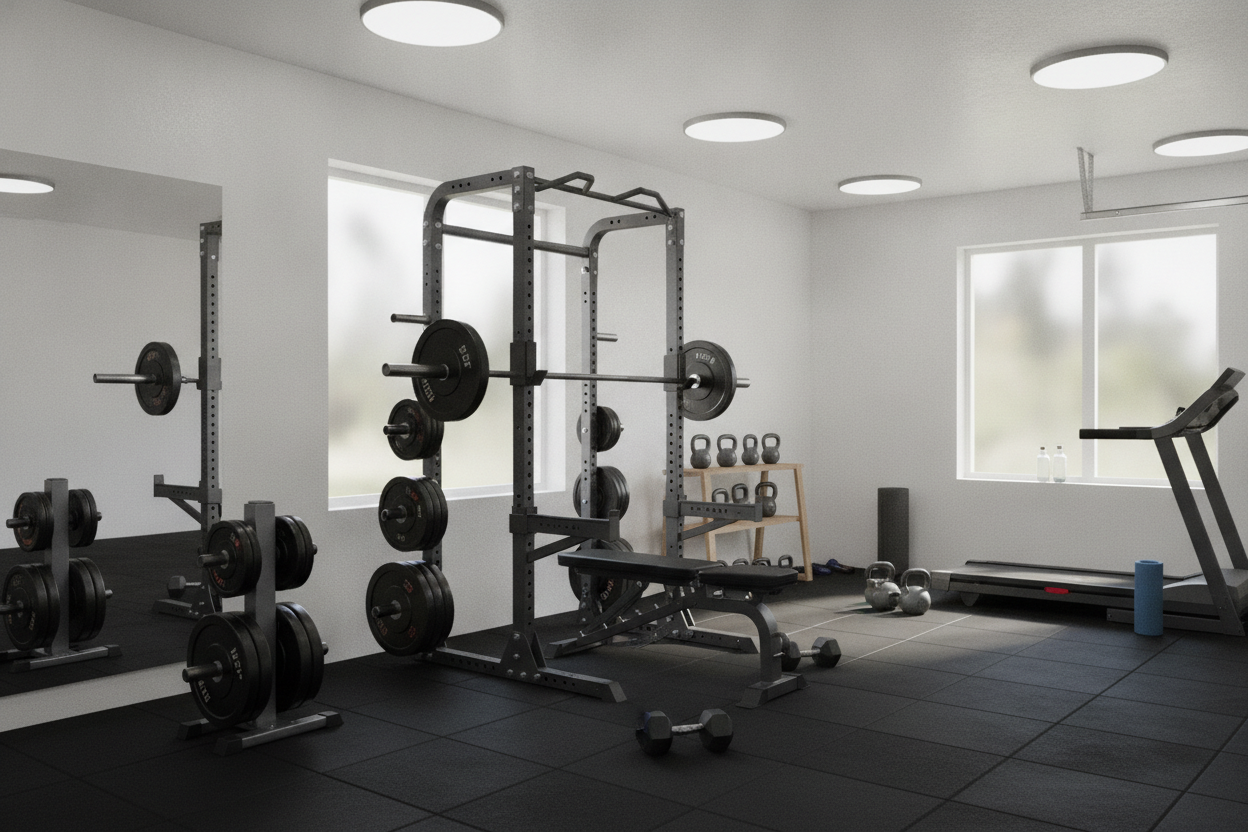
The power rack looks like a medieval torture device, but it is actually the safest place in the gym. It’s a steel cage with adjustable safety bars (spotter arms). If you’re squatting 200 pounds and your legs give out, those bars catch the weight so you don't end up as a viral fail video. Always check the J-cups—the hooks that hold the bar—to make sure they are set at shoulder height before you start. There is nothing worse than trying to tiptoe a heavy barbell back into its cradle.
Dumbbells (And Why You Don't Need Every Weight)
Commercial gyms usually have a massive rack of fixed dumbbells ranging from 5 lbs to 150 lbs. You don't need to use all of them. For most people, a few key increments are all that's necessary for a full-body workout. Dumbbells are superior for fixing muscle imbalances. If your right arm is stronger than your left, a barbell will let the right arm 'cheat' for the left. A dumbbell won't. You either lift it or you don't.
Cable Towers and Pulleys (The Typical Gym Equipment People Mess Up)
The cable crossover station is the Swiss Army knife of typical gym equipment. It uses a pulley system to provide constant resistance throughout the entire range of motion. When you use a dumbbell for a bicep curl, there is a 'dead spot' at the top where gravity isn't doing much. With a cable, that weight stack is pulling against you from start to finish.
The biggest mistake I see? People not checking the pulley ratio. Some machines are 1:1 (100 lbs on the stack feels like 100 lbs), while others are 2:1 (100 lbs feels like 50 lbs). Always do a 'test rep' before you fly into a full set. Also, don't be afraid to swap the handles. Most gyms have a basket of attachments like ropes, straight bars, and D-handles. Changing the grip can completely change how an exercise feels on your joints.
Exercise Equipment and Their Uses: A No-BS Translation
Let's talk about those big, intimidating machines with the pins and stacks. This is where exercise equipment and their uses get overcomplicated by marketing. A 'Linear Leg Press' is just a squat where you don't have to balance. A 'Pec Dec' is just a chest fly that keeps you in a fixed arc. These machines are fantastic for 'finishing' a muscle after you've done your heavy lifting with free weights.
The technical names of different exercise machines can be a mouthful, but don't let that stop you. If the label says 'Seated Row,' you are pulling something toward your stomach. If it says 'Lat Pulldown,' you are pulling something down from above your head. Don't overthink the mechanics. Sit down, adjust the seat so your joints align with the machine's pivot points, and move the weight. If it feels chunky or hits your joints weird, get off and try a different machine. Not every machine is built for every body type.
Bringing It Home: What's Actually Worth Your Space
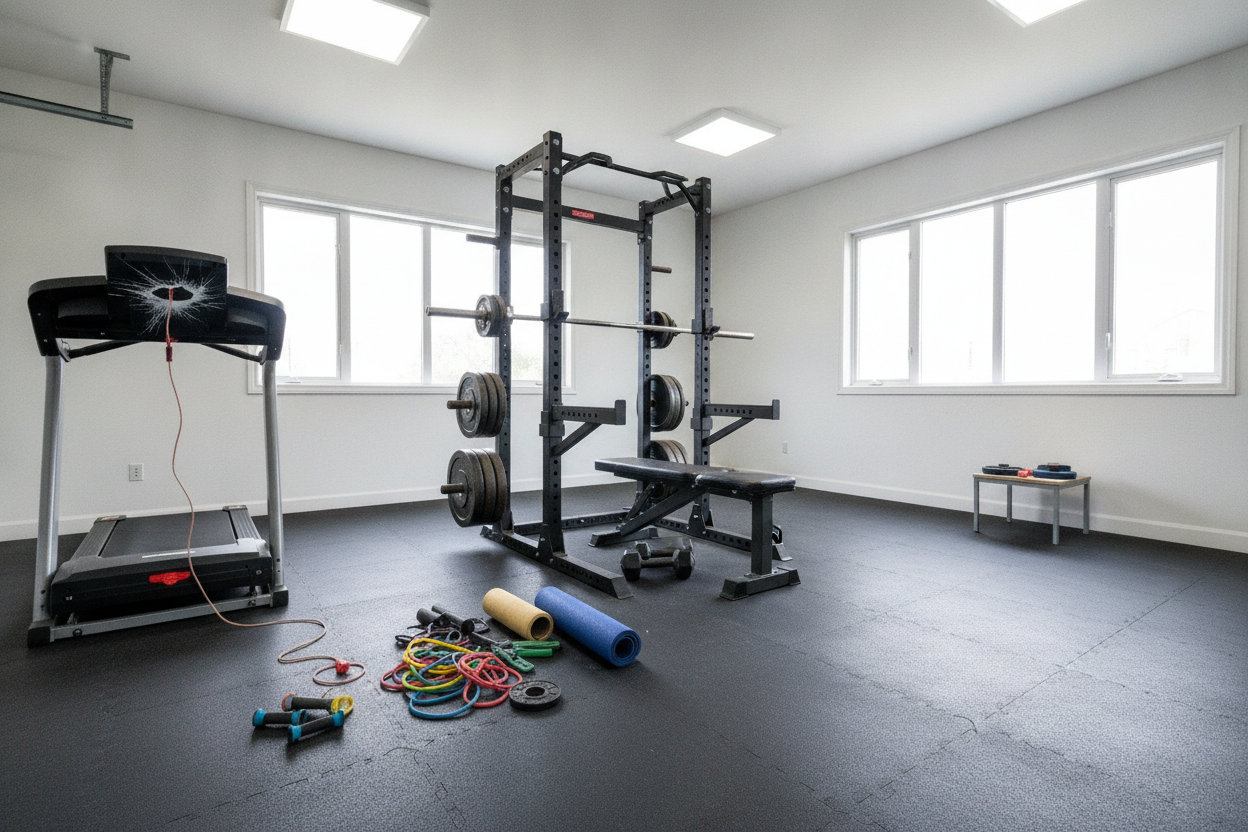
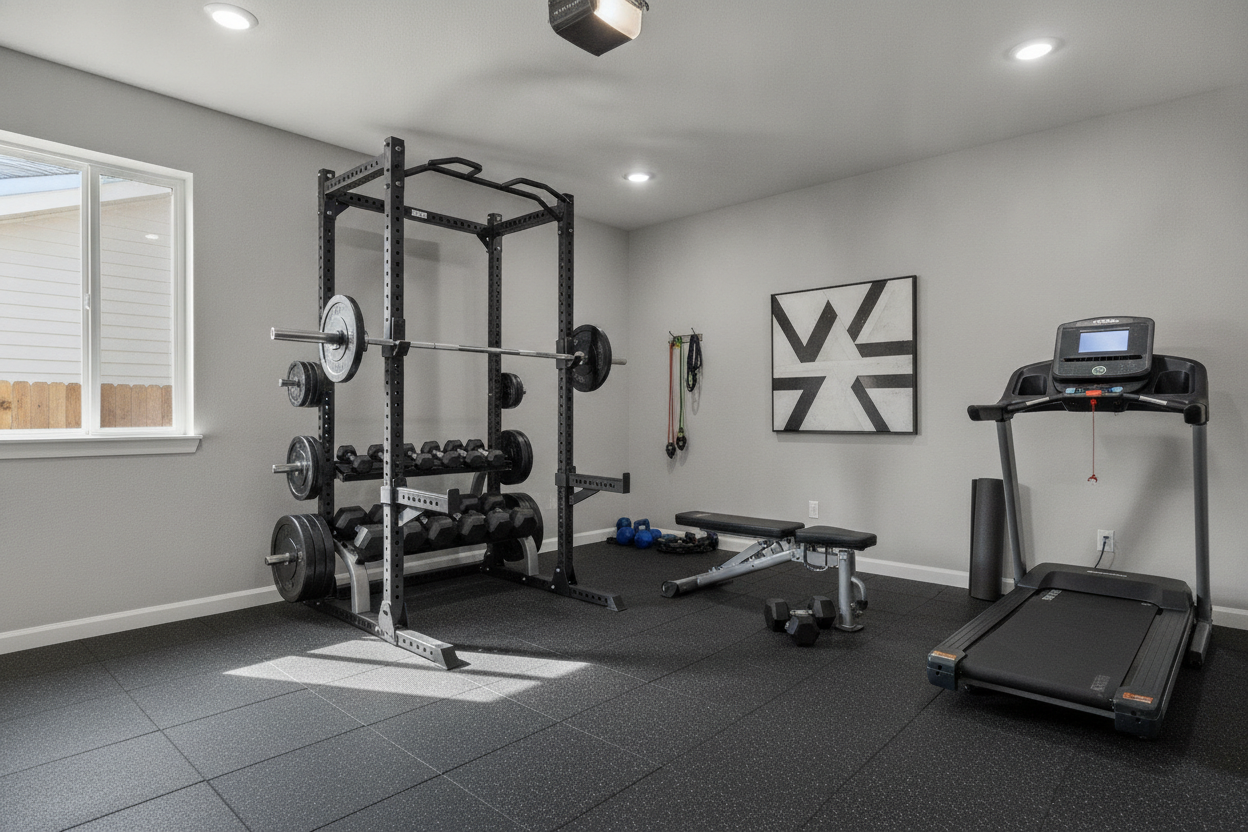
After years of paying monthly dues to use 20% of a gym's gear, I eventually built my own setup. You realize quickly that you don't need forty different machines to get results. You can build a highly effective home layout with just a solid rack, an Olympic barbell, and a bench. That covers about 90% of what the average person needs to get incredibly strong.
The commercial gym is a great place to 'test drive' equipment. Use their expensive leg presses and cable towers to figure out what movements you actually enjoy. Then, when you're ready to stop commuting and start training in your garage, you'll know exactly which pieces of gear are worth the investment and which ones are just taking up floor space.
My Honest Take: The Time I Dropped the Bar
I’ve been lifting for fifteen years, and I still make mistakes. A few years back, I was ego-lifting on a bench press without using the safety pins in the rack. I misgrooved the rep, the bar tilted, and I dumped 225 pounds of plates onto the floor. It sounded like a bomb went off. The entire gym stopped and stared. I learned two things that day: use the damn safety features on the equipment, and nobody actually cares as much as you think they do. Five minutes later, everyone went back to their own workouts. Don't let the fear of looking silly stop you from using the gear.
Common Gym Equipment FAQ
Do I really need to use the clips on the barbell?
Yes. Every single time. Even if you're just lifting the bar. It takes two seconds and prevents a catastrophic balance shift if you tilt the bar slightly. Don't be the person who dumps plates in a crowded gym.
How do I know if the seat height is right on a machine?
Look for the 'pivot point' on the machine—usually marked by a colorful bolt or a cap. Your joint (like your elbow or knee) should be in a straight line with that pivot point. If it’s not, you’re putting unnecessary stress on your tendons.
Are machines worse than free weights?
No, they just serve a different purpose. Machines are better for isolating a specific muscle without worrying about balance. Free weights are better for overall athletic development. A good program uses both.