Exercise Equipment and Names: The Ultimate Gym Glossary
Walking into a commercial gym for the first time often feels like stepping into the cockpit of an alien spaceship. You are surrounded by pulleys, levers, iron plates, and digital consoles, all designed to improve your fitness but terrifying to touch if you don't know what they are. This intimidation factor is real, and it keeps many people stuck on the treadmill for months.
Understanding exercise equipment and names isn't just about gym trivia; it's about safety and confidence. When you know the difference between a Smith Machine and a Power Rack, or a Lat Pulldown and a Seated Row, you unlock the ability to follow workout programs effectively and avoid injury. Let's decode the gym floor so you can train like a pro.
Key Takeaways: Gym Equipment Cheat Sheet
- Cardio Machines: Devices like the Treadmill, Elliptical, and Rowing Machine focus on heart rate and endurance.
- Selectorized Machines: Also known as pin-loaded machines (e.g., Leg Press, Lat Pulldown), these are beginner-friendly and isolate specific muscles.
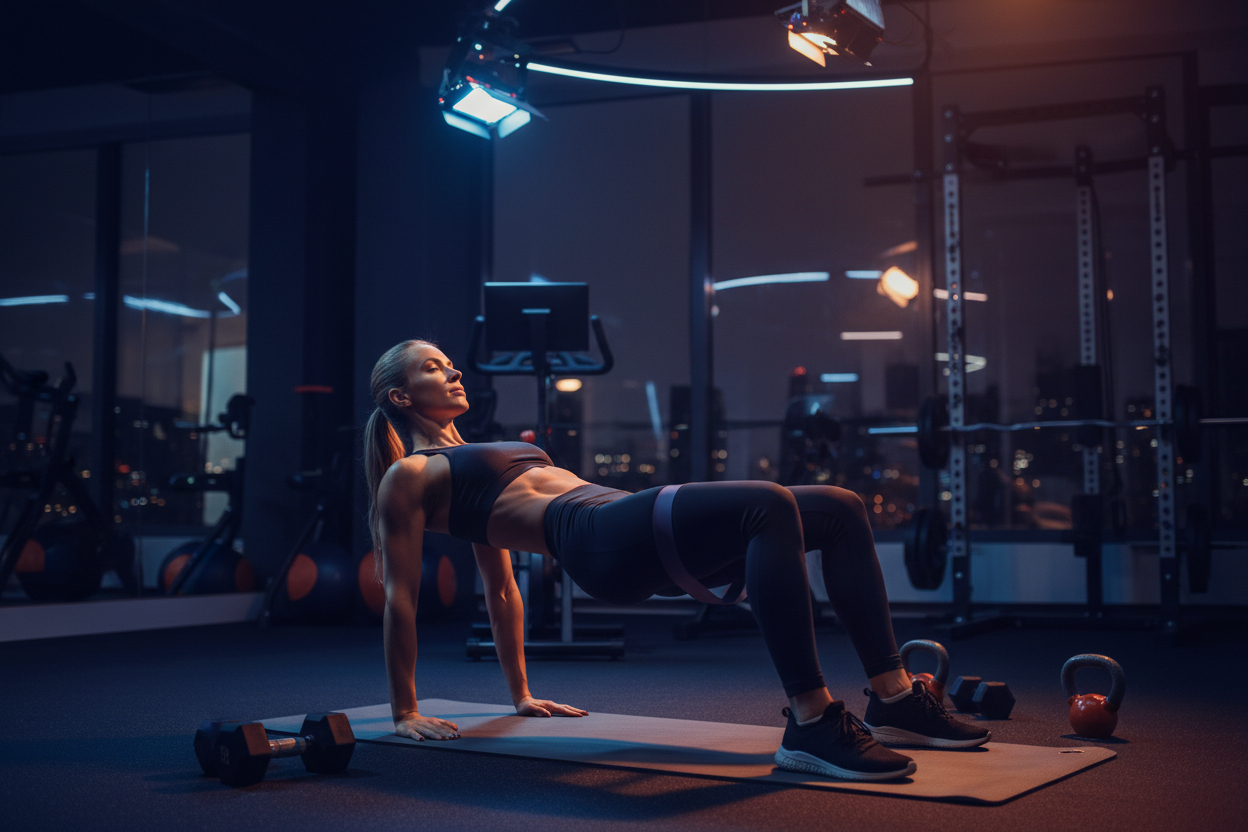
- Free Weights: Dumbbells, Barbells, and Kettlebells require you to stabilize the load, offering better functional strength.
- Functional Apparatus: Equipment like the Cable Crossover and Smith Machine bridge the gap between fixed motion and free movement.
- The "Rack": Usually refers to the Power Cage or Squat Rack, the centerpiece for heavy compound lifting.
The Cardio Zone: Gym Running Machine Names and More
Usually located near the entrance, this is where most people start. These machines are straightforward, but knowing their proper names helps when tracking your data.
The Treadmill
The most recognizable machine in the gym. It simulates walking or running via a moving belt. While simple, modern versions have incline settings that can simulate steep hiking trails.
The Elliptical (Cross-Trainer)
This is the machine with two foot pedals and two handles that move in a gliding, oval motion. It’s a low-impact alternative to running, saving your knees while still torching calories.
The Rowing Machine (Ergometer)
Often just called the "erg" or rower. This is the long, low machine with a sliding seat and a handle attached to a chain or strap. It provides a full-body workout, engaging your legs, back, and core simultaneously.
Stair Climber (StepMill)
Think of a never-ending escalator. This machine is brutal on the glutes and calves. It is distinct from a "stepper" (which just has pedals that go up and down) because the StepMill has actual revolving stairs.
Strength Sector: Weight Lifting Machine Names
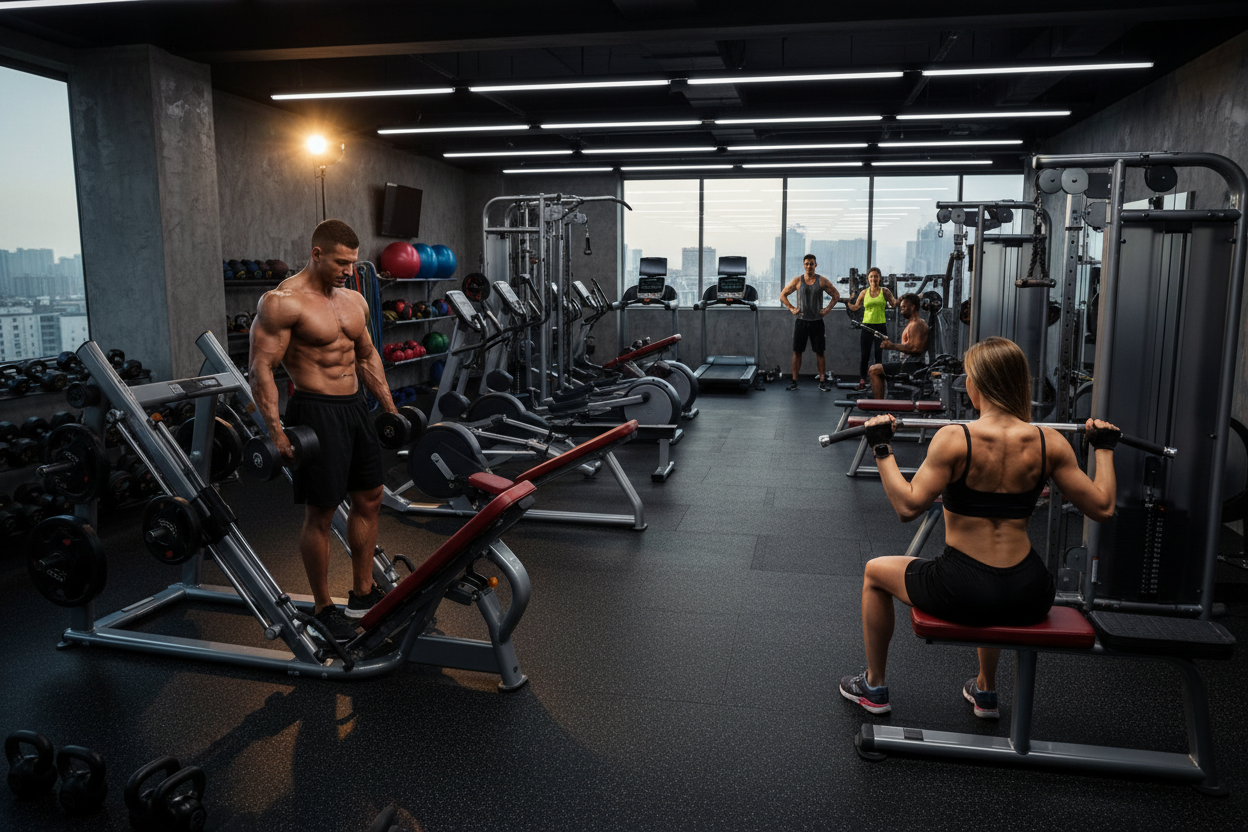
This area is filled with "selectorized" machines. You select your weight by inserting a pin into a stack of rectangular plates. These are excellent for beginners because they dictate your path of motion.
Leg Press Machine
You sit in a reclined seat and push a platform away from you with your feet. It targets the quads, hamstrings, and glutes. Note: There are two types. The Horizontal Leg Press (common for beginners) and the 45-Degree Leg Press (plate-loaded and heavier).
Lat Pulldown
This machine features a seat with a thigh pad and a long bar hanging from a cable above. You pull the bar down to your chest. It mimics a pull-up but allows you to adjust the weight to be less than your body mass.
Chest Press Machine
The seated version of a bench press. You sit upright and push handles away from your chest. It is one of the safest ways to learn pushing mechanics without the risk of dropping a bar on yourself.
Cable Crossover (Functional Trainer)
This is the large, wide apparatus with two weight stacks on opposite sides and adjustable pulleys. It is incredibly versatile. You can perform flys, tricep pushdowns, and bicep curls here. If you hear someone mention "cable machines," this is usually what they mean.
The Iron Jungle: Free Weight Equipment Names
Here, there are no tracks or pins to guide you. You are responsible for stabilizing the weight.
Dumbbells
The short handheld weights usually found on a long rack in front of a mirror. They range from 1lb to 150lbs+. They are the most versatile tools in the gym for isolation and compound movements.
Barbells
The long iron bars (standard weight is 45lbs or 20kg) that you load round plates onto. You use these for the "Big Three" lifts: Squat, Bench Press, and Deadlift.
Kettlebells
They look like a cannonball with a handle. Originally from Russia, these are used for dynamic, swinging movements that build explosive power and grip strength.
EZ-Curl Bar
A shorter barbell with a jagged, "W" shaped handle. This design reduces wrist strain during bicep curls and tricep extensions.
The Racks and Cages
These are not machines in the traditional sense, but structural apparatuses used to lift heavy weights safely.
Power Rack (Squat Cage)
A large metal box-like frame with four vertical posts. It has adjustable horizontal safety pins. This is where you perform heavy squats or overhead presses. The safety pins are there to catch the barbell if you fail a lift.
Smith Machine
Often confused with the squat rack. The Smith Machine looks similar but the barbell is attached to vertical rails. It can only move straight up and down. It has hooks along the entire rail system, allowing you to rack the weight at any point with a twist of the wrist.
My Personal Experience with Exercise Equipment and Names
I remember my first week in a "real" bodybuilding gym. I was trying to follow a magazine workout that called for a "Hack Squat." I spent 15 minutes wandering the floor, looking for a label. I eventually just hopped on the 45-degree Leg Press because it looked big and scary enough to be right.
It wasn't.
A trainer eventually came over—not to scold me, but because I was positioning my feet so low on the platform that my heels were popping off, putting massive shear force on my knees. He walked me over to the actual Hack Squat machine (the one with shoulder pads where you stand at an angle). The difference in muscle activation was instant. The grit of the shoulder pads digging in and the specific friction of the sled moving on the rails felt completely different from the smooth glide of the leg press.
That day I learned that names matter. Knowing the specific name of the machine allows you to look up the specific setup cues. If you treat a Smith Machine exactly like a Free Weight Squat rack, the fixed path will fight against your natural body mechanics, and you'll feel that unnatural grinding in your hips.
Conclusion
Learning exercise equipment and names is the first step toward gym autonomy. Once you can identify a Cable Crossover from a Smith Machine, the gym floor stops being an obstacle course and starts being a playground. Don't be afraid to ask staff or use Google Lens if you are unsure of a machine's name—getting it right ensures you target the correct muscle and stay injury-free.
Frequently Asked Questions
What are the main gym machines called for beginners?
Beginners usually start with selectorized machines. The most common names include the Chest Press, Seated Row, Lat Pulldown, Leg Extension, and Leg Curl. These machines have diagrams on them showing how to use them.
What is the difference between a Smith Machine and a Squat Rack?
A Squat Rack is a frame for a free-weight barbell, requiring you to balance the weight yourself. A Smith Machine has a barbell attached to rails, guiding the weight in a fixed vertical line, which removes the need for stabilization.
What is the name of the machine where you pull the ropes?
That is typically called a Cable Machine, Cable Crossover, or Functional Trainer. It uses a system of pulleys and cables to provide constant tension in any direction you pull.